Java Fern Care Guide
Microsorum pteropus · Freshwater Plant
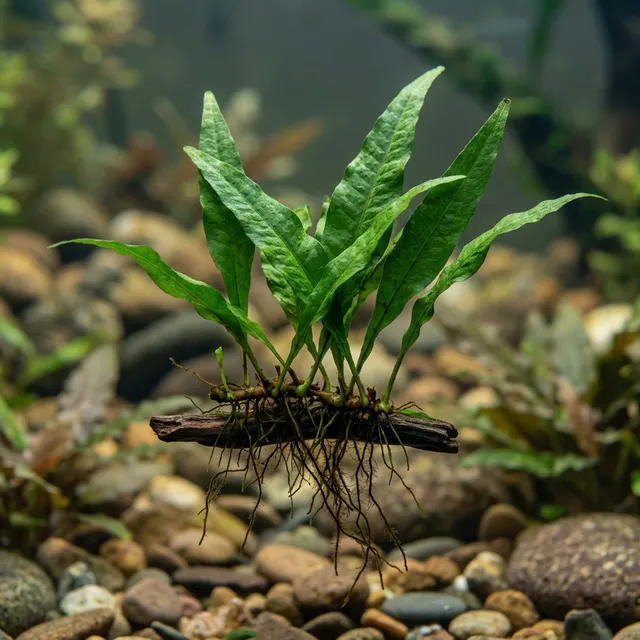
What Java Fern look like
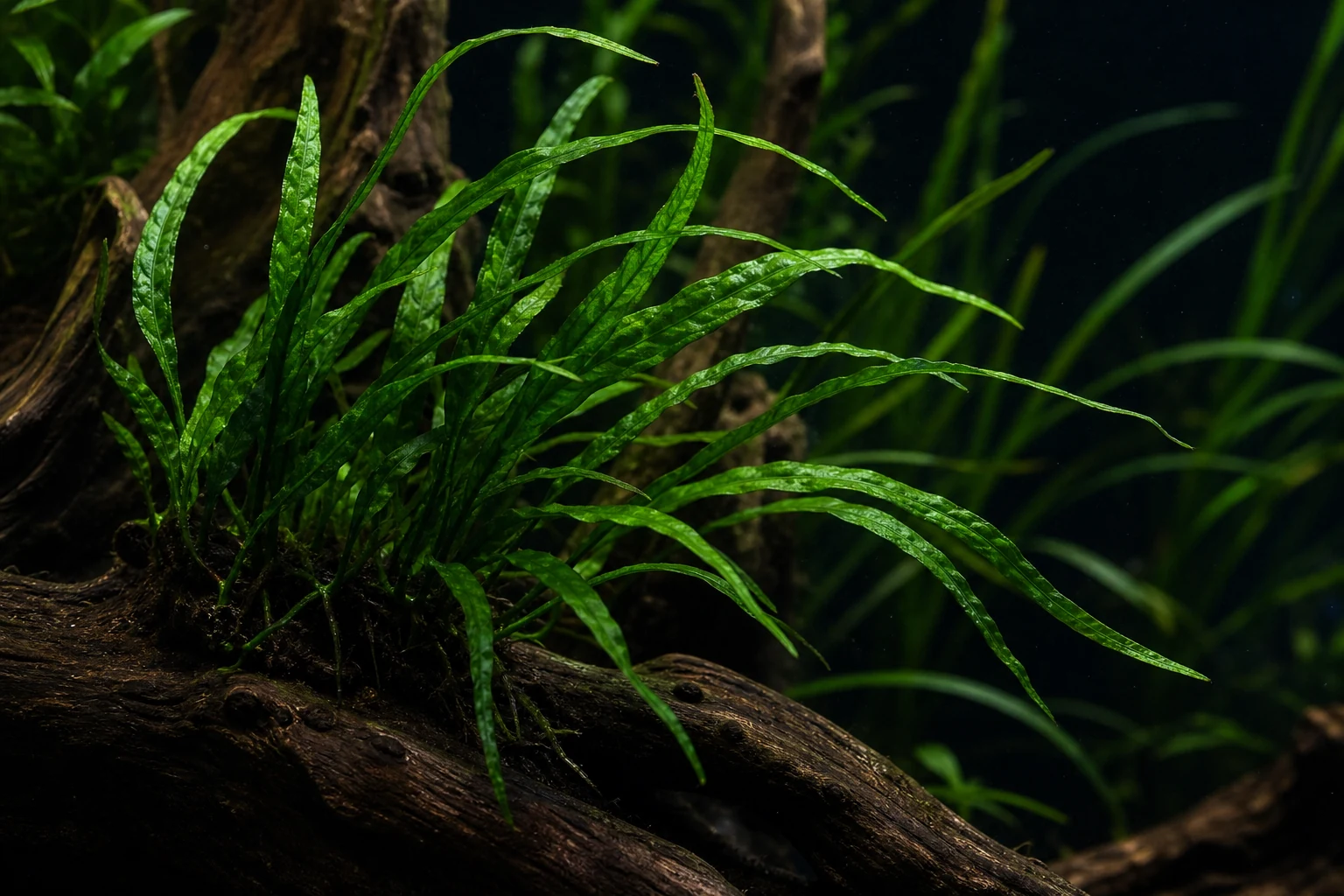
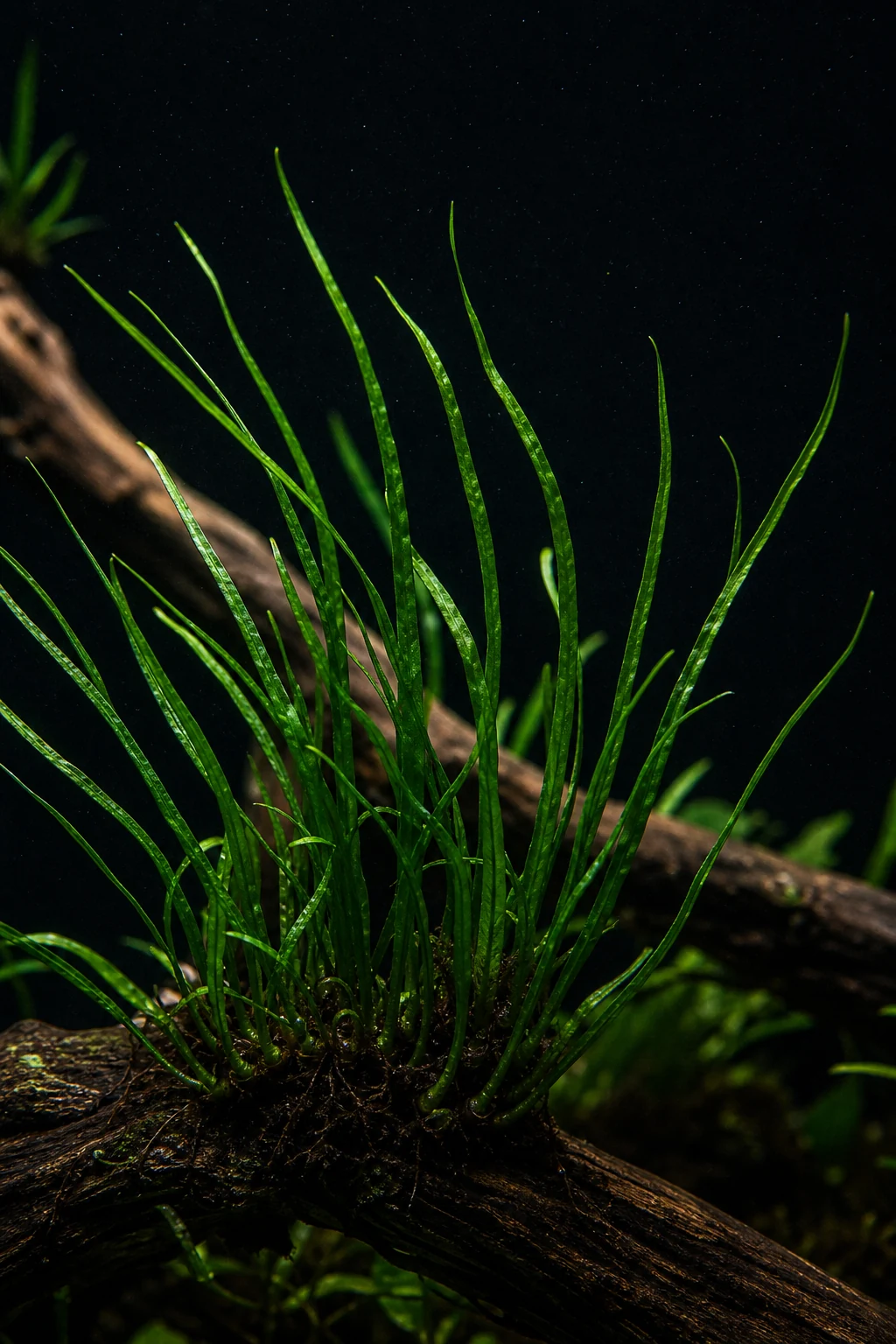
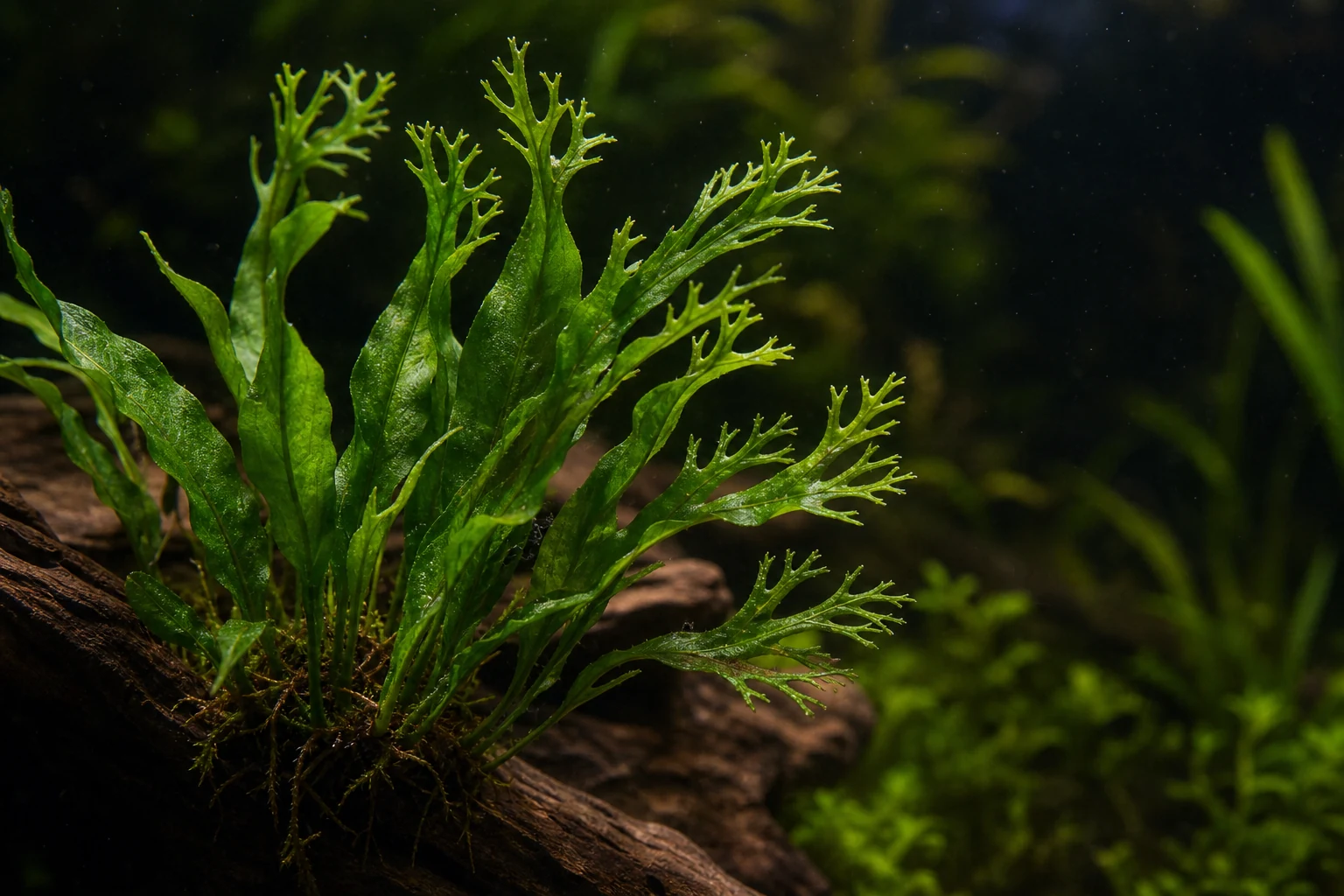
Microsorum pteropus, commonly known as Java Fern, is an epiphytic aquatic plant characterized by its broad, lanceolate leaves that can reach lengths of 2 to 15 inches (5 to 38 cm). The leaves are typically dark green, leathery, and exhibit a distinct undulating margin, which contributes to its ornamental appeal. The plant possesses a rhizome that anchors it to substrates, allowing it to thrive in various aquatic environments. Java Fern does not exhibit sexual dimorphism, as both male and female plants share similar morphological traits. Its defensive adaptations include the production of a thick, tough leaf texture that deters herbivory. Unique features include the presence of sori, which are clusters of sporangia located on the underside of mature leaves, facilitating reproduction through spore dispersal. The plant's growth habit is generally upright, with leaves emerging from the central rhizome, creating a lush, bushy appearance in aquascapes.
Behavior & temperament
Java Fern is primarily a solitary plant that does not form extensive colonies but can thrive in close proximity to other aquatic flora. It is typically found in the lower to mid-water column, often attached to rocks or driftwood in its natural habitat. Java Fern exhibits a relatively slow growth rate and is tolerant of a wide range of water conditions, making it a popular choice for both beginner and experienced aquarists. The plant reproduces vegetatively through the production of plantlets on mature leaves, which can be detached and replanted. Java Fern is generally non-aggressive and can coexist peacefully with a variety of fish and invertebrates, contributing to its reputation as a versatile and hardy aquatic plant.
Diet & feeding
As a photosynthetic organism, Java Fern primarily relies on light and carbon dioxide for its nutritional needs, utilizing photosynthesis to produce energy. In captivity, it thrives in well-lit environments with adequate CO2 supplementation and benefits from occasional fertilization with liquid fertilizers containing micronutrients to promote healthy growth.
Behind the name
Microsorum (small spore); pteropus (winged or fin-like).
Plan your tank
Check the numbers before you buy: tank volume, a stocking plan, cycle progress, water changes, and your ongoing care routine.
Keep reading
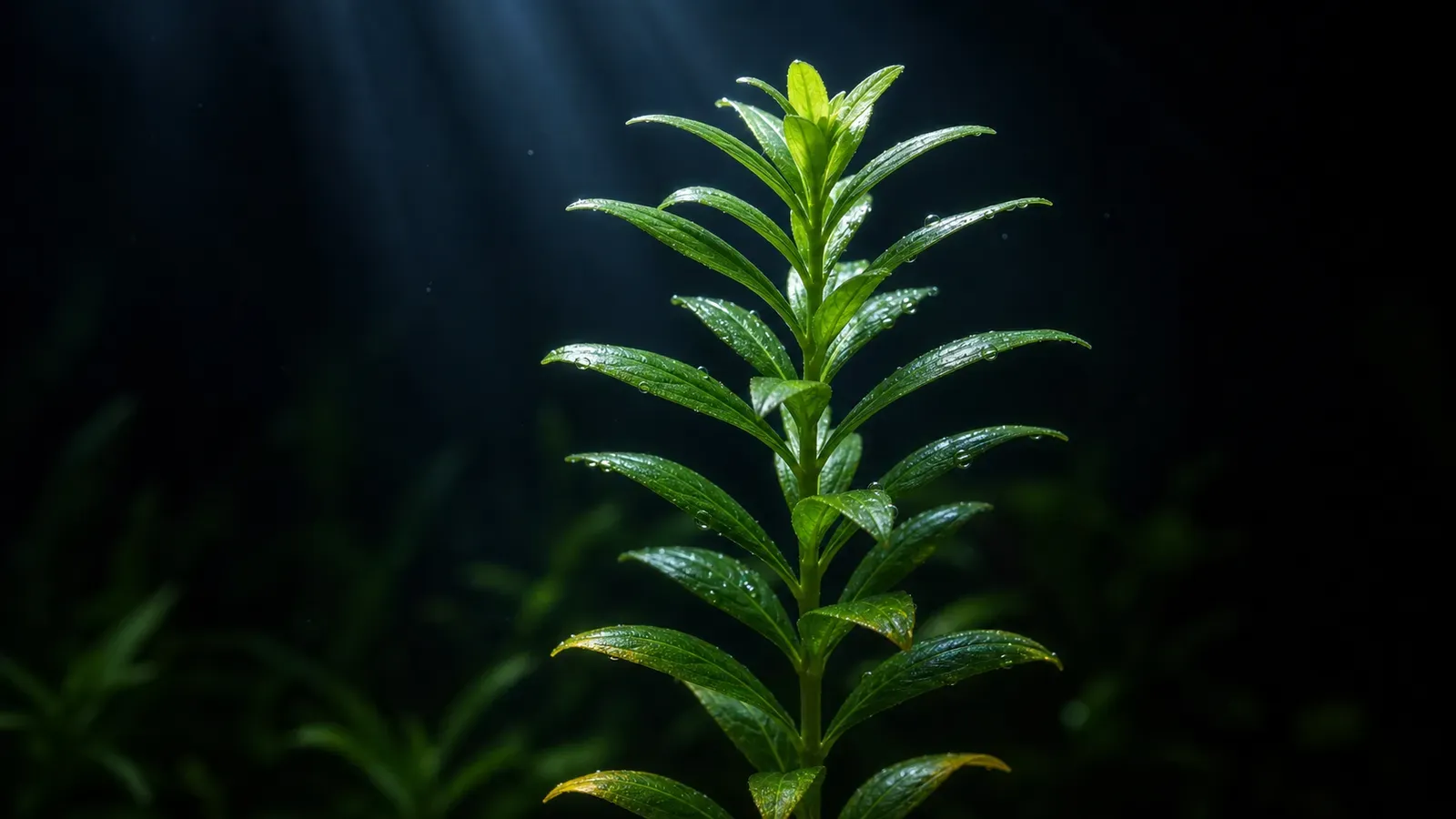
Diagnose aquarium plant deficiencies by leaf age and symptom: yellowing, pinholes, twisting, and stunting. Read the pattern, then fix it safely.
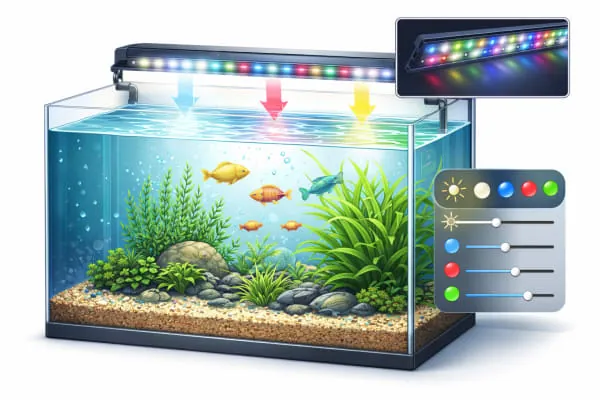
PAR-first planted tank lighting: choose intensity by what you grow, set photoperiod and spectrum, kill shadows, and hold algae back without overspending.

Aquarium CO₂ injection made safe: how carbon, light, and nutrients balance, which system to buy, and how to dial it in without gassing your fish.
Keeping Java Fern?
AquaLens identifies your fish and plants from a photo, tracks water chemistry, and flags health issues early — free on iOS and Android.