Lawnmower Blenny Care Guide
Salarias fasciatus · Saltwater Blenny
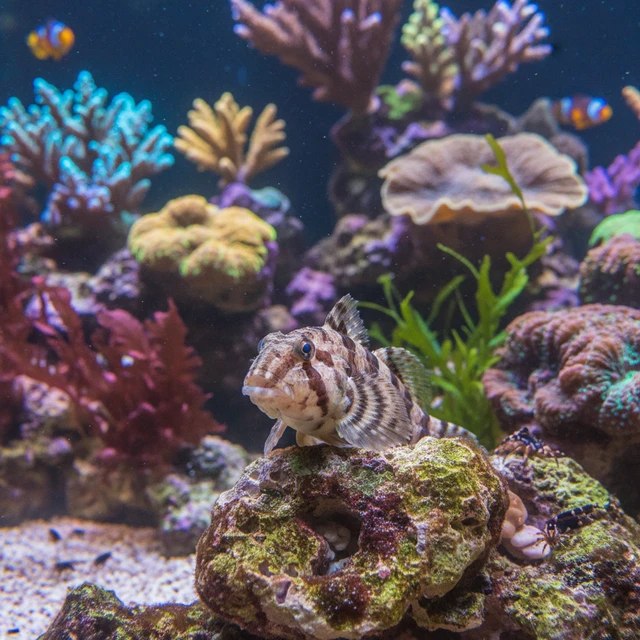
What Lawnmower Blenny look like
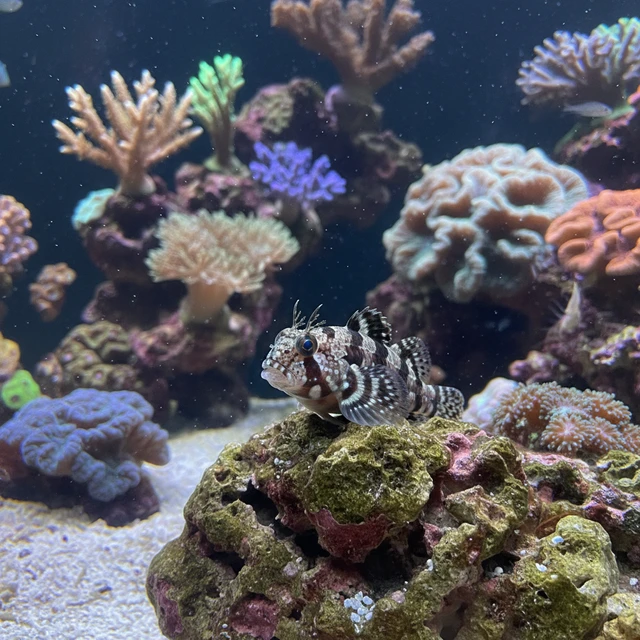
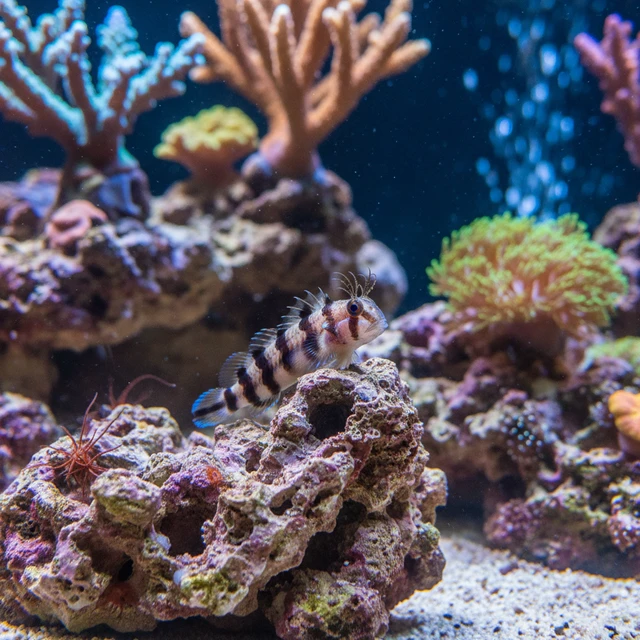
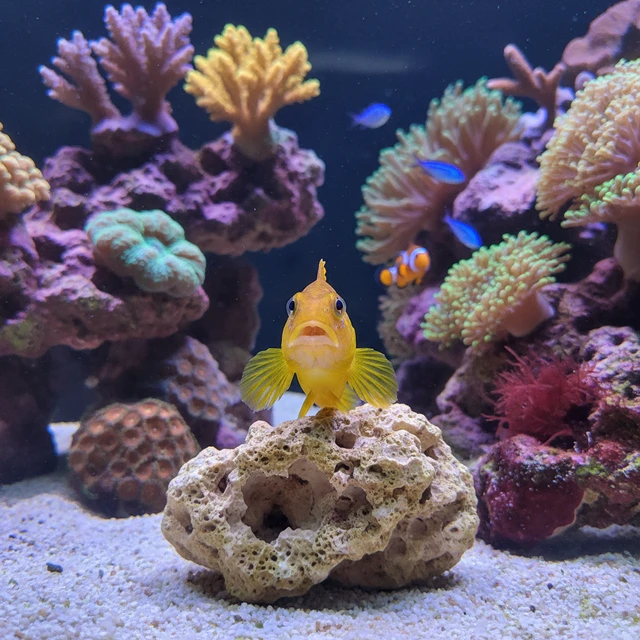
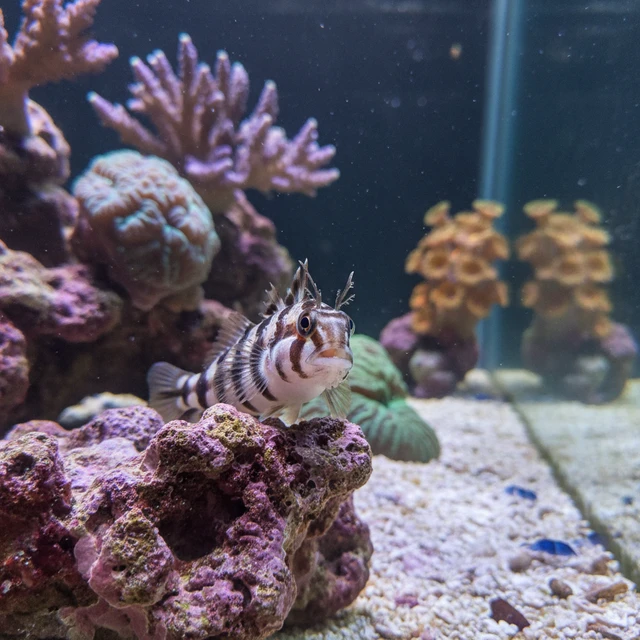
The Lawnmower Blenny (Salarias fasciatus) exhibits a streamlined, elongated body that can reach a maximum adult size of approximately 4 inches (10 cm). Its coloration is predominantly a mottled greenish-brown, with distinctive dark vertical stripes that provide effective camouflage among algae-covered substrates. The head is relatively large with a blunt snout, and the mouth is equipped with a set of small, comb-like teeth adapted for scraping algae from surfaces. The dorsal fin is continuous and extends along the back, characterized by a series of spines that can be raised for defense, while the pectoral fins are broad and fan-like, allowing for agile maneuvering. Sexual dimorphism is subtle, with males typically displaying slightly more vibrant coloration and larger dorsal fin extensions during breeding periods. The species possesses a unique adaptation in its ability to change color intensity based on environmental conditions and stress levels, enhancing its survival in the wild.
Behavior & temperament
Lawnmower Blennies are generally solitary or found in small groups, establishing a loose social hierarchy based on size and dominance. They are primarily benthic dwellers, often seen perched on rocks or coral, where they engage in grazing behavior. During breeding, males establish territories and perform courtship displays, which include fin flaring and body posturing to attract females. Their temperament is typically peaceful, although they can exhibit territorial aggression towards other blennies or similar-sized fish. This species is known for its unique behavior of 'hovering' near algae patches while using its specialized teeth to scrape and consume algae, making it an important contributor to reef health.
Diet & feeding
Lawnmower Blennies are primarily herbivorous, feeding on a diet consisting mainly of filamentous algae and diatoms. In captivity, they require a diet rich in algae, such as dried seaweed sheets, and may benefit from supplemental herbivore pellets or frozen foods containing vegetable matter.
Behind the name
The genus name 'Salarias' is derived from the Latin word 'salarius', meaning 'of salt', referring to their marine habitat, while the species name 'fasciatus' comes from the Latin 'fascis', meaning 'band' or 'stripe', indicative of the fish's striped appearance.
Plan your tank
Check the numbers before you buy: tank volume, salinity, salt mix, water changes, and your ongoing care routine. Keeping reef? Start from the Saltwater & Reef hub.
Keep reading
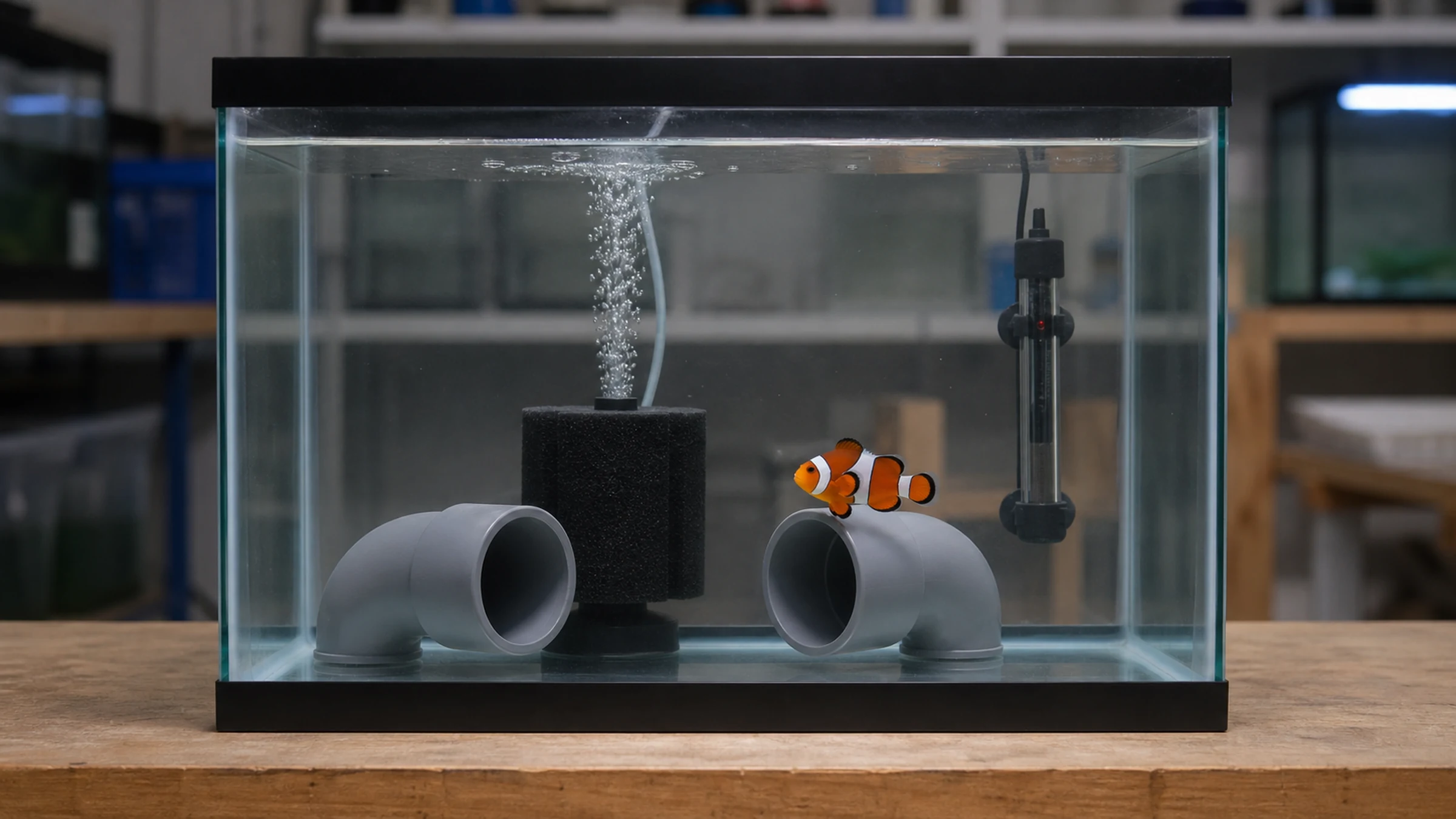
How to quarantine new saltwater fish against marine ich, velvet, and brooklynella: the QT tank, treatments, timelines, and the buy-clean shortcut.

What every reef parameter means and where to keep it: salinity, temperature, pH, alkalinity, calcium, magnesium, nitrate, and phosphate.

Choose compatible fish: school sizes, swimming zones, aggression, temperature and hardness matching, and honest bioload math for a peaceful community.
Keeping Lawnmower Blenny?
AquaLens identifies your fish and plants from a photo, tracks water chemistry, and flags health issues early — free on iOS and Android.