Segmented Blenny Care Guide
Salarias segmentatus · Saltwater Blenny
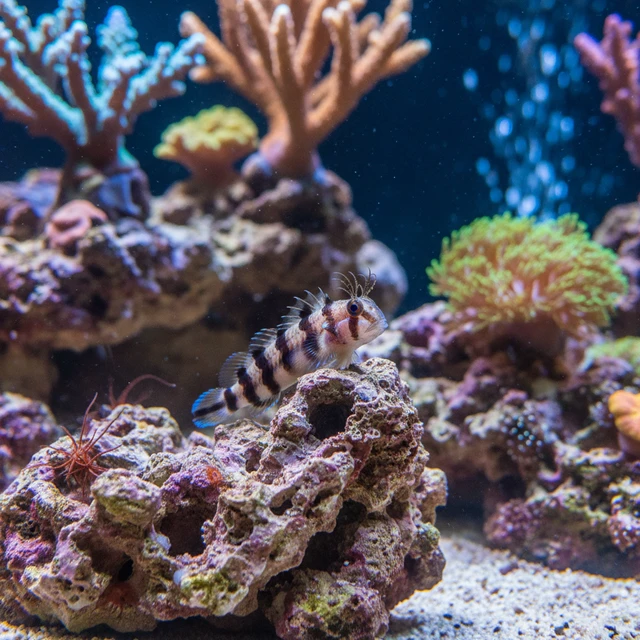
What Segmented Blenny look like
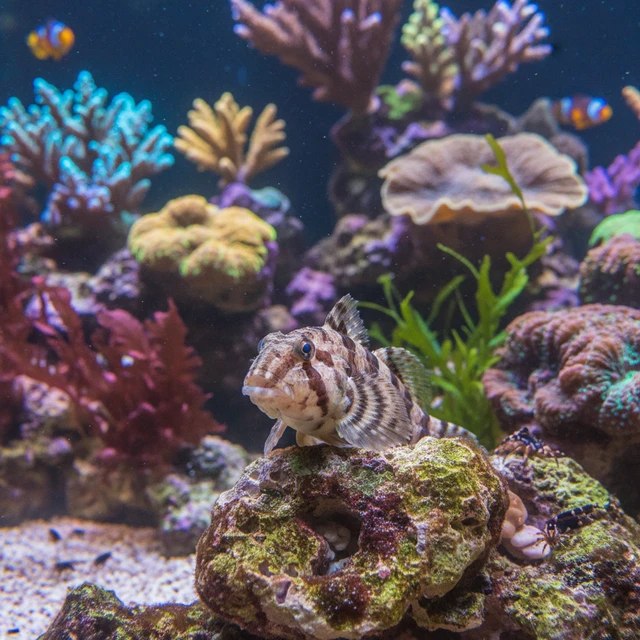
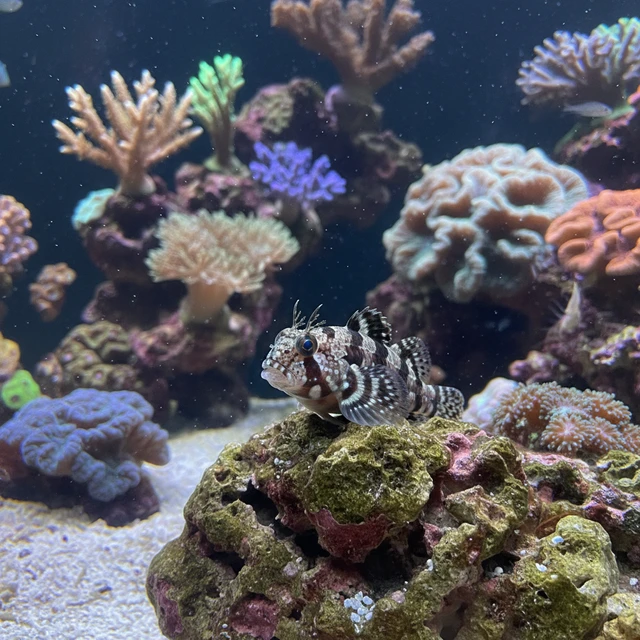
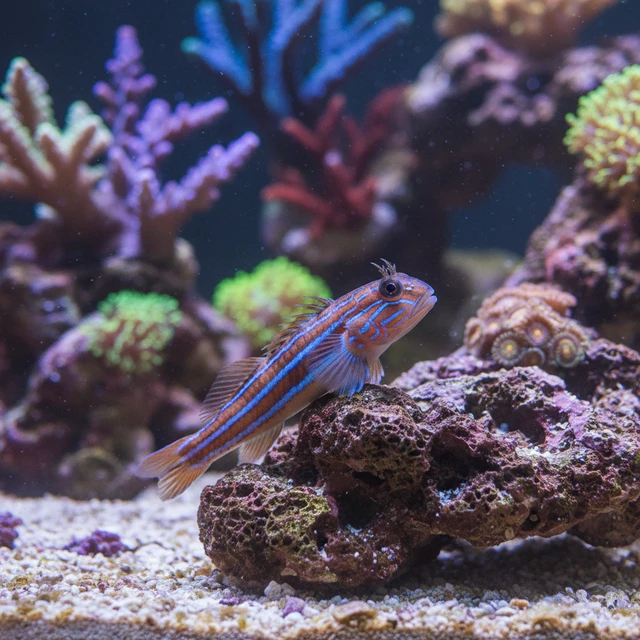
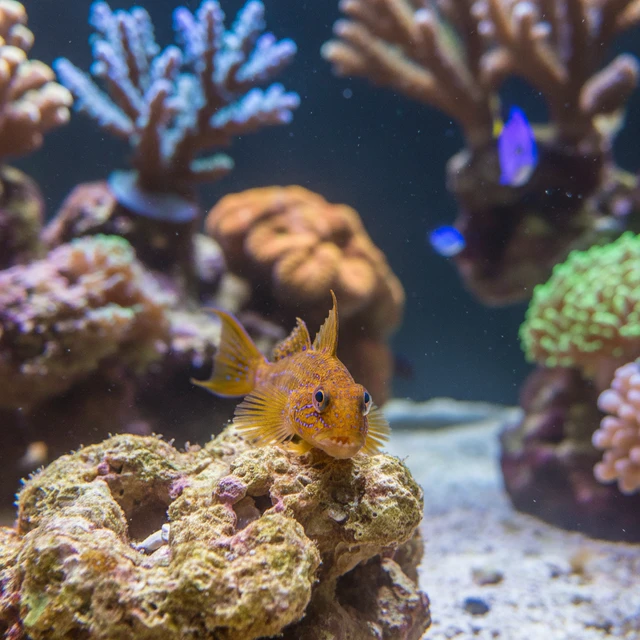
The Segmented Blenny (Salarias segmentatus) exhibits a slender, elongated body that can reach a maximum adult size of approximately 4 inches (10 cm). Its coloration is typically a blend of sandy browns and yellows, with darker vertical bands that provide effective camouflage among its natural rocky habitats. The head is somewhat flattened, featuring a prominent, rounded snout and large, expressive eyes that enhance its visual acuity. Sexual dimorphism is subtle; males tend to display slightly more vibrant coloration and larger dorsal fins during breeding seasons. A distinctive morphological feature includes the presence of a continuous dorsal fin that extends from the nape to the caudal fin, which is adorned with filamentous extensions. The lateral line is well-developed, aiding in the detection of water movements, while the dentition consists of small, comb-like teeth adapted for grazing on algae.
Behavior & temperament
Segmented Blennies are generally territorial and exhibit a social hierarchy, often establishing dominance over specific rock crevices or territories within their environment. They are primarily found at the substrate level, where they can be seen darting in and out of their hiding spots among rocks and corals. Breeding behavior involves elaborate courtship displays, where males will perform a series of swimming patterns to attract females. Their temperament can vary; while they are generally peaceful, males may exhibit aggressive behaviors towards intruders or rivals during the breeding season. Segmented Blennies are diurnal and are known to engage in foraging activities throughout the day, primarily grazing on algae and detritus.
Diet & feeding
In the wild, Segmented Blennies primarily consume a diet of algae and small invertebrates, making them effective grazers. In captivity, they require a diet rich in marine algae, supplemented with high-quality herbivore pellets and frozen foods such as spirulina and mysis shrimp.
Behind the name
The genus name 'Salarias' is derived from the Latin word 'salarius', meaning 'of the salt', referring to the fish's marine habitat. The species name 'segmentatus' is derived from the Latin 'segmentum', meaning 'segment' or 'section', likely referencing the segmented appearance of its dorsal fin.
Plan your tank
Check the numbers before you buy: tank volume, salinity, salt mix, water changes, and your ongoing care routine. Keeping reef? Start from the Saltwater & Reef hub.
Keep reading
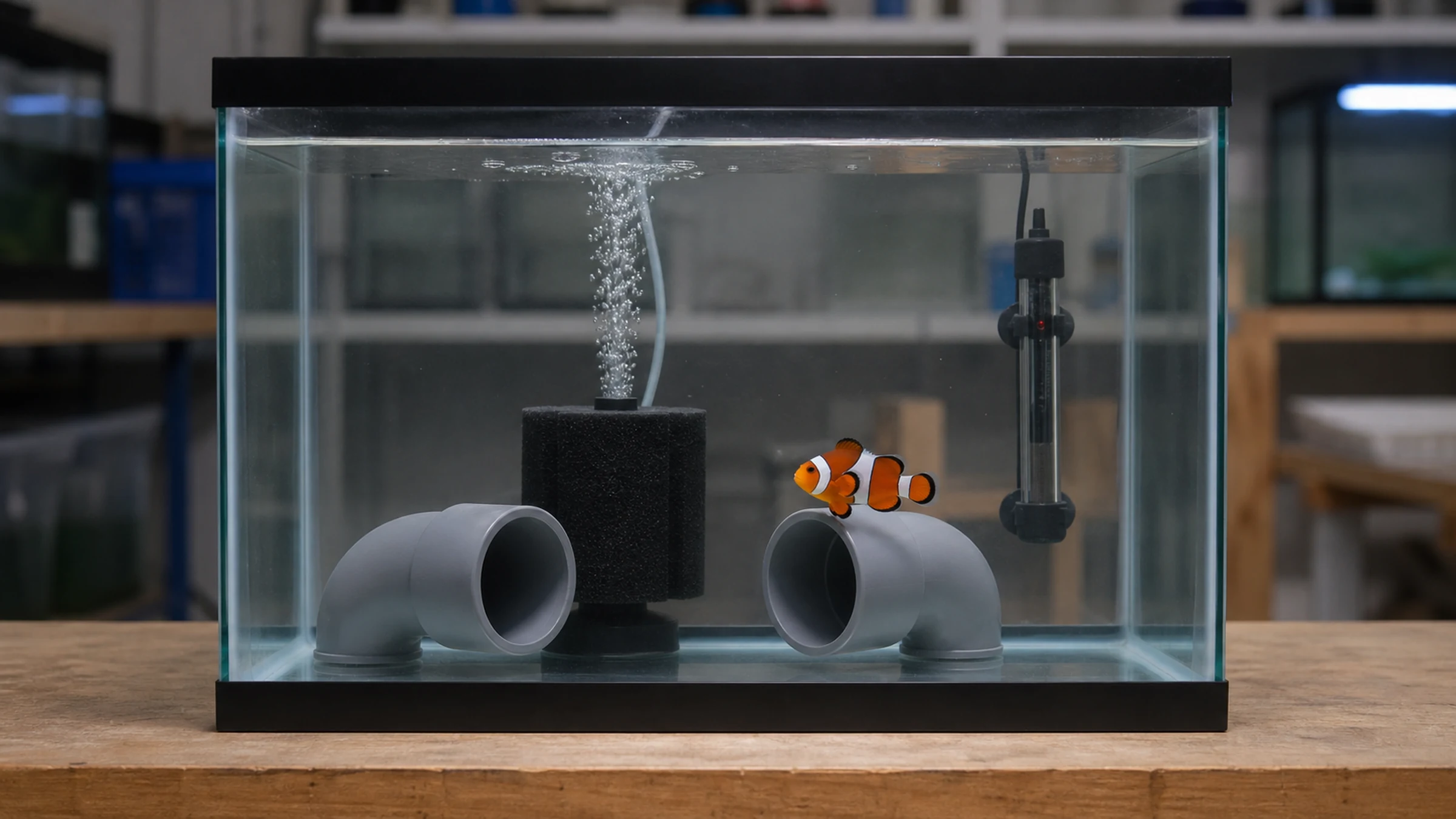
How to quarantine new saltwater fish against marine ich, velvet, and brooklynella: the QT tank, treatments, timelines, and the buy-clean shortcut.

What every reef parameter means and where to keep it: salinity, temperature, pH, alkalinity, calcium, magnesium, nitrate, and phosphate.

Choose compatible fish: school sizes, swimming zones, aggression, temperature and hardness matching, and honest bioload math for a peaceful community.
Keeping Segmented Blenny?
AquaLens identifies your fish and plants from a photo, tracks water chemistry, and flags health issues early — free on iOS and Android.