Longnose Hawkfish Care Guide
Oxycirrhites typus · Saltwater Hawkfish
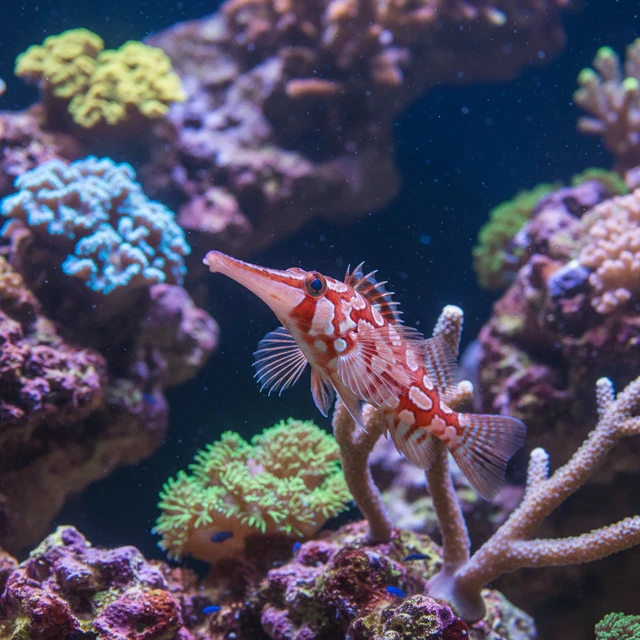
What Longnose Hawkfish look like
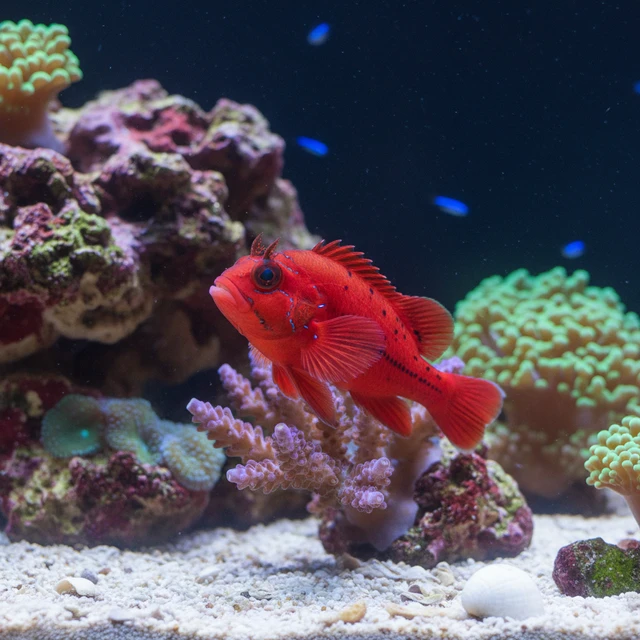
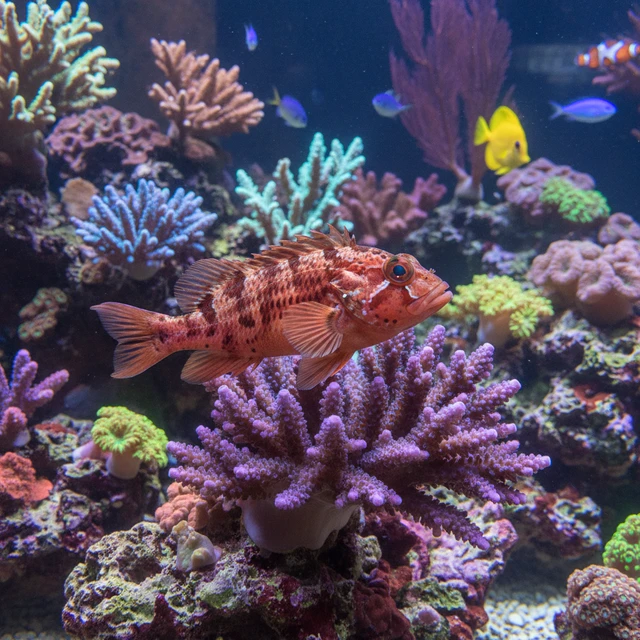
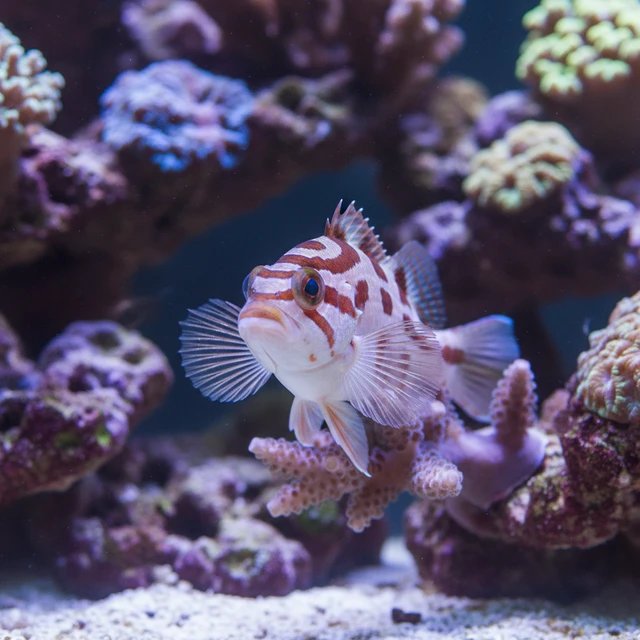
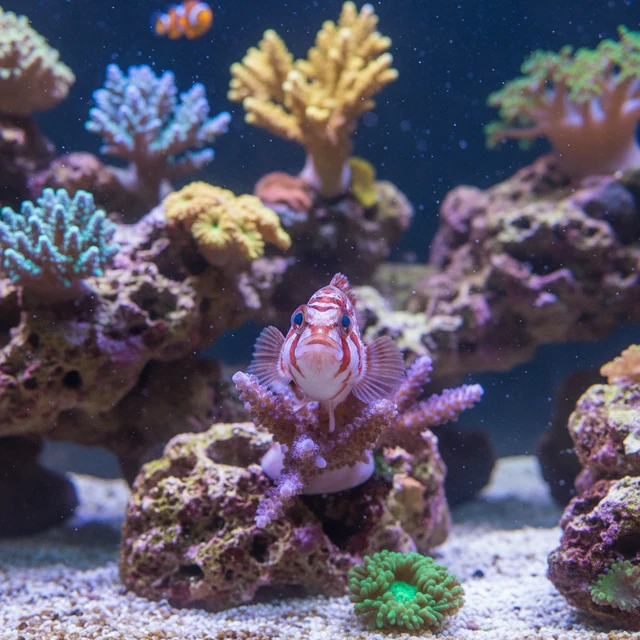
The Longnose Hawkfish (Oxycirrhites typus) exhibits a distinctive elongated body that can reach a maximum adult size of approximately 4 inches (10 cm). Its morphology is characterized by a prominent, elongated snout that tapers to a point, giving it a unique profile among hawkfish. The body is adorned with a striking pattern of red, orange, and white spots, which serve as camouflage against the coral reefs it inhabits. Sexual dimorphism is subtle, with males typically displaying slightly more vibrant coloration and larger dorsal fins than females. Defensive adaptations include a robust body and the ability to perch on coral branches, where it can evade predators. The Longnose Hawkfish possesses a well-developed lateral line system, which aids in detecting vibrations in the water, and its dentition is adapted for a carnivorous diet, featuring small, sharp teeth for grasping prey.
Behavior & temperament
The Longnose Hawkfish is known for its semi-aggressive temperament and territorial behavior, often establishing dominance hierarchies within its habitat. It typically occupies the upper levels of the reef, where it can perch on coral formations and survey its surroundings. Breeding behavior involves courtship displays, where males exhibit vibrant colors and perform specific movements to attract females. This species is generally solitary but may be observed in small groups, particularly during breeding seasons. Its feeding behavior is characterized by ambush predation, where it waits patiently for small fish and invertebrates to pass by before darting out to capture them. The Longnose Hawkfish is also known to exhibit a degree of curiosity towards divers and aquarists.
Diet & feeding
The Longnose Hawkfish is primarily carnivorous, feeding on small fish and crustaceans in its natural habitat. In captivity, it requires a varied diet that includes high-quality frozen or live foods such as mysis shrimp, brine shrimp, and small pellets.
Behind the name
The genus name 'Oxycirrhites' is derived from the Greek words 'oxy' meaning 'sharp' and 'chirros' meaning 'hair', referring to the sharp, elongated dorsal fin spines. The species name 'typus' is Latin for 'type' or 'model', indicating its representative status within the family.
Plan your tank
Check the numbers before you buy: tank volume, salinity, salt mix, water changes, and your ongoing care routine. Keeping reef? Start from the Saltwater & Reef hub.
Keep reading
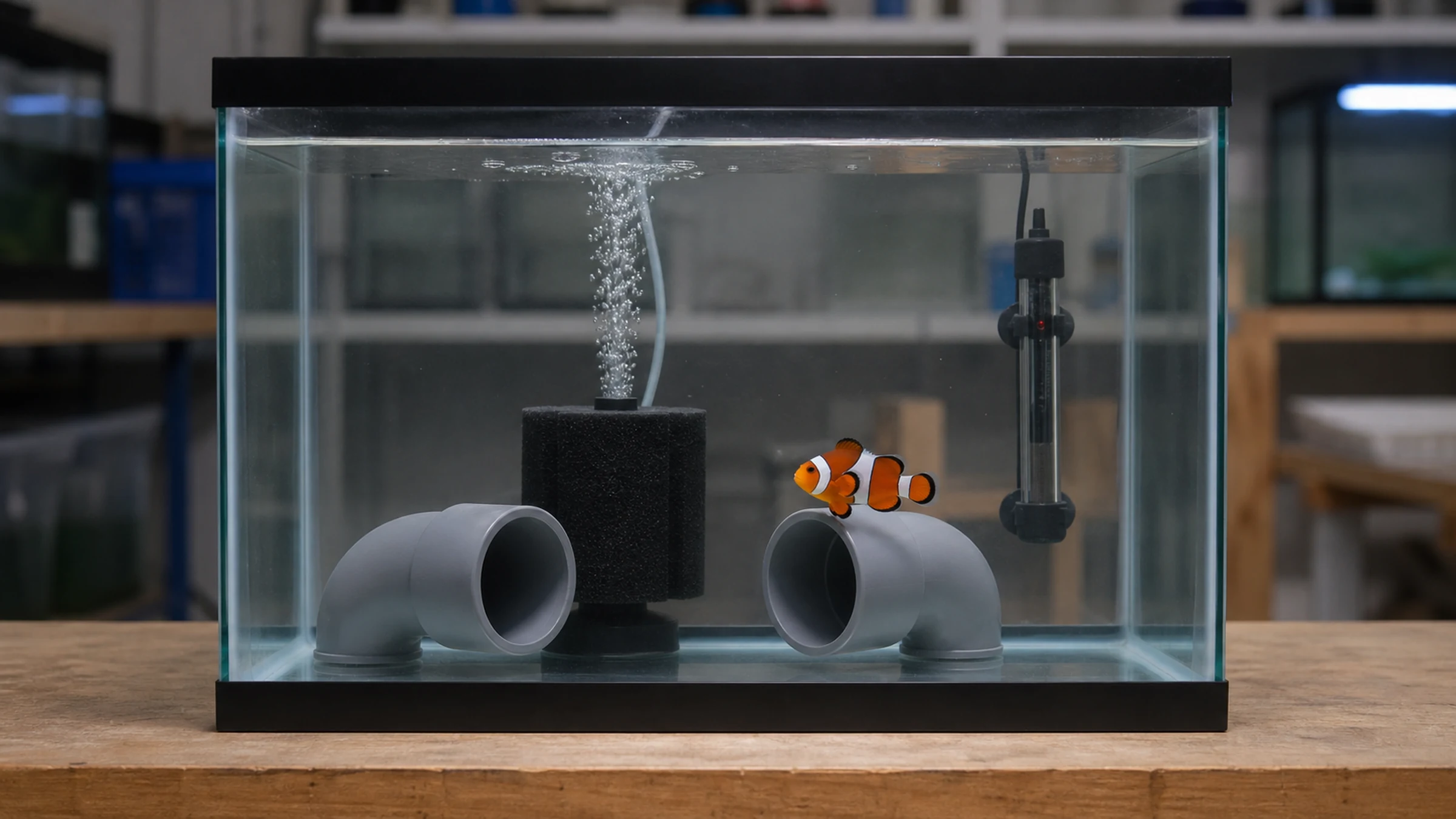
How to quarantine new saltwater fish against marine ich, velvet, and brooklynella: the QT tank, treatments, timelines, and the buy-clean shortcut.

What every reef parameter means and where to keep it: salinity, temperature, pH, alkalinity, calcium, magnesium, nitrate, and phosphate.
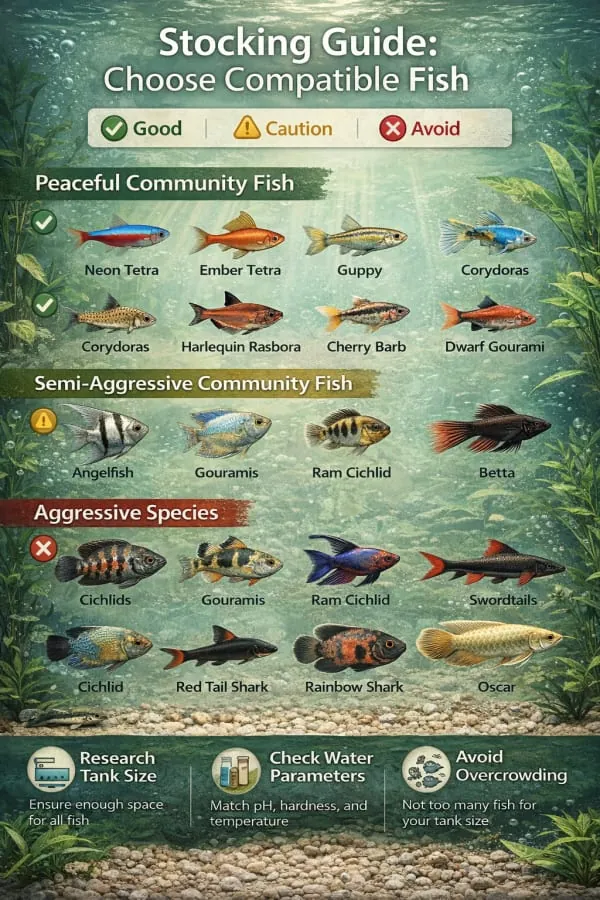
Choose compatible fish: school sizes, swimming zones, aggression, temperature and hardness matching, and honest bioload math for a peaceful community.
Keeping Longnose Hawkfish?
AquaLens identifies your fish and plants from a photo, tracks water chemistry, and flags health issues early — free on iOS and Android.