Mantis Shrimp Care Guide
Odontodactylus scyllarus · Saltwater Shrimp
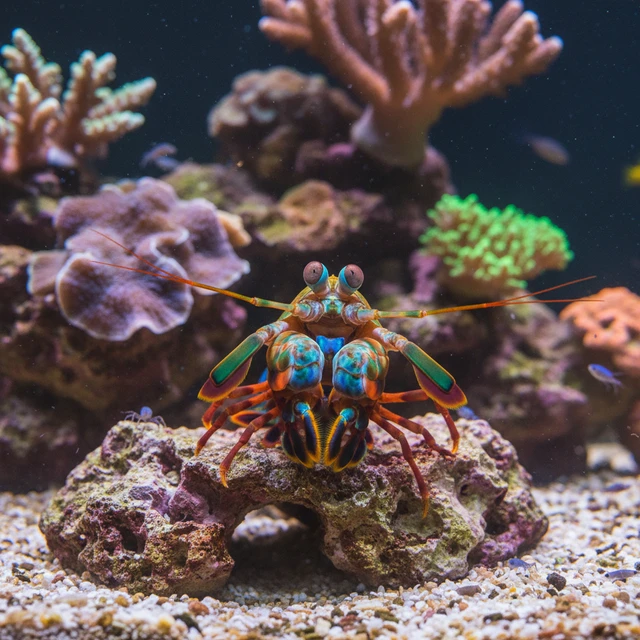
What Mantis Shrimp look like
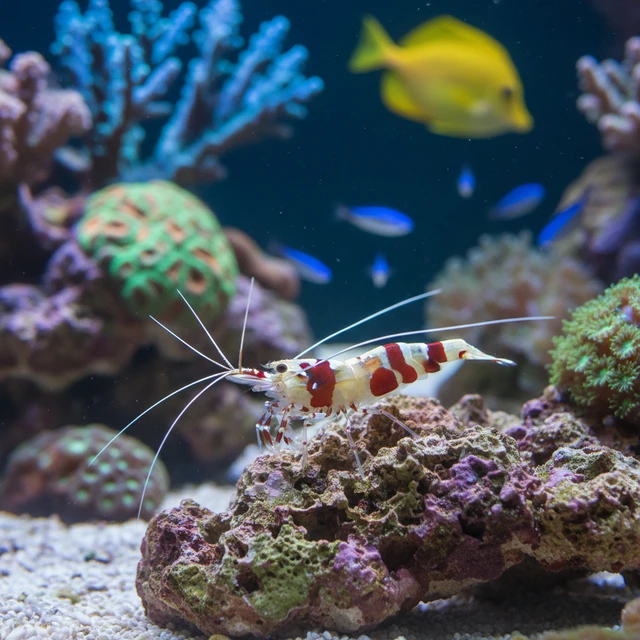
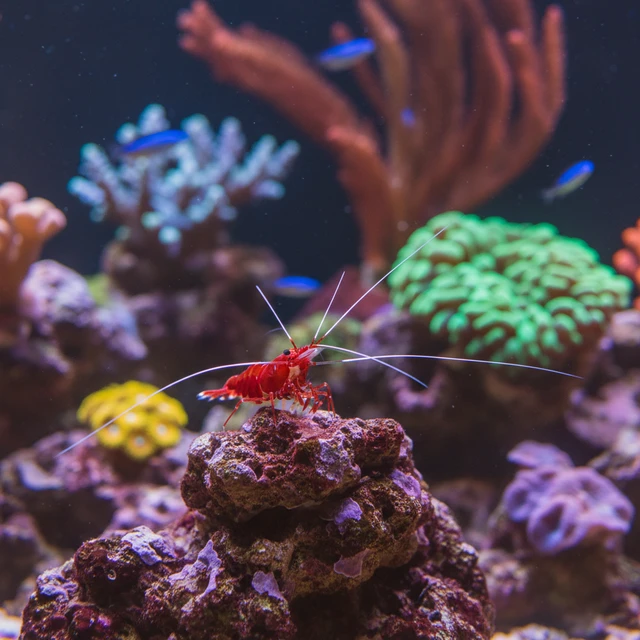
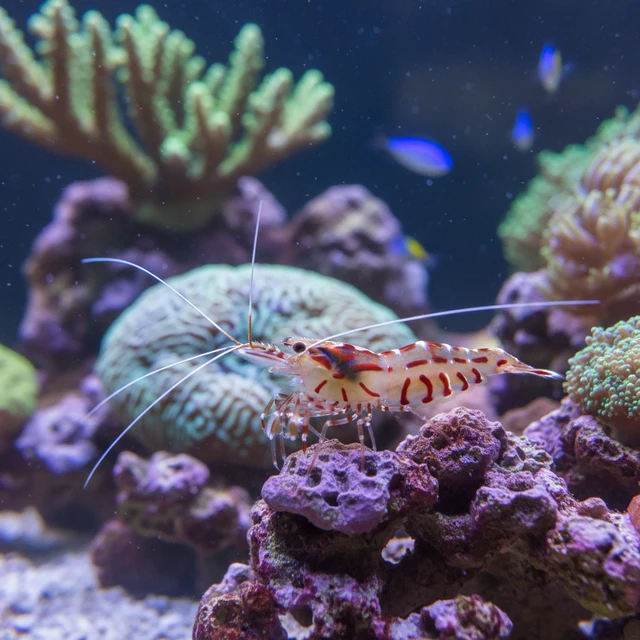
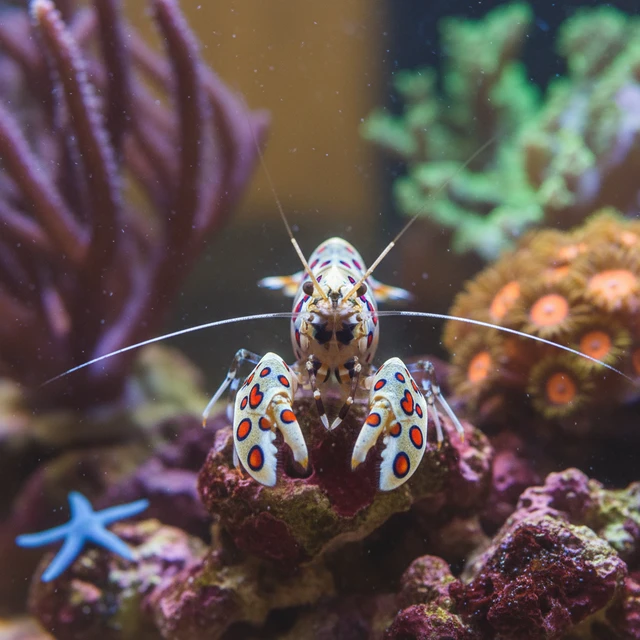
Odontodactylus scyllarus, commonly known as the peacock mantis shrimp, exhibits a strikingly vibrant coloration with a carapace that can display hues of blue, green, and orange. This species can reach a maximum adult size of approximately 7 inches (18 cm) in length. Sexual dimorphism is present, with females typically being slightly larger than males. The mantis shrimp possesses a robust exoskeleton and specialized raptorial appendages, which are adapted for both hunting and defense; these appendages can deliver a powerful strike capable of breaking glass. Unique morphological features include a complex compound eye structure with trinocular vision, allowing them to perceive polarized light and a broad spectrum of colors. The body is elongated with a distinct thorax and abdomen, and the segmented pleopods are adapted for swimming, while the telson is broad and flattened, aiding in rapid movement.
Behavior & temperament
The peacock mantis shrimp is known for its complex social behaviors and territoriality. They are generally solitary and exhibit aggressive behaviors towards intruders, establishing dominance hierarchies within their territories. Mating rituals involve elaborate displays of color and movement, with courtship often accompanied by aggressive posturing. They are primarily benthic dwellers, residing in burrows or crevices, and exhibit ambush predation techniques, utilizing their raptorial appendages to strike at prey with incredible speed and precision. Their temperament can vary, but they are often considered aggressive, particularly when defending their territory or during breeding.
Diet & feeding
Odontodactylus scyllarus is a carnivorous predator, primarily feeding on small crustaceans, mollusks, and other invertebrates. In captivity, they require a diet rich in protein, including live or frozen shrimp, fish, and other meaty foods.
Behind the name
The genus name 'Odontodactylus' derives from the Greek words 'odous' meaning 'tooth' and 'dactylus' meaning 'finger', referring to the tooth-like structure of their raptorial appendages. The species name 'scyllarus' is derived from the Greek word 'scyllarus', which refers to a type of fish, possibly indicating its predatory nature.
Plan your tank
Check the numbers before you buy: tank volume, salinity, salt mix, water changes, and your ongoing care routine. Keeping reef? Start from the Saltwater & Reef hub.
Keep reading
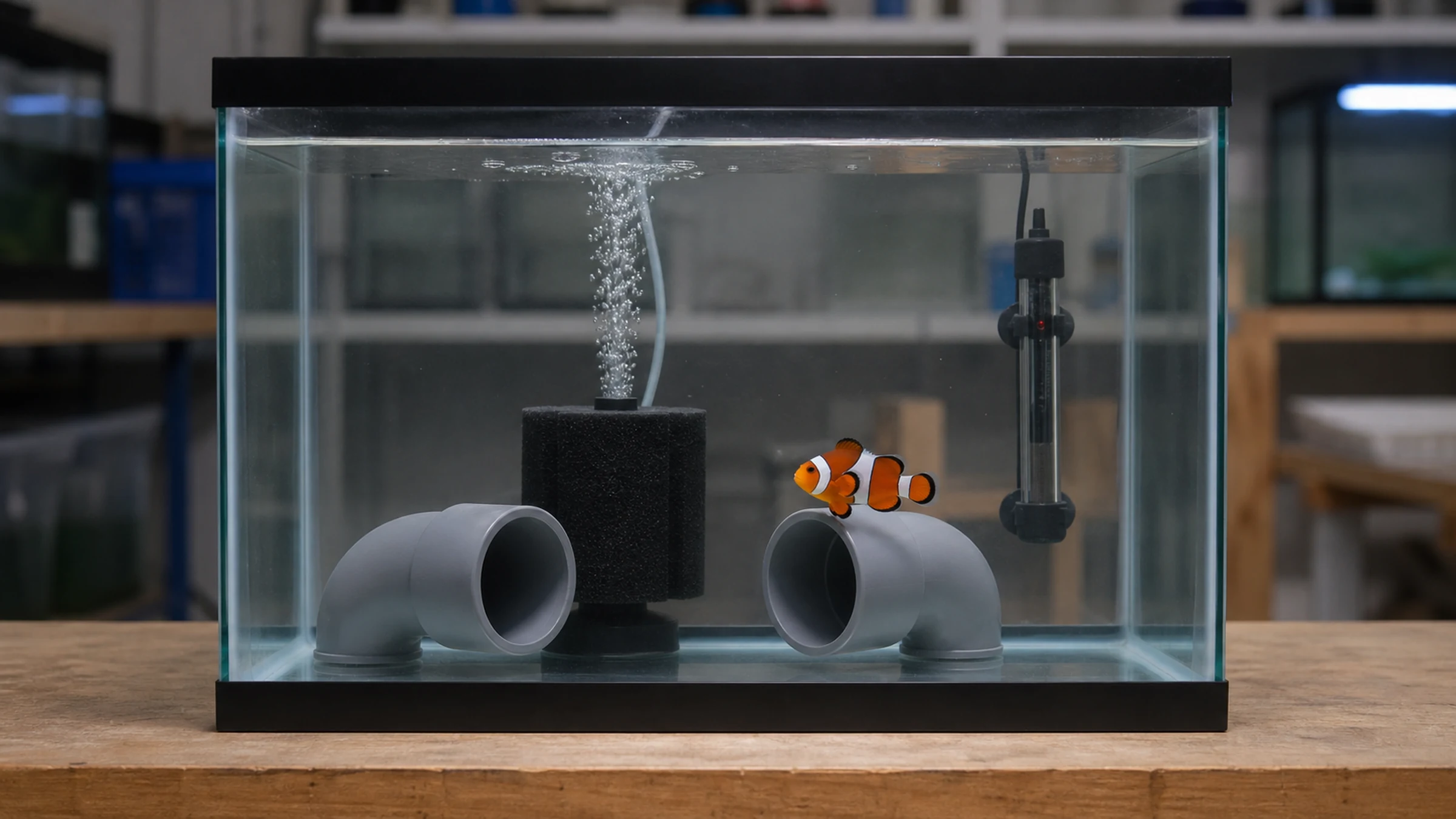
How to quarantine new saltwater fish against marine ich, velvet, and brooklynella: the QT tank, treatments, timelines, and the buy-clean shortcut.

What every reef parameter means and where to keep it: salinity, temperature, pH, alkalinity, calcium, magnesium, nitrate, and phosphate.
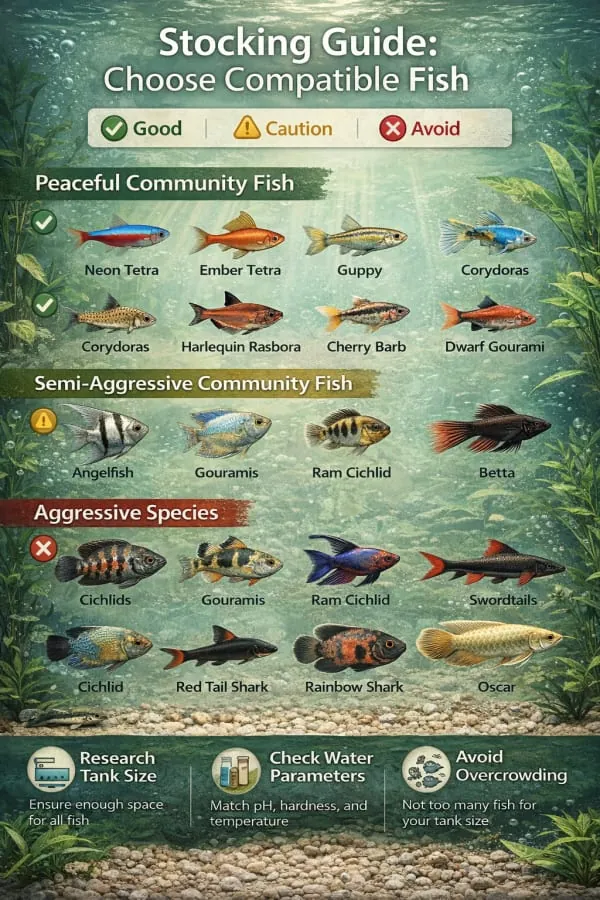
Choose compatible fish: school sizes, swimming zones, aggression, temperature and hardness matching, and honest bioload math for a peaceful community.
Keeping Mantis Shrimp?
AquaLens identifies your fish and plants from a photo, tracks water chemistry, and flags health issues early — free on iOS and Android.