Peacock Gudgeon Care Guide
Tateurndina ocellicauda · Freshwater Fish
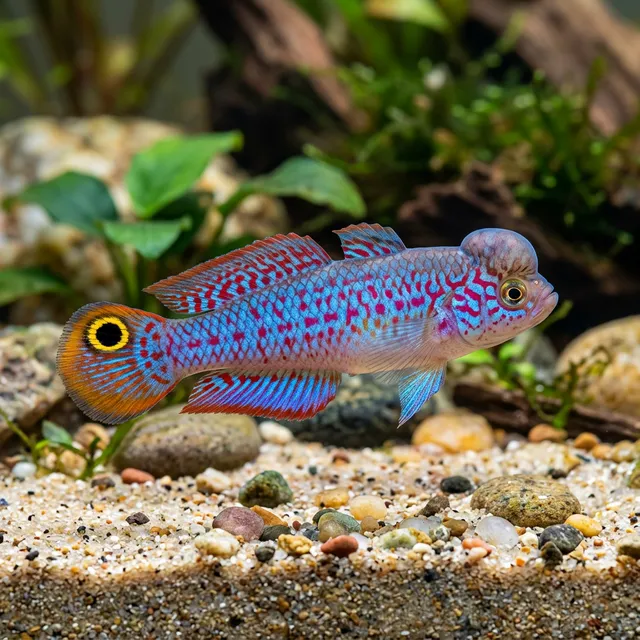
What Peacock Gudgeon look like
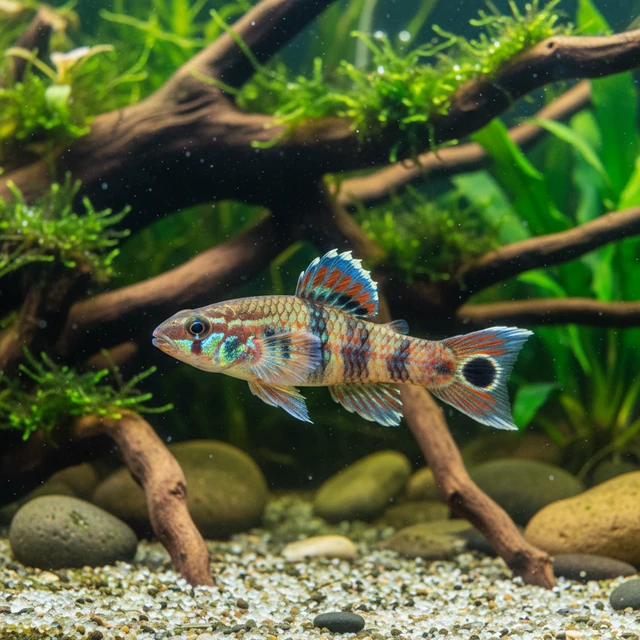
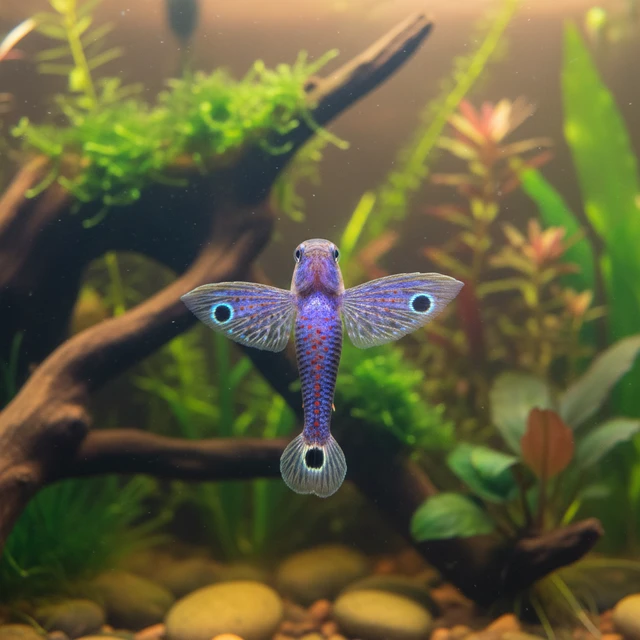
The Peacock Gudgeon (Tateurndina ocellicauda) exhibits a laterally compressed, elongated body structure, typically reaching a maximum adult size of 5 to 12 cm. Males are distinguished by a prominent nuchal hump, particularly pronounced during breeding periods, while females tend to be more streamlined. The species showcases a striking iridescent blue coloration adorned with vibrant red-pink spots and markings, creating a visually captivating display. Notably, the caudal fin features a distinctive black ocellus, encircled by a bright yellow ring, which serves as a unique morphological trait. The pelvic fins are also blue, contributing to the overall aesthetic appeal. The body shimmers with a combination of blue and pink iridescence, enhancing its visibility in its natural habitat. Defensive adaptations include its small size and the ability to blend into the substrate, which aids in evasion from predators.
Behavior & temperament
The Peacock Gudgeon is primarily a benthic fish that exhibits a peaceful temperament and is often found dwelling near the substrate of freshwater habitats in Papua. It is not an obligate schooler but tends to form loose aggregations, particularly during breeding. The species engages in a unique breeding behavior where males establish territories and display to attract females, often performing elaborate courtship rituals. Their social hierarchy is relatively flat, with no strict dominance; however, males can exhibit territorial aggression during the breeding season. Overall, they are known for their inquisitive nature and can display some shyness, particularly in the presence of larger or more aggressive tank mates.
Diet & feeding
In the wild, the Peacock Gudgeon is an omnivore, feeding on a varied diet that includes small invertebrates, detritus, and plant matter. In captivity, they require a balanced diet consisting of high-quality flake food, live or frozen foods such as brine shrimp and daphnia, along with occasional vegetable matter to ensure optimal health.
Behind the name
Tateurndina (from Latin, meaning 'to be in the water'; ocellicauda from Latin, meaning 'eye tail', referring to the distinctive eyespot on the tail fin).
Plan your tank
Check the numbers before you buy: tank volume, a stocking plan, cycle progress, water changes, and your ongoing care routine.
Keep reading
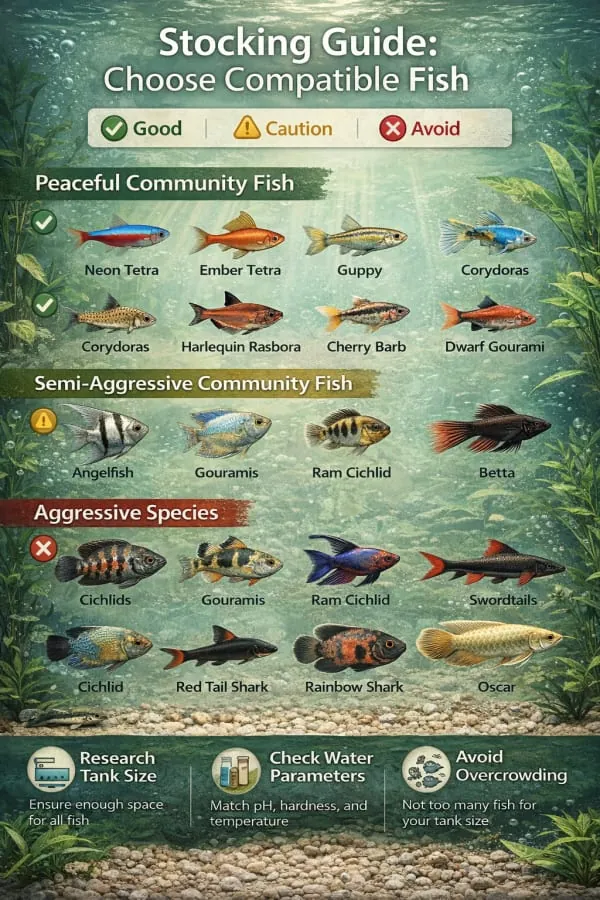
Choose compatible fish: school sizes, swimming zones, aggression, temperature and hardness matching, and honest bioload math for a peaceful community.
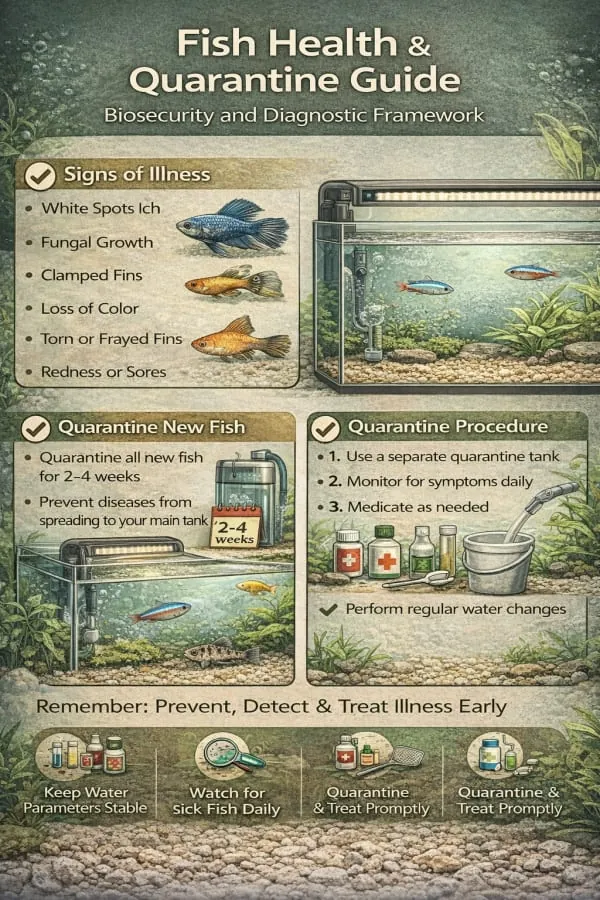
Quarantine new fish, spot the early warning signs, and treat disease without wrecking your tank. A practical freshwater fish health guide.
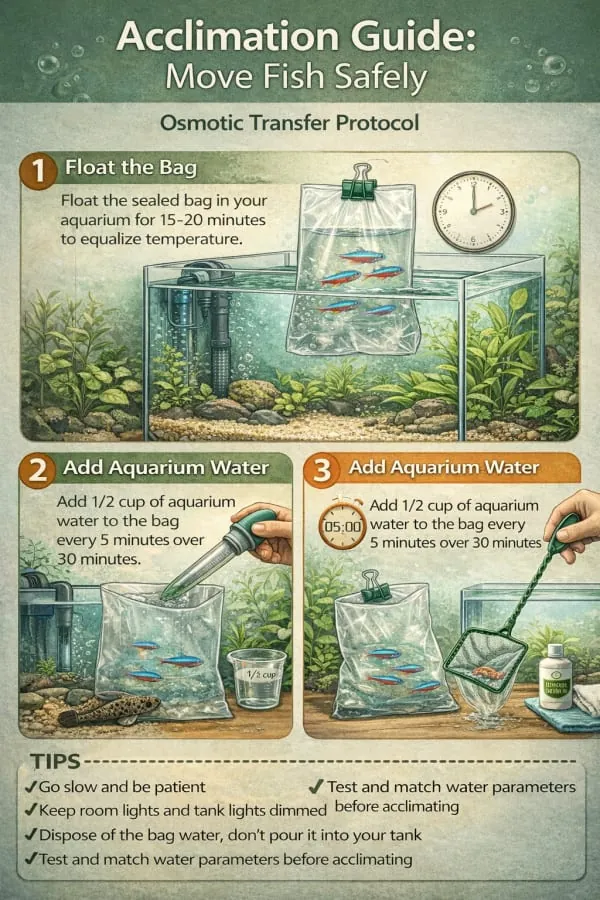
Acclimate new fish, shrimp, and coral safely: temperature floating, drip acclimation, plop-and-drop for shipped livestock, and the first 24 hours.
Keeping Peacock Gudgeon?
AquaLens identifies your fish and plants from a photo, tracks water chemistry, and flags health issues early — free on iOS and Android.