
Crystalwort Care Guide
Riccia fluitans · Freshwater Plant
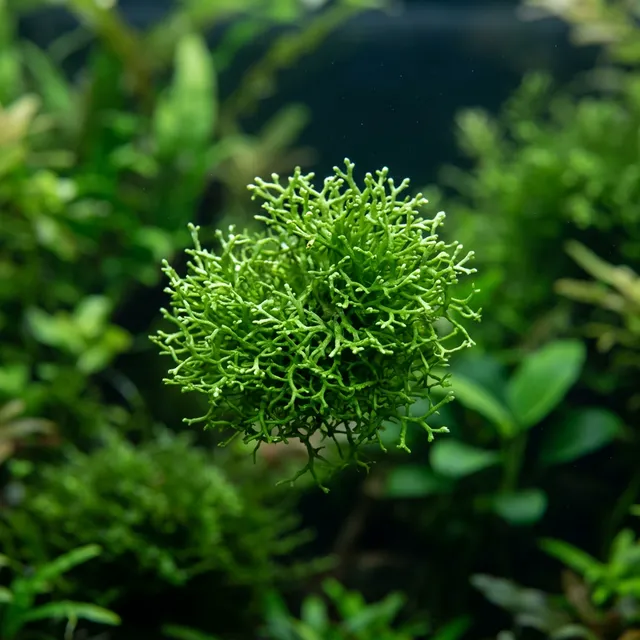
What Crystalwort look like
Riccia fluitans, commonly known as Crystalwort, exhibits a distinctive morphology characterized by its thalloid structure, which is typically bright green and can reach a maximum size of 5-15 centimeters in length. The plant is composed of flattened, lobed thalli that are often described as being ribbon-like or leaf-like in appearance, with a smooth and glossy surface that reflects light, contributing to its name. This species lacks true roots, stems, and leaves, instead possessing a simple, thallus-based structure that allows it to float on the water's surface or grow submerged. Crystalwort does not display sexual dimorphism, as it reproduces asexually through fragmentation and sexually via the production of gametes in specialized structures. Defensive adaptations include the ability to form dense mats that can inhibit the growth of competing algae and provide habitat for small aquatic organisms. Unique morphological features include its ability to absorb nutrients directly from the water column and its capacity to thrive in a variety of aquatic environments, making it a versatile addition to aquatic ecosystems.
Behavior & temperament
In terms of ethology, Riccia fluitans is primarily a benthic and floating plant that thrives in still or slow-moving waters, often forming dense colonies that can cover the substrate or float on the surface. It does not exhibit social hierarchy or schooling behavior, as it is a non-motile organism. Crystalwort reproduces through both asexual fragmentation and sexual reproduction, with gametophytes producing gametes in favorable conditions. This species is not aggressive and does not exhibit territorial behavior, instead providing a habitat for various aquatic organisms and contributing to the overall biodiversity of its environment. Its growth patterns can be influenced by water quality and light availability, making it a responsive species in aquatic ecosystems.
Diet & feeding
Riccia fluitans is an omnivorous aquatic plant that derives its nutrients from the water column through absorption, requiring a nutrient-rich environment to thrive. In captivity, it benefits from a substrate rich in organic matter and may require additional fertilization with liquid fertilizers to ensure optimal growth and health.
Behind the name
Riccia (derived from the Latin 'riccia', meaning 'a small, thin plant'); fluitans (from the Latin 'fluere', meaning 'to flow', referring to its floating nature).
Plan your tank
Check the numbers before you buy: tank volume, a stocking plan, cycle progress, water changes, and your ongoing care routine.
Keep reading
Diagnose aquarium plant deficiencies by leaf age and symptom: yellowing, pinholes, twisting, and stunting. Read the pattern, then fix it safely.

PAR-first planted tank lighting: choose intensity by what you grow, set photoperiod and spectrum, kill shadows, and hold algae back without overspending.

Aquarium CO₂ injection made safe: how carbon, light, and nutrients balance, which system to buy, and how to dial it in without gassing your fish.
Keeping Crystalwort?
AquaLens identifies your fish and plants from a photo, tracks water chemistry, and flags health issues early — free on iOS and Android.