Pot-bellied Seahorse Care Guide
Hippocampus abdominalis · Saltwater Seahorse
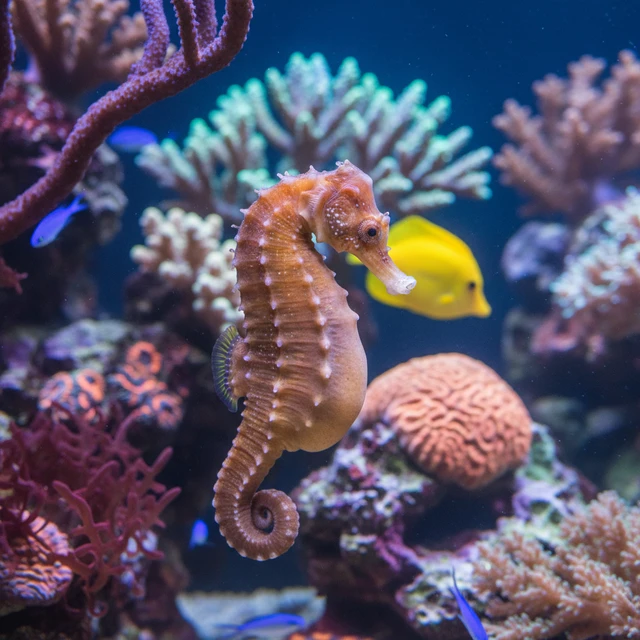
What Pot-bellied Seahorse look like
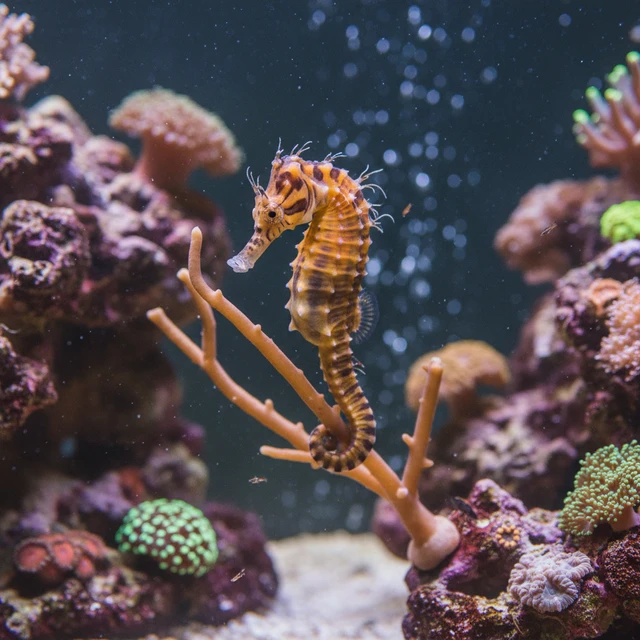
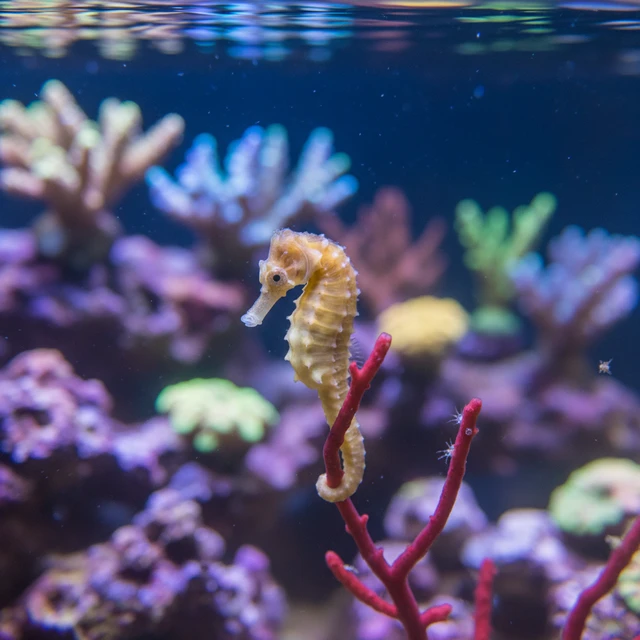
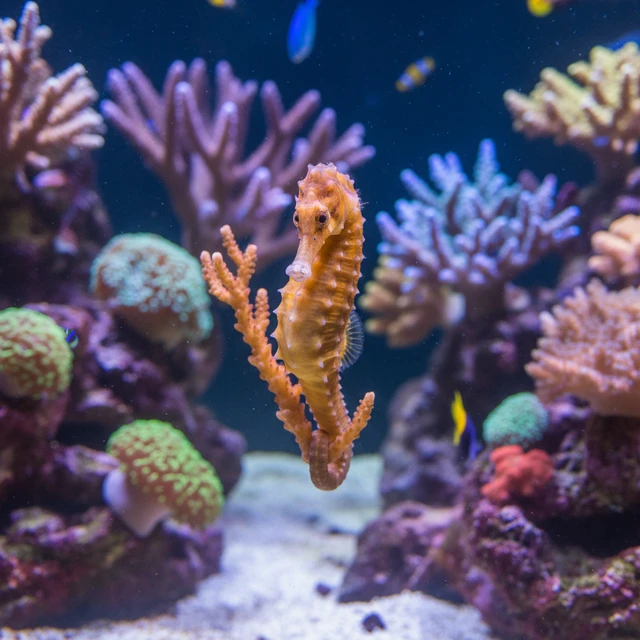
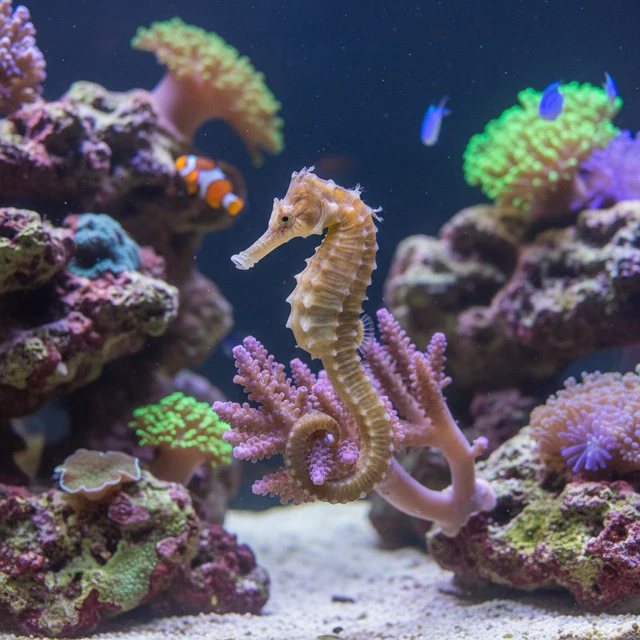
The Pot-bellied Seahorse (Hippocampus abdominalis) exhibits a distinctive morphology characterized by a robust, rounded body that can reach a maximum adult size of approximately 12 inches (30 cm). Its body is encased in bony plates, providing structural support and protection, while the elongated snout is adapted for feeding. Sexual dimorphism is evident, with males possessing a brood pouch located on their ventral side, which is used for carrying and nurturing embryos. This species displays a prehensile tail that allows it to anchor itself to seagrasses and corals, enhancing its camouflage against predators. The dorsal fin is small and located on the back, while the pectoral fins, situated behind the eyes, are used for steering and stabilization during swimming. Unique to seahorses, the Pot-bellied Seahorse lacks a typical fish shape, instead presenting a horse-like appearance, which contributes to its common name.
Behavior & temperament
Pot-bellied Seahorses are generally solitary or found in loose aggregations, displaying a non-territorial nature. They are typically found at various swimming levels, often hovering near the substrate or among vegetation. Breeding behavior is particularly fascinating; males perform a courtship dance that can last several days, involving synchronized swimming and color changes. The male then transfers fertilized eggs into his brood pouch, where they develop until birth. In terms of temperament, they are relatively peaceful, but may exhibit stress when housed with overly aggressive tank mates. Their movement is often slow and deliberate, relying on their ability to blend into their surroundings for protection.
Diet & feeding
In the wild, the Pot-bellied Seahorse primarily feeds on small crustaceans, such as copepods and amphipods, as well as other tiny zooplankton. In captivity, they require a diet of live or frozen foods, including brine shrimp and mysis shrimp, to ensure proper nutrition and health.
Behind the name
The genus name 'Hippocampus' is derived from the Greek words 'hippos' meaning 'horse' and 'kampos' meaning 'sea monster', while the species name 'abdominalis' refers to the location of the brood pouch on the abdomen of males.
Plan your tank
Check the numbers before you buy: tank volume, salinity, salt mix, water changes, and your ongoing care routine. Keeping reef? Start from the Saltwater & Reef hub.
Keep reading
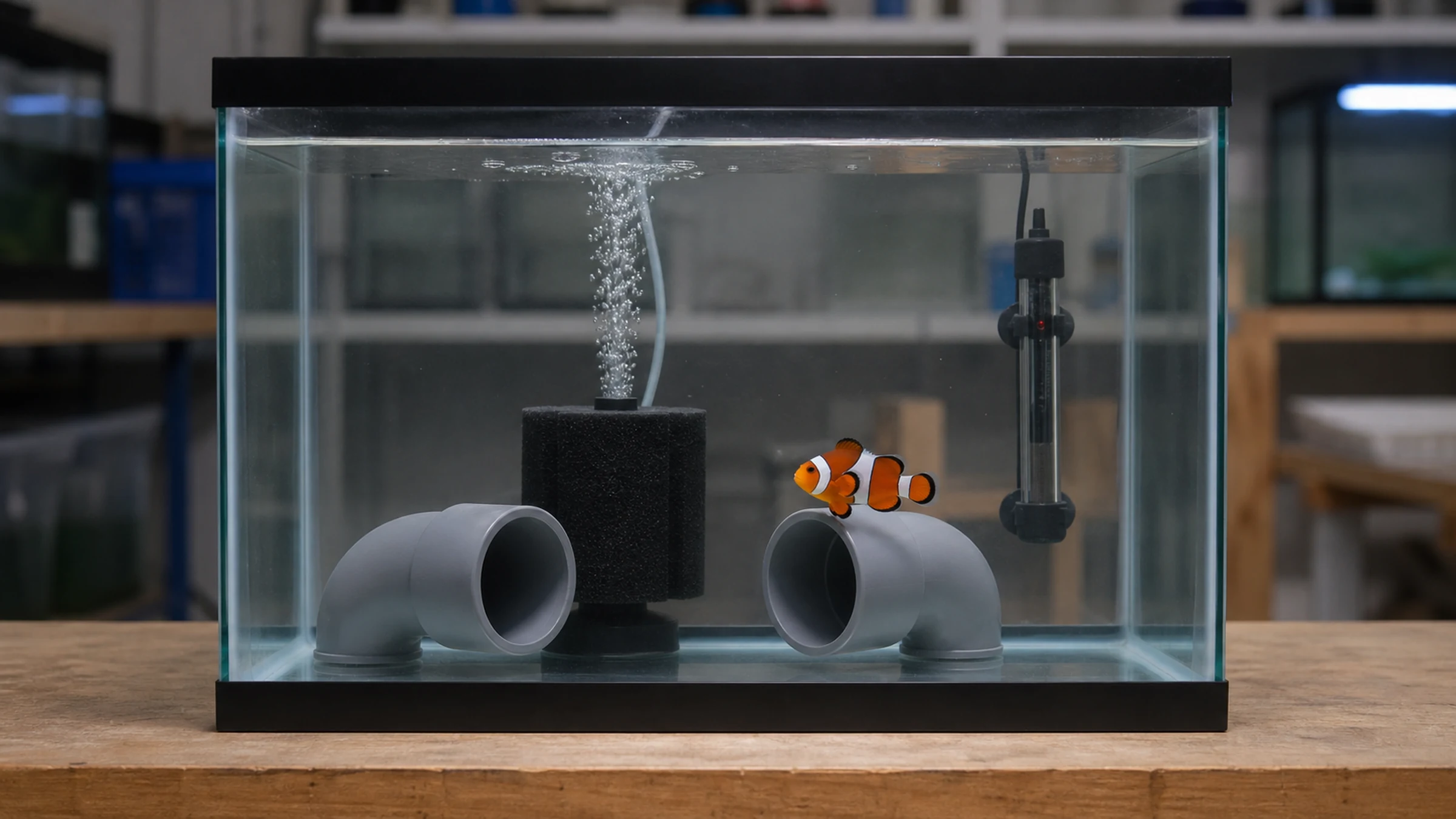
How to quarantine new saltwater fish against marine ich, velvet, and brooklynella: the QT tank, treatments, timelines, and the buy-clean shortcut.
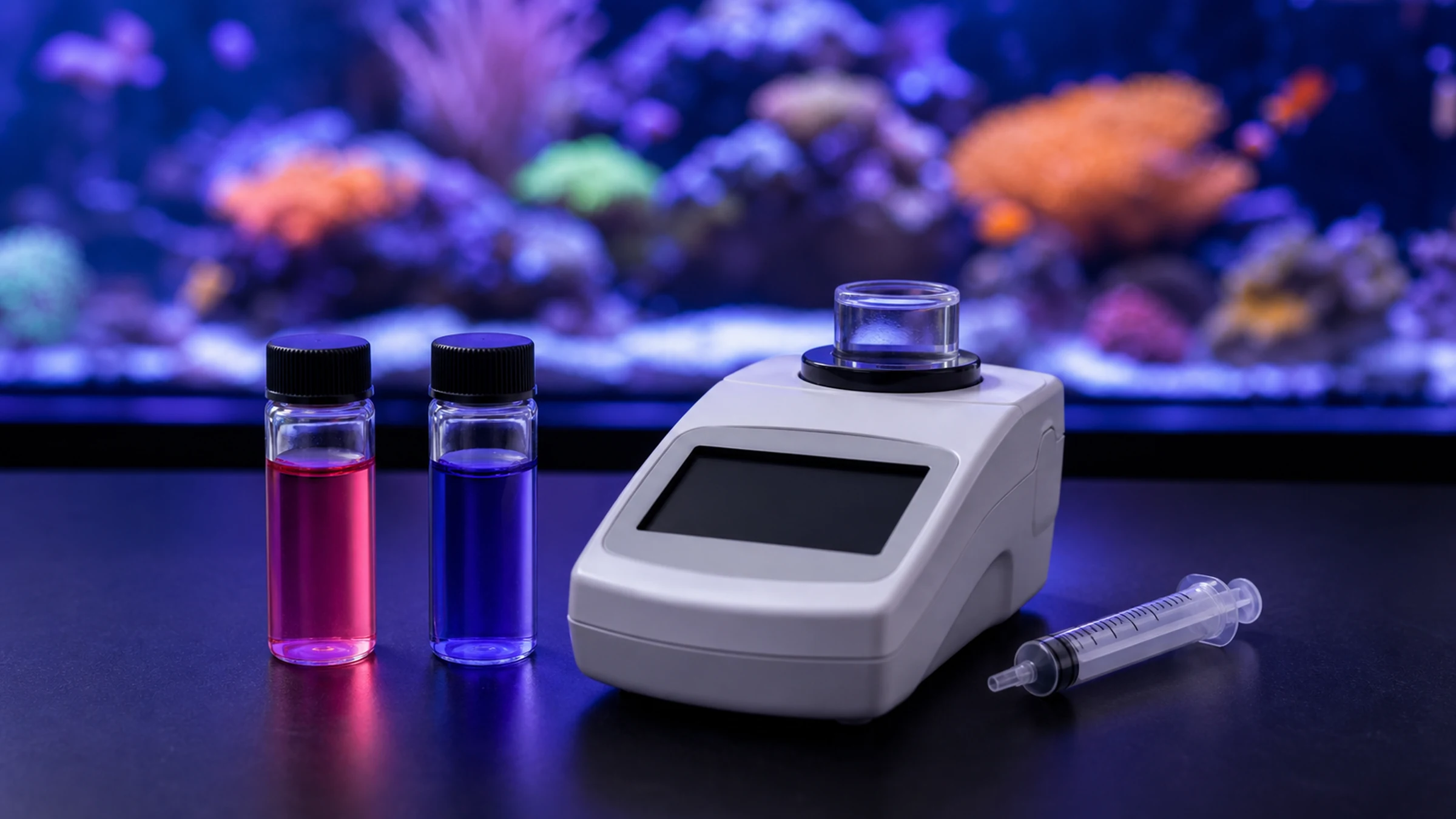
What every reef parameter means and where to keep it: salinity, temperature, pH, alkalinity, calcium, magnesium, nitrate, and phosphate.

Choose compatible fish: school sizes, swimming zones, aggression, temperature and hardness matching, and honest bioload math for a peaceful community.
Keeping Pot-bellied Seahorse?
AquaLens identifies your fish and plants from a photo, tracks water chemistry, and flags health issues early — free on iOS and Android.