Dwarf Seahorse Care Guide
Hippocampus zosterae · Saltwater Seahorse
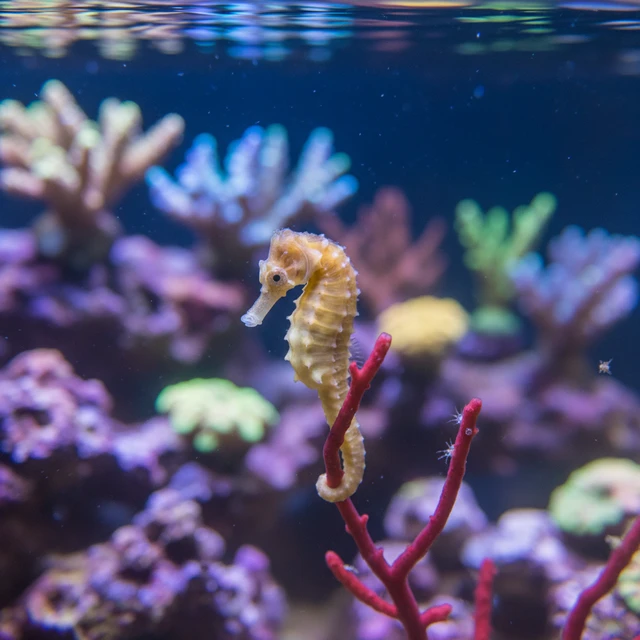
What Dwarf Seahorse look like
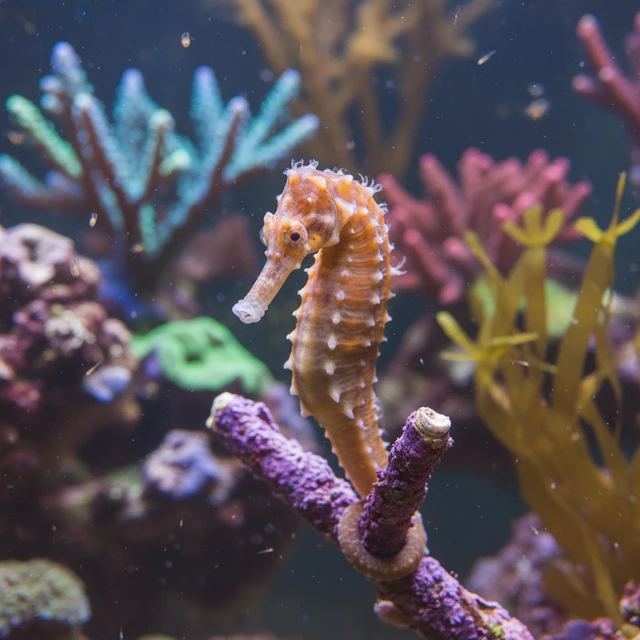
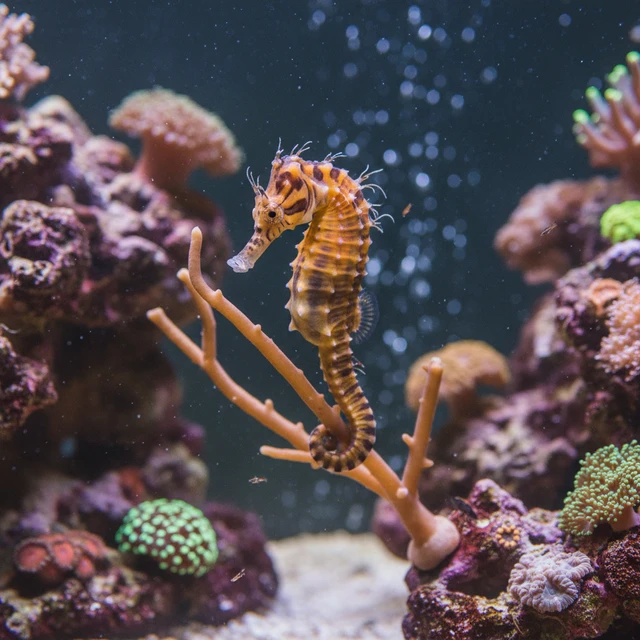
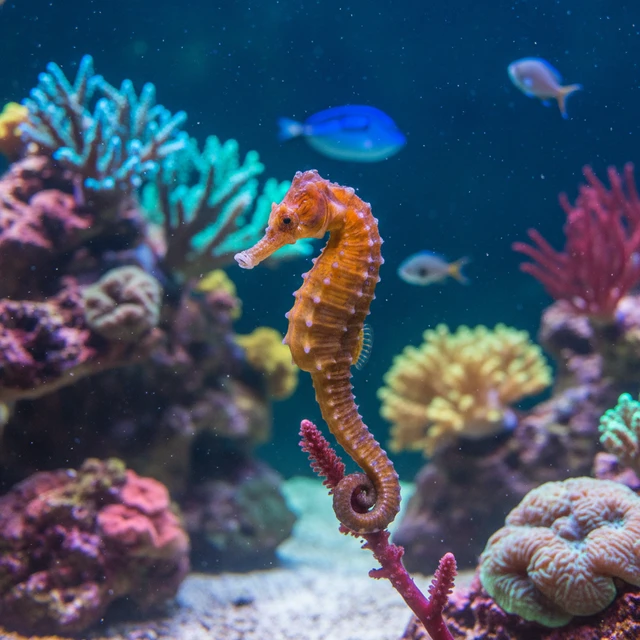
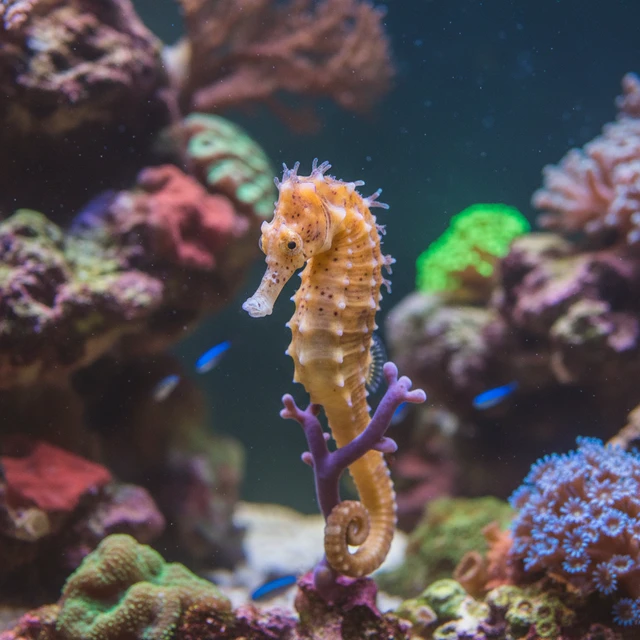
Hippocampus zosterae, commonly known as the Dwarf Seahorse, exhibits a diminutive size, typically reaching a maximum adult length of approximately 2 inches (5 cm). This species is characterized by its elongated body, prehensile tail, and a distinctive horse-like head with a tubular snout. The Dwarf Seahorse displays sexual dimorphism, with males possessing a brood pouch located on their abdomen, which is absent in females. Their coloration can vary significantly, ranging from yellow to brown, often with mottled patterns that provide effective camouflage among seagrass habitats. Defensive adaptations include their ability to change color to blend with their surroundings and the use of their tail to anchor themselves to seagrass or corals, minimizing the risk of predation. Unique morphological features include a series of bony plates that provide structural support and a lack of dorsal fin, which is replaced by a small fin located on the back, aiding in subtle maneuvering.
Behavior & temperament
The Dwarf Seahorse exhibits a largely solitary lifestyle, although they may be found in loose aggregations in suitable habitats. They are generally found at the substrate level, often clinging to seagrass or other vegetation. Breeding behavior is notable, as males perform a courtship dance that involves color changes and synchronized movements with the female. After mating, the female deposits eggs into the male's brood pouch, where fertilization occurs, and the male carries the developing embryos until they are ready to be released as fully formed juveniles. Their temperament is generally peaceful, but they can exhibit territorial behavior when competing for optimal anchoring sites. They are not strong swimmers and rely on their ability to blend into their environment for protection.
Diet & feeding
In the wild, the Dwarf Seahorse primarily feeds on small crustaceans, such as copepods and mysid shrimp. In captivity, they require a diet rich in live or frozen foods, particularly small live foods like brine shrimp or enriched mysis shrimp to ensure proper nutrition.
Behind the name
The genus name 'Hippocampus' is derived from the Greek words 'hippos' meaning 'horse' and 'kampos' meaning 'sea monster', while the species name 'zosterae' refers to the seagrass genus Zostera, indicating their natural habitat.
Plan your tank
Check the numbers before you buy: tank volume, salinity, salt mix, water changes, and your ongoing care routine. Keeping reef? Start from the Saltwater & Reef hub.
Keep reading
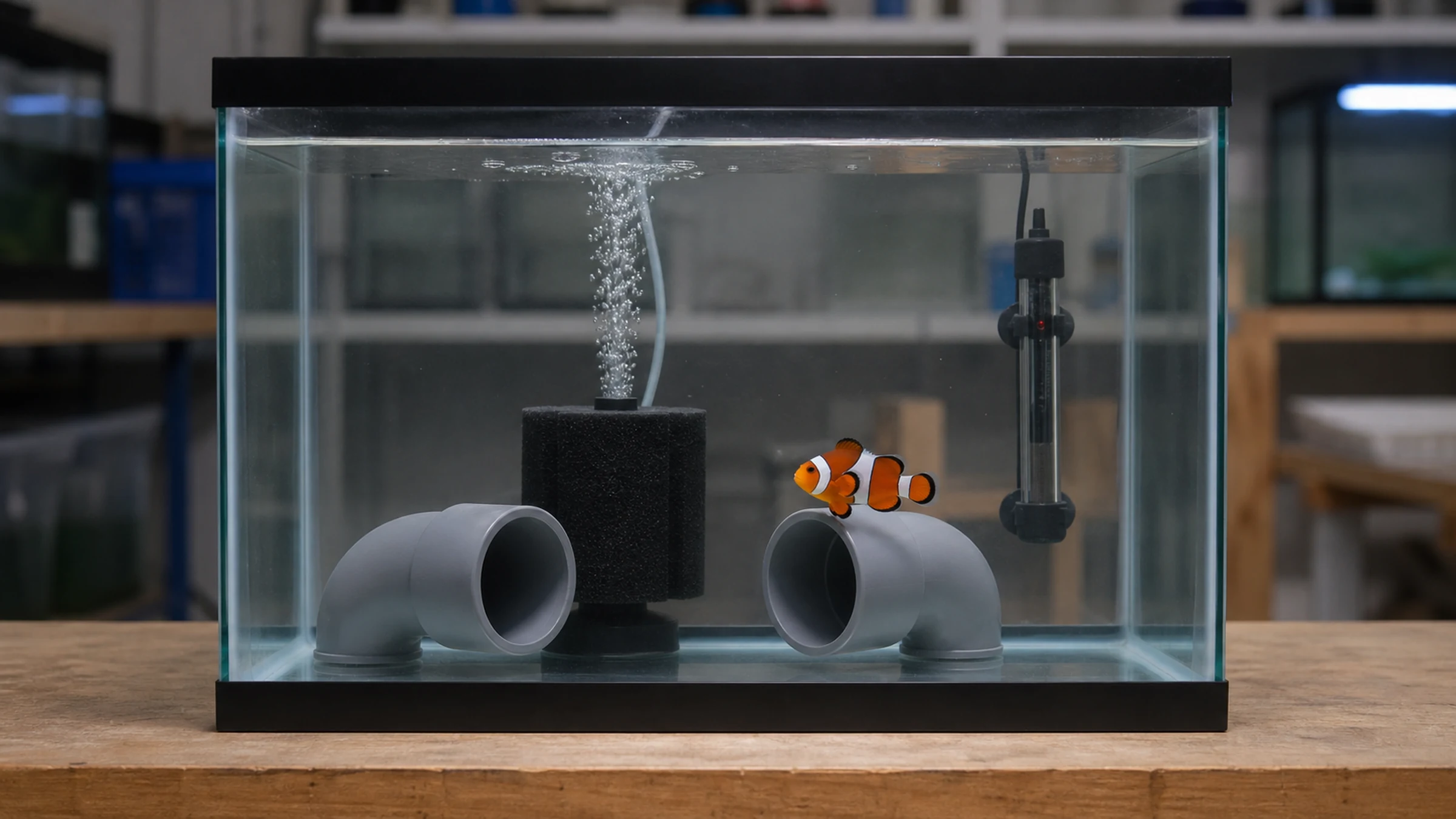
How to quarantine new saltwater fish against marine ich, velvet, and brooklynella: the QT tank, treatments, timelines, and the buy-clean shortcut.

What every reef parameter means and where to keep it: salinity, temperature, pH, alkalinity, calcium, magnesium, nitrate, and phosphate.

Choose compatible fish: school sizes, swimming zones, aggression, temperature and hardness matching, and honest bioload math for a peaceful community.
Keeping Dwarf Seahorse?
AquaLens identifies your fish and plants from a photo, tracks water chemistry, and flags health issues early — free on iOS and Android.