Spotted Seahorse Care Guide
Hippocampus kuda · Saltwater Seahorse
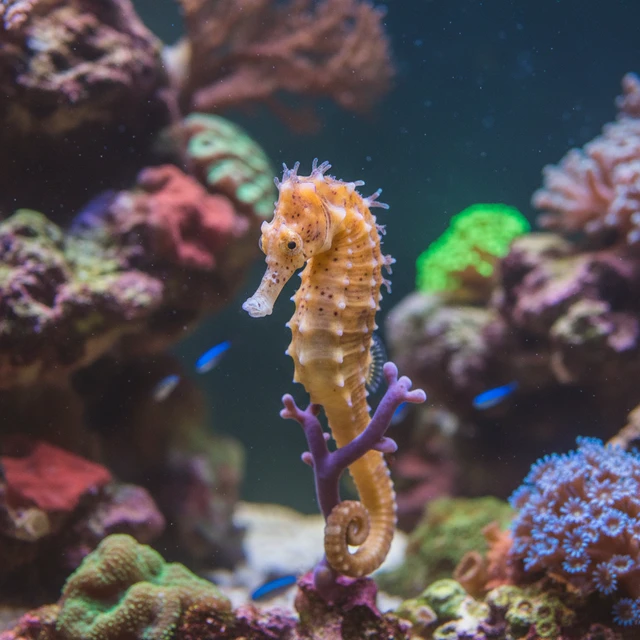
What Spotted Seahorse look like
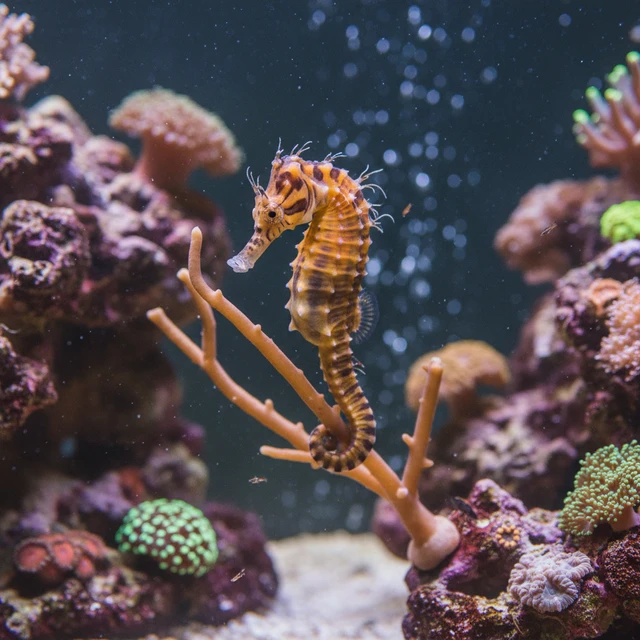
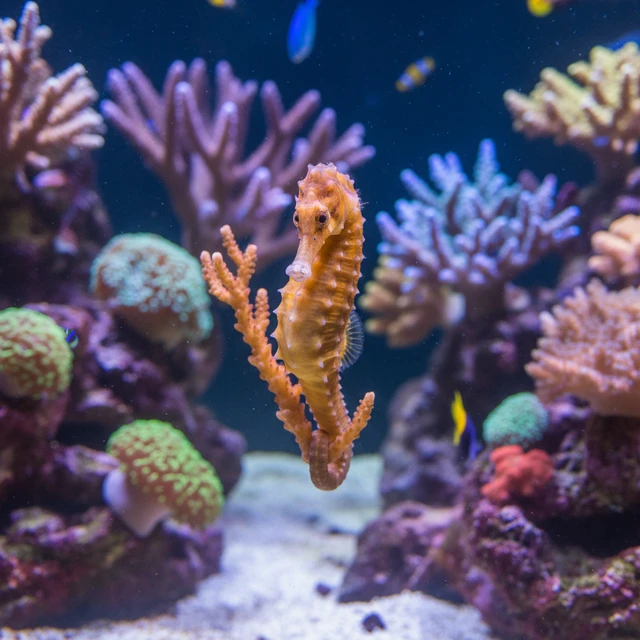
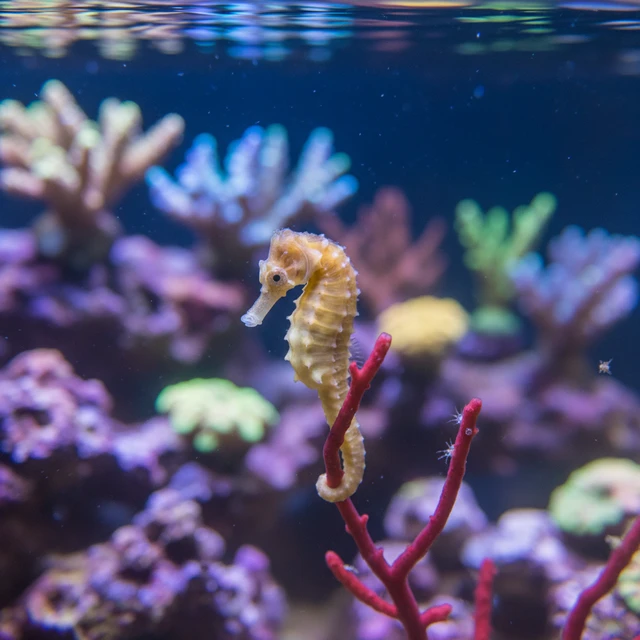
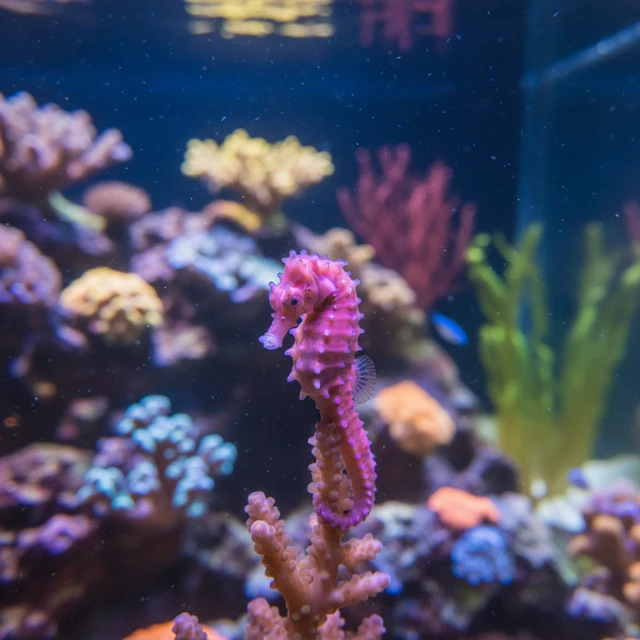
The Spotted Seahorse (Hippocampus kuda) exhibits a distinctive elongated body that can reach a maximum adult size of approximately 15 cm (6 inches). Its morphology is characterized by a series of bony plates that form a rigid structure, giving it a unique horse-like appearance. The coloration varies widely, often displaying a combination of yellow, brown, and green hues, adorned with dark spots that provide effective camouflage against predators. Sexual dimorphism is evident, as males possess a brood pouch on their ventral side, which is absent in females. Defensive adaptations include the ability to change color to blend into their surroundings and a prehensile tail that allows them to anchor themselves to seagrass or corals, minimizing movement and reducing predation risk. The head is elongated with a tubular snout, and they lack traditional fins; instead, they have a dorsal fin that aids in propulsion.
Behavior & temperament
Spotted Seahorses are generally solitary or found in loose aggregations, exhibiting a non-territorial behavior. They are primarily found at mid-water levels and are known for their unique courtship rituals, which involve an elaborate dance where the male and female entwine their tails and swim together in a synchronized manner. Breeding occurs in monogamous pairs, and males are responsible for carrying and nurturing the young in their brood pouch. Their temperament is generally peaceful, but they can exhibit stress in crowded conditions. They are not strong swimmers and rely on their ability to cling to substrates for stability.
Diet & feeding
In the wild, Spotted Seahorses primarily feed on small crustaceans, such as copepods and mysid shrimp, which they capture using their elongated snouts. In captivity, they require a diet rich in live or frozen foods, including brine shrimp and other small marine invertebrates.
Behind the name
The genus name 'Hippocampus' is derived from the Greek words 'hippos' meaning 'horse' and 'kampos' meaning 'sea monster', reflecting their horse-like appearance. The species name 'kuda' is derived from the Malay word for 'horse'.
Plan your tank
Check the numbers before you buy: tank volume, salinity, salt mix, water changes, and your ongoing care routine. Keeping reef? Start from the Saltwater & Reef hub.
Keep reading
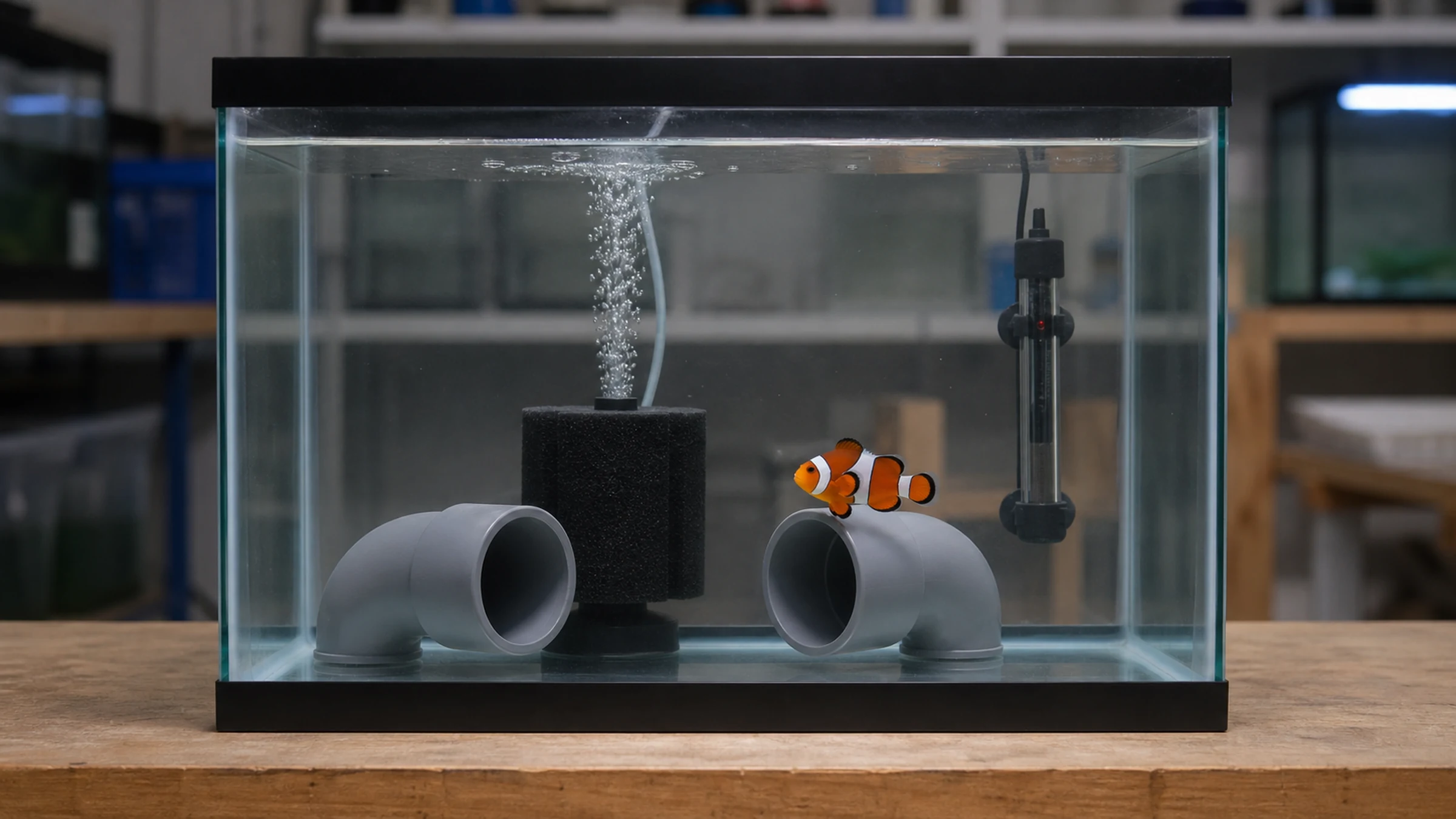
How to quarantine new saltwater fish against marine ich, velvet, and brooklynella: the QT tank, treatments, timelines, and the buy-clean shortcut.
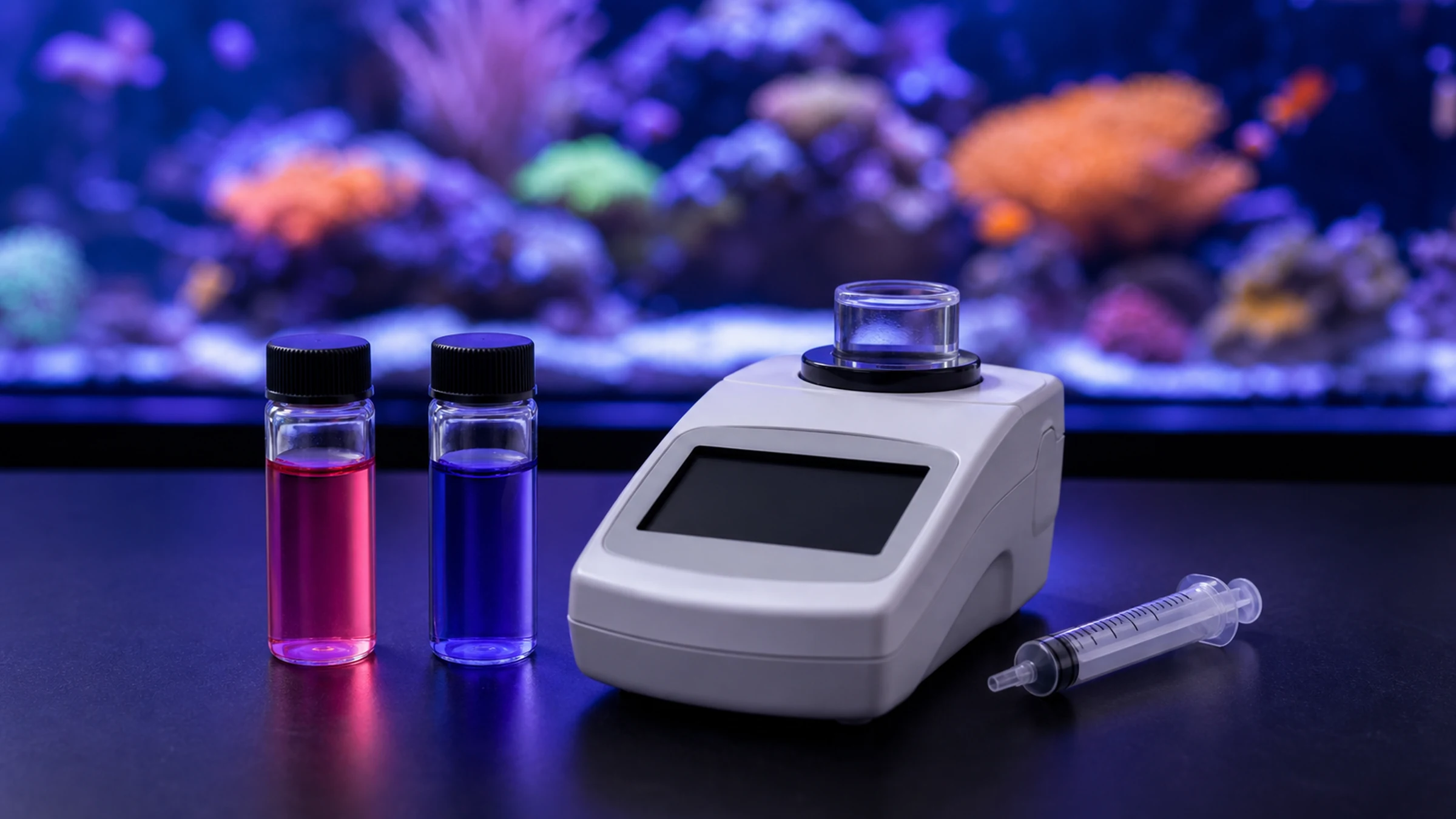
What every reef parameter means and where to keep it: salinity, temperature, pH, alkalinity, calcium, magnesium, nitrate, and phosphate.

Choose compatible fish: school sizes, swimming zones, aggression, temperature and hardness matching, and honest bioload math for a peaceful community.
Keeping Spotted Seahorse?
AquaLens identifies your fish and plants from a photo, tracks water chemistry, and flags health issues early — free on iOS and Android.