Protopalythoa Polyps Care Guide
Protopalythoa mutuki · Saltwater Zoanthid
What Protopalythoa Polyps look like
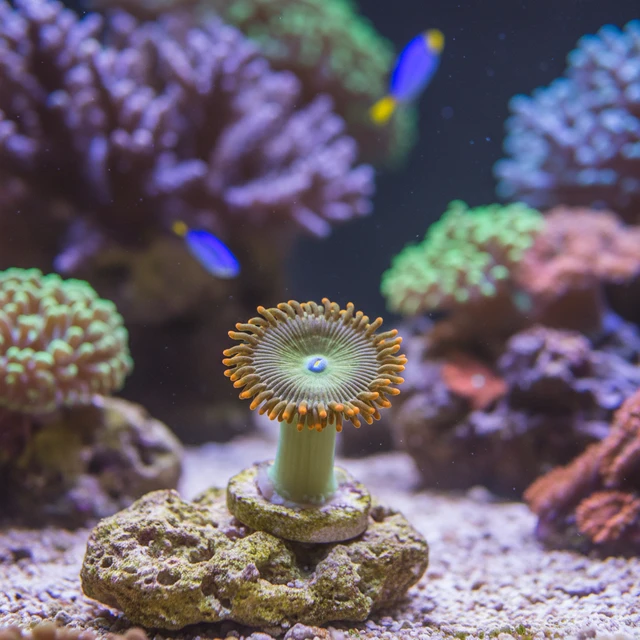
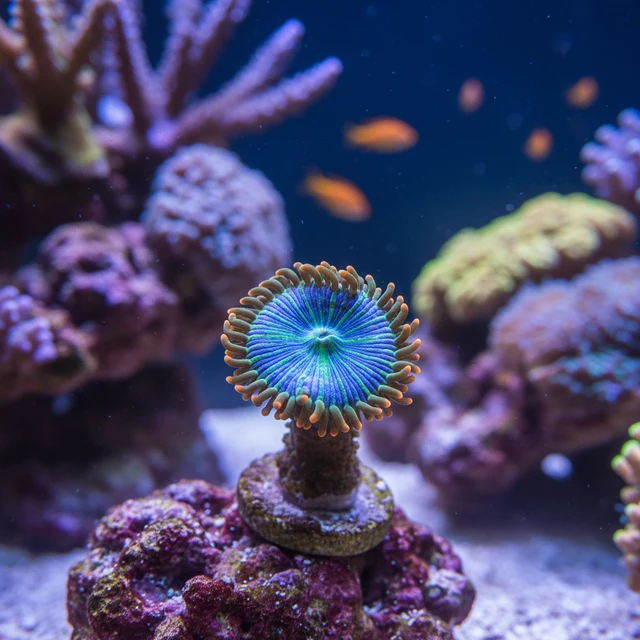
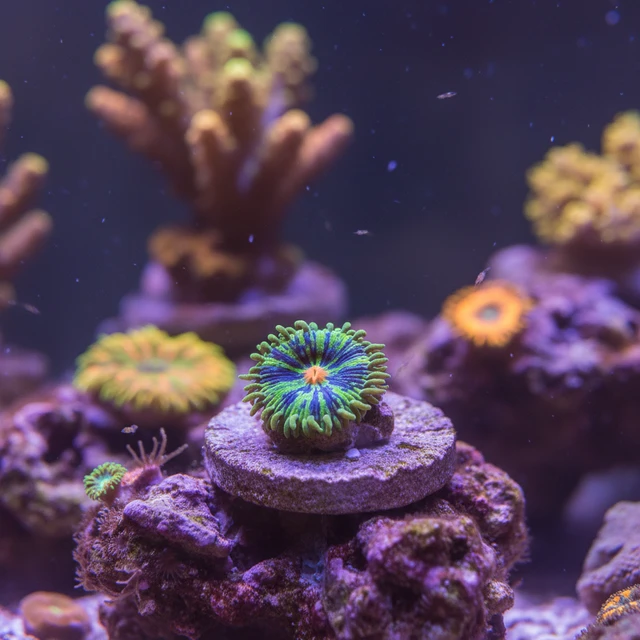
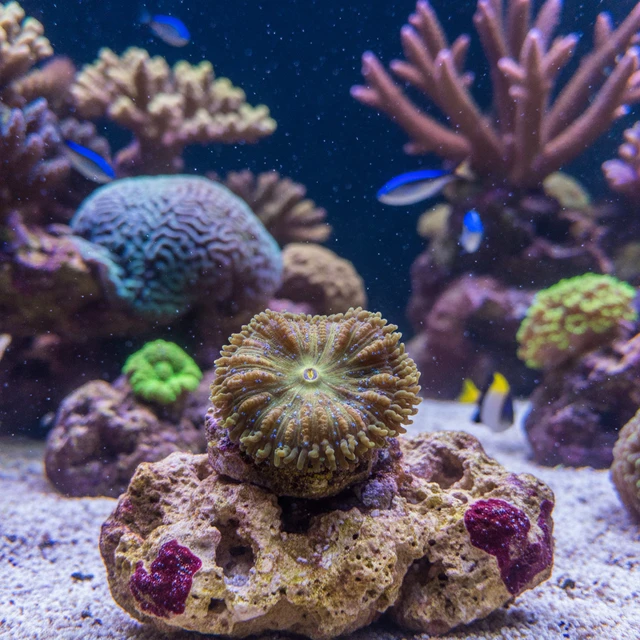
Protopalythoa mutuki exhibits a robust, encrusting growth form characterized by a mat-like structure that can spread over substrates. The polyps are typically small, measuring up to 2.5 cm in diameter, and possess a prominent oral disc surrounded by numerous tentacles, which are usually arranged in a radial pattern. The coloration of the polyps can vary significantly, ranging from vibrant greens and blues to more subdued browns and purples, often with contrasting patterns that enhance their visual appeal. These corals lack a hard skeleton, relying instead on a soft tissue structure that allows for flexibility and adaptability in their environment. They possess specialized nematocysts for defense, which can deliver a mild sting to potential predators. The polyps can retract into the mat when threatened, providing an additional layer of protection.
Behavior & temperament
Protopalythoa mutuki is primarily a colonial organism, exhibiting a communal behavior where multiple polyps can be found in close proximity, often forming dense clusters. They are generally non-aggressive towards other corals, but can exhibit competition for space and light with neighboring species. Feeding occurs primarily through the capture of zooplankton and particulate matter using their tentacles, which extend during the day to maximize feeding opportunities. The polyps can also engage in photosynthesis, thanks to symbiotic zooxanthellae residing within their tissues, which contribute to their energy needs. Movement is limited, as they are sessile, but they can expand and contract their polyps to optimize feeding and respond to environmental stimuli.
Diet & feeding
Protopalythoa mutuki is primarily a photosynthetic coral that derives energy from symbiotic zooxanthellae, but it also captures zooplankton and organic particulate matter from the water column. In captivity, they thrive on a diet of finely chopped meaty foods, liquid coral foods, and regular exposure to phytoplankton.
Behind the name
The genus name 'Protopalythoa' derives from the Greek words 'proto' meaning 'first' and 'palythoa' which refers to a type of colonial coral, indicating its foundational role in certain reef ecosystems. The species name 'mutuki' is derived from local vernacular, often associated with its habitat or appearance.
Plan your tank
Check the numbers before you buy: tank volume, salinity, salt mix, water changes, and your ongoing care routine. Keeping reef? Start from the Saltwater & Reef hub.
Keep reading
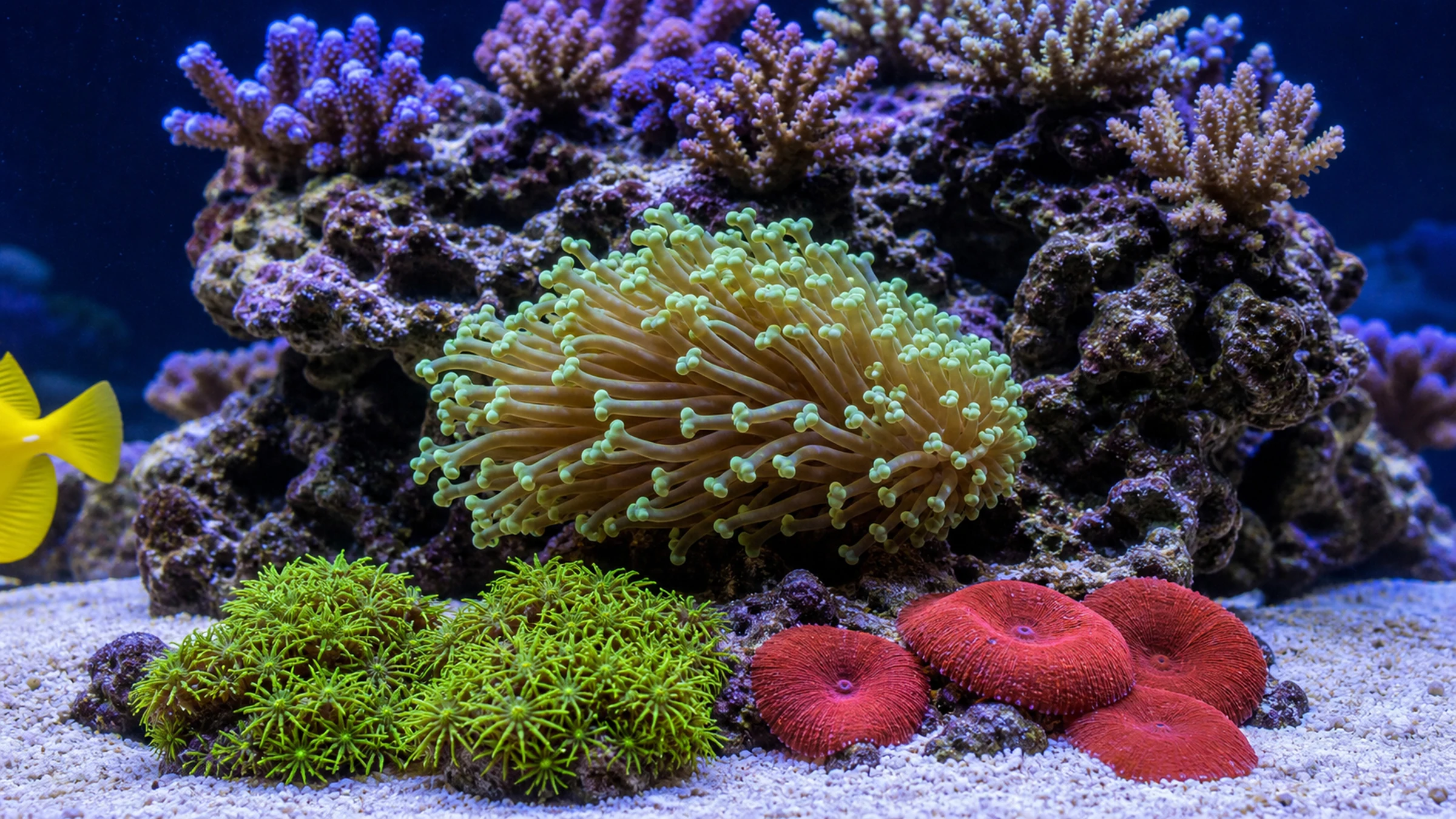
How to place corals by light and flow, PAR targets for softies, LPS, and SPS, dipping new corals for pests, and acclimating them without bleaching.

What every reef parameter means and where to keep it: salinity, temperature, pH, alkalinity, calcium, magnesium, nitrate, and phosphate.
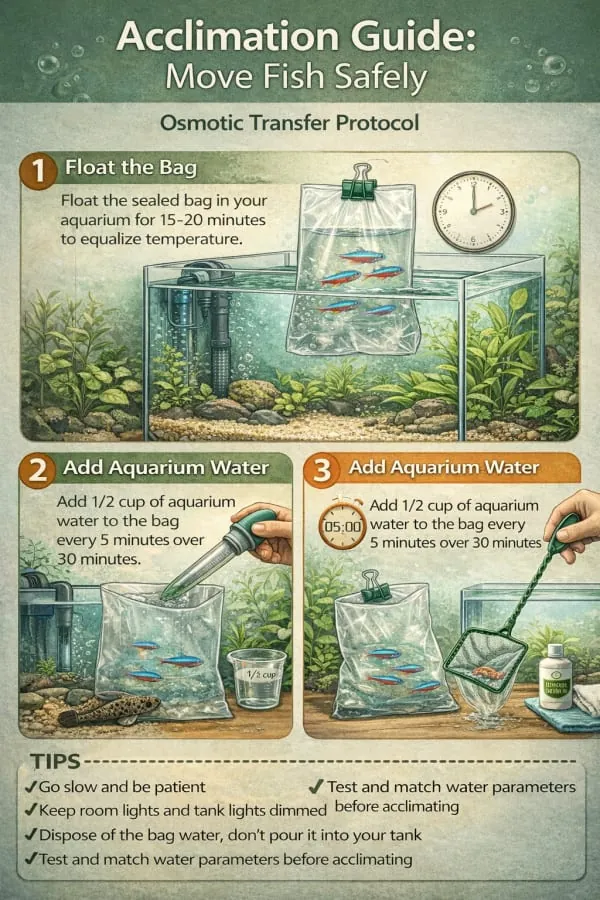
Acclimate new fish, shrimp, and coral safely: temperature floating, drip acclimation, plop-and-drop for shipped livestock, and the first 24 hours.
Keeping Protopalythoa Polyps?
AquaLens identifies your fish and plants from a photo, tracks water chemistry, and flags health issues early — free on iOS and Android.