Zoanthid Polyps Care Guide
Zoanthus sociatus · Saltwater Zoanthid
What Zoanthid Polyps look like
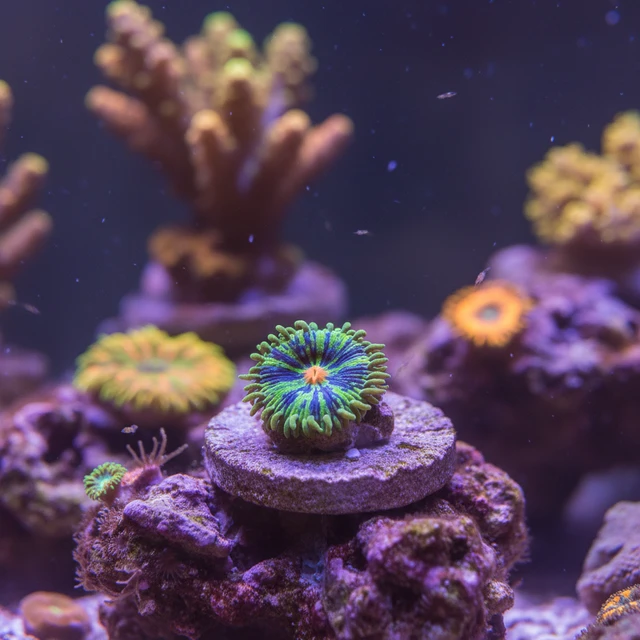
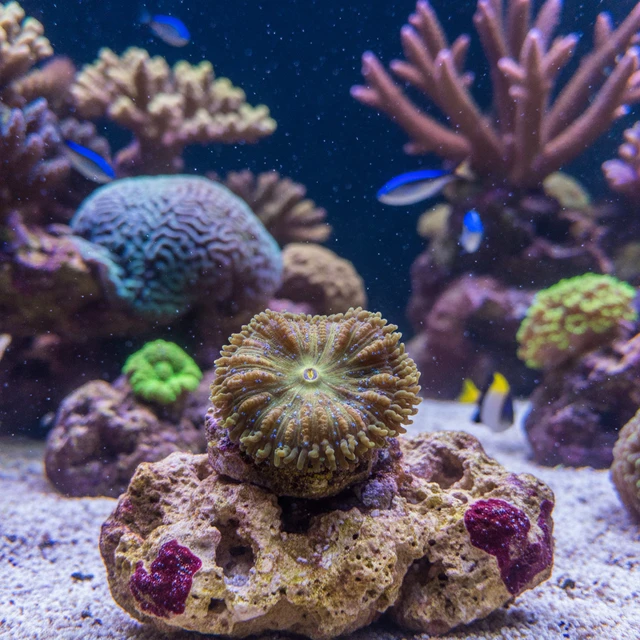
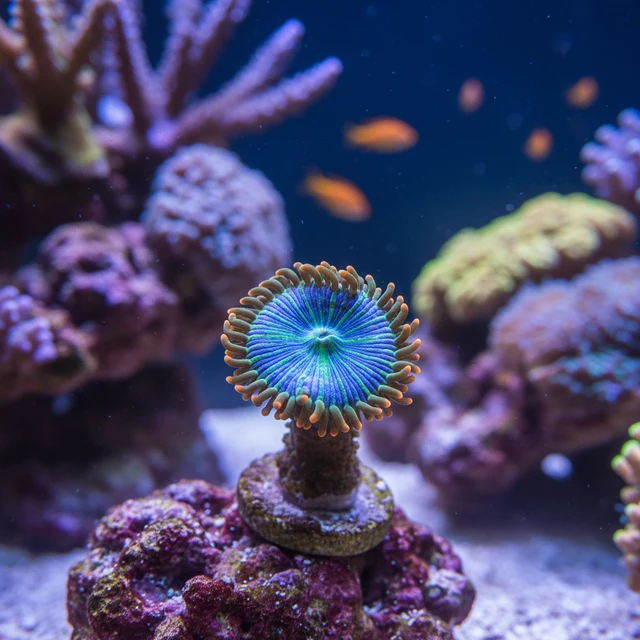
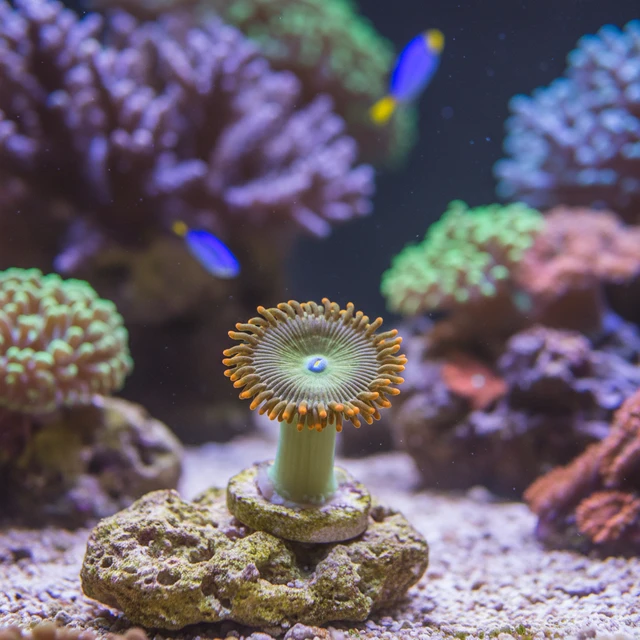
Zoanthus sociatus, commonly known as zoanthid polyps, exhibit a distinctive morphology characterized by their small, disc-shaped polyps that can reach up to 2.5 cm in diameter. The polyps are typically arranged in colonies, with numerous individuals sharing a common base, and display a vibrant array of colors ranging from green to orange, often with contrasting patterns. Each polyp possesses a central mouth surrounded by a ring of tentacles, which are equipped with specialized stinging cells (nematocysts) for defense and capturing prey. The colony structure is supported by a soft, fleshy mat that can vary in thickness, and the polyps can retract into this mat when threatened. Sexual dimorphism is not pronounced in this species, as both sexes appear similar externally. Their defensive adaptations include the ability to retract quickly and their potent nematocysts, which can deter potential predators.
Behavior & temperament
Zoanthus sociatus exhibits a relatively sedentary lifestyle, remaining attached to substrates such as rocks or coral rubble. They are primarily nocturnal feeders, extending their tentacles at night to capture plankton and detritus from the water column. These corals can form symbiotic relationships with zooxanthellae, which provide them with essential nutrients through photosynthesis, although they also rely on heterotrophic feeding. In terms of aggression, they can exhibit territorial behavior towards other sessile invertebrates, utilizing their nematocysts to fend off intruders. The extension of polyps is influenced by environmental conditions, with optimal feeding occurring in low to moderate water flow.
Diet & feeding
Zoanthus sociatus is primarily a carnivorous coral, feeding on zooplankton and organic detritus in the wild. In captivity, they require a diet supplemented with small particulate foods such as marine snow, finely chopped seafood, and specialized coral foods to thrive.
Behind the name
The genus name 'Zoanthus' is derived from the Greek words 'zoon', meaning 'animal', and 'anthos', meaning 'flower', referring to the flower-like appearance of the polyps. The species name 'sociatus' is Latin for 'associated' or 'joined', reflecting their colonial nature.
Plan your tank
Check the numbers before you buy: tank volume, salinity, salt mix, water changes, and your ongoing care routine. Keeping reef? Start from the Saltwater & Reef hub.
Keep reading
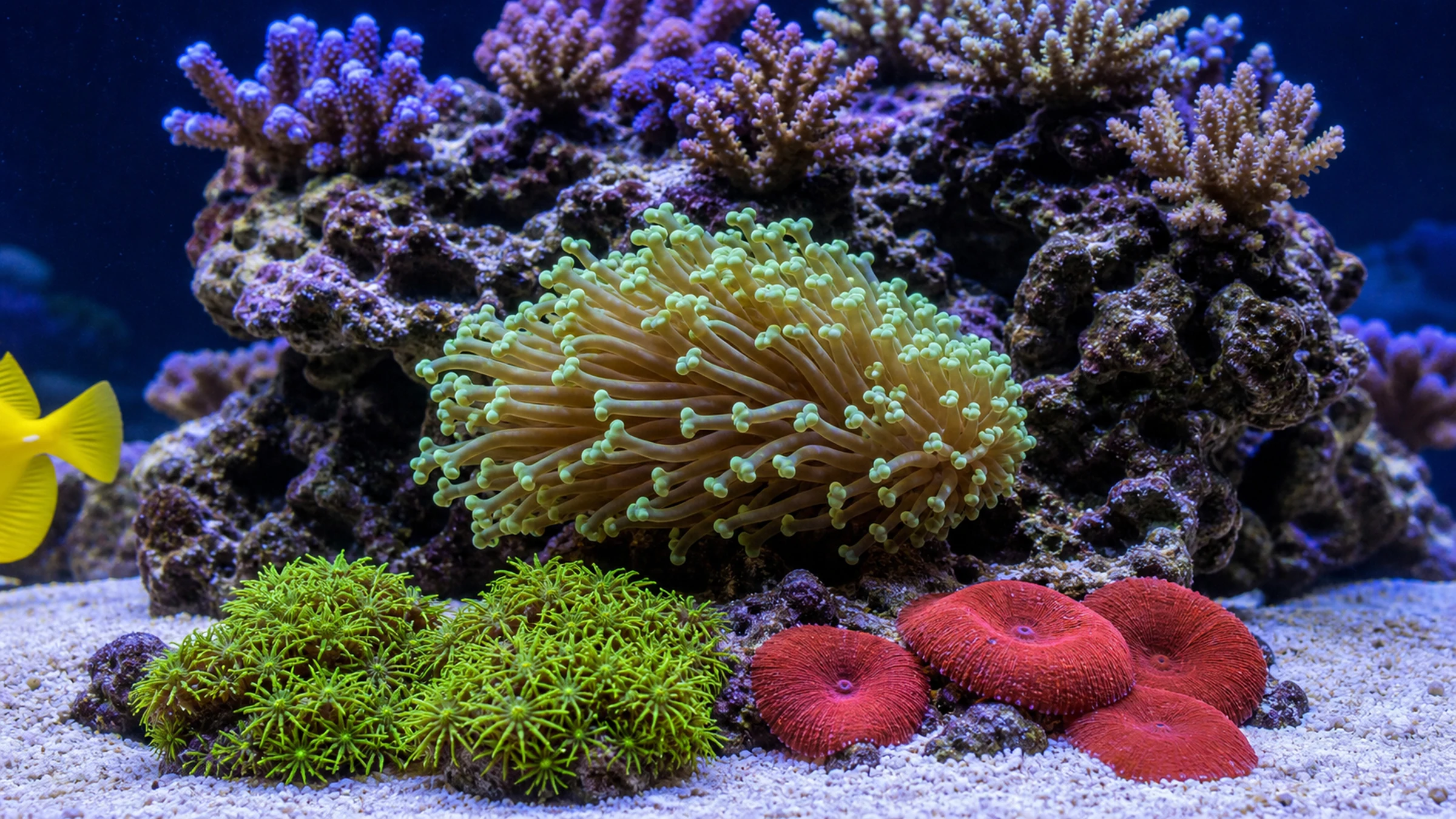
How to place corals by light and flow, PAR targets for softies, LPS, and SPS, dipping new corals for pests, and acclimating them without bleaching.
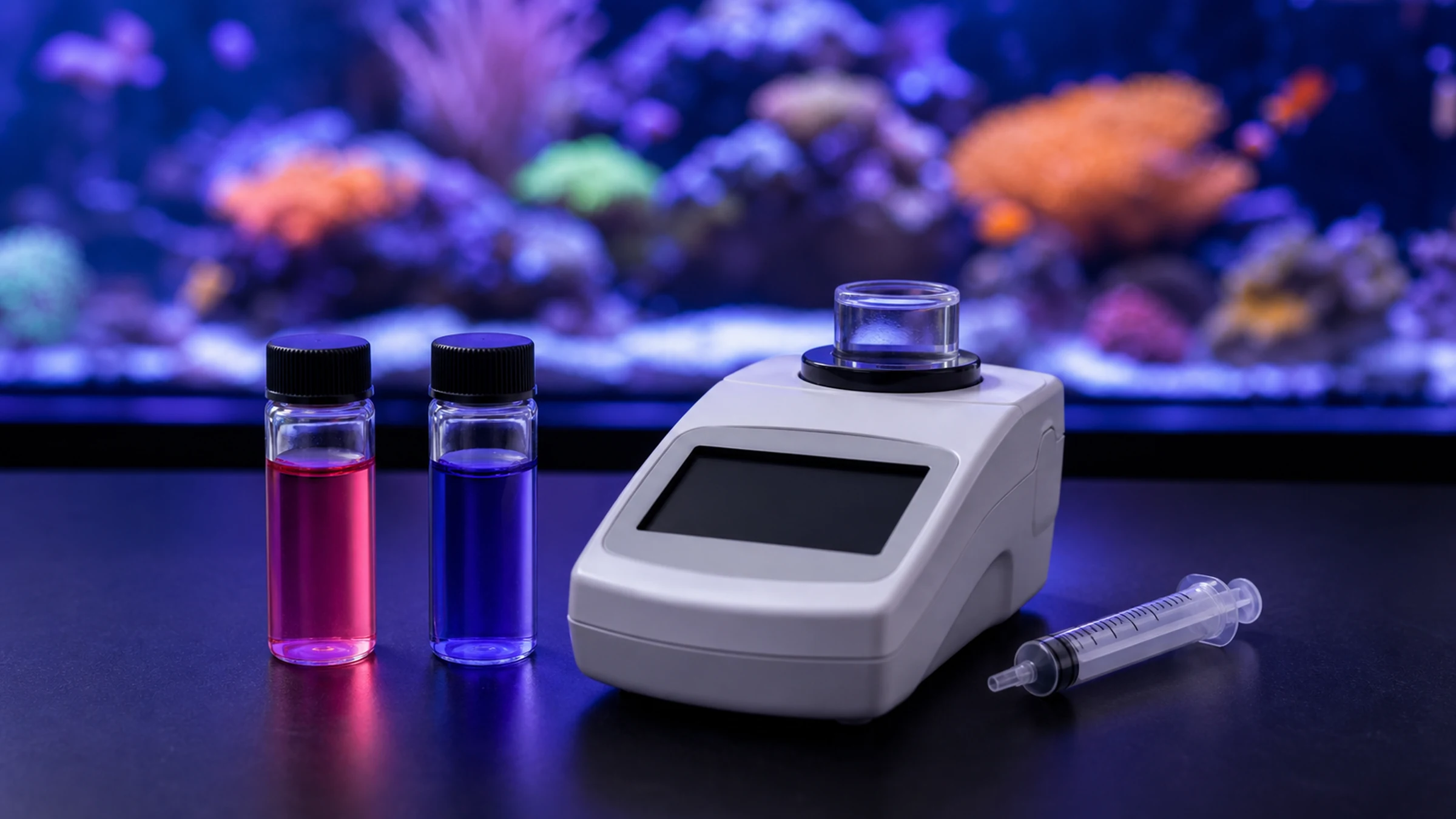
What every reef parameter means and where to keep it: salinity, temperature, pH, alkalinity, calcium, magnesium, nitrate, and phosphate.
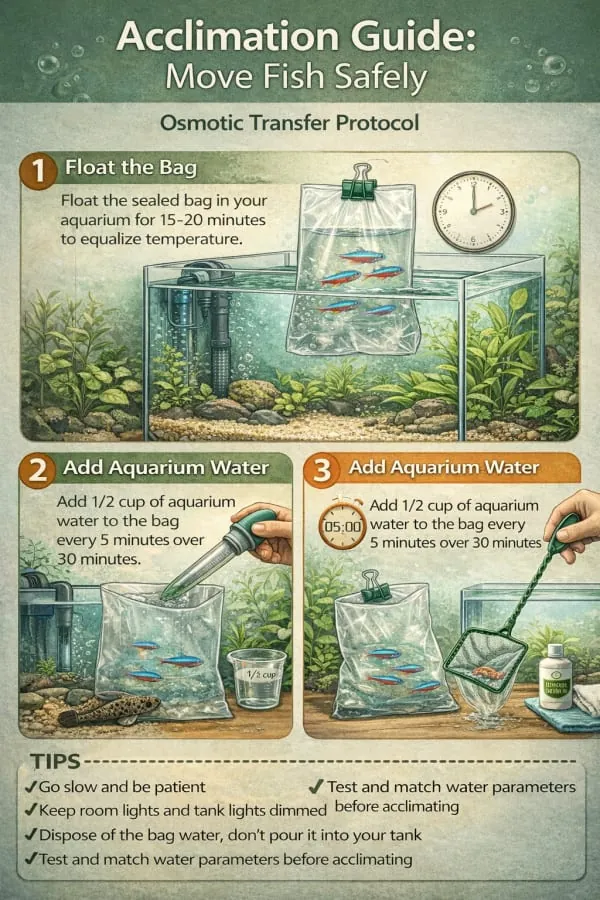
Acclimate new fish, shrimp, and coral safely: temperature floating, drip acclimation, plop-and-drop for shipped livestock, and the first 24 hours.
Keeping Zoanthid Polyps?
AquaLens identifies your fish and plants from a photo, tracks water chemistry, and flags health issues early — free on iOS and Android.