Pygmy Swordtail Care Guide
Xiphophorus pygmaeus · Freshwater Fish
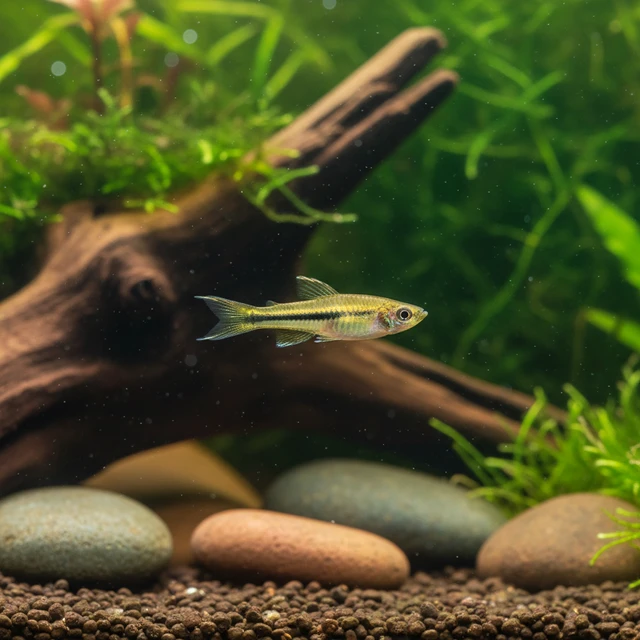
What Pygmy Swordtail look like
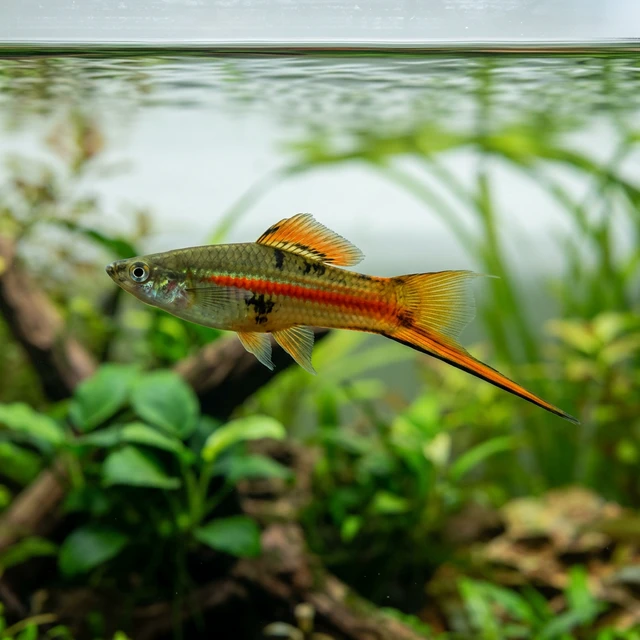
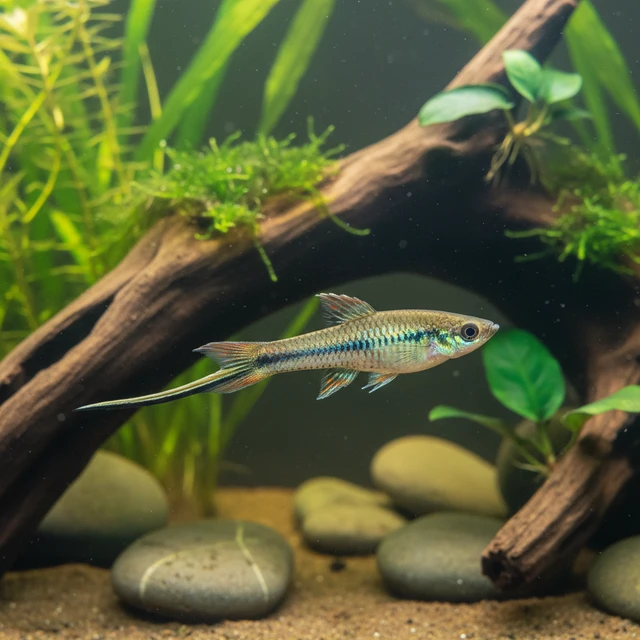
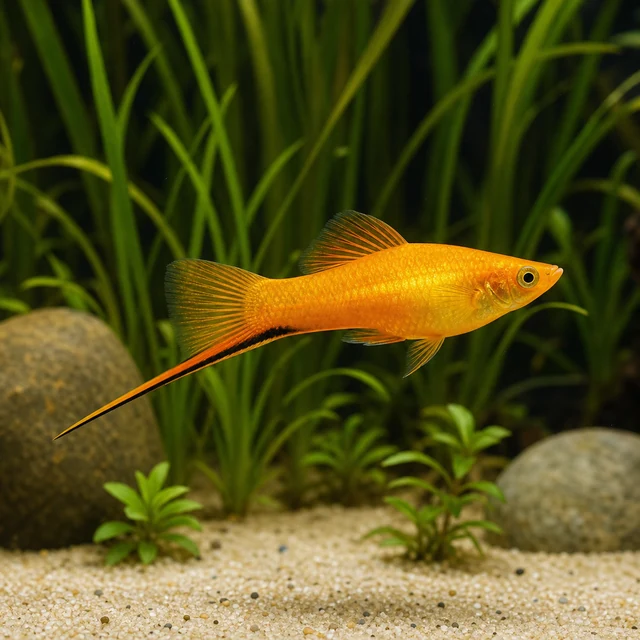
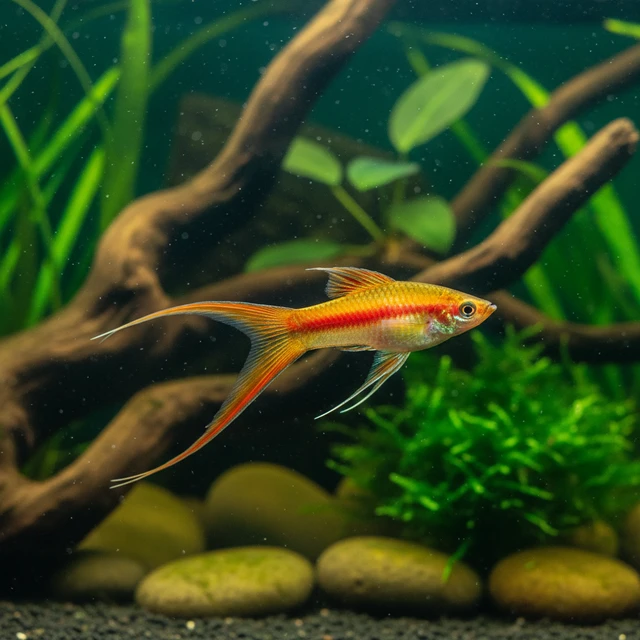
The Pygmy Swordtail (Xiphophorus pygmaeus) is a diminutive livebearer, reaching a maximum adult size of approximately 1-1.5 inches (2.5-3.8 cm), making it the smallest species within the swordtail family. The body is characterized by a slim, laterally compressed form, exhibiting an olive-silver coloration with a pronounced dark lateral stripe that runs from the head to the caudal fin. Males are notably smaller than females and possess a very short or absent sword extension, a distinctive feature that differentiates them from other swordtail species. The fins are generally small and rounded, with the anal fin in males being modified into a gonopodium for reproductive purposes. Defensive adaptations include a streamlined body shape that allows for quick evasive maneuvers in the presence of predators. The absence of elaborate ornamental features such as long swords or bold patterns further aids in their camouflage within their natural habitat.
Behavior & temperament
Pygmy Swordtails exhibit a peaceful and social temperament, often found in small groups within their natural habitat, which promotes a loose social hierarchy. They are primarily a mid-water dwelling species, inhabiting the pelagic zone of shallow streams and ponds in Central America. During breeding, females display a tendency to scatter eggs among vegetation, although they are also known to exhibit mouthbrooding behavior in some instances. Their breeding behavior is characterized by a lack of aggression, making them suitable for community aquariums. In terms of social interaction, they are not obligate schoolers but thrive in groups, displaying a degree of social bonding and interaction among individuals.
Diet & feeding
In the wild, Pygmy Swordtails are omnivorous, feeding on a varied diet that includes small invertebrates, plant matter, and detritus. In captivity, they require a balanced diet consisting of high-quality flake foods, supplemented with live or frozen foods such as daphnia and brine shrimp to ensure optimal health and coloration.
Behind the name
Xiphophorus (sword bearer); pygmaeus (dwarf or small).
Plan your tank
Check the numbers before you buy: tank volume, a stocking plan, cycle progress, water changes, and your ongoing care routine.
Keep reading

Choose compatible fish: school sizes, swimming zones, aggression, temperature and hardness matching, and honest bioload math for a peaceful community.
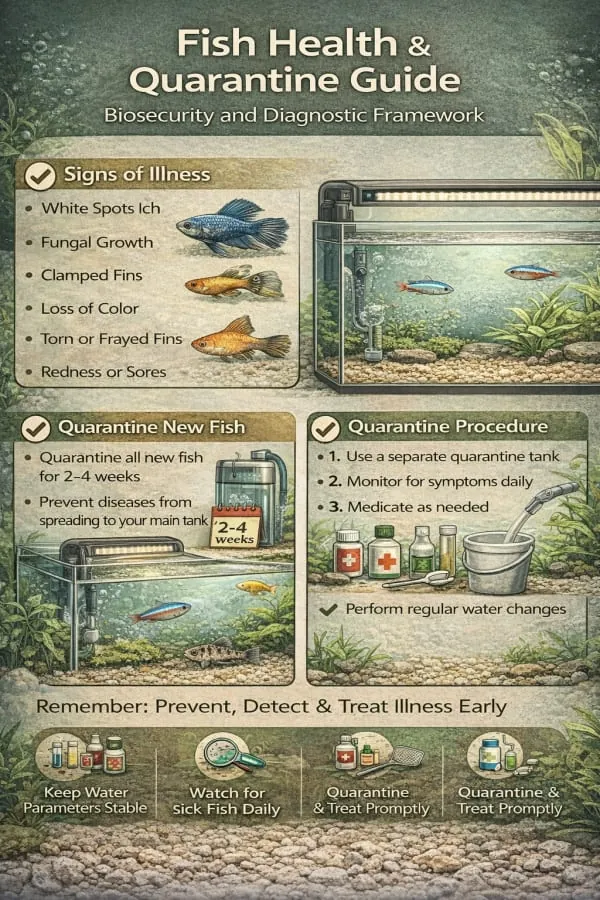
Quarantine new fish, spot the early warning signs, and treat disease without wrecking your tank. A practical freshwater fish health guide.
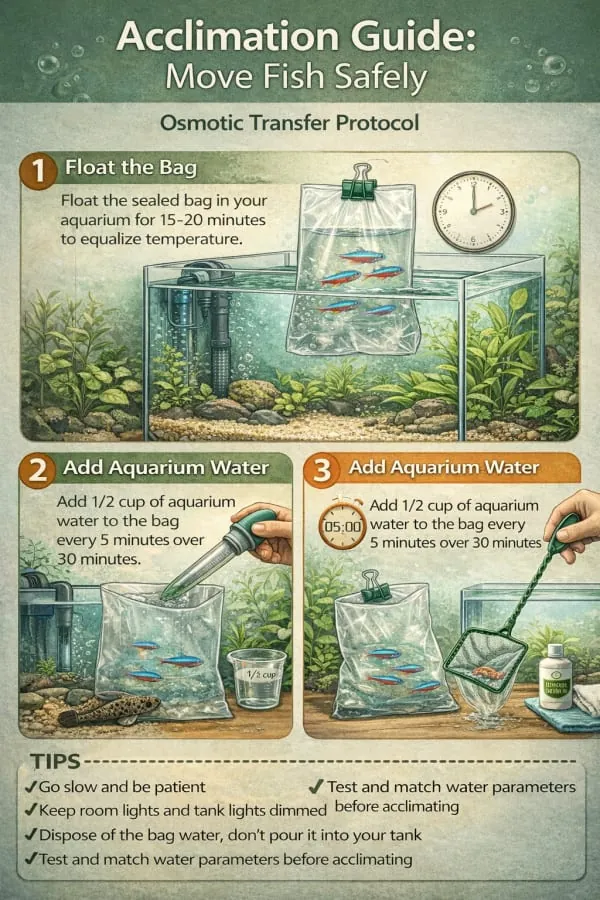
Acclimate new fish, shrimp, and coral safely: temperature floating, drip acclimation, plop-and-drop for shipped livestock, and the first 24 hours.
Keeping Pygmy Swordtail?
AquaLens identifies your fish and plants from a photo, tracks water chemistry, and flags health issues early — free on iOS and Android.