Redbreasted Acara Care Guide
Laetacara dorsigera · Freshwater Fish
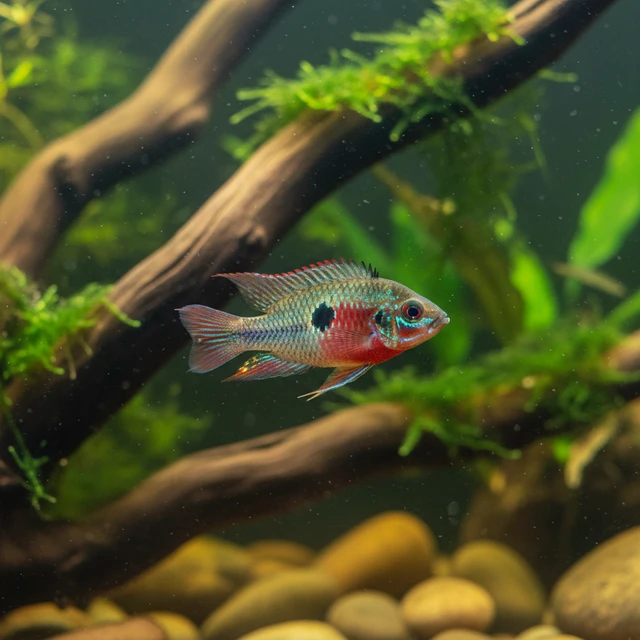
What Redbreasted Acara look like
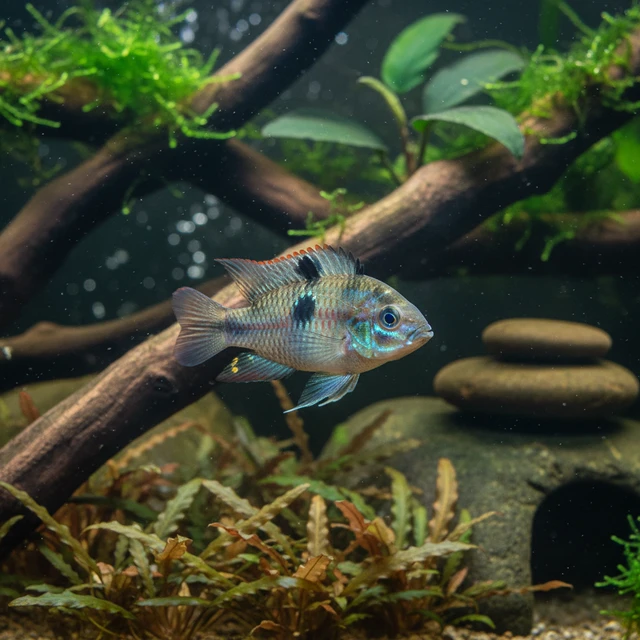
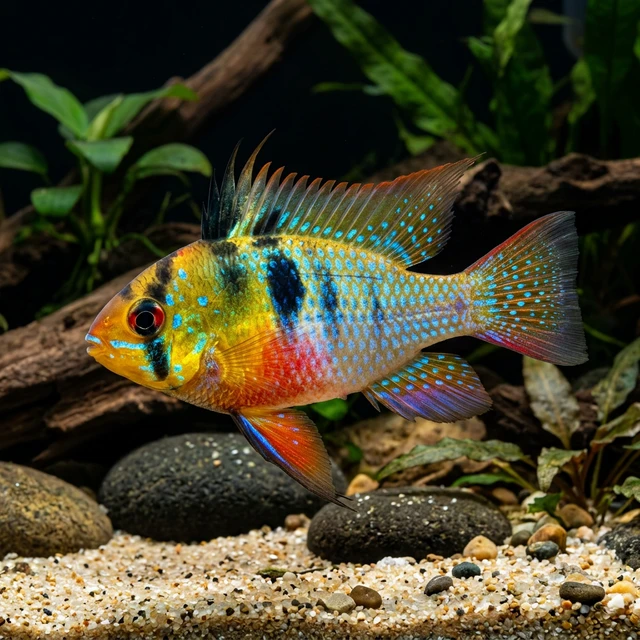
Laetacara dorsigera, commonly known as the Redbreasted Acara, exhibits a small, laterally compressed body that typically reaches a maximum adult size of approximately 2-3 inches (5-8 cm). This dwarf cichlid is characterized by its pale blue-gray coloration, which serves as a subtle backdrop to its most distinctive feature: the vibrant orange-red breast and belly. A prominent dark spot is located on the mid-body, enhancing its visual appeal. The body is adorned with scattered blue iridescent spots, providing a striking contrast against the overall coloration. Sexual dimorphism is evident, with males generally displaying more intense coloration and larger fins compared to females. Defensive adaptations include a robust body and the ability to retreat into crevices or dense vegetation when threatened. The presence of an adipose fin, along with a moderately forked caudal fin, contributes to its agile swimming capabilities, allowing it to navigate through its natural habitat effectively.
Behavior & temperament
The Redbreasted Acara is known for its semi-social behavior, often exhibiting a peaceful temperament that allows it to coexist with other species in a community tank. While they can be somewhat territorial, especially during breeding, they do not form strict hierarchies and are not obligate schoolers; rather, they tend to establish small groups or pairs. This species primarily inhabits the mid to lower water column, favoring areas with ample vegetation and hiding spots. Breeding behavior is characterized by a biparental approach, where both parents participate in caring for the eggs, which are laid on flat surfaces and guarded zealously. Their temperament is generally calm, but they can display aggression when defending their territory or offspring, making it essential to provide adequate space and hiding places in captivity.
Diet & feeding
In the wild, Laetacara dorsigera is an omnivore, feeding on a varied diet that includes small invertebrates, plant matter, and detritus. In captivity, they thrive on high-quality flake foods, supplemented with live or frozen foods such as brine shrimp and daphnia, as well as blanched vegetables to ensure a balanced diet.
Behind the name
Laetacara (cheerful face); dorsigera (back-bearing).
Plan your tank
Check the numbers before you buy: tank volume, a stocking plan, cycle progress, water changes, and your ongoing care routine.
Keep reading

Choose compatible fish: school sizes, swimming zones, aggression, temperature and hardness matching, and honest bioload math for a peaceful community.
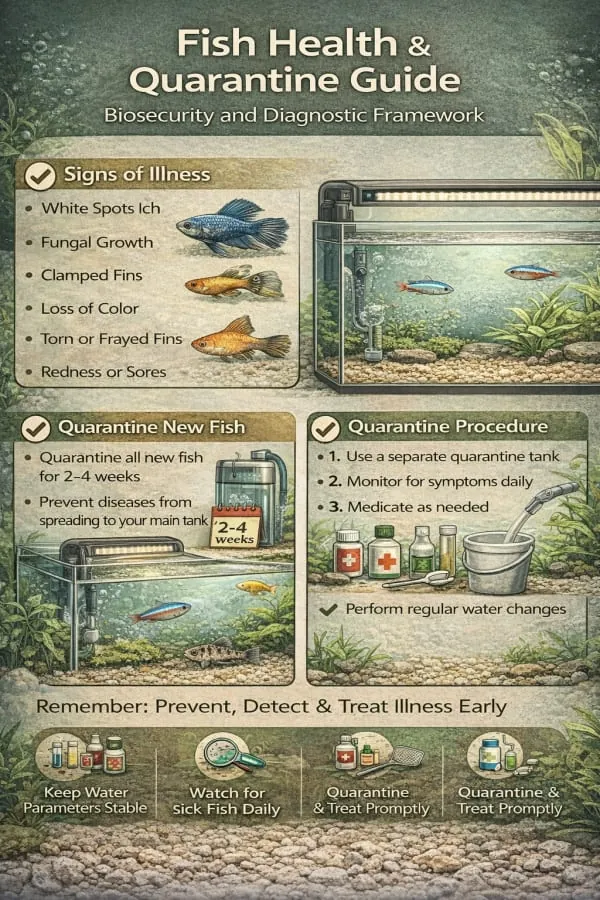
Quarantine new fish, spot the early warning signs, and treat disease without wrecking your tank. A practical freshwater fish health guide.
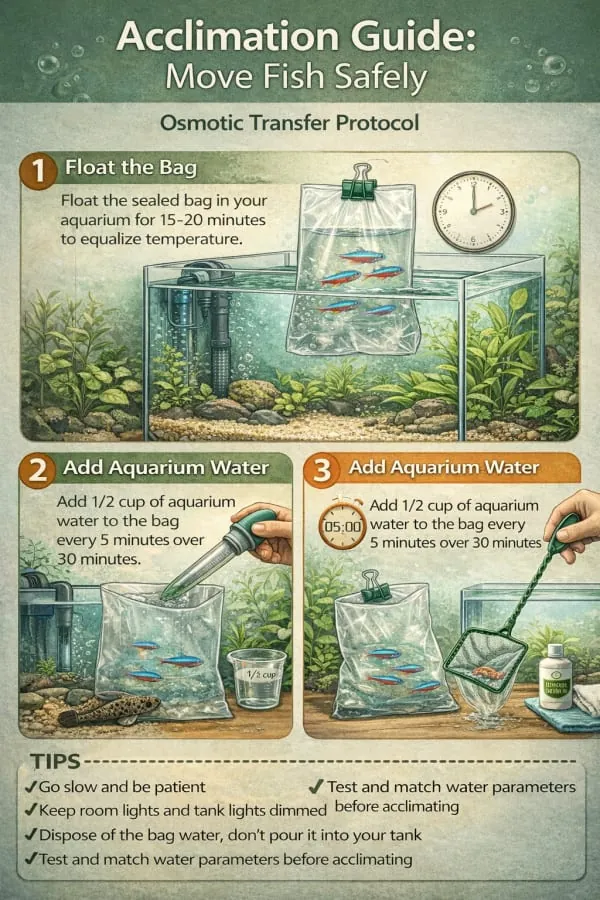
Acclimate new fish, shrimp, and coral safely: temperature floating, drip acclimation, plop-and-drop for shipped livestock, and the first 24 hours.
Keeping Redbreasted Acara?
AquaLens identifies your fish and plants from a photo, tracks water chemistry, and flags health issues early — free on iOS and Android.