Rope Fish Care Guide
Erpetoichthys calabaricus · Freshwater Fish
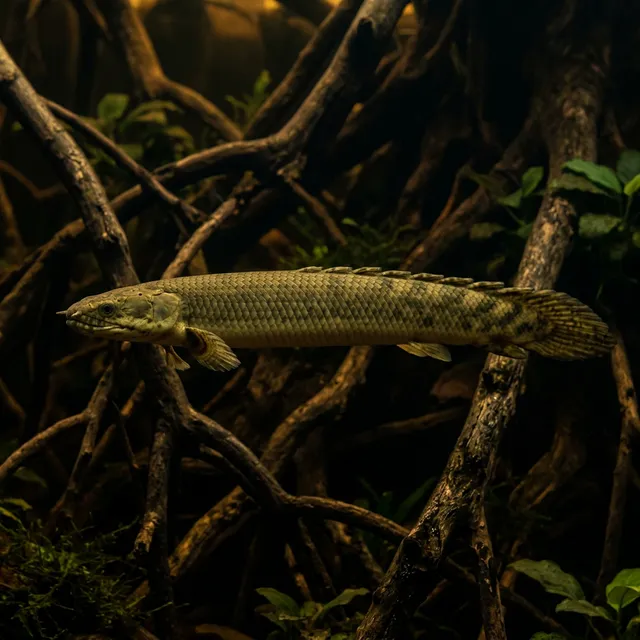
What Rope Fish look like
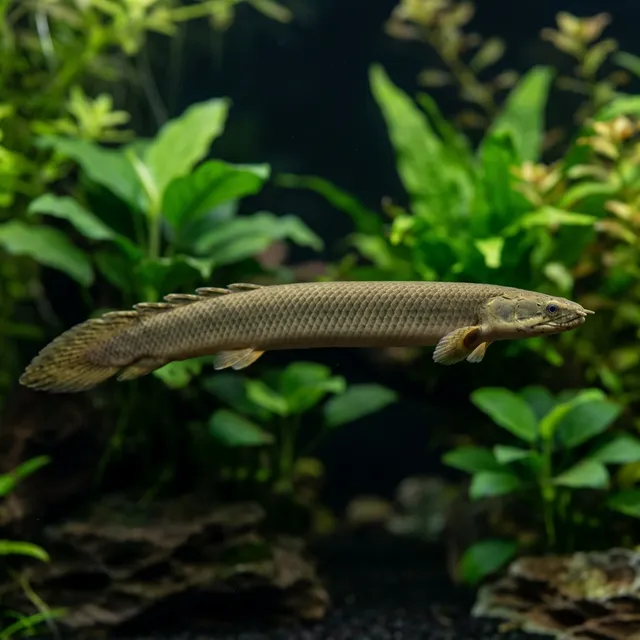
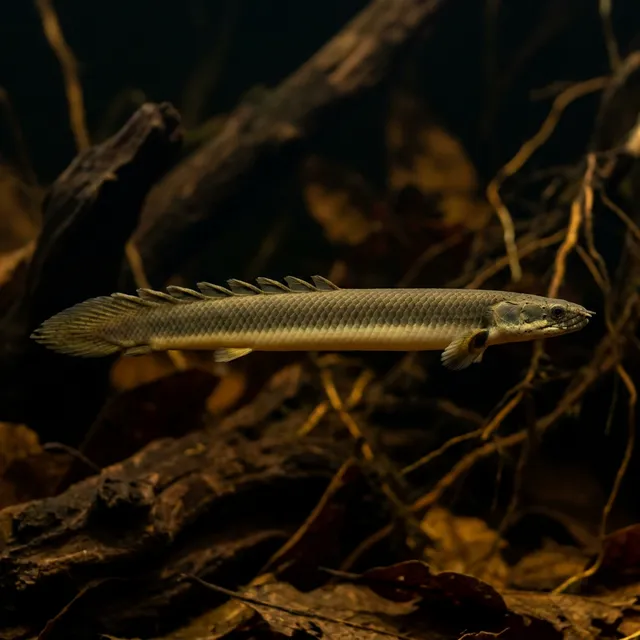
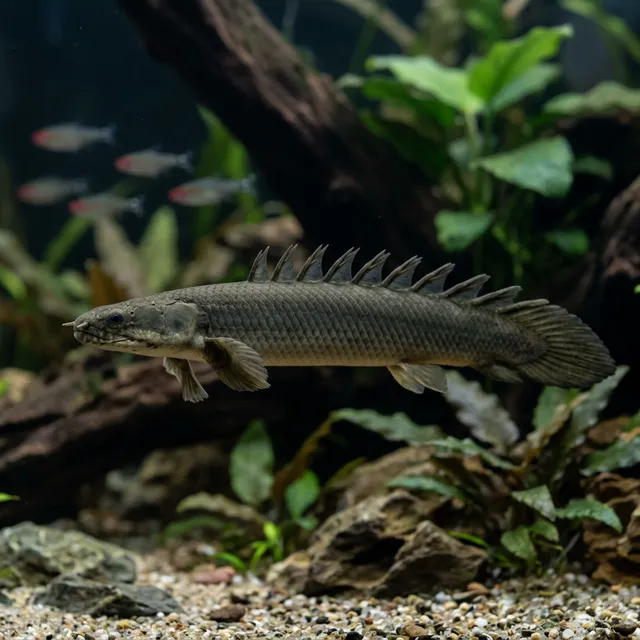
Erpetoichthys calabaricus, commonly known as the Rope Fish, exhibits a highly elongated, serpentine body that can reach a maximum adult size of approximately 5 to 15 inches (12 to 38 cm). Its body is laterally compressed and covered with small, smooth scales that contribute to its streamlined appearance. The head is relatively small with a pronounced, elongated snout, housing a set of small, conical teeth adapted for grasping prey. Notably, the Rope Fish possesses a unique arrangement of dorsal fins, which are elongated and continuous, running along the length of its body, providing it with remarkable maneuverability in aquatic environments. The presence of a lateral line system enhances its sensory capabilities, allowing it to detect vibrations and movements in the water. This species also features an adipose fin, which aids in stabilization during swimming. Defensive adaptations include its ability to escape through narrow crevices, making it an effective escape artist in the wild.
Behavior & temperament
The Rope Fish is primarily a solitary and nocturnal species, often dwelling in the benthic zone of freshwater habitats such as swamps and slow-moving rivers in Africa. It exhibits a calm temperament but can display territorial behavior, especially during breeding periods. Breeding occurs through egg scattering, where females release eggs into the water column, and males fertilize them externally. Rope Fish are known to be relatively shy, preferring to hide among vegetation or submerged structures, and they are not considered aggressive towards other species, although they may exhibit defensive behaviors when threatened.
Diet & feeding
In the wild, the Rope Fish is a carnivore, primarily feeding on small fish, crustaceans, and invertebrates. In captivity, it requires a diet rich in protein, including high-quality pellets, live or frozen foods such as bloodworms, and small fish to maintain optimal health.
Behind the name
Erpetoichthys (from Greek 'erpeton' meaning 'to creep' and 'ichthys' meaning 'fish'); calabaricus (from Calabar, a region in Nigeria where the species was first described).
Plan your tank
Check the numbers before you buy: tank volume, a stocking plan, cycle progress, water changes, and your ongoing care routine.
Keep reading

Choose compatible fish: school sizes, swimming zones, aggression, temperature and hardness matching, and honest bioload math for a peaceful community.
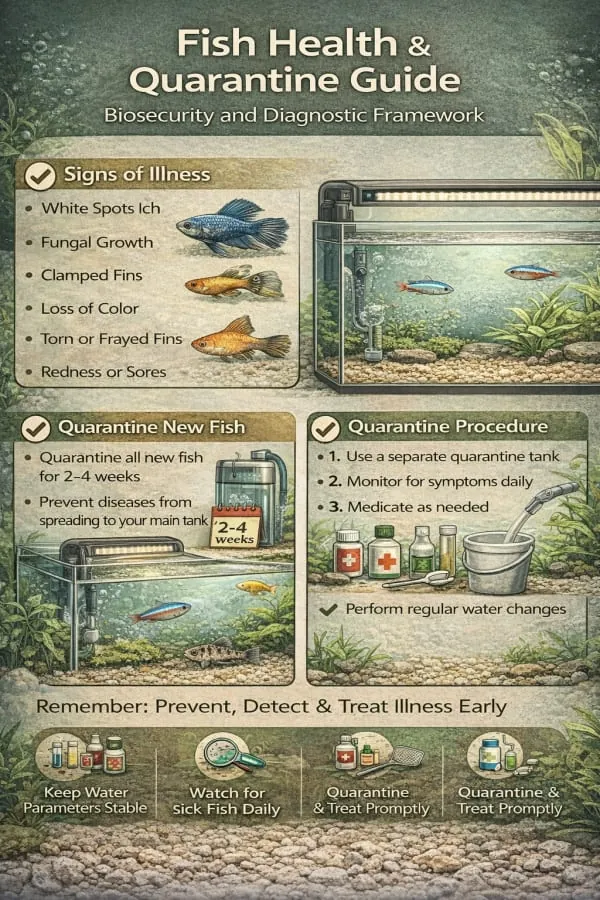
Quarantine new fish, spot the early warning signs, and treat disease without wrecking your tank. A practical freshwater fish health guide.
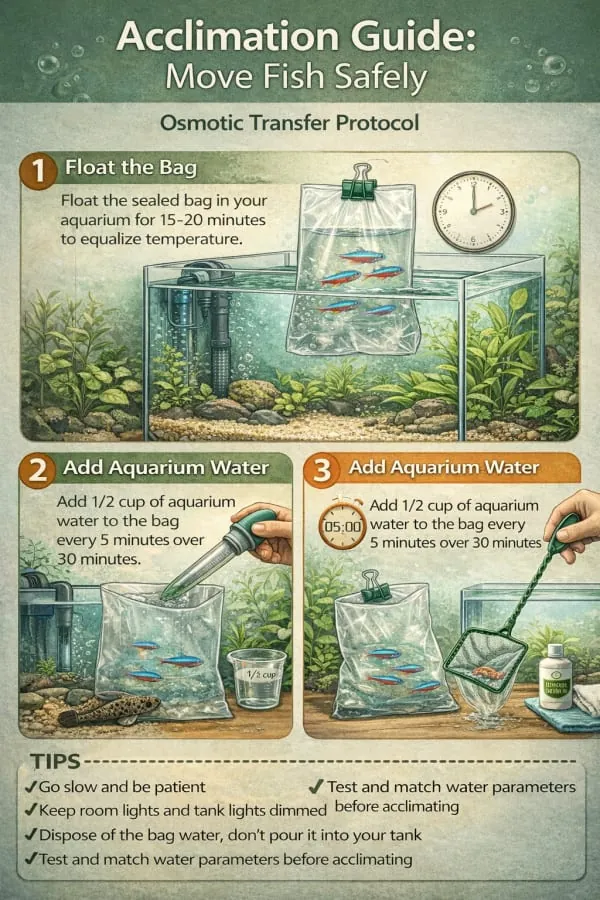
Acclimate new fish, shrimp, and coral safely: temperature floating, drip acclimation, plop-and-drop for shipped livestock, and the first 24 hours.
Keeping Rope Fish?
AquaLens identifies your fish and plants from a photo, tracks water chemistry, and flags health issues early — free on iOS and Android.