Tangaroa Goby Care Guide
Ctenogobiops tangaroai · Saltwater Goby
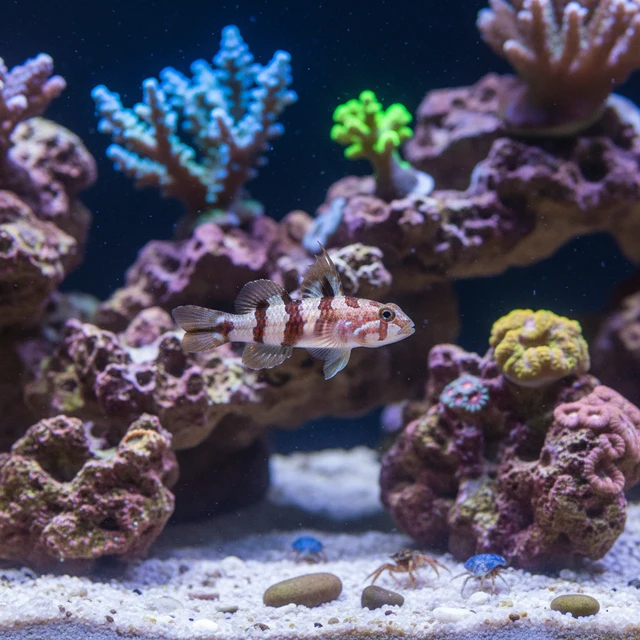
What Tangaroa Goby look like
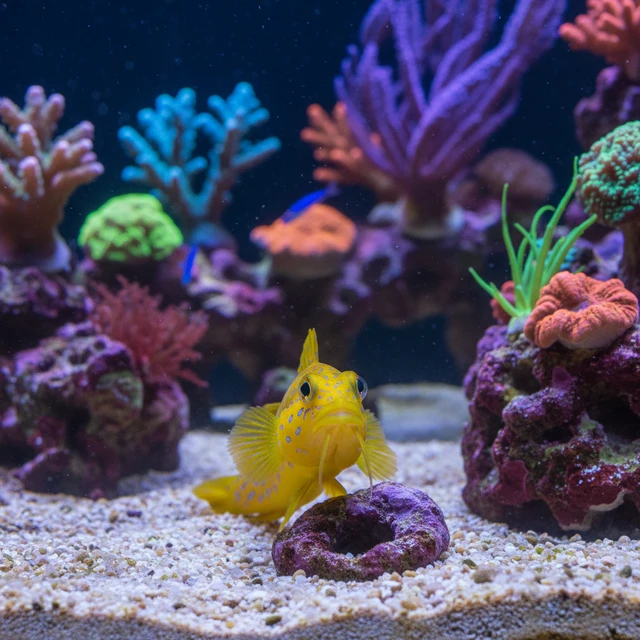
Ctenogobiops tangaroai, commonly known as the Tangaroa Goby, exhibits a slender, elongated body that can reach a maximum adult size of approximately 3 inches (7.5 cm). The species displays sexual dimorphism, with males typically possessing more vibrant coloration and larger dorsal fins compared to females. The coloration is generally a pale yellow to light brown, adorned with distinct dark spots along the body and fins, which serve as camouflage against the sandy substrates of its habitat. Notably, this goby features a fused pelvic fin that forms a disc-like structure, allowing it to adhere to the substrate, providing both stability and a defensive adaptation against predators. The lateral line is well-developed, aiding in the detection of water movements, while the dentition consists of small, conical teeth adapted for grazing on microalgae and detritus.
Behavior & temperament
The Tangaroa Goby is a social species, often found in small groups or pairs, exhibiting a hierarchical structure within its social interactions. It primarily inhabits the sandy substrates of reef environments, where it can be observed swimming just above the bottom, darting in and out of crevices and burrows. Breeding behavior involves the establishment of territories, with males performing courtship displays that include fin flaring and body posturing to attract females. The temperament of Ctenogobiops tangaroai is generally peaceful, although it may exhibit territorial aggression towards conspecifics or other goby species when breeding. This species is known to form symbiotic relationships with various shrimp species, sharing burrows and providing mutual protection.
Diet & feeding
In the wild, the Tangaroa Goby primarily feeds on small invertebrates, detritus, and microalgae. In captivity, it requires a varied diet that includes high-quality frozen or live foods, such as brine shrimp and finely chopped seafood, supplemented with algae-based foods.
Behind the name
The scientific name 'Ctenogobiops tangaroai' derives from the Greek 'Cteno' meaning 'comb', 'gobio' meaning 'goby', and 'ops' meaning 'appearance', referring to the comb-like structure of the pelvic fins, while 'tangaroai' is named after Tangaroa, the Māori god of the sea.
Plan your tank
Check the numbers before you buy: tank volume, salinity, salt mix, water changes, and your ongoing care routine. Keeping reef? Start from the Saltwater & Reef hub.
Keep reading
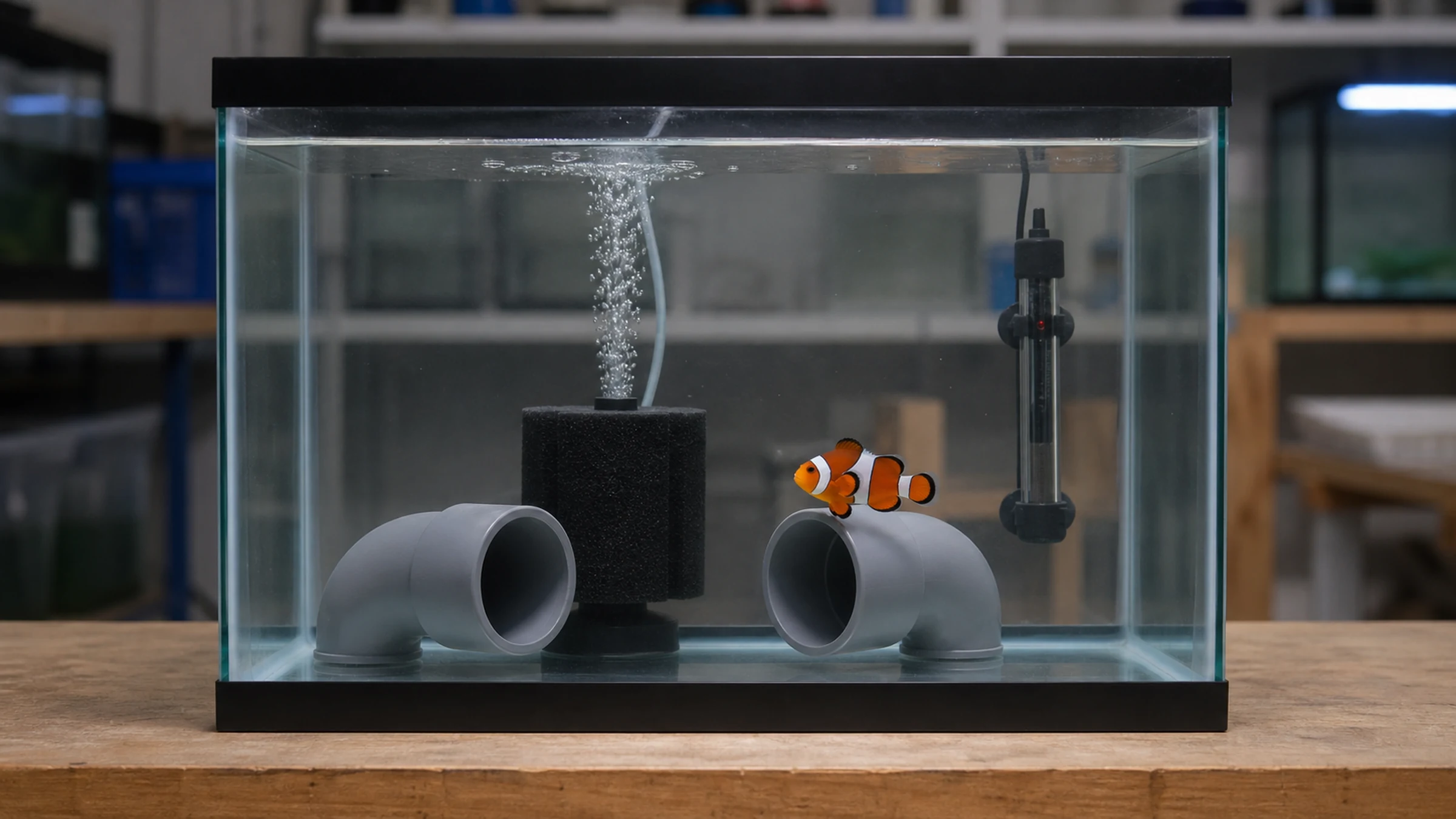
How to quarantine new saltwater fish against marine ich, velvet, and brooklynella: the QT tank, treatments, timelines, and the buy-clean shortcut.

What every reef parameter means and where to keep it: salinity, temperature, pH, alkalinity, calcium, magnesium, nitrate, and phosphate.

Choose compatible fish: school sizes, swimming zones, aggression, temperature and hardness matching, and honest bioload math for a peaceful community.
Keeping Tangaroa Goby?
AquaLens identifies your fish and plants from a photo, tracks water chemistry, and flags health issues early — free on iOS and Android.