MTS (Trumpet Snail) Care Guide
Melanoides tuberculata · Freshwater Invert
What MTS (Trumpet Snail) look like
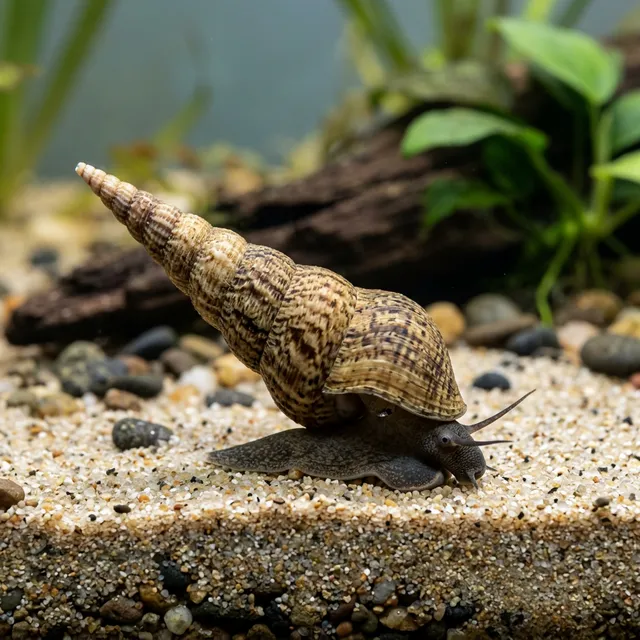
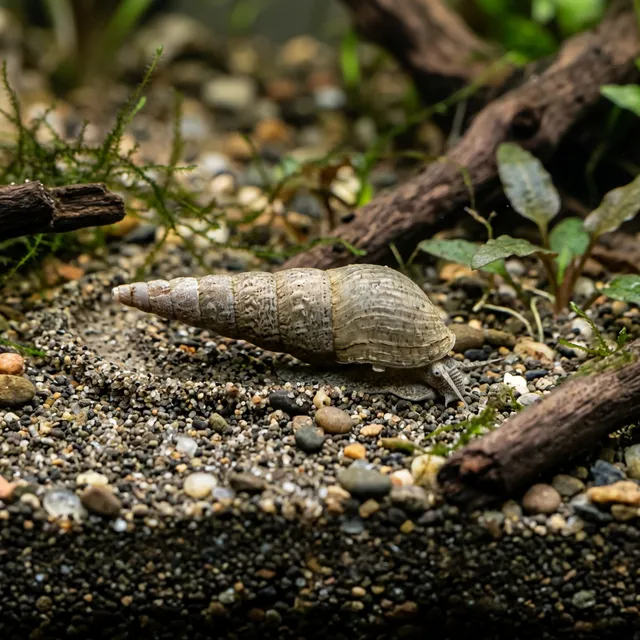
Melanoides tuberculata, commonly known as the Trumpet Snail, exhibits a distinctive, elongated, and conical shell that resembles an ice-cream cone or trumpet, reaching a maximum adult size of approximately 5 to 25 mm in length. The shell is characterized by its smooth, uncoiled structure, typically displaying a drab coloration of light brown to grey, which aids in camouflage against the substrate. This species lacks pronounced sexual dimorphism; however, females may exhibit slightly larger shells due to reproductive capacity. Defensive adaptations include the ability to burrow into the substrate, providing protection from predators. The shell features a well-defined aperture and a subtle spiral pattern, while the soft body is equipped with a retractable foot that facilitates movement and burrowing behavior. The presence of a siphon allows for respiration while buried, and the species also possesses a radula, which is adapted for scraping detritus from surfaces.
Behavior & temperament
Inhabiting freshwater environments, Melanoides tuberculata is primarily a benthic organism that thrives in soft substrates where it can burrow and aerate the sediment. This species is generally solitary but can be found in loose aggregations, particularly in areas with abundant food sources. It exhibits a non-aggressive temperament, primarily feeding on detritus and organic matter. Breeding behavior is characterized by ovoviviparity, where females give birth to live young rather than laying eggs, allowing for greater survival rates in fluctuating environments. The Trumpet Snail is known for its ability to adapt to various water conditions, making it a resilient inhabitant of its native habitats.
Diet & feeding
In the wild, Melanoides tuberculata primarily feeds on detritus, algae, and decomposing organic material. In captivity, it requires a diet rich in detritus and may benefit from supplemental feedings of spirulina-based foods and blanched vegetables to ensure optimal health.
Behind the name
Melanoides (black form); tuberculata (tuberculated or having small bumps).
Plan your tank
Check the numbers before you buy: tank volume, a stocking plan, cycle progress, water changes, and your ongoing care routine.
Keep reading
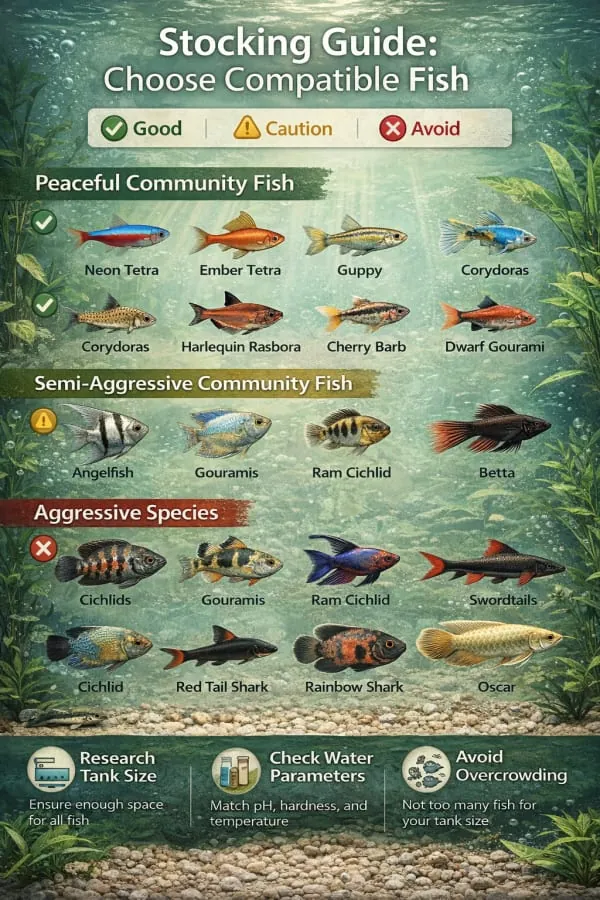
Choose compatible fish: school sizes, swimming zones, aggression, temperature and hardness matching, and honest bioload math for a peaceful community.
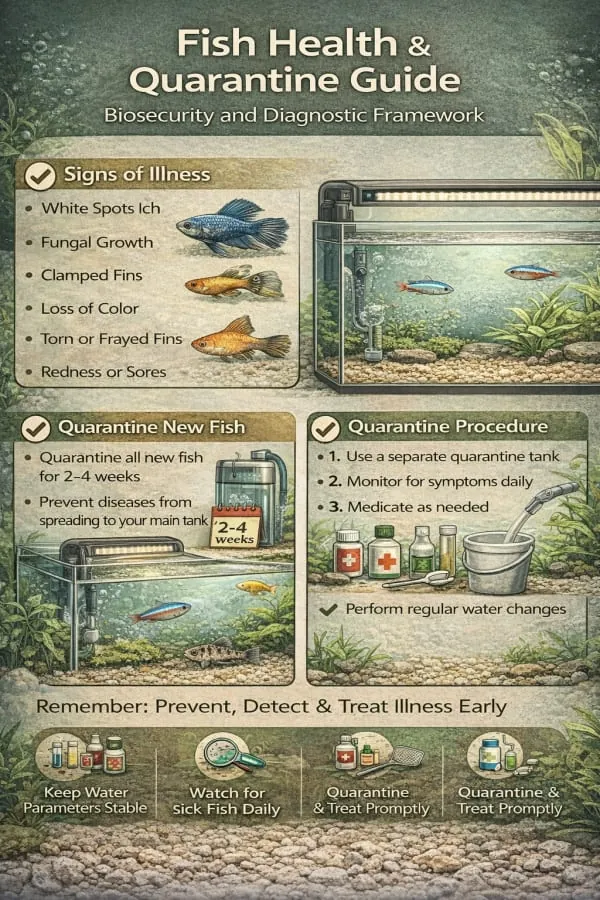
Quarantine new fish, spot the early warning signs, and treat disease without wrecking your tank. A practical freshwater fish health guide.
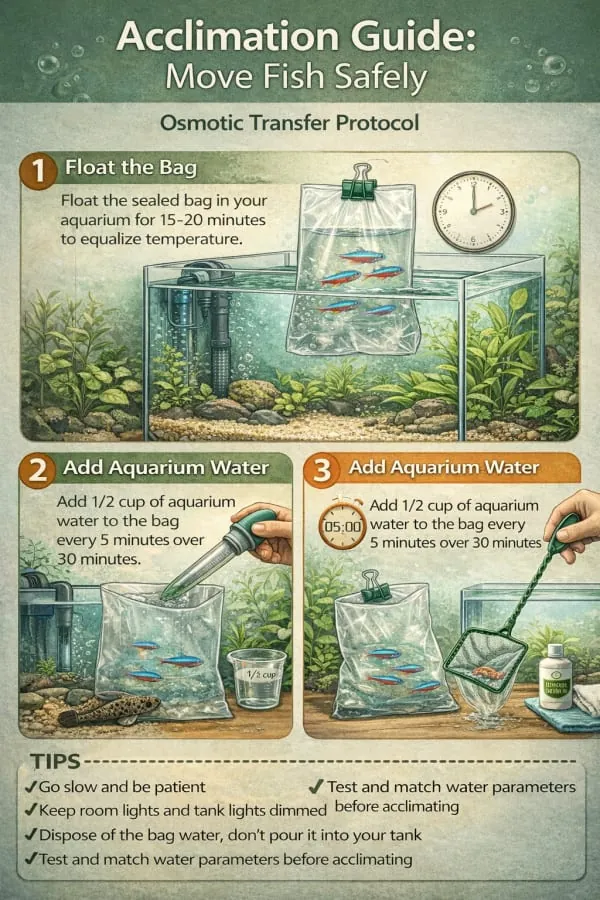
Acclimate new fish, shrimp, and coral safely: temperature floating, drip acclimation, plop-and-drop for shipped livestock, and the first 24 hours.
Keeping MTS (Trumpet Snail)?
AquaLens identifies your fish and plants from a photo, tracks water chemistry, and flags health issues early — free on iOS and Android.