
Water Sprite Care Guide
Ceratopteris thalictroides · Freshwater Plant
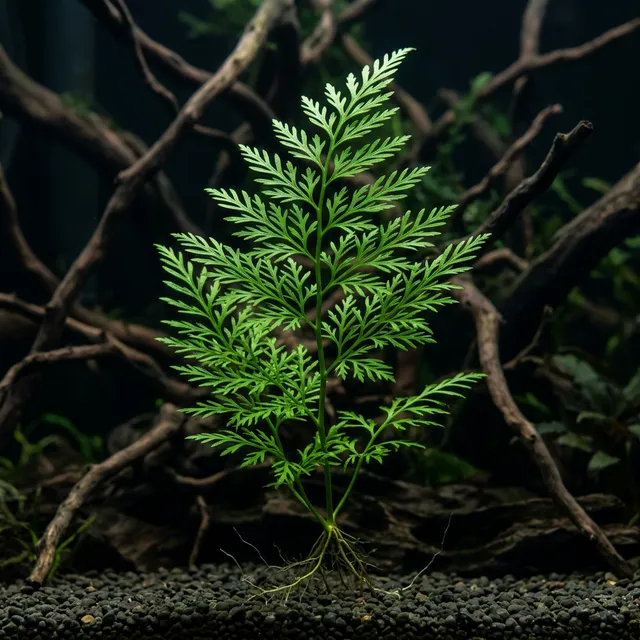
What Water Sprite look like
Ceratopteris thalictroides, commonly known as Water Sprite, exhibits a finely dissected, feathery appearance characterized by its delicate, lacy fronds that can reach a maximum height of 15 inches under optimal conditions. The plant is typically submerged but can also float on the water's surface, displaying a bright green coloration that is indicative of its healthy photosynthetic capabilities. The fronds are pinnately lobed, with a soft texture that enhances its aesthetic appeal in aquaria. This species does not exhibit sexual dimorphism, as it reproduces via spores rather than through distinct male and female structures. Its defensive adaptations include the production of allelopathic compounds that can inhibit the growth of competing aquatic plants, thus securing its ecological niche. Unique morphological features include its ability to produce both submerged and emergent leaves, with the latter developing a more robust structure that aids in buoyancy and light capture.
Behavior & temperament
Water Sprite is primarily a floating aquatic plant that thrives in a variety of freshwater environments, often found in slow-moving waters, swamps, and marshes. It does not exhibit a social hierarchy as it is a solitary plant, but it can form dense colonies when conditions are favorable. The plant is known for its rapid growth and adaptability, often responding to changes in water levels and light availability. Water Sprite reproduces through spores, which are dispersed by water currents, allowing it to colonize new areas effectively. Its temperament is non-aggressive, making it an ideal choice for community aquariums, where it can coexist peacefully with various fish and invertebrates.
Diet & feeding
Ceratopteris thalictroides is an obligate photosynthetic organism, relying on sunlight to produce energy through the process of photosynthesis. In captivity, it requires a nutrient-rich substrate and may benefit from the addition of liquid fertilizers to promote optimal growth.
Behind the name
Ceratopteris (horned fern); thalictroides (resembling the genus Thalictrum, commonly known as meadow rue).
Plan your tank
Check the numbers before you buy: tank volume, a stocking plan, cycle progress, water changes, and your ongoing care routine.
Keep reading
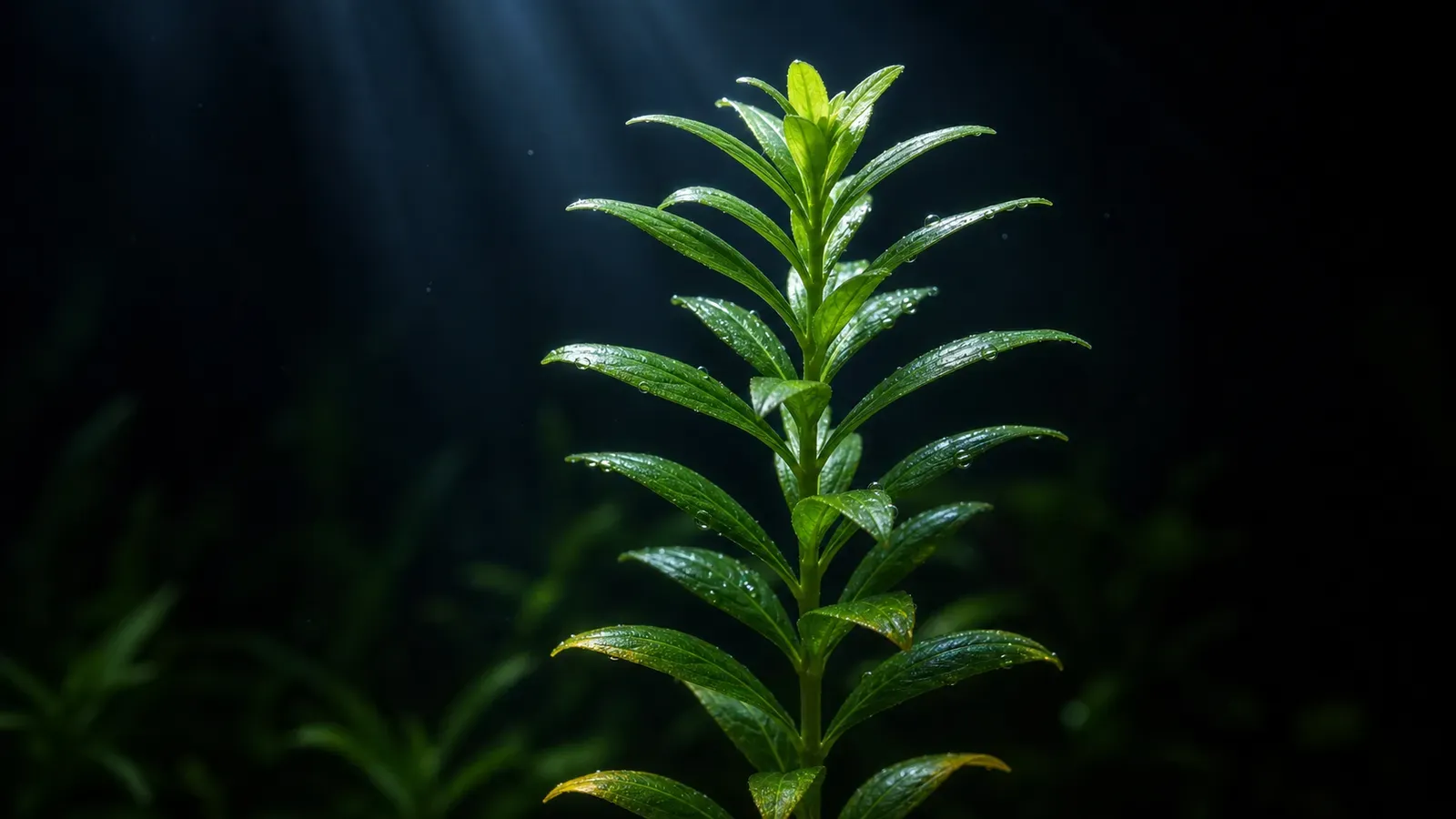
Diagnose aquarium plant deficiencies by leaf age and symptom: yellowing, pinholes, twisting, and stunting. Read the pattern, then fix it safely.
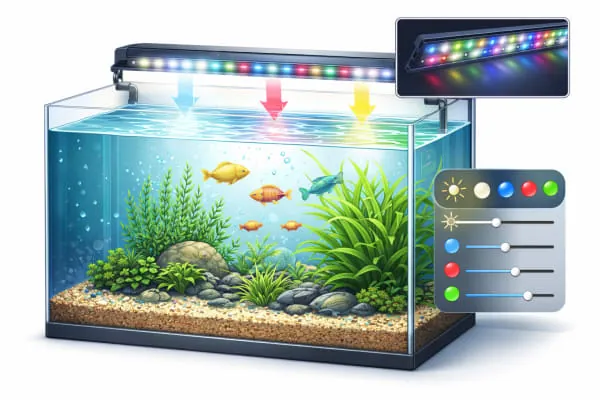
PAR-first planted tank lighting: choose intensity by what you grow, set photoperiod and spectrum, kill shadows, and hold algae back without overspending.

Aquarium CO₂ injection made safe: how carbon, light, and nutrients balance, which system to buy, and how to dial it in without gassing your fish.
Keeping Water Sprite?
AquaLens identifies your fish and plants from a photo, tracks water chemistry, and flags health issues early — free on iOS and Android.