Whitecheek Goby Care Guide
Rhinogobius duospilus · Freshwater Fish
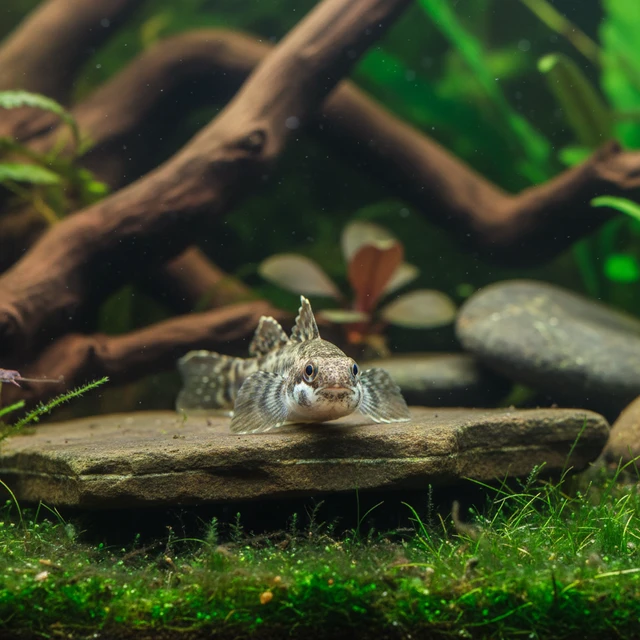
What Whitecheek Goby look like
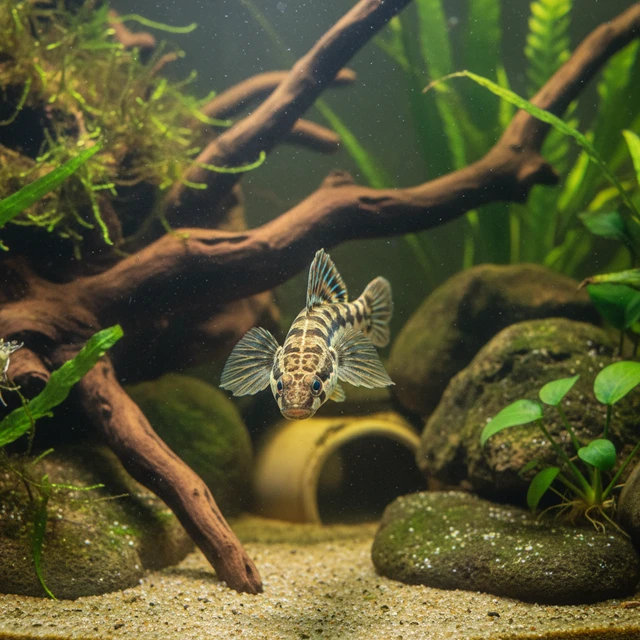
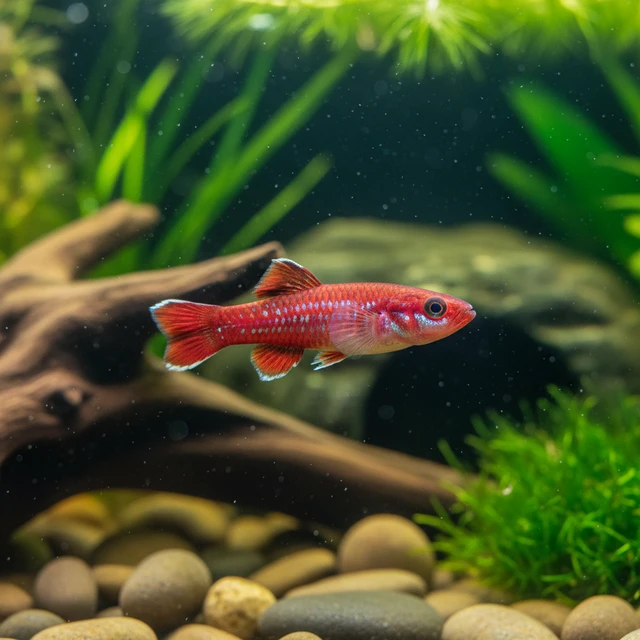
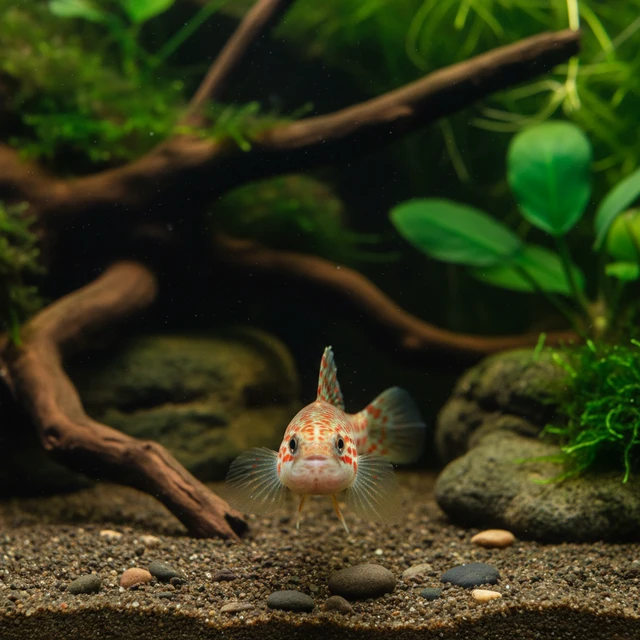
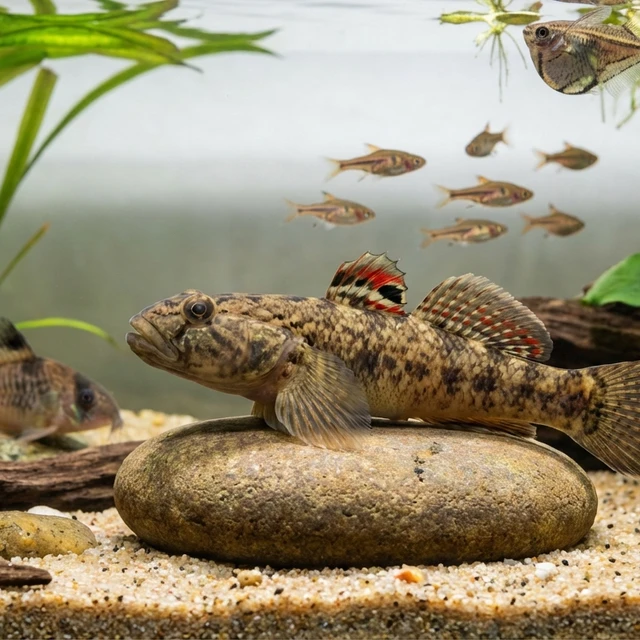
The Whitecheek Goby (Rhinogobius duospilus) exhibits a laterally compressed, fusiform body that typically reaches a maximum adult size of 3 to 4 inches (7.5 to 10 cm). This species is characterized by distinct pale or white patches on the cheeks, which serve as a key identifying feature, with the specific epithet 'duospilus' referring to the two prominent spots. Males display vibrant coloration during the breeding season, often showcasing a spectrum of hues that can include blues and yellows, in contrast to the more subdued coloration of females. The species possesses a robust, fused pelvic fin that forms a disc-like structure, aiding in its benthic lifestyle, allowing it to adhere to substrates in fast-flowing waters. Additionally, the presence of a lateral line system enhances its sensory perception in turbid environments, while its dentition is adapted for a carnivorous diet, featuring small, sharp teeth suitable for grasping prey.
Behavior & temperament
Rhinogobius duospilus is primarily a benthic species, often found dwelling in shallow, fast-flowing streams and rivers of East Asia. This goby exhibits a solitary to semi-social behavior, with individuals often establishing small territories within their habitat. During the breeding season, males become highly territorial and engage in displays of aggression towards rivals, showcasing their colorful markings to attract females. The breeding behavior involves the construction of nests in crevices or under stones, where the female scatters eggs, and the male guards the nest until the eggs hatch. Overall, the Whitecheek Goby is known for its relatively calm demeanor, although it can exhibit aggression during territorial disputes.
Diet & feeding
In the wild, the Whitecheek Goby is a carnivore, primarily feeding on small invertebrates such as insect larvae and crustaceans. In captivity, it requires a diet rich in protein, including high-quality flake food, frozen or live foods such as brine shrimp and bloodworms.
Behind the name
Rhinogobius (nose goby); duospilus (two spots).
Plan your tank
Check the numbers before you buy: tank volume, a stocking plan, cycle progress, water changes, and your ongoing care routine.
Keep reading

Choose compatible fish: school sizes, swimming zones, aggression, temperature and hardness matching, and honest bioload math for a peaceful community.
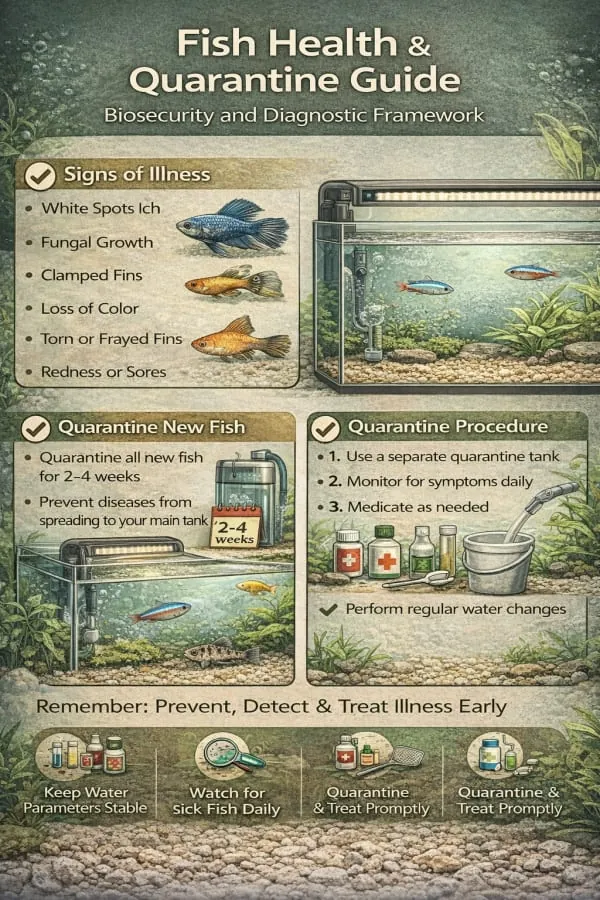
Quarantine new fish, spot the early warning signs, and treat disease without wrecking your tank. A practical freshwater fish health guide.

Acclimate new fish, shrimp, and coral safely: temperature floating, drip acclimation, plop-and-drop for shipped livestock, and the first 24 hours.
Keeping Whitecheek Goby?
AquaLens identifies your fish and plants from a photo, tracks water chemistry, and flags health issues early — free on iOS and Android.