Anubias Barteri Care Guide
Anubias barteri · Freshwater Plant
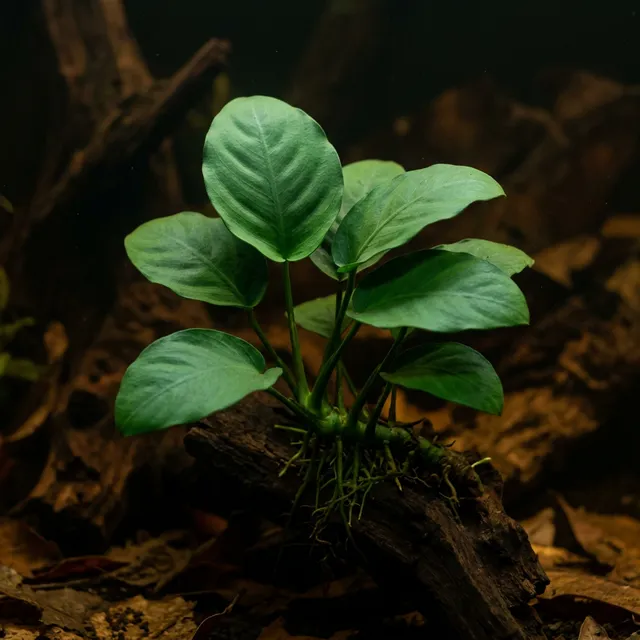
What Anubias Barteri look like
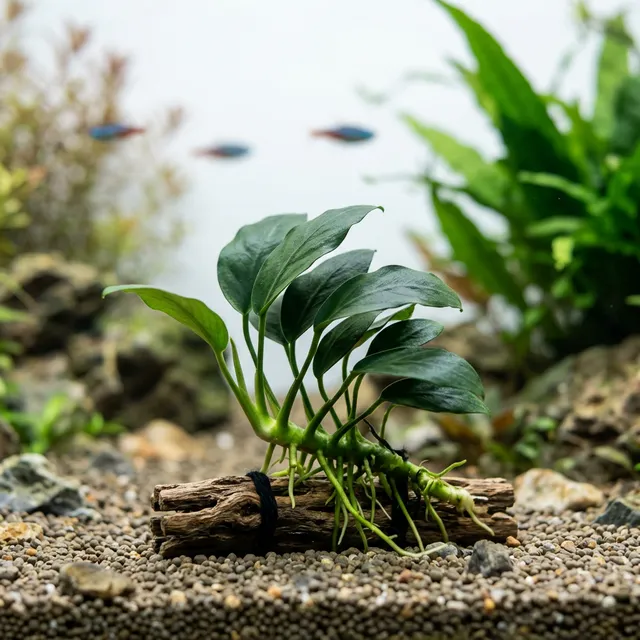
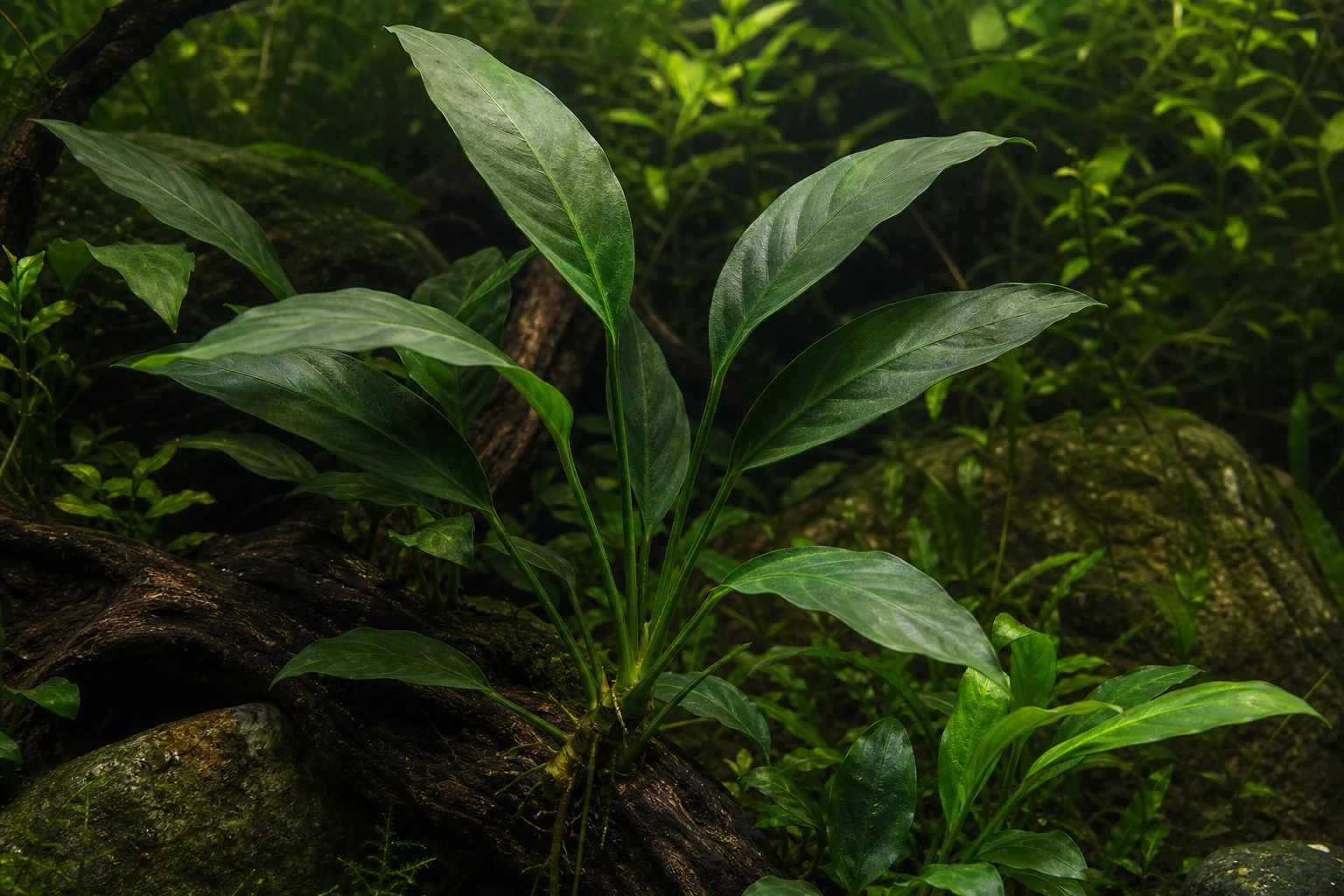
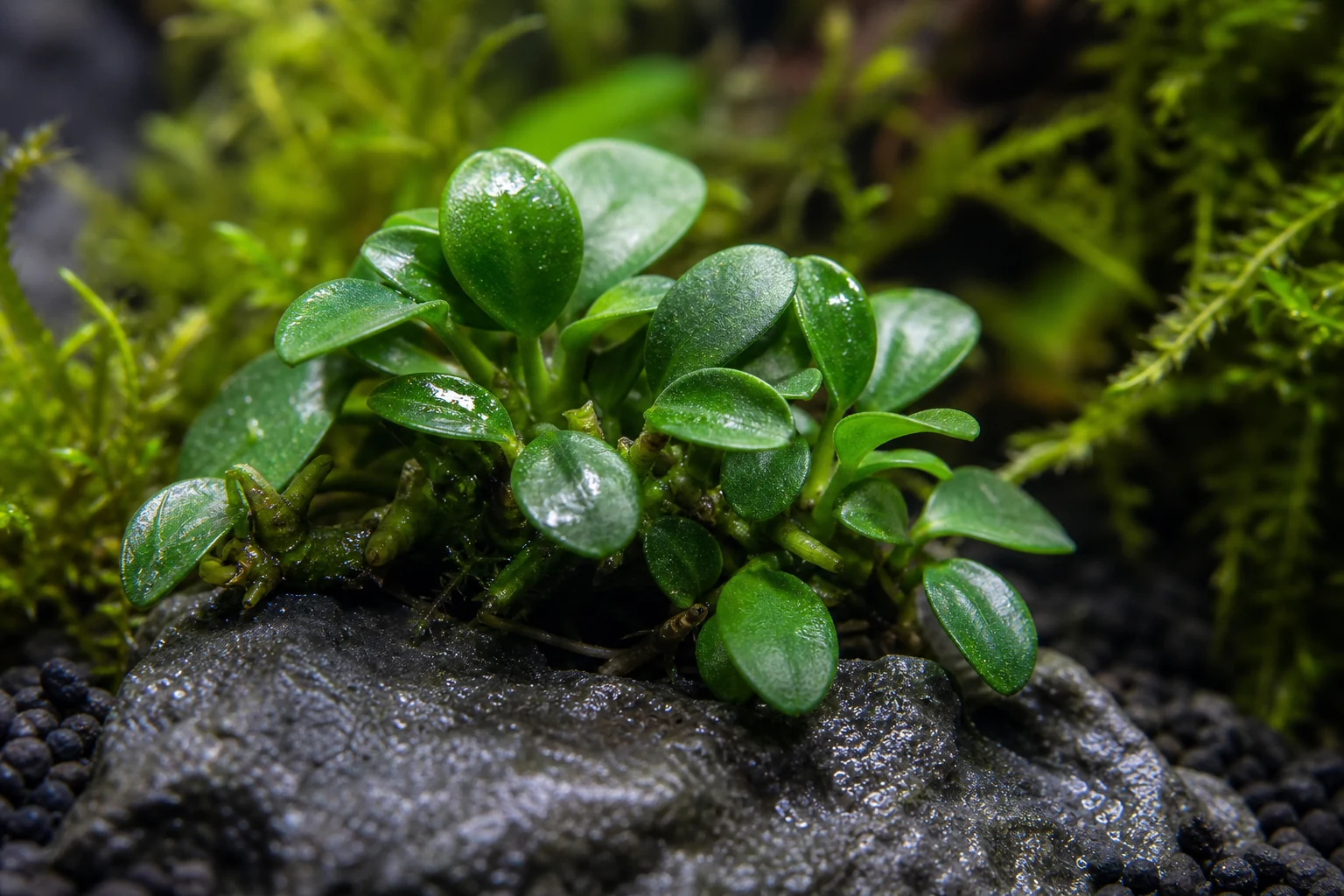
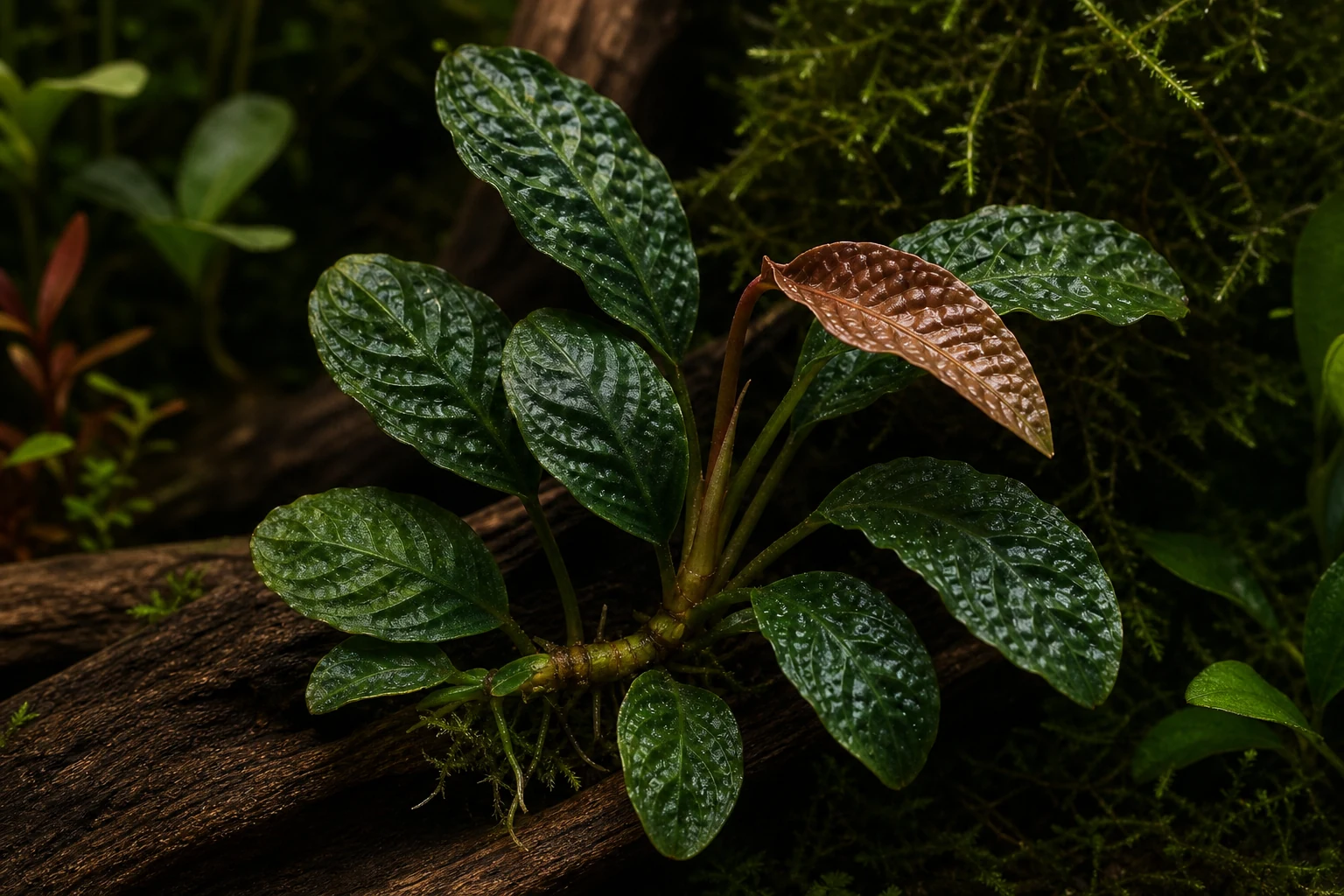
Anubias barteri exhibits a robust and thickly textured leaf structure, characterized by its broad, ovate leaves that can reach up to 15 cm in length and 7 cm in width. The leaves are dark green, leathery, and have a glossy surface, which aids in minimizing water loss. The plant typically grows as an epiphyte, attaching itself to rocks and driftwood, with a rhizome that can extend several centimeters in length. This species does not exhibit significant sexual dimorphism, as both male and female plants share similar morphological traits. Defensive adaptations include its tough leaf texture, which deters herbivory, and its ability to thrive in low-light conditions, making it less susceptible to competition. Unique features include the presence of a prominent midrib and a network of veins that provide structural support, as well as the potential for flowering under optimal conditions, producing small, white inflorescences.
Behavior & temperament
Anubias barteri is primarily a solitary plant, often found in shaded areas of slow-moving water bodies, where it can anchor itself to submerged structures. It exhibits a low level of aggression towards other aquatic plants and can coexist harmoniously in community aquariums. This species is not a true aquatic plant in the sense that it can thrive partially submerged or fully submerged, making it versatile in its habitat preferences. Breeding behavior is not applicable as it is a flowering plant that reproduces via seeds and vegetative propagation through its rhizome. Its growth rate is moderate, and it tends to establish itself in the substrate or on surfaces, contributing to the overall biodiversity of its environment.
Diet & feeding
Anubias barteri is autotrophic, relying primarily on photosynthesis for energy. In captivity, it requires a nutrient-rich substrate and may benefit from occasional supplementation with liquid fertilizers to promote healthy growth.
Behind the name
Anubias (named after Anubis, the ancient Egyptian god associated with the afterlife); barteri (named in honor of the botanist Isaac Barter).
Plan your tank
Check the numbers before you buy: tank volume, a stocking plan, cycle progress, water changes, and your ongoing care routine.
Keep reading
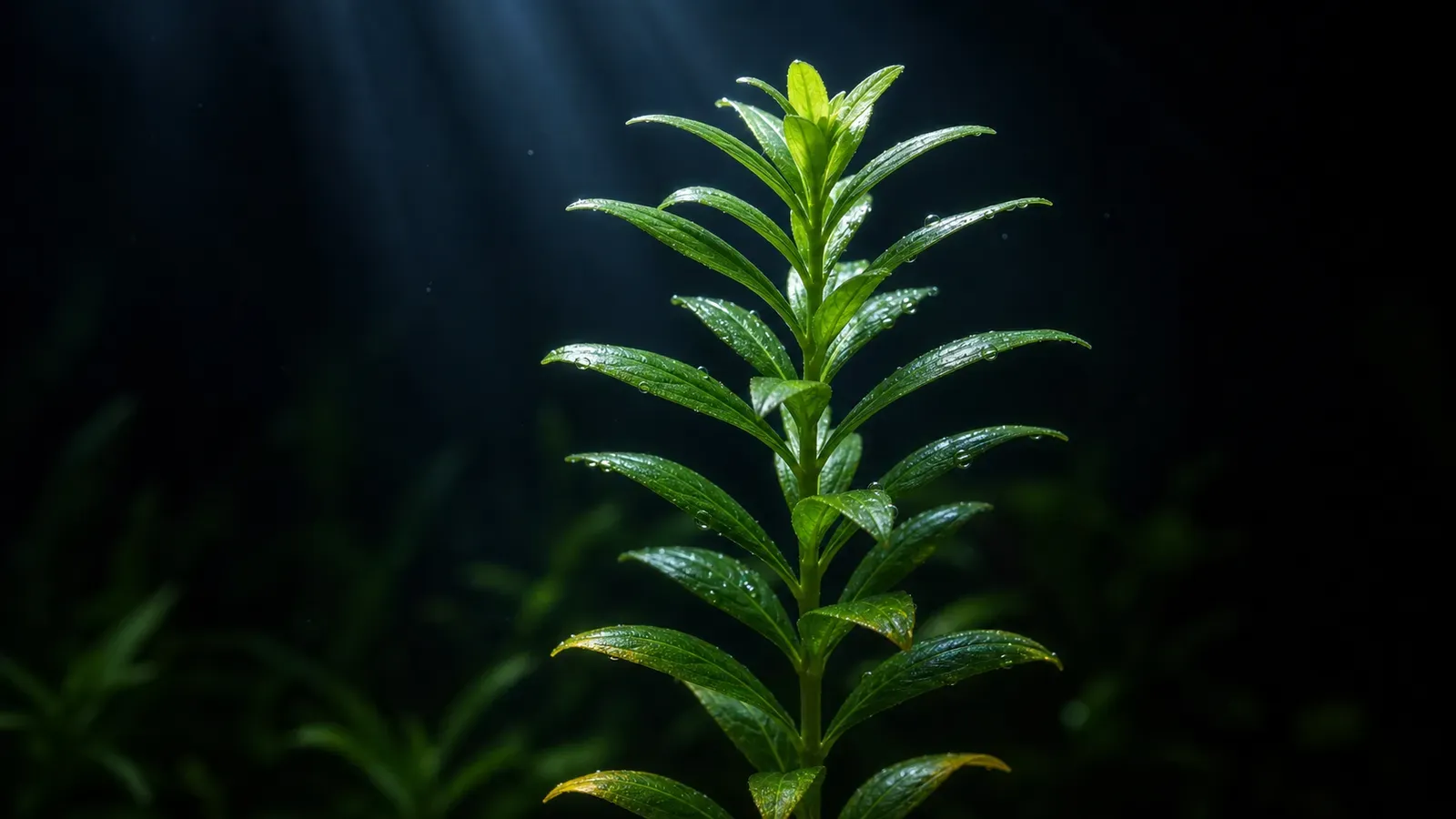
Diagnose aquarium plant deficiencies by leaf age and symptom: yellowing, pinholes, twisting, and stunting. Read the pattern, then fix it safely.

PAR-first planted tank lighting: choose intensity by what you grow, set photoperiod and spectrum, kill shadows, and hold algae back without overspending.

Aquarium CO₂ injection made safe: how carbon, light, and nutrients balance, which system to buy, and how to dial it in without gassing your fish.
Keeping Anubias Barteri?
AquaLens identifies your fish and plants from a photo, tracks water chemistry, and flags health issues early — free on iOS and Android.