Umbrella Cichlid Care Guide
Apistogramma borellii · Freshwater Fish
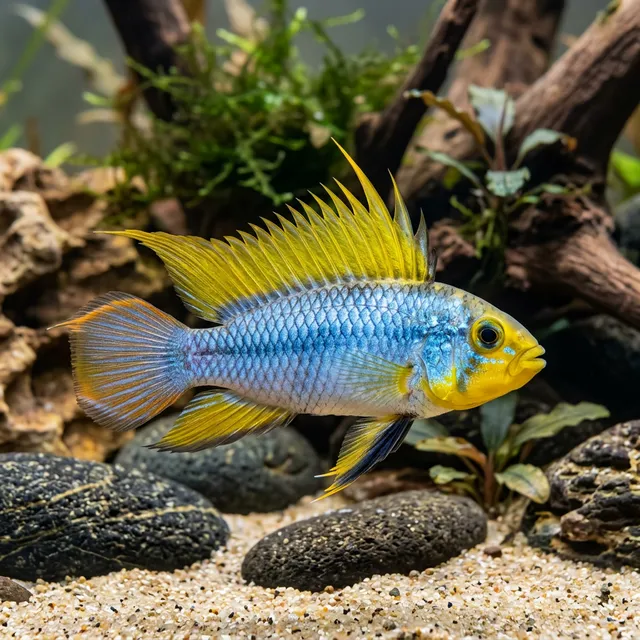
What Umbrella Cichlid look like
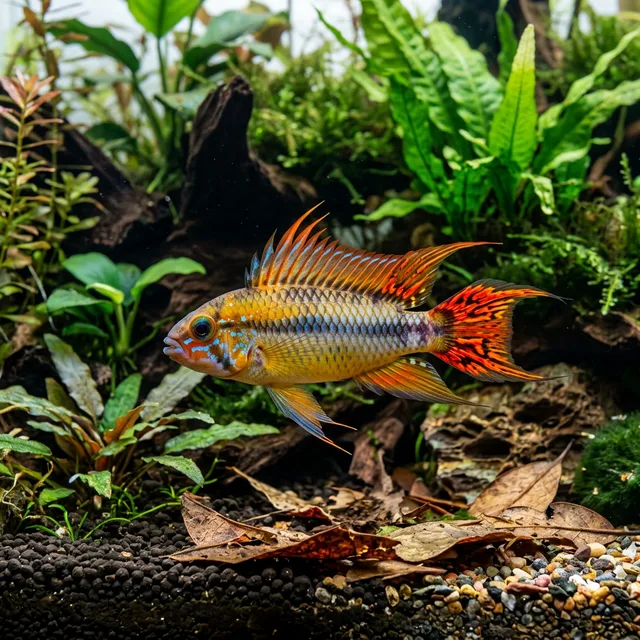
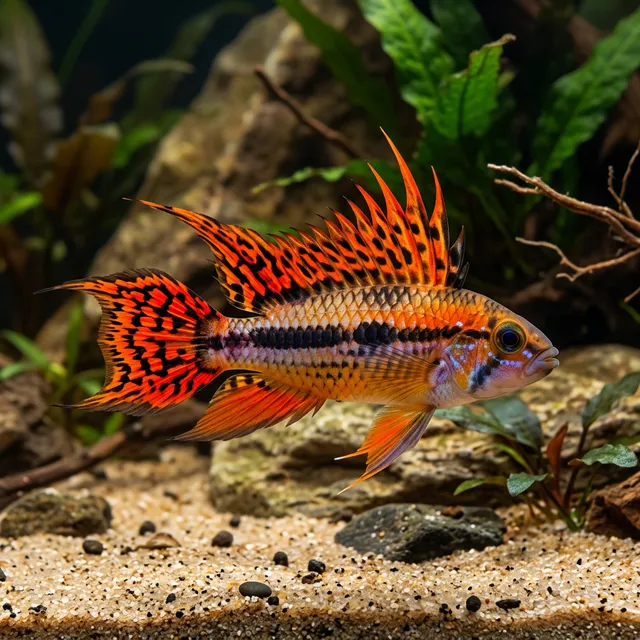
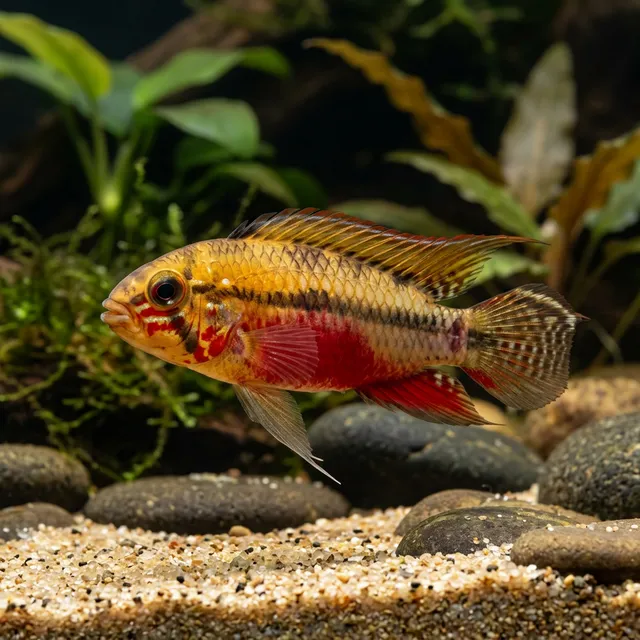
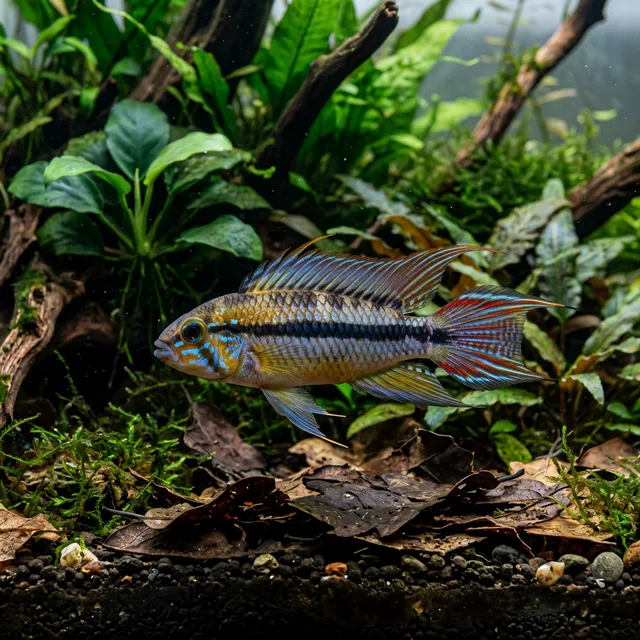
Apistogramma borellii, commonly known as the Umbrella Cichlid, exhibits a compact and laterally compressed body typical of dwarf cichlids, reaching a maximum adult size of approximately 5 inches (12.7 cm). Males are particularly striking, displaying a vivid metallic powder blue coloration that covers the entire body, contrasted by a bright solid yellow on the face, lower jaw, and the impressive sail-like dorsal fin, which is significantly larger in males than in females, showcasing pronounced sexual dimorphism. The species possesses a well-defined lateral line and robust dentition adapted for a carnivorous diet. Defensive adaptations include the ability to retreat into crevices and caves, which are essential for their breeding behavior as cave spawners. Their finnage is characterized by elongated dorsal and anal fins, enhancing their visual appeal and providing a graceful swimming style.
Behavior & temperament
The Umbrella Cichlid is primarily a benthic dweller, often found in the lower strata of its aquatic environment, where it exhibits a territorial nature, particularly during breeding. Males are known to establish and defend territories against other males, while females are more social and may form loose associations with other females. This species is not an obligate schooler, but they can be observed in small groups, especially during non-breeding periods. Breeding behavior involves the female laying eggs in a concealed cave, which the male then guards fiercely, demonstrating a high level of parental care. Their temperament can range from moderately aggressive to territorial, particularly during the breeding season, making them suitable for aquarists with some experience in managing cichlid behavior.
Diet & feeding
In the wild, Apistogramma borellii primarily feeds on small invertebrates and zooplankton, making them carnivorous micropredators. In captivity, they require a diet rich in protein, including high-quality pellets, frozen or live foods such as brine shrimp and daphnia, to ensure optimal health and coloration.
Behind the name
Apistogramma (from Greek 'apistos' meaning 'not easily caught' and 'gramma' meaning 'line' or 'letter'); borellii (named in honor of the naturalist and explorer, Borelli).
Plan your tank
Check the numbers before you buy: tank volume, a stocking plan, cycle progress, water changes, and your ongoing care routine.
Keep reading
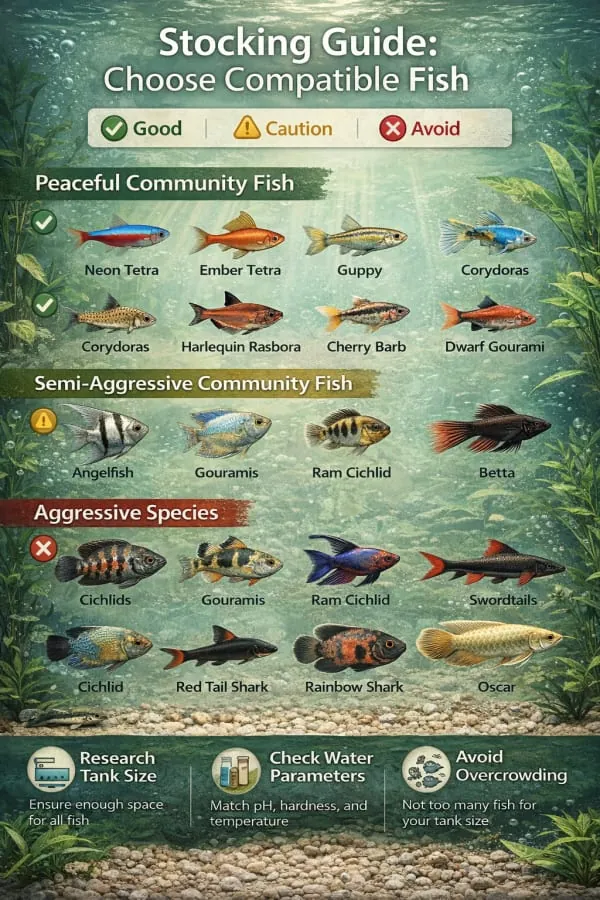
Choose compatible fish: school sizes, swimming zones, aggression, temperature and hardness matching, and honest bioload math for a peaceful community.
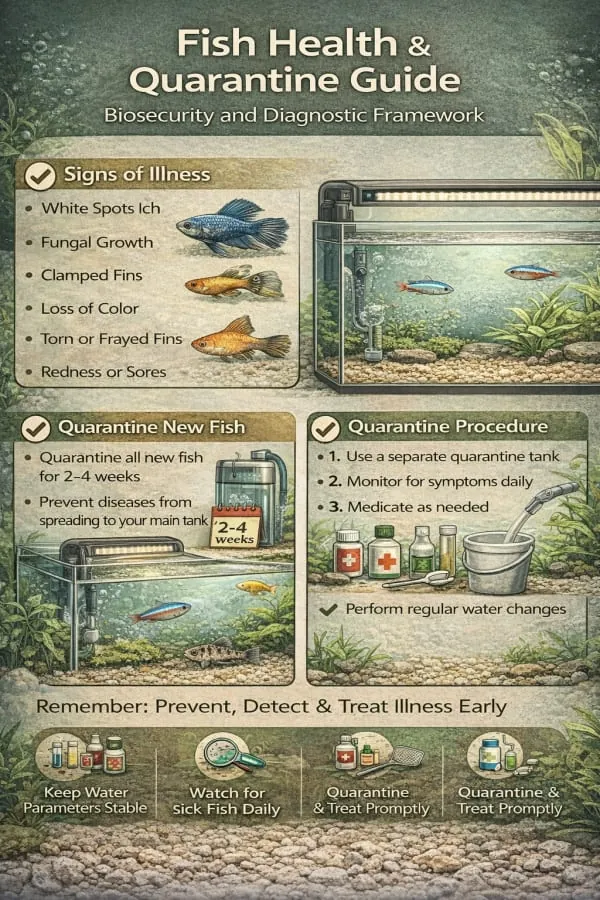
Quarantine new fish, spot the early warning signs, and treat disease without wrecking your tank. A practical freshwater fish health guide.
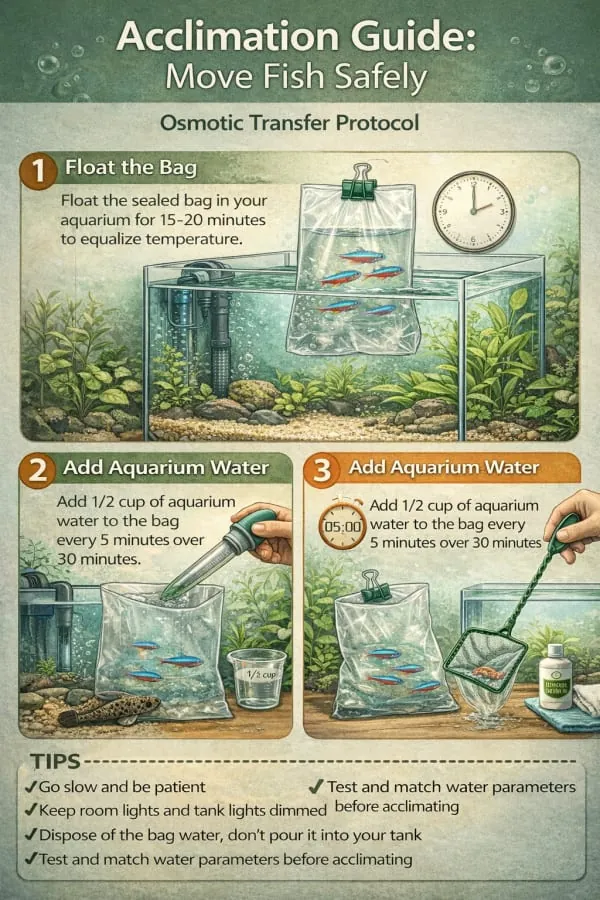
Acclimate new fish, shrimp, and coral safely: temperature floating, drip acclimation, plop-and-drop for shipped livestock, and the first 24 hours.
Keeping Umbrella Cichlid?
AquaLens identifies your fish and plants from a photo, tracks water chemistry, and flags health issues early — free on iOS and Android.