Compact Aponogeton Care Guide
Aponogeton ulvaceus · Freshwater Plant
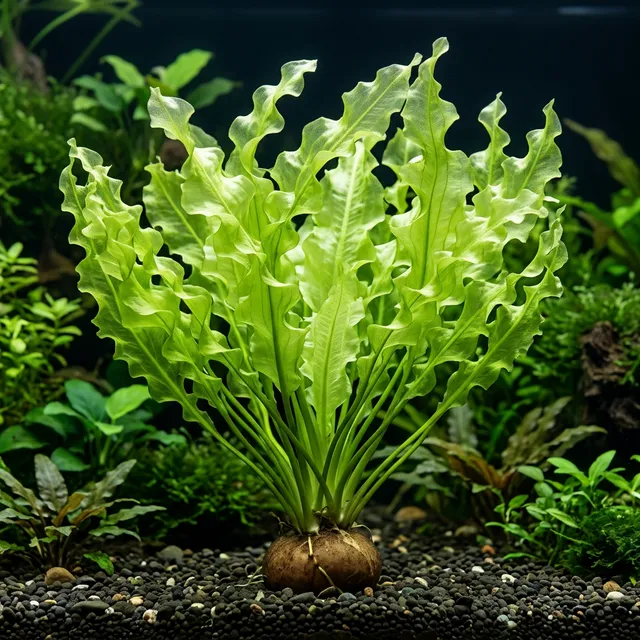
What Compact Aponogeton look like
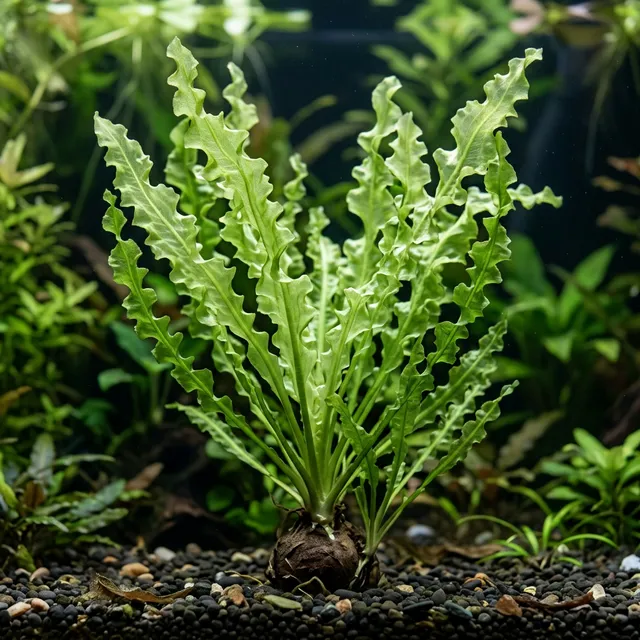
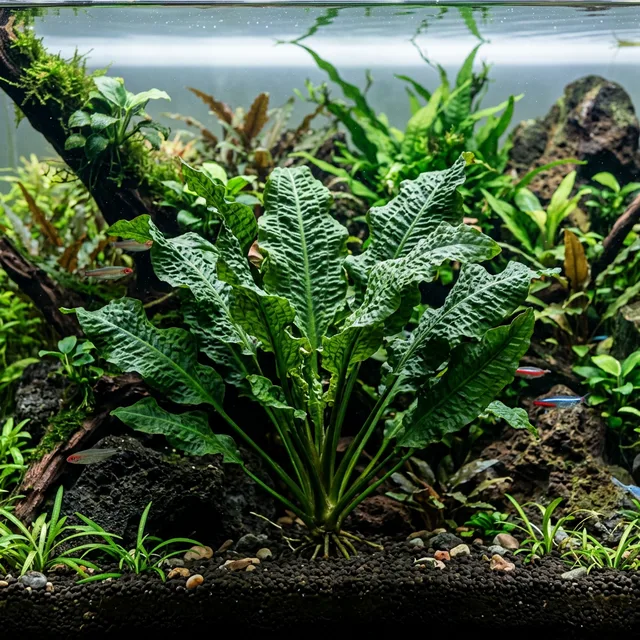
Aponogeton ulvaceus, commonly known as the Compact Aponogeton, is characterized by its large, bulbous structure from which it grows wide, translucent, pale green leaves. These leaves are heavily undulating and can reach lengths of 12 to 20 inches and widths of 3 to 4 inches, exhibiting dramatic ruffled margins that contribute to its striking appearance. The plant's morphology is distinct from other species in the genus due to its broader leaf structure, which provides a unique aesthetic in aquatic environments. The leaves emerge from a round brown tuber, which serves as a storage organ, allowing the plant to thrive in varying conditions. Aponogeton ulvaceus does not exhibit sexual dimorphism, as it is a flowering plant that reproduces through aquatic blooms rather than through distinct male and female forms. Its defensive adaptations include a robust structure that can withstand herbivory, and its translucent leaves may also serve as a camouflage against potential grazers.
Behavior & temperament
In its natural habitat, Aponogeton ulvaceus typically dwells in the benthic zone of freshwater bodies, where it can establish itself in soft substrates. It is not an obligate schooler and does not exhibit social hierarchies, as it is primarily a solitary plant. This species is known for its ability to adapt to varying water conditions, and its breeding behavior involves the production of flowers that rise above the water surface, allowing for cross-pollination. The temperament of this plant is generally peaceful, contributing to a harmonious aquatic environment when placed in community tanks.
Diet & feeding
Aponogeton ulvaceus is primarily autotrophic, relying on photosynthesis for its nutritional needs. In captivity, it requires adequate light levels to support its growth and may benefit from the addition of liquid fertilizers to enhance nutrient availability.
Behind the name
Aponogeton (from Greek 'apon' meaning 'away from' and 'gēton' meaning 'to gather'); ulvaceus (from Latin 'ulva' meaning 'seaweed' or 'green algae', referring to the plant's leaf coloration).
Plan your tank
Check the numbers before you buy: tank volume, a stocking plan, cycle progress, water changes, and your ongoing care routine.
Keep reading
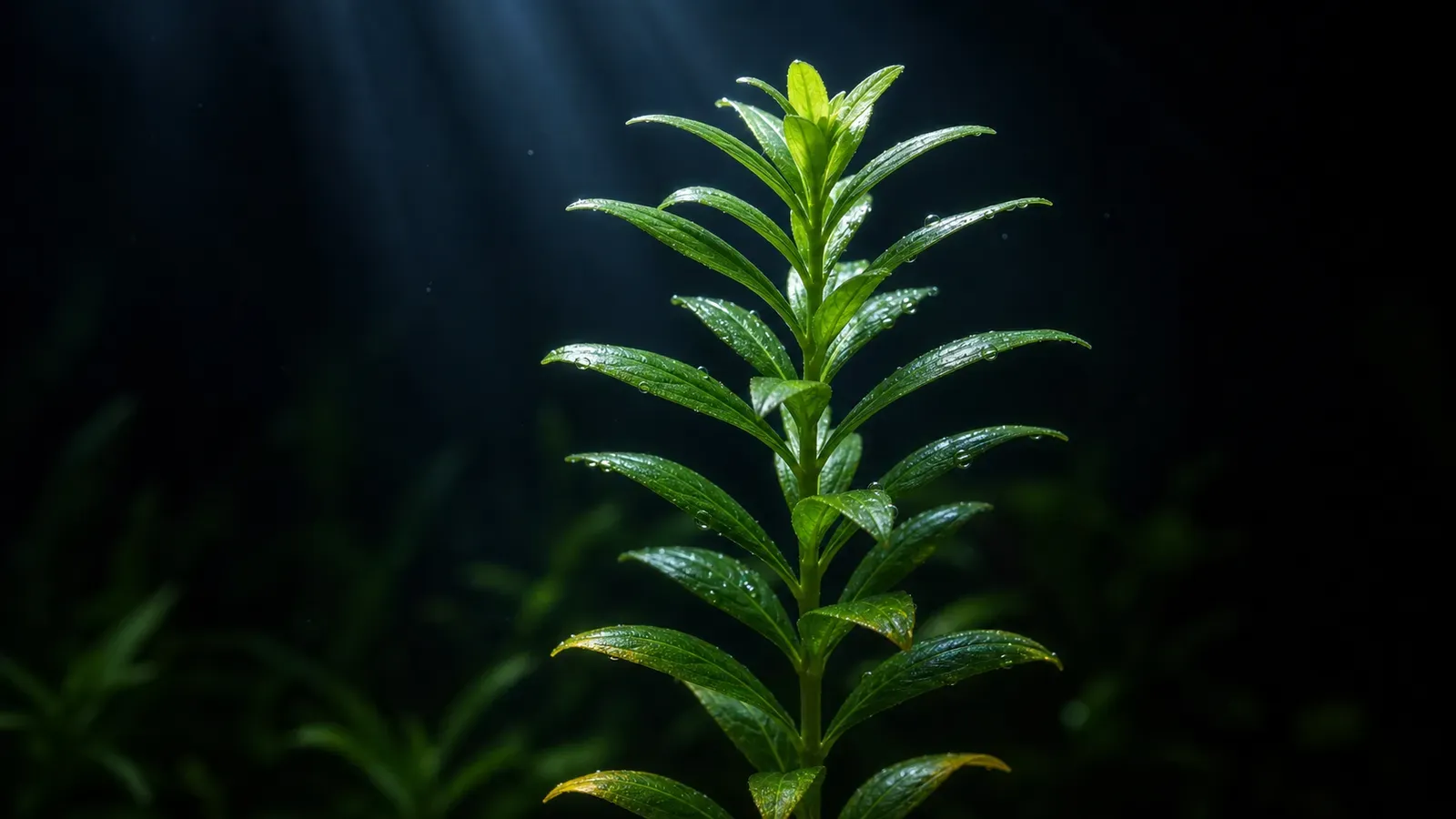
Diagnose aquarium plant deficiencies by leaf age and symptom: yellowing, pinholes, twisting, and stunting. Read the pattern, then fix it safely.
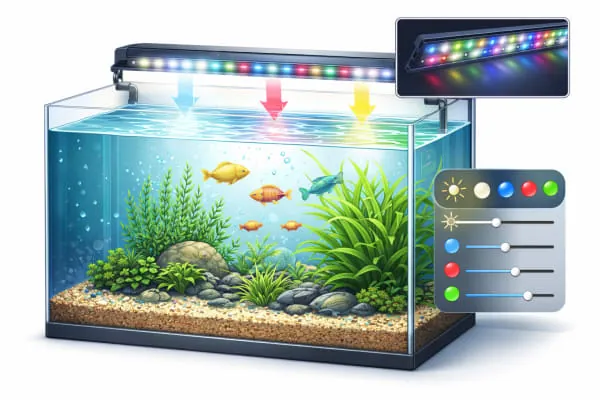
PAR-first planted tank lighting: choose intensity by what you grow, set photoperiod and spectrum, kill shadows, and hold algae back without overspending.
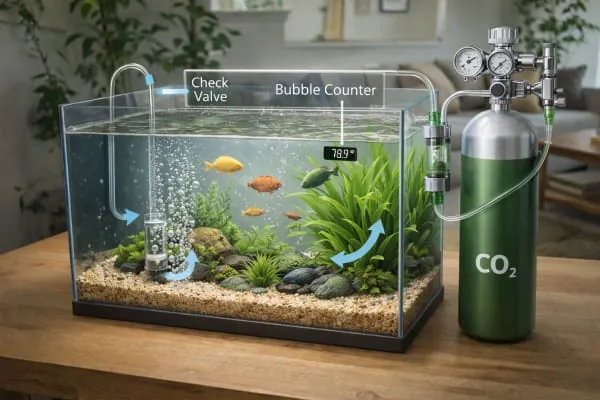
Aquarium CO₂ injection made safe: how carbon, light, and nutrients balance, which system to buy, and how to dial it in without gassing your fish.
Keeping Compact Aponogeton?
AquaLens identifies your fish and plants from a photo, tracks water chemistry, and flags health issues early — free on iOS and Android.