Madagascar Lace Plant Care Guide
Aponogeton madagascariensis · Freshwater Plant
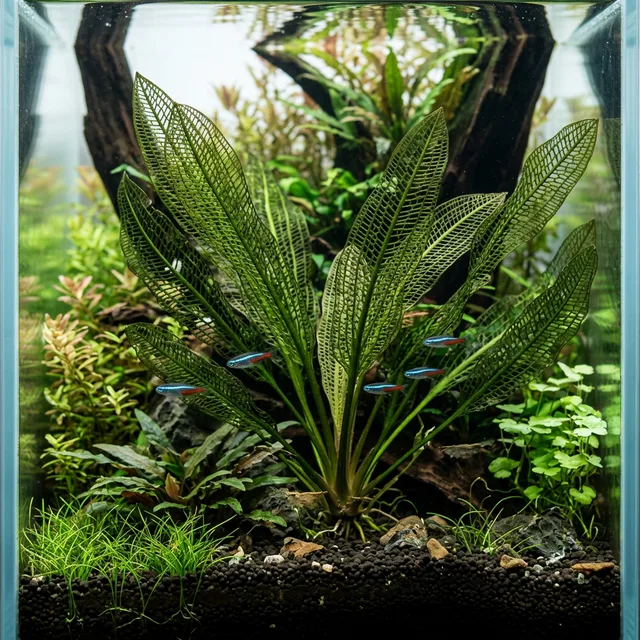
What Madagascar Lace Plant look like
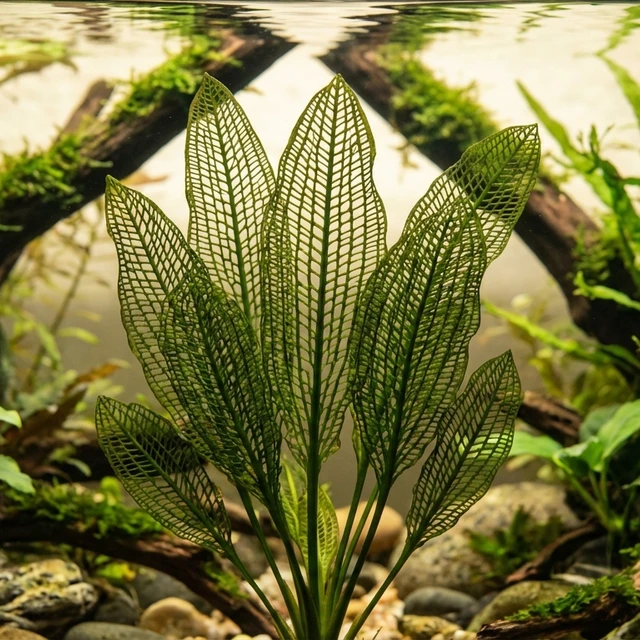
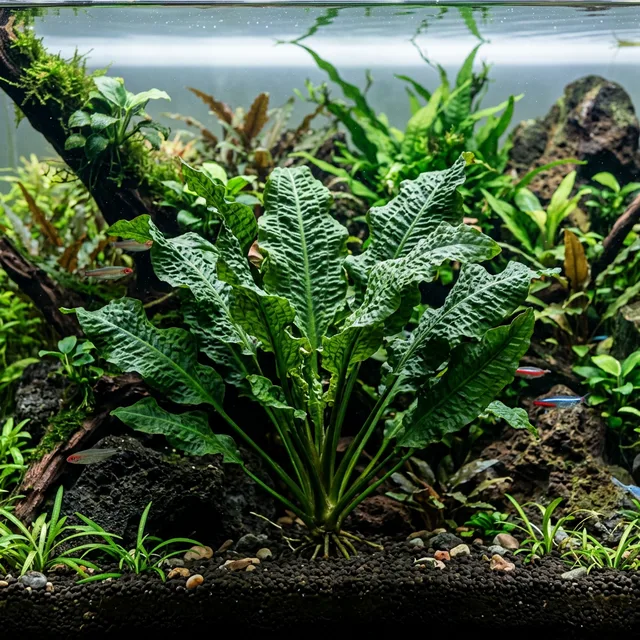
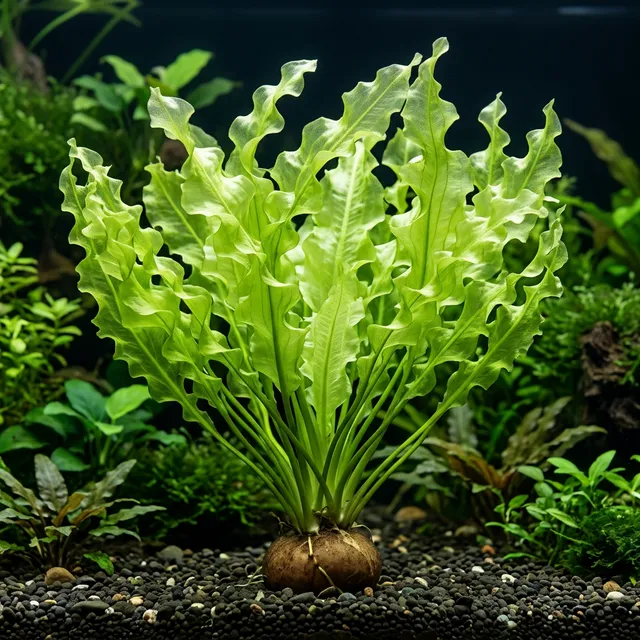
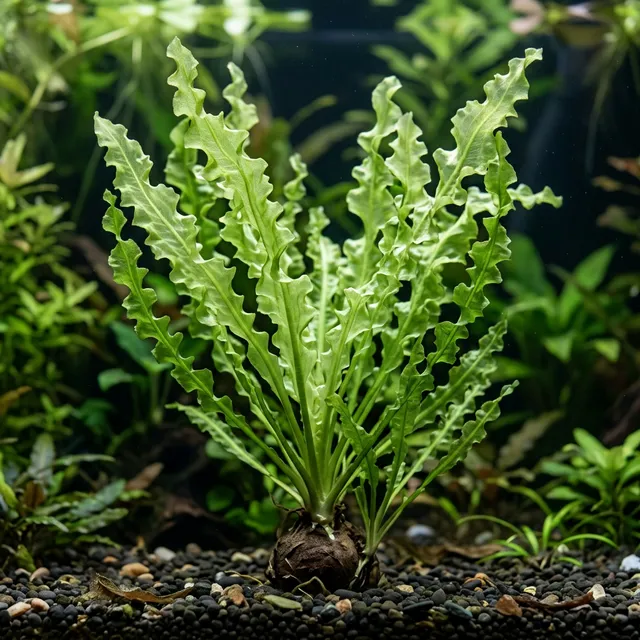
Aponogeton madagascariensis, commonly known as the Madagascar Lace Plant, exhibits a unique and intricate morphology characterized by its finely dissected, lace-like leaves that can grow up to 5-15 inches in length. The leaves are typically bright green and can display a wavy or undulating texture, providing a visually striking appearance in aquatic environments. This species features a rosette growth form, with leaves emerging directly from a bulbous base, which serves as a storage organ. The plant's stems are slender and flexible, allowing for movement in water currents. While sexual dimorphism is not pronounced in this species, flowering can occur under optimal conditions, producing small, white to pale pink flowers that rise above the water surface on elongated stalks. The Madagascar Lace Plant is adapted to its environment with a robust root system that anchors it in substrate while allowing for nutrient uptake, and it may exhibit a degree of buoyancy due to air-filled spaces within its leaves, aiding in flotation.
Behavior & temperament
This species is primarily a rooted aquatic plant that thrives in still or slow-moving waters, often found in shallow lakes and ponds. It does not exhibit social behaviors typical of animals; instead, it occupies a benthic position, anchoring itself in substrate while its leaves extend towards the water surface. The Madagascar Lace Plant is known for its ability to adapt to varying light conditions, making it suitable for a range of aquatic environments. It reproduces through both seed production and vegetative propagation, with flowering occurring sporadically throughout the growing season. The plant's temperament is non-aggressive, contributing to its compatibility in community aquariums, where it can coexist peacefully with other aquatic flora and fauna.
Diet & feeding
In its natural habitat, the Madagascar Lace Plant is an omnivorous aquatic plant that absorbs nutrients from the water column and substrate. In captivity, it thrives on a nutrient-rich substrate and benefits from regular fertilization, particularly with potassium and trace elements to support healthy growth and leaf development.
Behind the name
Aponogeton (from Greek 'apon' meaning 'away from' and 'geiton' meaning 'neighbor', referring to the plant's unique leaf structure); madagascariensis (indicating its origin from Madagascar).
Plan your tank
Check the numbers before you buy: tank volume, a stocking plan, cycle progress, water changes, and your ongoing care routine.
Keep reading
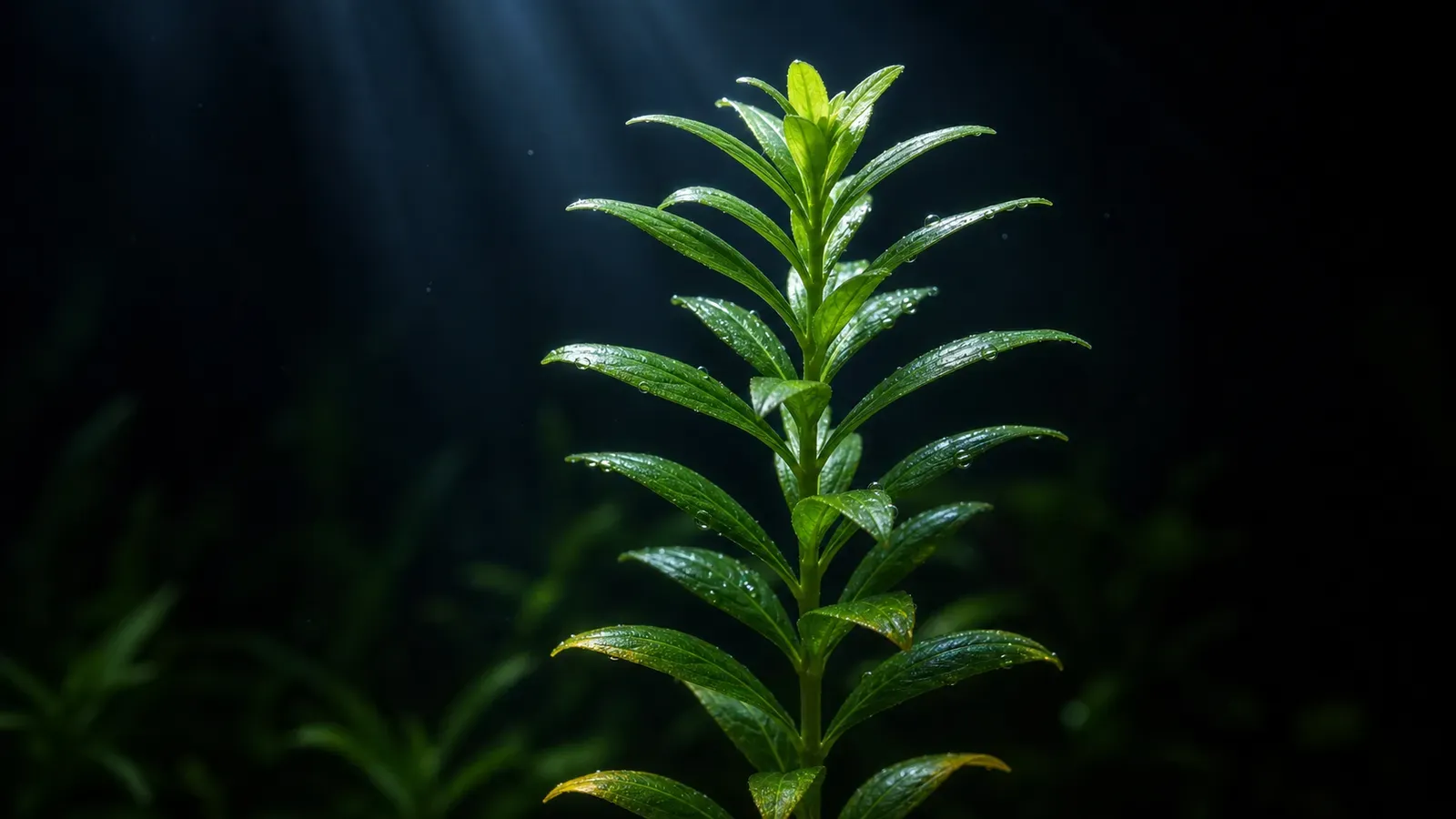
Diagnose aquarium plant deficiencies by leaf age and symptom: yellowing, pinholes, twisting, and stunting. Read the pattern, then fix it safely.

PAR-first planted tank lighting: choose intensity by what you grow, set photoperiod and spectrum, kill shadows, and hold algae back without overspending.

Aquarium CO₂ injection made safe: how carbon, light, and nutrients balance, which system to buy, and how to dial it in without gassing your fish.
Keeping Madagascar Lace Plant?
AquaLens identifies your fish and plants from a photo, tracks water chemistry, and flags health issues early — free on iOS and Android.