Arrow Crab Care Guide
Stenorhynchus seticornis · Saltwater Crab
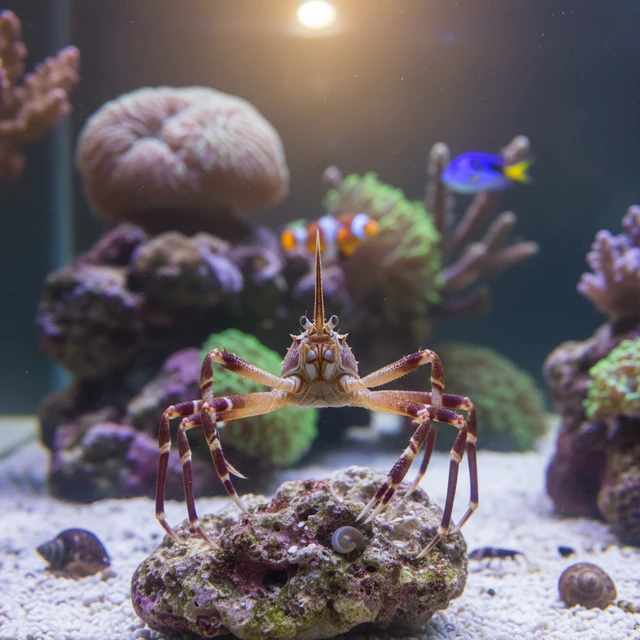
What Arrow Crab look like
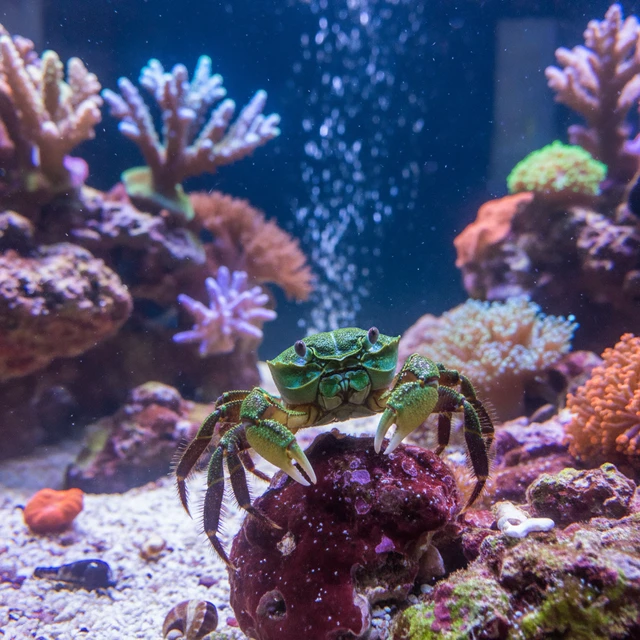
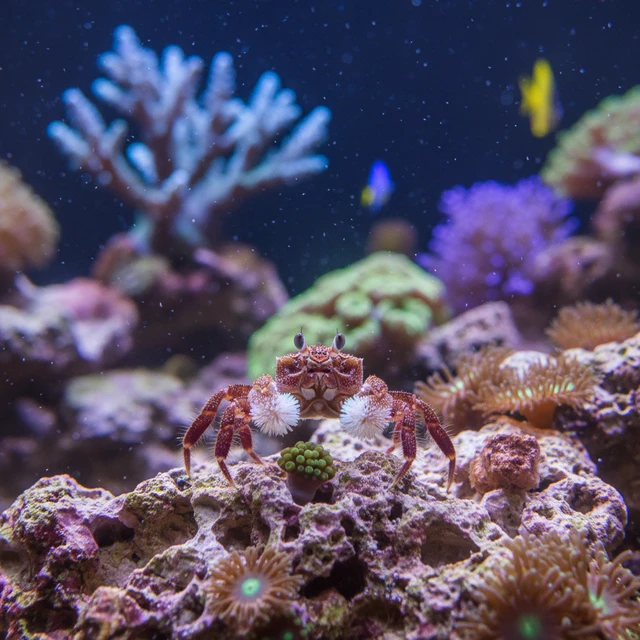
The Arrow Crab, scientifically known as Stenorhynchus seticornis, exhibits a distinctive elongated body structure characterized by a narrow, triangular carapace that can reach up to 6 inches (15 cm) in length. Its long, slender legs extend outward, often measuring several times the length of its body, giving it a unique appearance that aids in navigating through complex reef environments. The coloration typically ranges from yellow to orange with darker brown or reddish markings, providing effective camouflage among corals and rocky substrates. Sexual dimorphism is evident, with females being generally larger and possessing a broader abdomen compared to males. Defensive adaptations include a pair of elongated chelae (claws) that are used for both foraging and defense, while its ability to blend into its surroundings serves as an additional protective mechanism against predators.
Behavior & temperament
Arrow Crabs are primarily nocturnal and exhibit a semi-social behavior, often found in small groups among coral reefs or rocky crevices. They are known to be opportunistic scavengers, utilizing their long legs to forage for detritus and small invertebrates. During the day, they tend to remain motionless, relying on their camouflage to avoid detection. Breeding behavior involves the male performing a courtship display to attract females, which may include specific movements and positioning. Their temperament is generally non-aggressive towards other reef inhabitants, although they may exhibit territorial behavior when competing for food resources.
Diet & feeding
Arrow Crabs are omnivorous scavengers, primarily feeding on detritus, algae, and small invertebrates in their natural habitat. In captivity, they thrive on a varied diet that includes high-quality marine pellets, frozen foods, and occasional live foods such as brine shrimp.
Behind the name
The scientific name 'Stenorhynchus' is derived from the Greek words 'stenos,' meaning narrow, and 'rhynchos,' meaning snout, referring to the crab's elongated rostrum. The species name 'seticornis' translates to 'with setae on the horns,' indicating the presence of setae on the carapace.
Plan your tank
Check the numbers before you buy: tank volume, salinity, salt mix, water changes, and your ongoing care routine. Keeping reef? Start from the Saltwater & Reef hub.
Keep reading
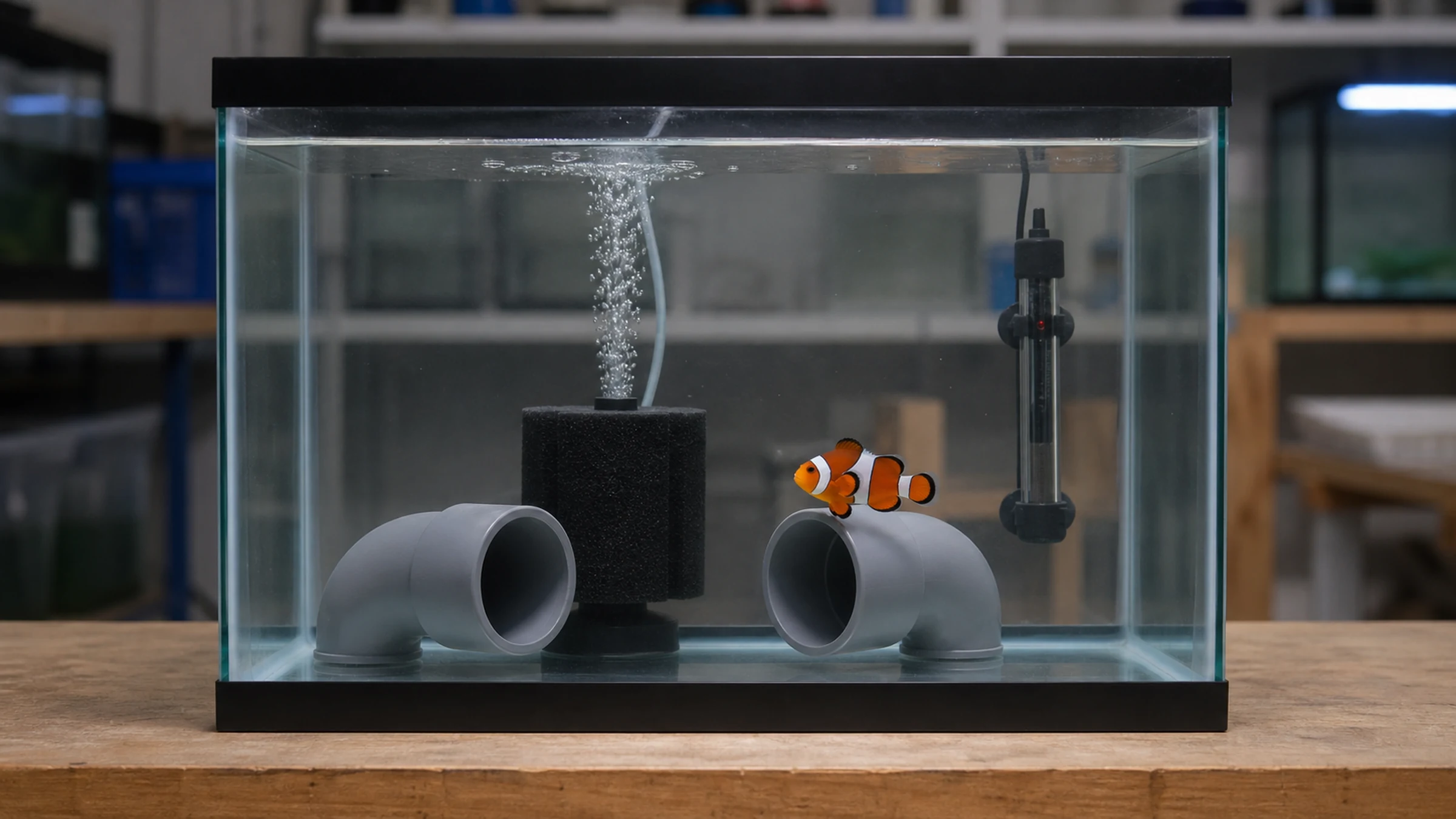
How to quarantine new saltwater fish against marine ich, velvet, and brooklynella: the QT tank, treatments, timelines, and the buy-clean shortcut.

What every reef parameter means and where to keep it: salinity, temperature, pH, alkalinity, calcium, magnesium, nitrate, and phosphate.

Choose compatible fish: school sizes, swimming zones, aggression, temperature and hardness matching, and honest bioload math for a peaceful community.
Keeping Arrow Crab?
AquaLens identifies your fish and plants from a photo, tracks water chemistry, and flags health issues early — free on iOS and Android.