Porcelain Crab Care Guide
Petrolisthes galathinus · Saltwater Crab
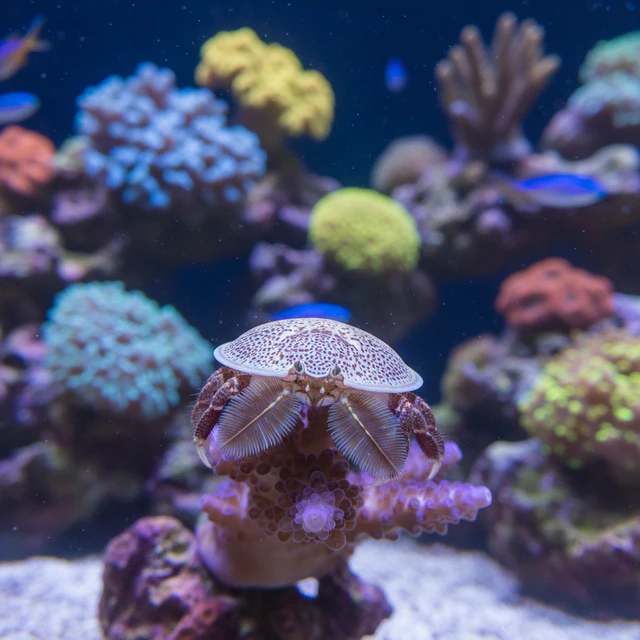
What Porcelain Crab look like
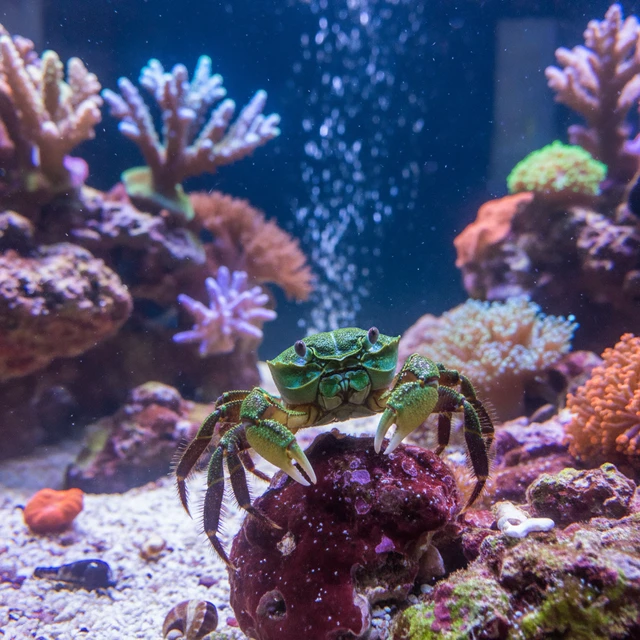
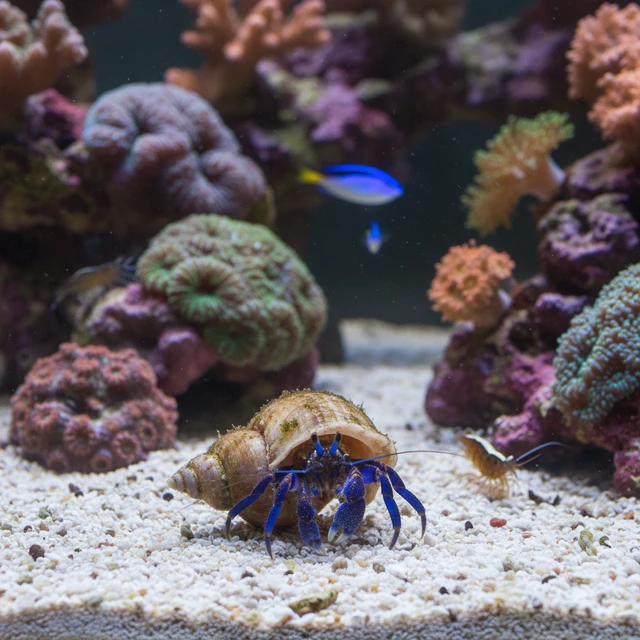
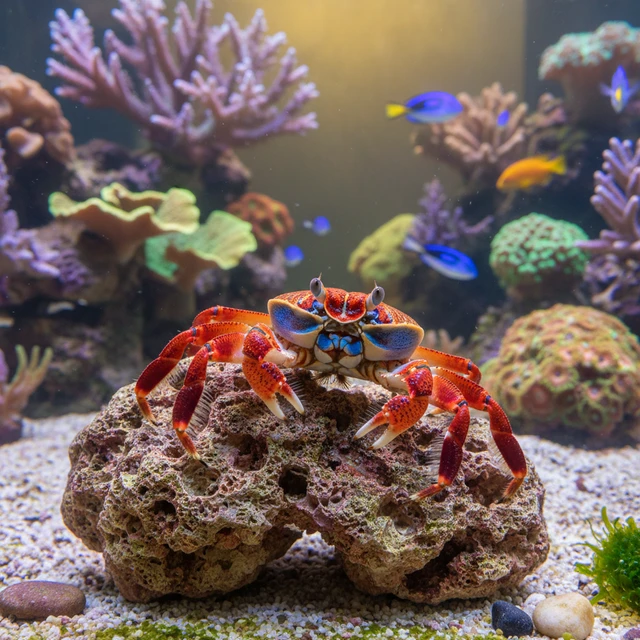
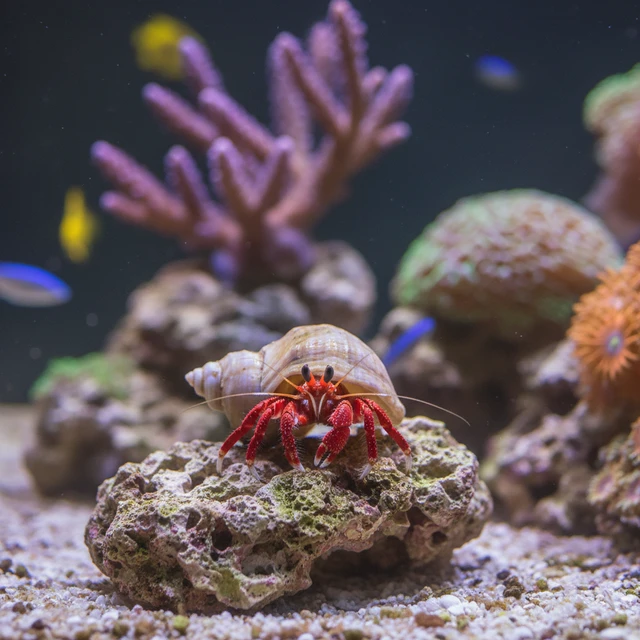
Petrolisthes galathinus, commonly known as the Porcelain Crab, exhibits a compact and flattened body structure, typically reaching a maximum adult size of around 2 inches (5 cm) in carapace width. The carapace is smooth and glossy, displaying a coloration that ranges from pale white to light brown, often adorned with intricate patterns of darker mottling. Sexual dimorphism is evident, with females generally possessing a broader abdomen to accommodate their eggs, while males exhibit more elongated claws. Notably, the Porcelain Crab possesses long, slender chelae (claws) that are adapted for grasping and holding onto substrates, such as coral branches, which serve as both a habitat and a source of food. Defensive adaptations include the ability to blend into their surroundings and the use of their claws to fend off potential predators. Additionally, they have a reduced and flexible exoskeleton that allows for greater mobility among crevices and coral structures.
Behavior & temperament
Porcelain Crabs are primarily found in shallow, tropical reef environments and exhibit a commensal lifestyle, often residing among coral branches or in the crevices of rocky substrates. They are generally social and can be observed in small groups, displaying a hierarchical structure where larger individuals tend to dominate feeding areas. Their swimming behavior is characterized by short bursts of movement, allowing them to quickly retreat into hiding spots when threatened. Breeding behavior involves the male performing courtship displays to attract females, after which they engage in a brief mating process. The temperament of Petrolisthes galathinus is typically non-aggressive, making them suitable for community tanks, although they may exhibit territoriality when competing for space or food.
Diet & feeding
In the wild, Porcelain Crabs primarily feed on detritus, plankton, and small organic particles filtered from the water column. In captivity, they require a diet rich in finely crushed foods, such as high-quality marine pellets, frozen or live foods like brine shrimp, and other small invertebrates to thrive.
Behind the name
The scientific name 'Petrolisthes' derives from the Greek words 'petra' meaning 'rock' and 'listhes' meaning 'robber', referring to their habitat and lifestyle, while 'galathinus' is derived from Latin, possibly referencing their resemblance to other crab species.
Plan your tank
Check the numbers before you buy: tank volume, salinity, salt mix, water changes, and your ongoing care routine. Keeping reef? Start from the Saltwater & Reef hub.
Keep reading
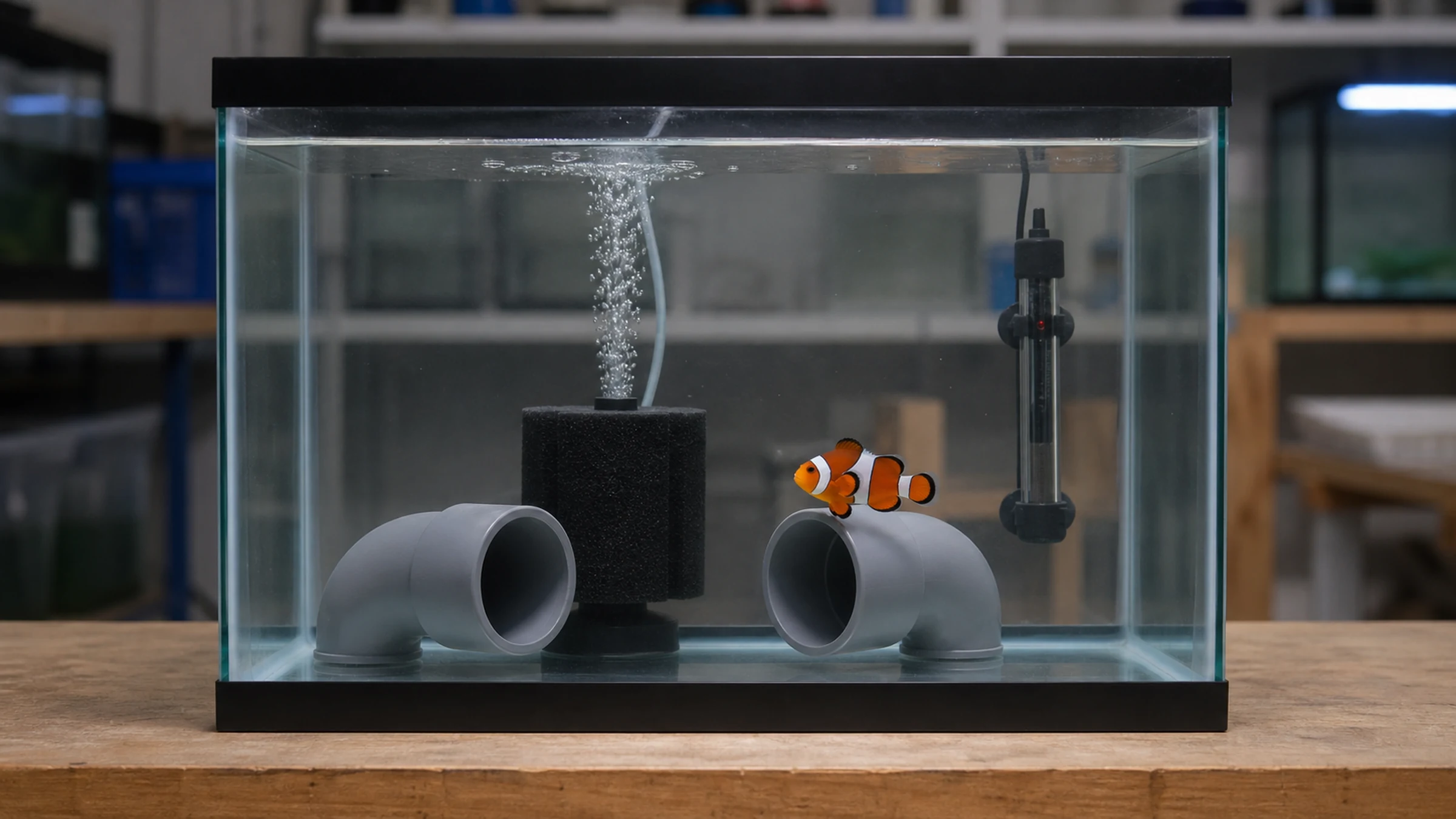
How to quarantine new saltwater fish against marine ich, velvet, and brooklynella: the QT tank, treatments, timelines, and the buy-clean shortcut.

What every reef parameter means and where to keep it: salinity, temperature, pH, alkalinity, calcium, magnesium, nitrate, and phosphate.

Choose compatible fish: school sizes, swimming zones, aggression, temperature and hardness matching, and honest bioload math for a peaceful community.
Keeping Porcelain Crab?
AquaLens identifies your fish and plants from a photo, tracks water chemistry, and flags health issues early — free on iOS and Android.