Scarlet Reef Hermit Crab Care Guide
Paguristes cadenati · Saltwater Crab
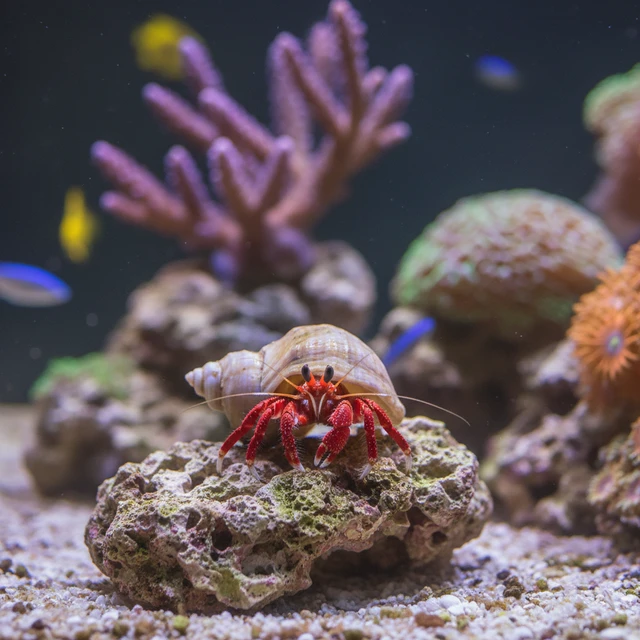
What Scarlet Reef Hermit Crab look like
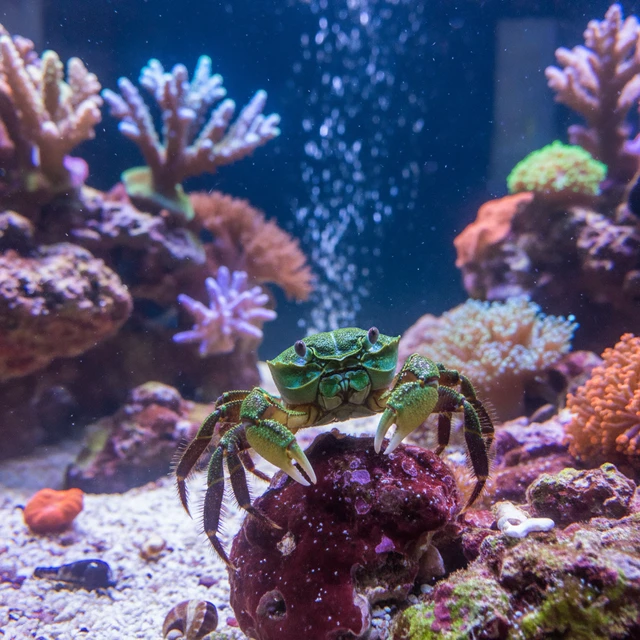
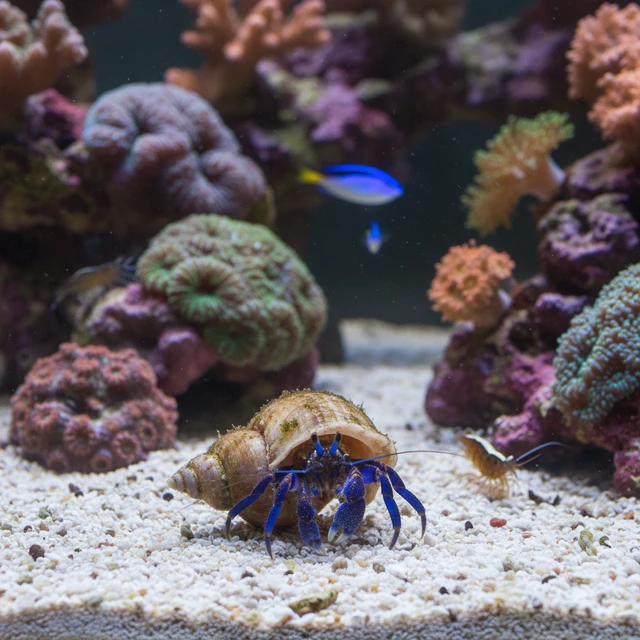
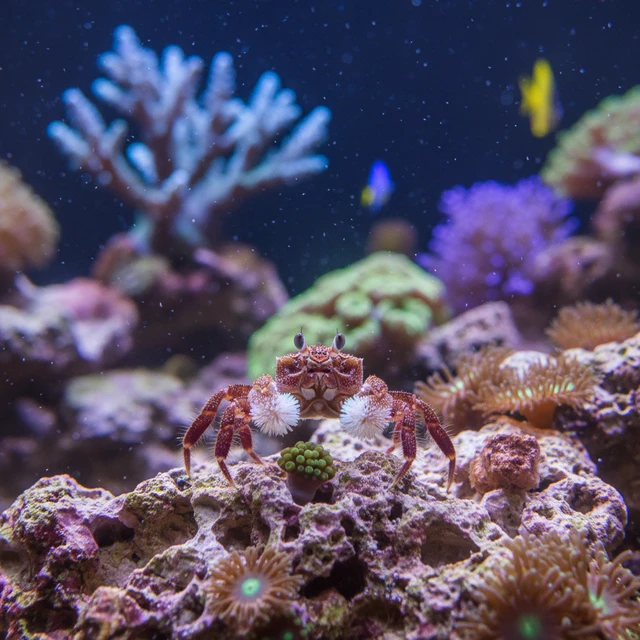
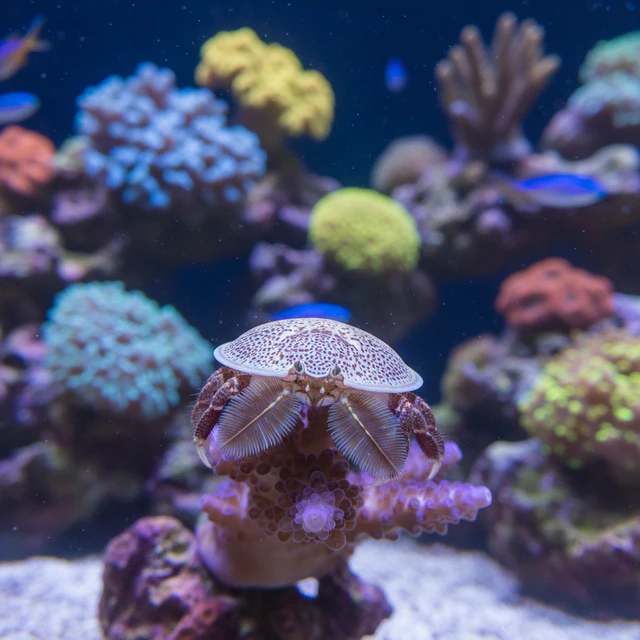
The Scarlet Reef Hermit Crab (Paguristes cadenati) exhibits a striking coloration, characterized by a vibrant red-orange exoskeleton adorned with subtle white speckles. Adult specimens can reach a maximum carapace length of approximately 2.5 cm (1 inch), with the overall size being influenced by the shell it occupies. Sexual dimorphism is minimal, though females may exhibit slightly larger abdomens to accommodate egg-bearing. This species possesses a robust, asymmetrical chela, with the right claw being significantly larger and adapted for both defense and manipulation of shells. The crab's body is protected by a coiled gastropod shell, which it occupies and can switch as it grows, providing a unique defensive adaptation against predation. Additionally, the presence of a well-developed antennae and compound eyes enhances its sensory perception in the reef environment.
Behavior & temperament
Paguristes cadenati is primarily a solitary invertebrate, often found in shallow reef environments where it exhibits a semi-territorial behavior. It is primarily nocturnal, emerging at night to forage for food and interact with conspecifics. During the day, it tends to retreat into its shell for protection. Breeding behavior involves the male displaying courtship rituals, which may include claw waving and shell tapping to attract females. The temperament of this hermit crab is generally peaceful, although it can exhibit aggressive behavior when competing for shells or food resources, particularly with other hermit crabs. Its movement is characterized by a cautious scuttling, often using its chela to probe the substrate for food.
Diet & feeding
In the wild, the Scarlet Reef Hermit Crab is primarily detritivorous, feeding on decomposing organic matter, algae, and detritus. In captivity, it requires a varied diet that includes high-quality sinking pellets, algae wafers, and occasional protein sources such as finely chopped seafood.
Behind the name
The genus name 'Paguristes' is derived from the Greek word 'paguros', meaning 'hermit crab', while the species name 'cadenati' honors the naturalist who first described the species.
Plan your tank
Check the numbers before you buy: tank volume, salinity, salt mix, water changes, and your ongoing care routine. Keeping reef? Start from the Saltwater & Reef hub.
Keep reading
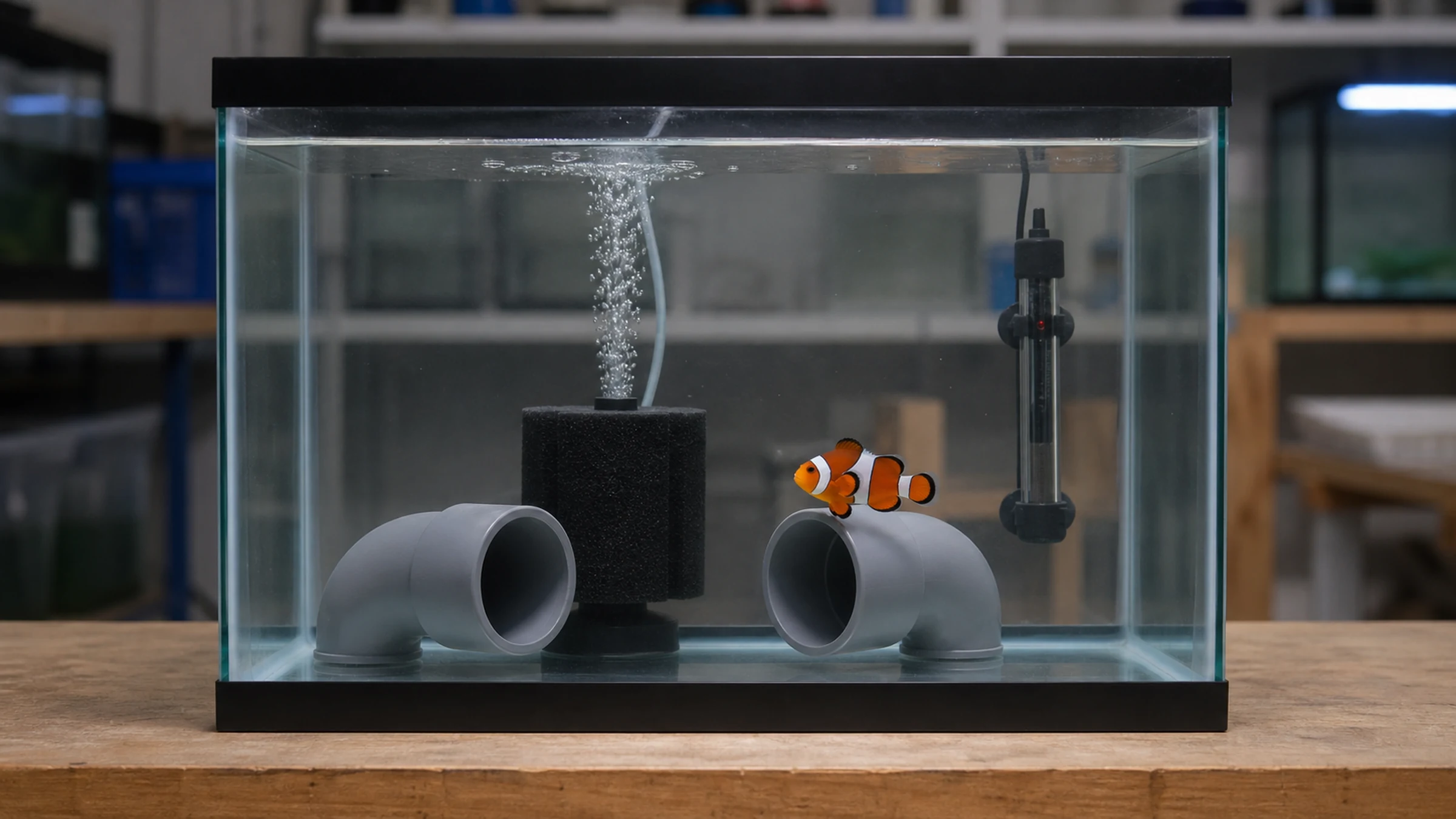
How to quarantine new saltwater fish against marine ich, velvet, and brooklynella: the QT tank, treatments, timelines, and the buy-clean shortcut.

What every reef parameter means and where to keep it: salinity, temperature, pH, alkalinity, calcium, magnesium, nitrate, and phosphate.

Choose compatible fish: school sizes, swimming zones, aggression, temperature and hardness matching, and honest bioload math for a peaceful community.
Keeping Scarlet Reef Hermit Crab?
AquaLens identifies your fish and plants from a photo, tracks water chemistry, and flags health issues early — free on iOS and Android.