Delhezi Bichir Care Guide
Polypterus delhezi · Freshwater Fish
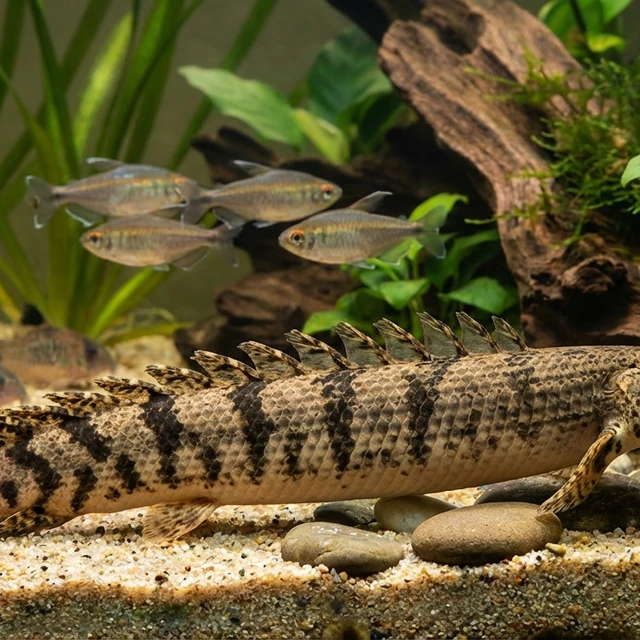
What Delhezi Bichir look like
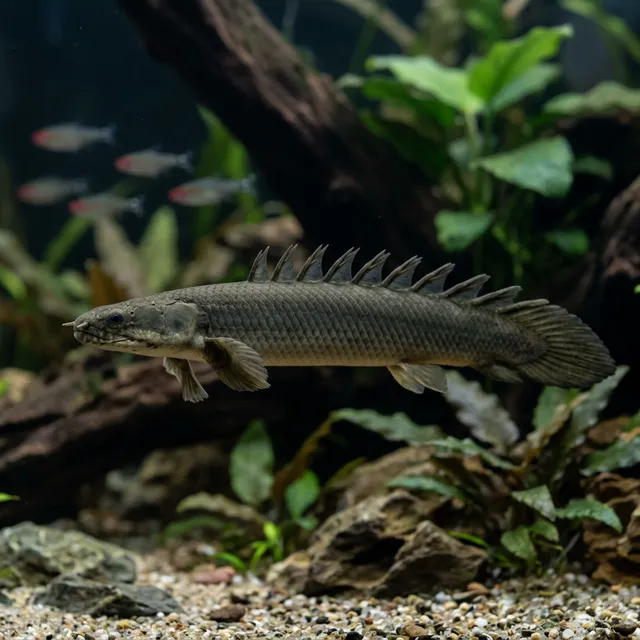
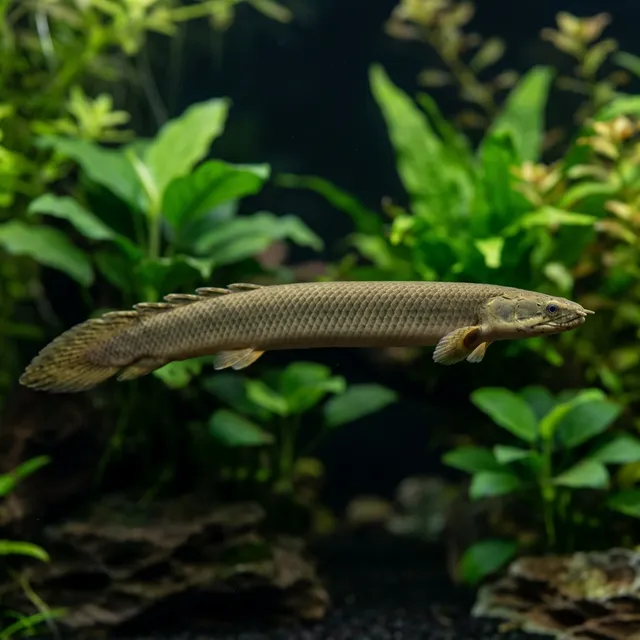
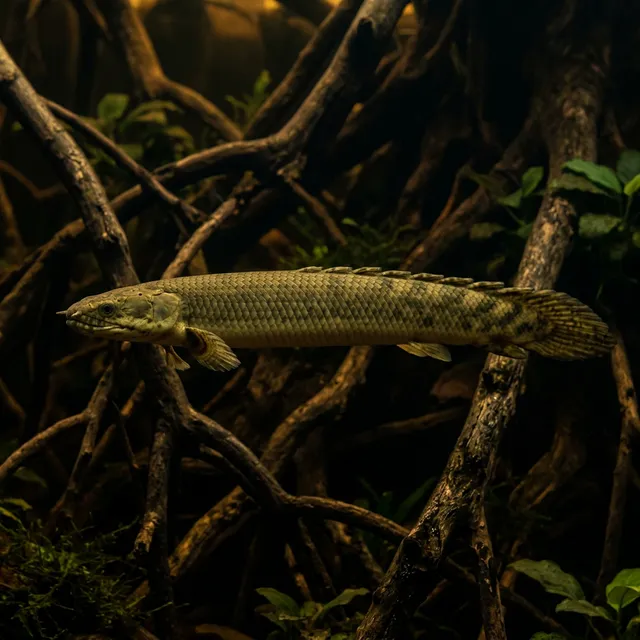
Polypterus delhezi, commonly known as the Barred Bichir, exhibits a primitive, elongated, and laterally compressed body that can reach a maximum adult size of 12-14 inches. The coloration is primarily gray-green adorned with distinct darker vertical bars, which serve as a form of camouflage in its natural habitat. The species is characterized by a series of separate, flag-like dorsal finlets that extend along the length of the back, contributing to its unique silhouette. Sexual dimorphism is subtle; males may exhibit slightly more pronounced finlets and a more robust body compared to females. Notably, the Barred Bichir possesses thick pectoral fins that allow it to maneuver effectively in its benthic environment and can utilize a modified swim bladder for aerial respiration, enabling it to survive in low-oxygen waters. Its dentition is comprised of sharp, conical teeth, adapted for grasping prey, and it features a lateral line system that aids in detecting vibrations in the water.
Behavior & temperament
The Barred Bichir is primarily a solitary and nocturnal species, often dwelling in the benthic zone of slow-moving rivers and swamps in the Congo region. While it does not form obligate schools, it may exhibit social interactions during breeding periods. Breeding behavior involves egg scattering, where females release eggs onto substrate surfaces, and males fertilize them externally. This species is generally characterized by a calm temperament but can display territorial aggression, especially during breeding or when defending its space from intruders. It tends to occupy the lower strata of the water column, utilizing its ability to breathe air to navigate through oxygen-poor environments.
Diet & feeding
In the wild, the Barred Bichir is a carnivore, primarily preying on small fish, crustaceans, and invertebrates. In captivity, it requires a diet rich in protein, including high-quality pellets, frozen or live foods such as bloodworms, and small fish to maintain optimal health.
Behind the name
Polypterus (many fins); delhezi (named after the French naturalist Louis Delhez).
Plan your tank
Check the numbers before you buy: tank volume, a stocking plan, cycle progress, water changes, and your ongoing care routine.
Keep reading

Choose compatible fish: school sizes, swimming zones, aggression, temperature and hardness matching, and honest bioload math for a peaceful community.

Quarantine new fish, spot the early warning signs, and treat disease without wrecking your tank. A practical freshwater fish health guide.

Acclimate new fish, shrimp, and coral safely: temperature floating, drip acclimation, plop-and-drop for shipped livestock, and the first 24 hours.
Keeping Delhezi Bichir?
AquaLens identifies your fish and plants from a photo, tracks water chemistry, and flags health issues early — free on iOS and Android.