Black Ghost Knifefish Care Guide
Apteronotus albifrons · Freshwater Fish
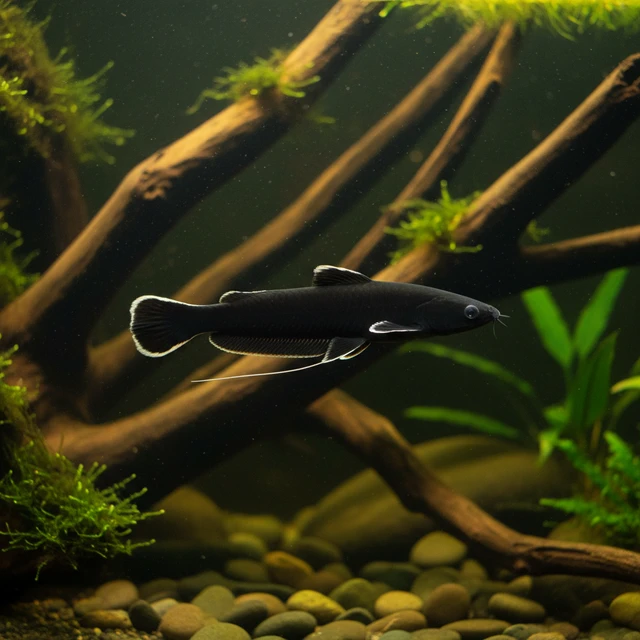
What Black Ghost Knifefish look like
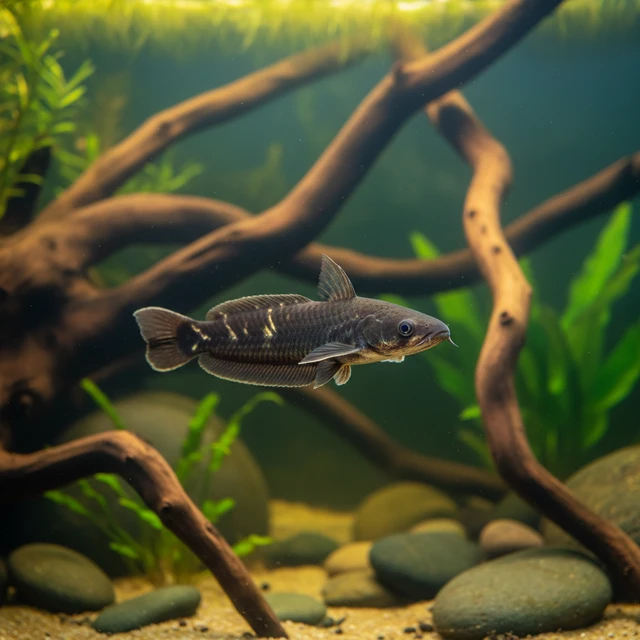
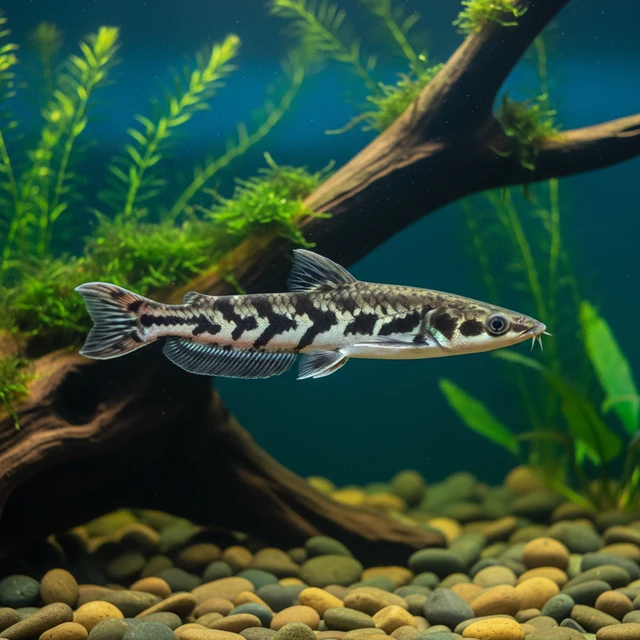
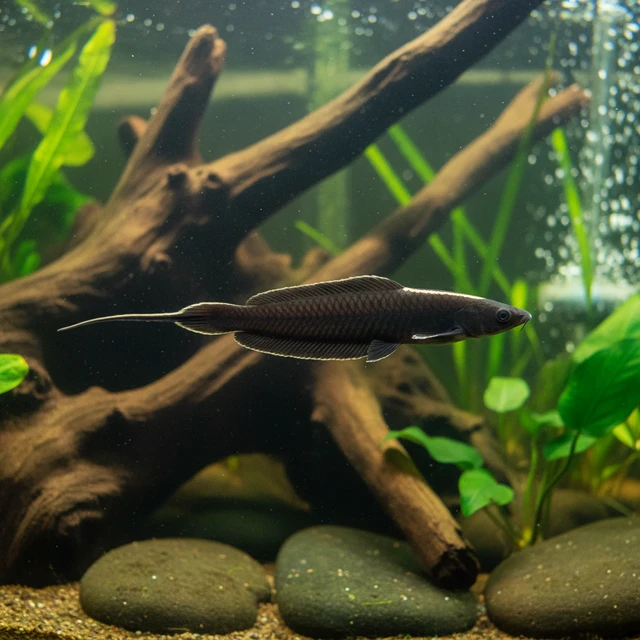
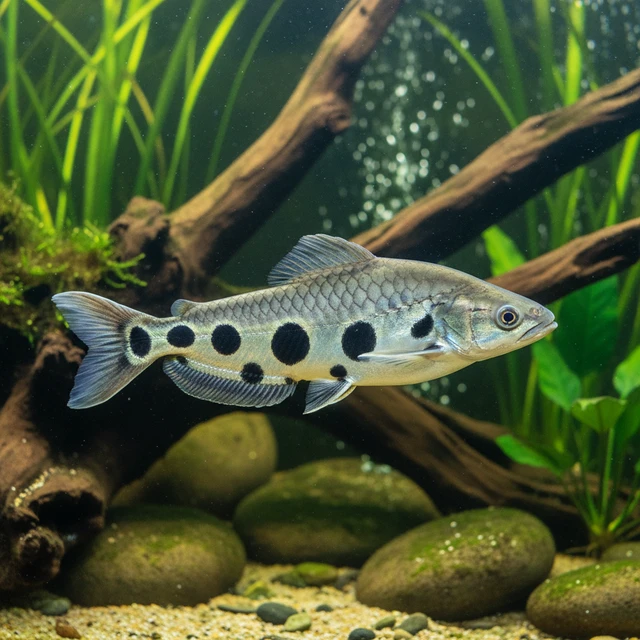
The Black Ghost Knifefish (Apteronotus albifrons) exhibits a distinctive fusiform body shape, characterized by its elongated, laterally compressed form which lacks a traditional caudal fin, instead possessing a long, undulating body that facilitates its unique mode of locomotion. Adults can reach a maximum size of approximately 15 inches (38 cm), with females generally being slightly smaller than males, showcasing a degree of sexual dimorphism. The fish is entirely enveloped in a velvety black coloration, which serves as a defensive adaptation against predation in its natural habitat, while two strikingly bright white rings at the tip of the tail and a prominent white stripe along the dorsal ridge enhance its visual appeal. The presence of a well-developed lateral line system aids in electroreception, allowing the fish to detect movements and vibrations in the water, while its dentition is adapted for a carnivorous diet, featuring small, sharp teeth suitable for grasping prey. The absence of a traditional dorsal fin is compensated by a long, continuous fin that extends from the head to the tail, contributing to its ghostly swimming style.
Behavior & temperament
The Black Ghost Knifefish is primarily a nocturnal species, exhibiting solitary behavior during the day and becoming more active at night when it hunts for food. It is a benthic dweller, often found near the substrate of slow-moving waters in the Amazon basin. This species is not an obligate schooler but may exhibit social interactions in larger tanks, where individuals can establish a loose hierarchy based on size and temperament. Breeding behavior involves egg scattering, with females laying eggs on flat surfaces, which are then fertilized by males. The Black Ghost Knifefish is generally peaceful but can exhibit territorial aggression towards conspecifics, particularly in confined spaces, necessitating ample space in captivity to minimize stress and aggression.
Diet & feeding
In the wild, the Black Ghost Knifefish is a carnivore, primarily feeding on small invertebrates and fish. In captivity, it requires a diet rich in high-quality frozen or live foods such as bloodworms, brine shrimp, and small fish to thrive.
Behind the name
Apteronotus (without fin; from Greek 'apteron' meaning 'without fin' and 'notus' meaning 'back'); albifrons (white forehead; from Latin 'albus' meaning 'white' and 'frons' meaning 'forehead').
Plan your tank
Check the numbers before you buy: tank volume, a stocking plan, cycle progress, water changes, and your ongoing care routine.
Keep reading

Choose compatible fish: school sizes, swimming zones, aggression, temperature and hardness matching, and honest bioload math for a peaceful community.
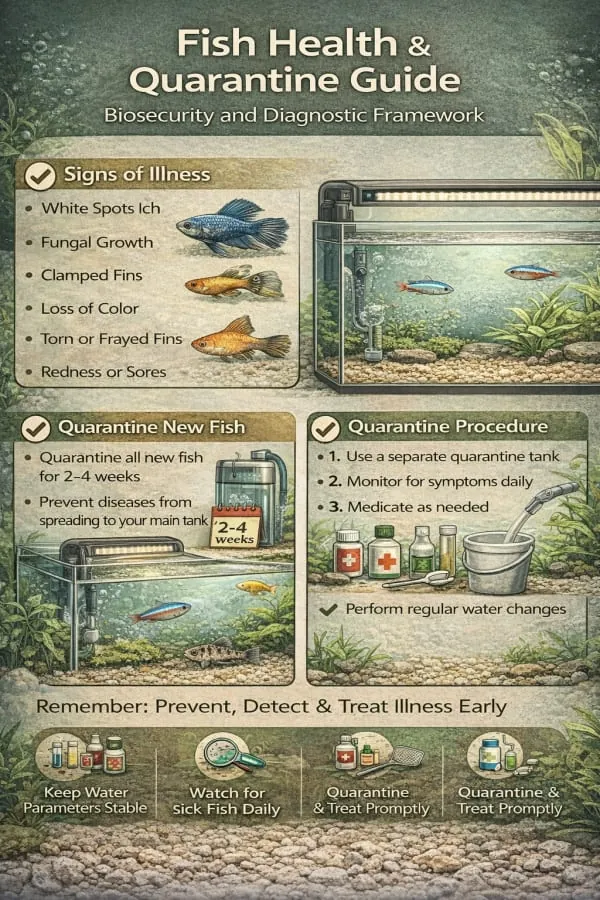
Quarantine new fish, spot the early warning signs, and treat disease without wrecking your tank. A practical freshwater fish health guide.
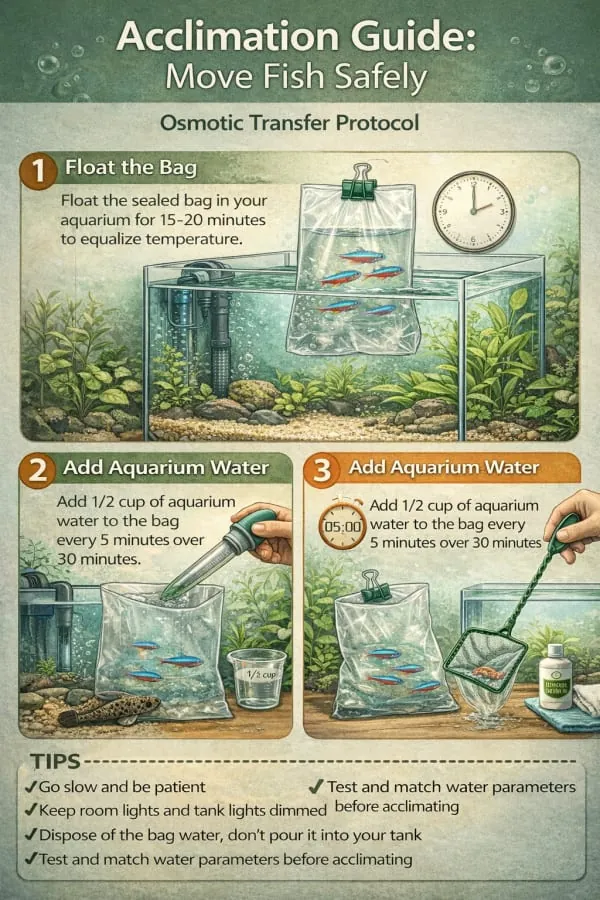
Acclimate new fish, shrimp, and coral safely: temperature floating, drip acclimation, plop-and-drop for shipped livestock, and the first 24 hours.
Keeping Black Ghost Knifefish?
AquaLens identifies your fish and plants from a photo, tracks water chemistry, and flags health issues early — free on iOS and Android.