Clown Knifefish Care Guide
Chitala ornata · Freshwater Fish
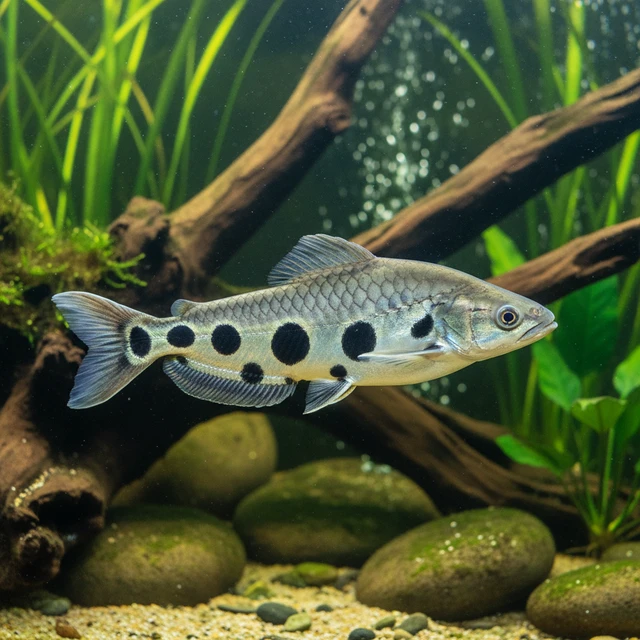
What Clown Knifefish look like
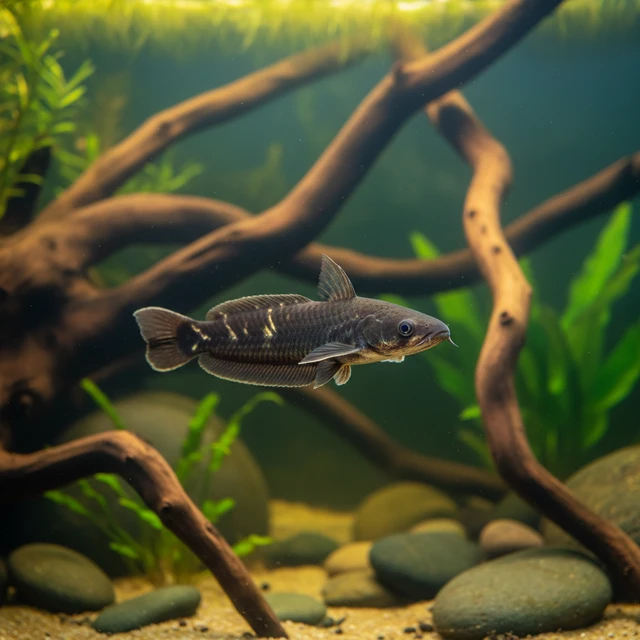
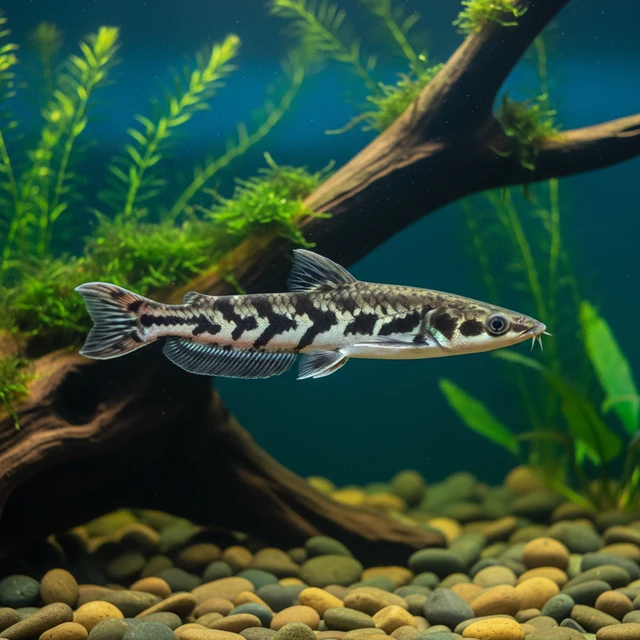
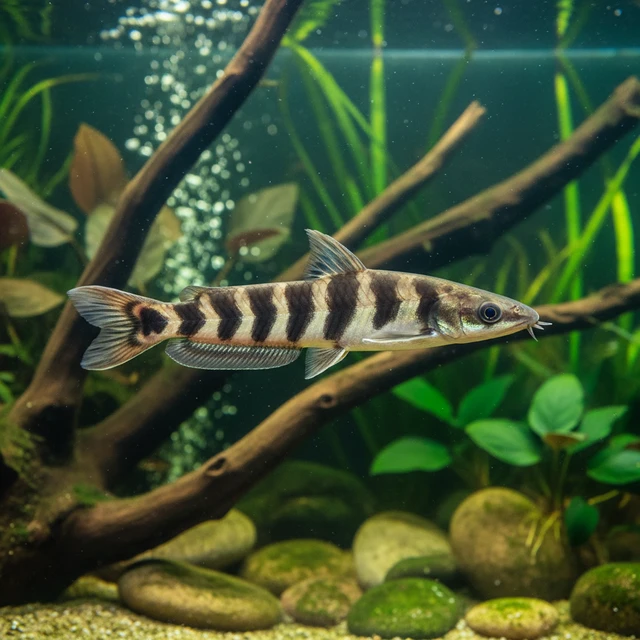
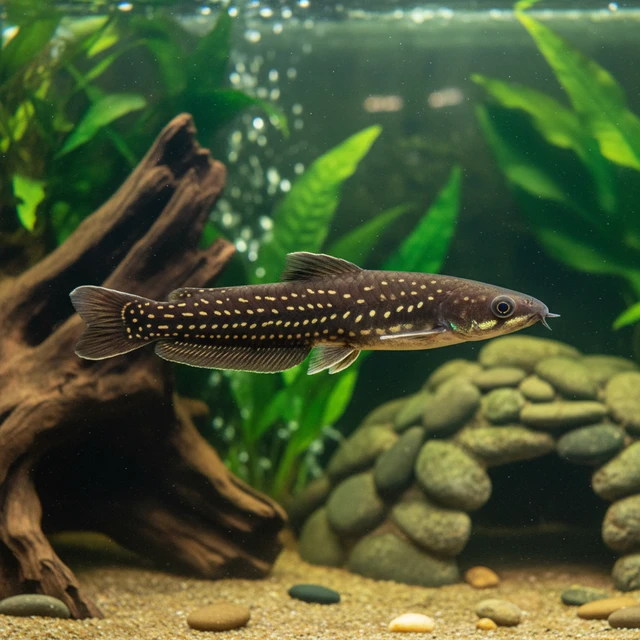
Chitala ornata, commonly known as the Clown Knife Fish, exhibits a highly distinctive morphology characterized by its elongated, laterally compressed body that can reach a maximum adult size of approximately 5 to 15 feet. The fish features a remarkably flat, knife-blade shape with a pronounced humped back, which aids in its unique swimming style. Sexual dimorphism is subtle, with females generally being slightly smaller and less robust than males. A notable morphological adaptation is the extremely tiny dorsal fin, which resembles a single tuft of hair, and the extensive, long, rippling belly fin adorned with a striking row of gigantic black spots, each ringed in luminous white. This coloration serves as a defensive adaptation, providing camouflage among the aquatic vegetation. The Clown Knife Fish possesses a large, gaping mouth equipped with conical teeth, allowing it to capture prey efficiently.
Behavior & temperament
The Clown Knife Fish is primarily a nocturnal predator, exhibiting solitary behavior during the day and becoming more active at night when it hunts for food. It is not an obligate schooler, but it may display social hierarchies in larger groups, particularly during breeding seasons. This species typically occupies the pelagic zone of freshwater environments, often found near the surface or mid-water, where it utilizes its unique swimming capabilities to navigate through dense vegetation. Breeding behavior is characterized by egg scattering, with females releasing eggs in open water, which are then fertilized by males. The Clown Knife Fish is generally considered to have a calm temperament but can exhibit territorial aggression, especially during breeding or when defending its space.
Diet & feeding
In the wild, the Clown Knife Fish is a carnivore that primarily feeds on smaller fish and invertebrates. In captivity, it requires a diet rich in protein, including high-quality pellets, live or frozen foods such as shrimp, and small fish to maintain optimal health.
Behind the name
Chitala (from Sanskrit, meaning 'fish'); ornata (from Latin, meaning 'ornate' or 'decorated').
Plan your tank
Check the numbers before you buy: tank volume, a stocking plan, cycle progress, water changes, and your ongoing care routine.
Keep reading

Choose compatible fish: school sizes, swimming zones, aggression, temperature and hardness matching, and honest bioload math for a peaceful community.
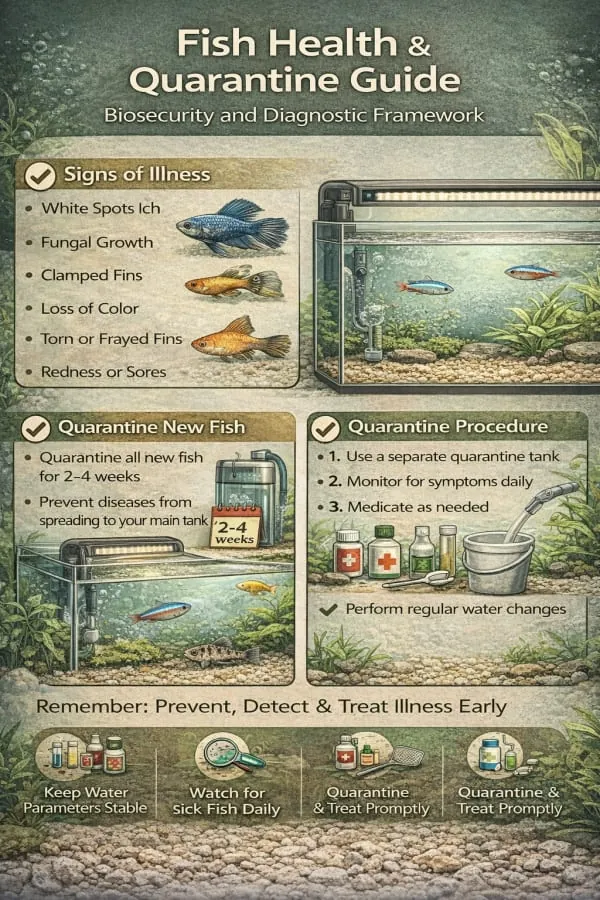
Quarantine new fish, spot the early warning signs, and treat disease without wrecking your tank. A practical freshwater fish health guide.
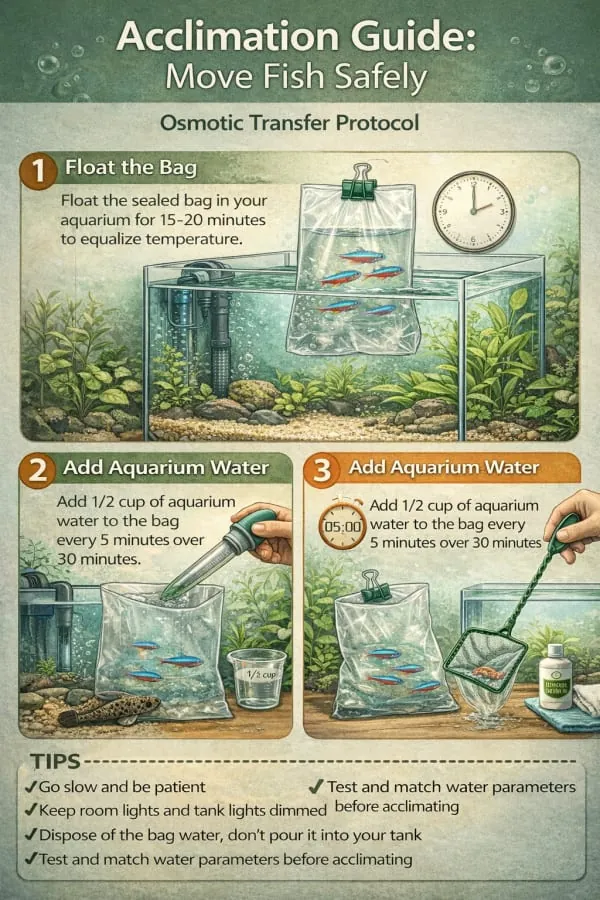
Acclimate new fish, shrimp, and coral safely: temperature floating, drip acclimation, plop-and-drop for shipped livestock, and the first 24 hours.
Keeping Clown Knifefish?
AquaLens identifies your fish and plants from a photo, tracks water chemistry, and flags health issues early — free on iOS and Android.