Morse Knifefish Care Guide
Gymnorhamphichthys hypostomus · Freshwater Fish
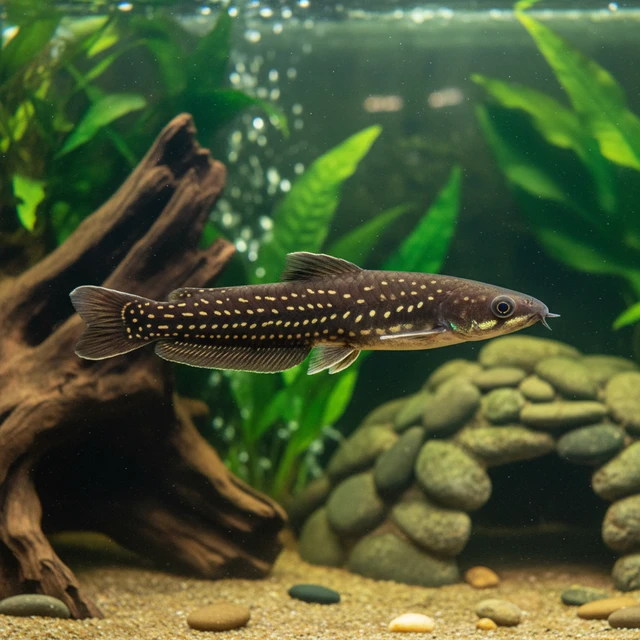
What Morse Knifefish look like
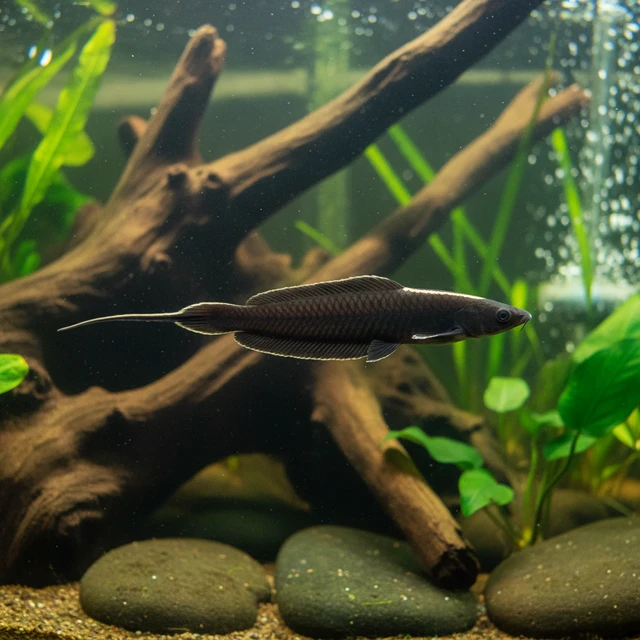
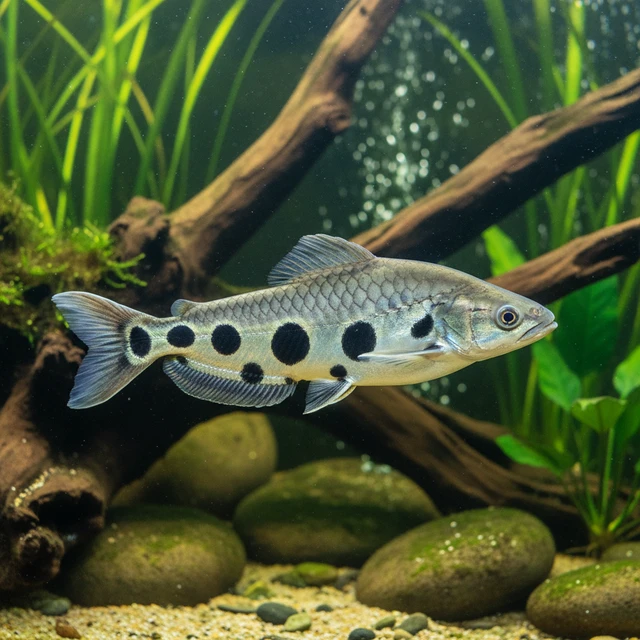
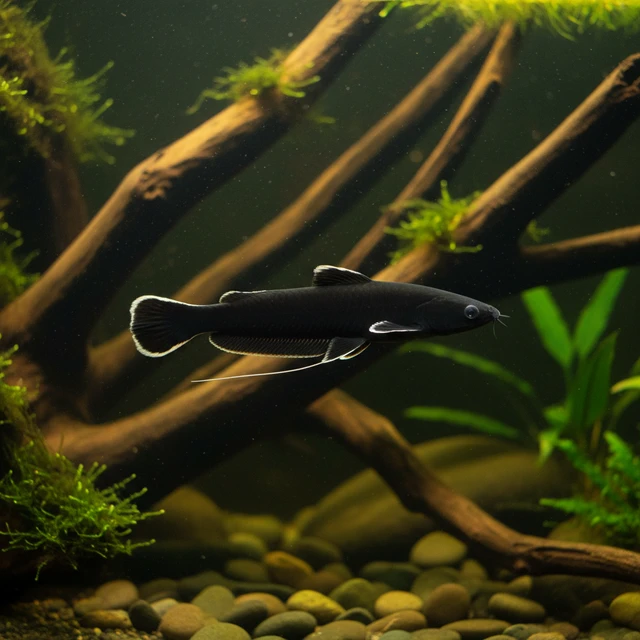
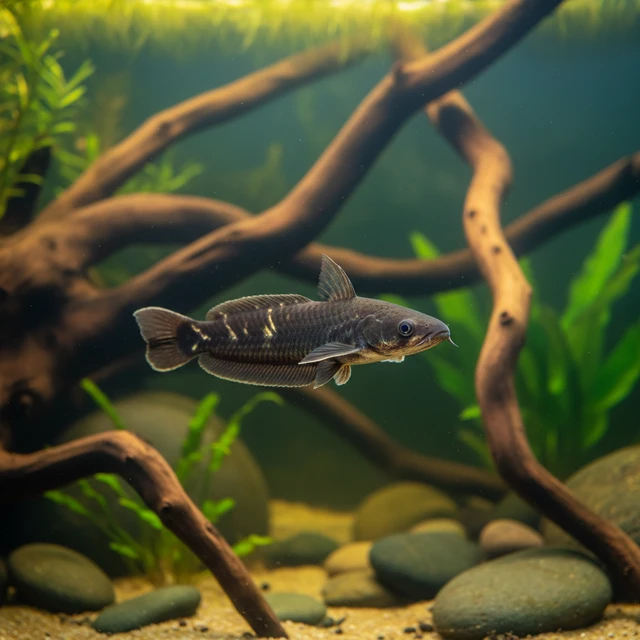
The Morse Knifefish (Gymnorhamphichthys hypostomus) exhibits a highly specialized morphology characterized by its elongated, fusiform body, which can reach a maximum adult size of approximately 15 inches. Its body is pale sandy-brown, adorned with darker mottled markings that provide effective camouflage against the substrate. The species possesses a long, pointed snout that is needle-like in appearance, facilitating its burrowing behavior in sandy environments. Notably, the Morse Knifefish lacks a traditional dorsal fin, instead featuring a continuous, elongated fin structure that runs along the length of its body, enhancing its maneuverability in tight spaces. The lateral line system is well-developed, allowing for enhanced sensory perception in its benthic habitat. Sexual dimorphism is subtle, with females generally being slightly larger and rounder during breeding periods, although external distinguishing features are minimal.
Behavior & temperament
The Morse Knifefish is primarily a solitary and benthic species, often found burrowed in sandy substrates during the day and becoming more active during twilight hours. It exhibits a non-aggressive temperament, although it may display territorial behaviors when competing for optimal burrowing sites. This species does not form schools; instead, it prefers to inhabit areas where it can easily conceal itself. Breeding behavior is not extensively documented, but it is believed to be an egg scatterer, releasing fertilized eggs into the substrate where they can develop in relative safety. The Morse Knifefish is known for its unique swimming style, utilizing its elongated fin for agile movements in close quarters.
Diet & feeding
In the wild, the Morse Knifefish is an omnivore, feeding on small invertebrates, crustaceans, and organic detritus found within the substrate. In captivity, it requires a varied diet that includes high-quality pellets, frozen or live foods such as brine shrimp and bloodworms, and occasional plant matter to ensure optimal health.
Behind the name
Gymnorhamphichthys (naked ramphos; hypostomus (under mouth))
Plan your tank
Check the numbers before you buy: tank volume, a stocking plan, cycle progress, water changes, and your ongoing care routine.
Keep reading

Choose compatible fish: school sizes, swimming zones, aggression, temperature and hardness matching, and honest bioload math for a peaceful community.
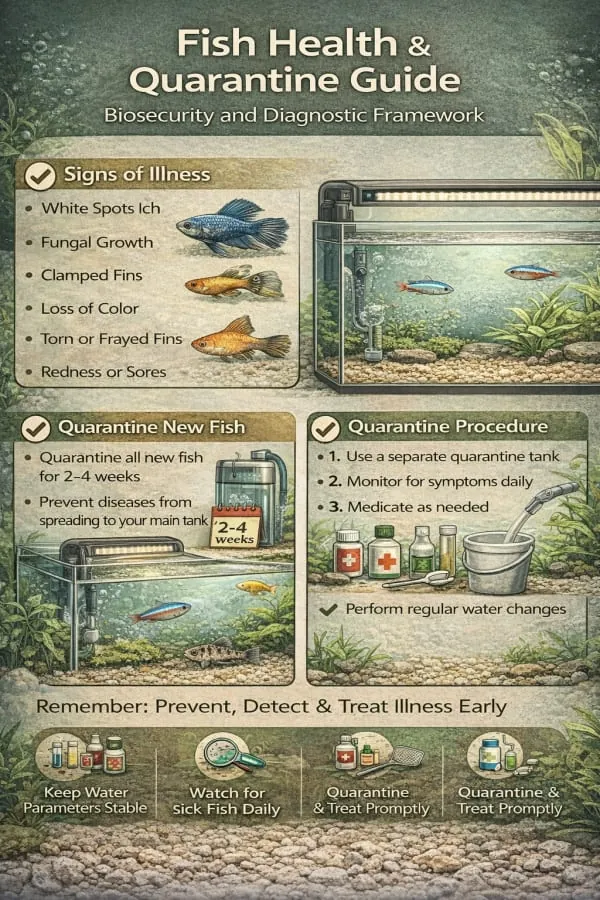
Quarantine new fish, spot the early warning signs, and treat disease without wrecking your tank. A practical freshwater fish health guide.

Acclimate new fish, shrimp, and coral safely: temperature floating, drip acclimation, plop-and-drop for shipped livestock, and the first 24 hours.
Keeping Morse Knifefish?
AquaLens identifies your fish and plants from a photo, tracks water chemistry, and flags health issues early — free on iOS and Android.