Blue Eyed Plecostomus Care Guide
Panaque cochliodon · Freshwater Fish
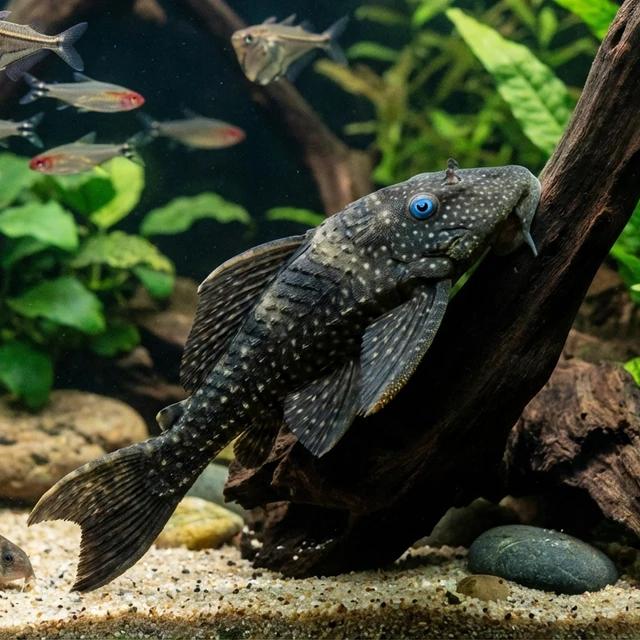
What Blue Eyed Plecostomus look like
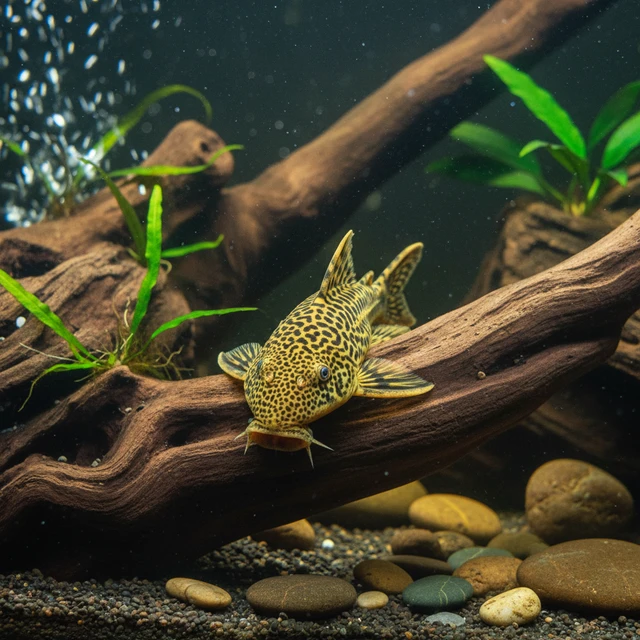
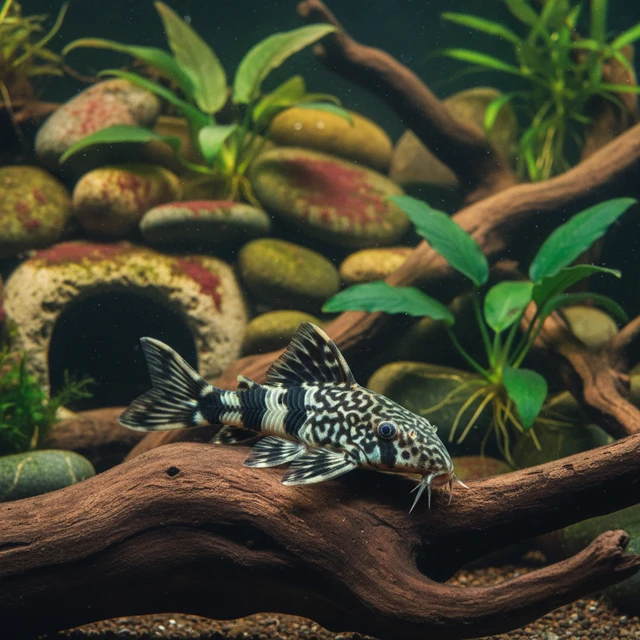
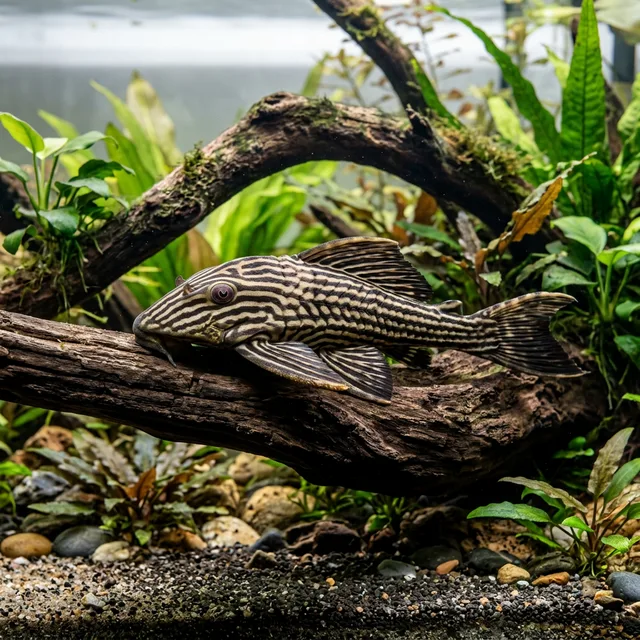
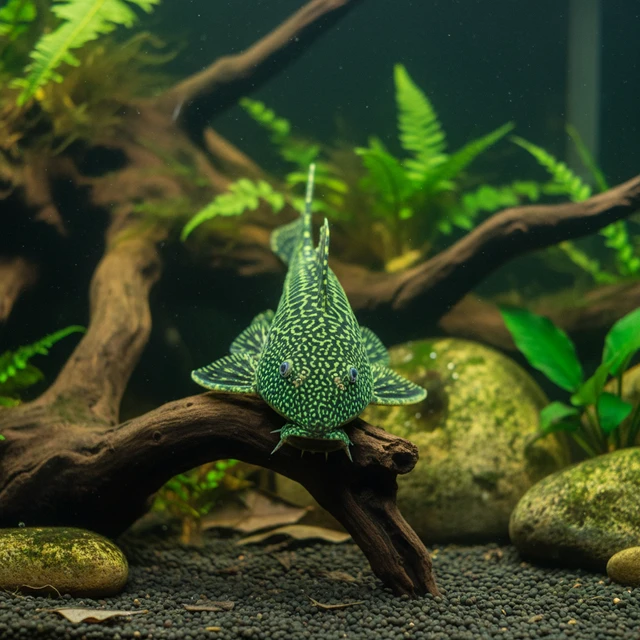
The Blue Eyed Plecostomus (Panaque cochliodon) exhibits a robust, laterally compressed body that can reach a maximum adult size of 10-14 inches (25-35 cm). This species is characterized by its dark gray-black body, which provides excellent camouflage in its natural habitat. A notable feature is its strikingly vivid electric blue eyes, which stand out against its somber coloration, serving as a unique morphological trait. The body is heavily armored with bony plates, providing protection against predators. The mouth is adapted into a powerful sucker, ideal for rasping wood and algae from surfaces. Additionally, this species possesses an adipose fin and a well-developed caudal fin, which aids in its maneuverability in swift currents. Sexual dimorphism is subtle but can be observed in the slightly larger size and more pronounced body shape of males during the breeding season.
Behavior & temperament
Panaque cochliodon is primarily a solitary species, although it may exhibit social behaviors in larger aquaria where individuals can establish territories. It typically dwells in the benthic zone of rivers and streams, where it utilizes its sucker mouth to graze on algae and detritus. Breeding behavior involves egg scattering, with females laying eggs in hidden crevices, while males guard the territory. This species is generally peaceful but can display territorial aggression towards conspecifics, particularly males during the breeding season. They are primarily nocturnal, becoming more active during the night when they forage for food.
Diet & feeding
In the wild, the Blue Eyed Plecostomus primarily feeds on algae, detritus, and decomposing wood, making it an obligate herbivore. In captivity, it requires a diet rich in vegetable matter, including high-quality sinking algae wafers, spirulina, and wood-based foods to meet its nutritional needs.
Behind the name
Panaque (from the indigenous term for a type of fish); cochliodon (from Greek 'kochlios' meaning 'spiral' and 'odon' meaning 'tooth', referring to the tooth structure).
Plan your tank
Check the numbers before you buy: tank volume, a stocking plan, cycle progress, water changes, and your ongoing care routine.
Keep reading

Choose compatible fish: school sizes, swimming zones, aggression, temperature and hardness matching, and honest bioload math for a peaceful community.
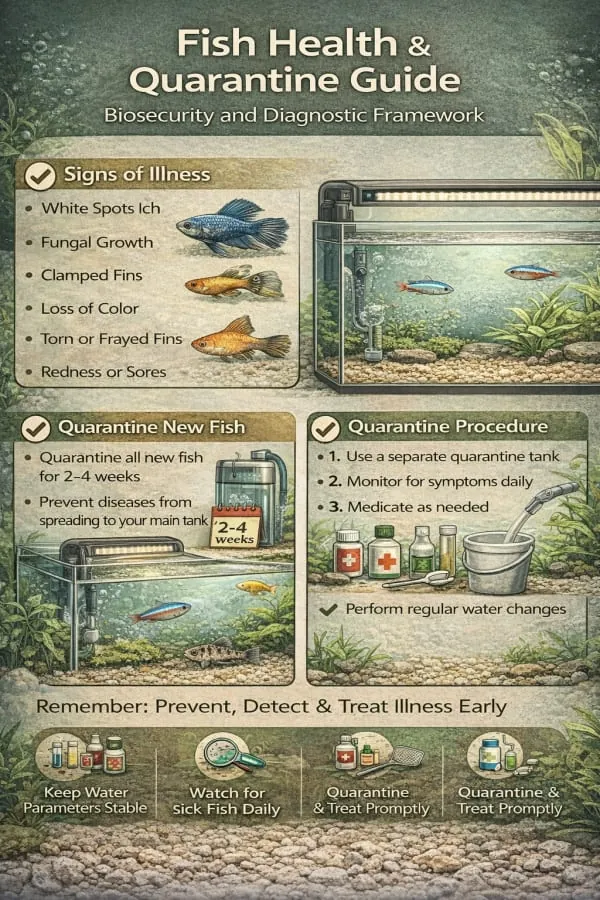
Quarantine new fish, spot the early warning signs, and treat disease without wrecking your tank. A practical freshwater fish health guide.
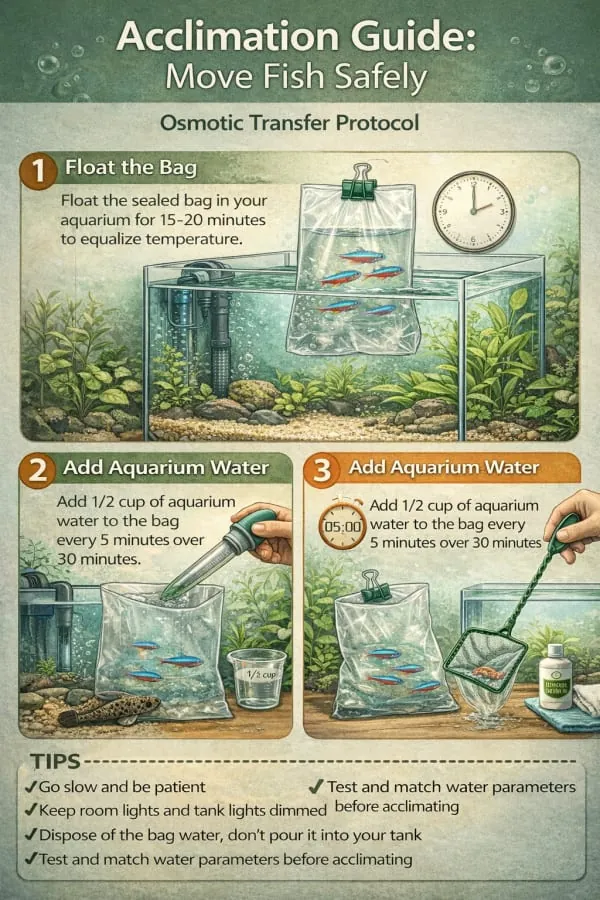
Acclimate new fish, shrimp, and coral safely: temperature floating, drip acclimation, plop-and-drop for shipped livestock, and the first 24 hours.
Keeping Blue Eyed Plecostomus?
AquaLens identifies your fish and plants from a photo, tracks water chemistry, and flags health issues early — free on iOS and Android.