Royal Pleco (L190) Care Guide
Panaque nigrolineatus · Freshwater Fish
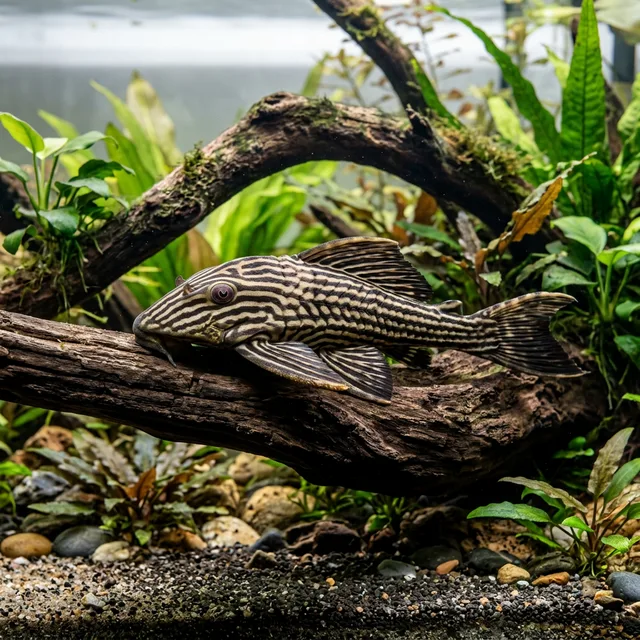
What Royal Pleco (L190) look like
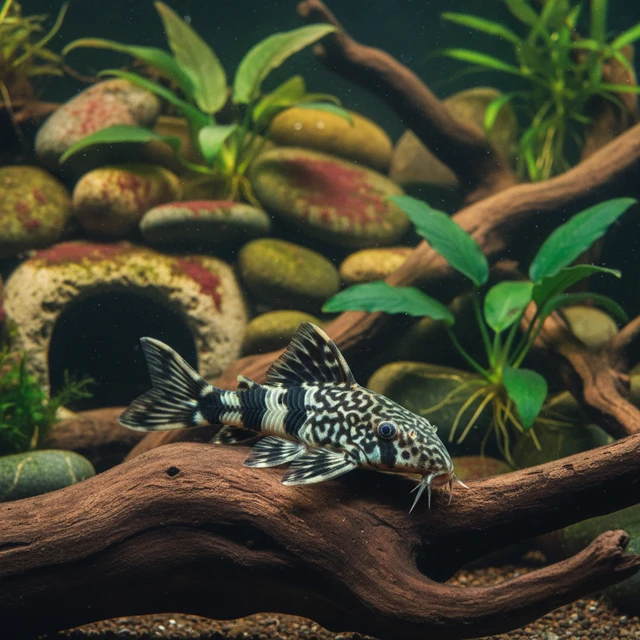
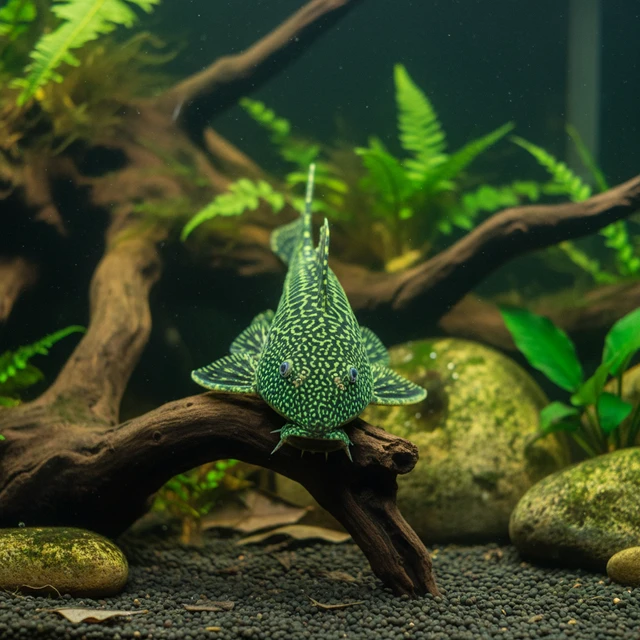
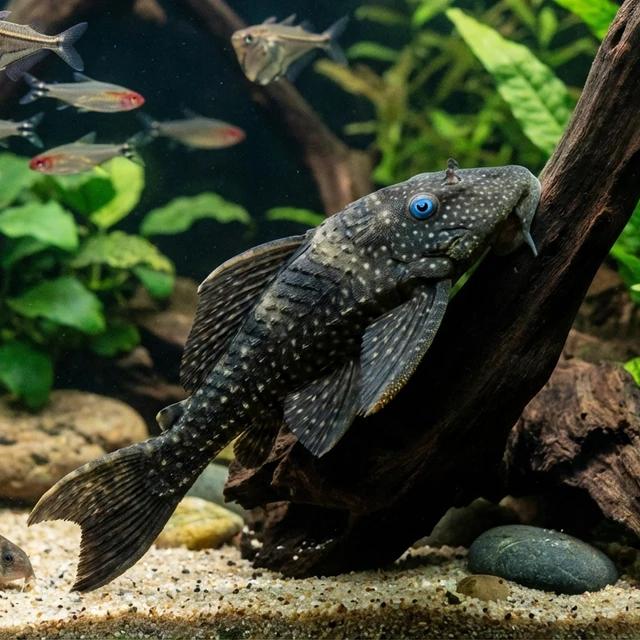
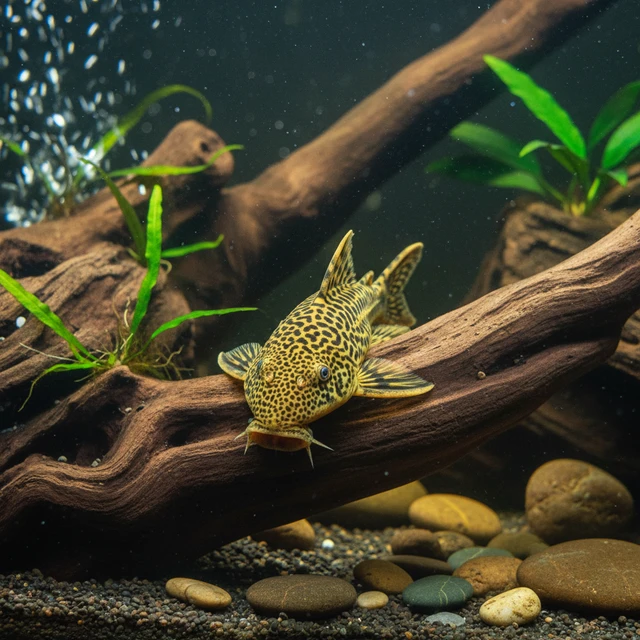
The Royal Pleco (Panaque nigrolineatus) exhibits a robust, laterally compressed body that can reach a maximum adult size of 5 to 15 inches, with individuals commonly found around 12 inches in aquaria. This species displays pronounced sexual dimorphism, with males typically exhibiting larger, more pronounced odontodes (bristle-like structures) on their snouts and pectoral fins compared to the more streamlined females. The body coloration is a striking light grey to brown, adorned with distinctive horizontal black pinstripes that provide effective camouflage among the driftwood and rocky substrates of its natural habitat. Notable morphological features include a broad, flattened head tapering sharply towards the caudal fin, and large, red eyes that enhance its visual acuity in low-light environments. The presence of an adipose fin and a well-developed lateral line system further aid in its navigation and sensory perception. Defensive adaptations include its armored body covered in bony plates, which deter potential predators.
Behavior & temperament
The Royal Pleco is primarily a solitary, benthic species, often found resting on the substrate or among submerged wood in slow-moving rivers and streams. It exhibits a largely peaceful temperament, although it may display territorial behaviors, particularly during breeding. This species is known to be an opportunistic feeder, often foraging during the night (nocturnal) and utilizing its specialized dentition to scrape biofilm and wood. Breeding behavior is characterized by egg scattering, where females lay adhesive eggs on flat surfaces, which males subsequently guard. Social hierarchy is minimal, as these fish do not form schools but may tolerate the presence of conspecifics in larger aquaria, provided there is ample space and hiding spots.
Diet & feeding
In the wild, the Royal Pleco primarily feeds on wood and biofilm, making it a xylophage (wood-eater) with a specialized diet that requires high lignin content. In captivity, it thrives on a diet rich in driftwood, supplemented with high-quality sinking pellets, algae wafers, and occasional fresh vegetables such as zucchini and cucumber.
Behind the name
Panaque (from the indigenous term for a type of fish); nigrolineatus (Latin: 'nigro' meaning black and 'lineatus' meaning lined, referring to the species' distinctive black stripes).
Plan your tank
Check the numbers before you buy: tank volume, a stocking plan, cycle progress, water changes, and your ongoing care routine.
Keep reading

Choose compatible fish: school sizes, swimming zones, aggression, temperature and hardness matching, and honest bioload math for a peaceful community.

Quarantine new fish, spot the early warning signs, and treat disease without wrecking your tank. A practical freshwater fish health guide.

Acclimate new fish, shrimp, and coral safely: temperature floating, drip acclimation, plop-and-drop for shipped livestock, and the first 24 hours.
Keeping Royal Pleco (L190)?
AquaLens identifies your fish and plants from a photo, tracks water chemistry, and flags health issues early — free on iOS and Android.