Blue Ring Octopus Care Guide
Hapalochlaena lunulata · Saltwater Octopus
What Blue Ring Octopus look like
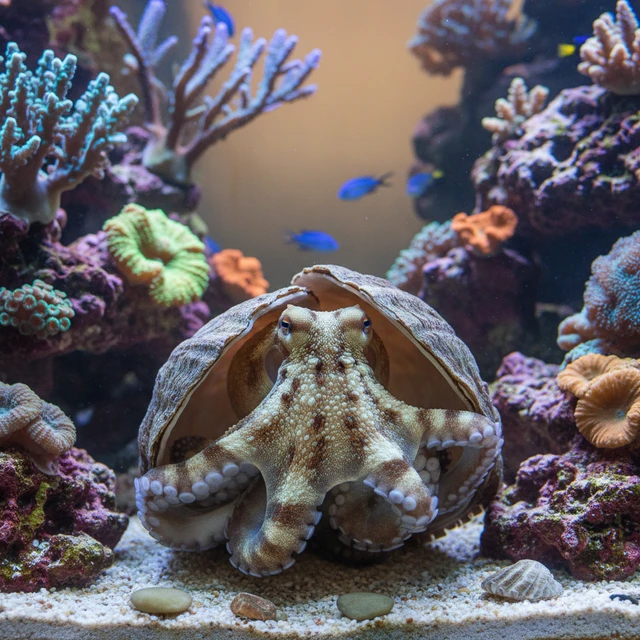
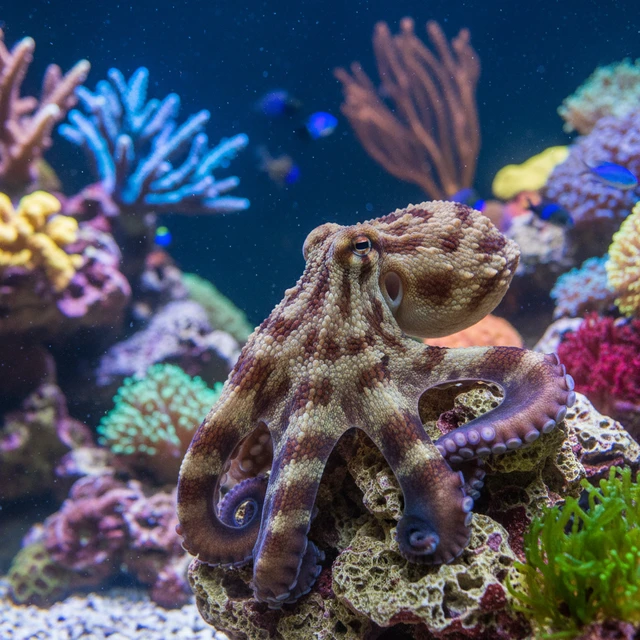
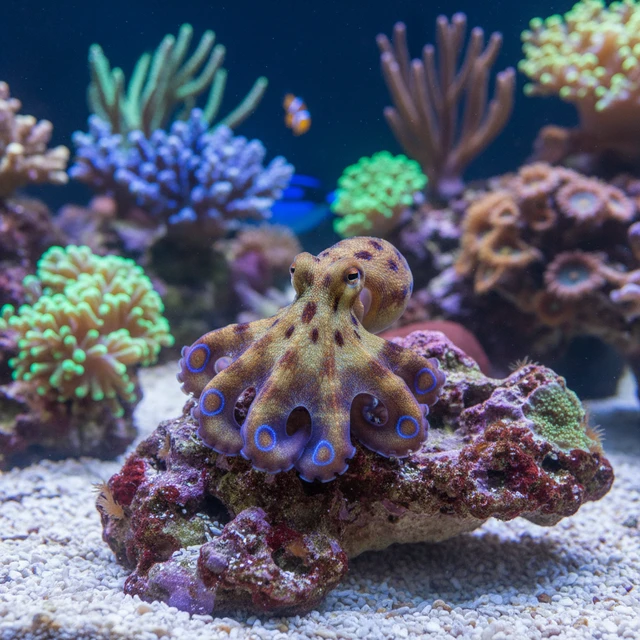
The Blue Ring Octopus (Hapalochlaena lunulata) is a small, highly venomous cephalopod, typically reaching a maximum adult size of about 4 to 5 inches (10 to 12 cm) in mantle length. This species exhibits sexual dimorphism, with females generally being larger than males. Its body is characterized by a soft, bulbous mantle and a series of distinctive blue rings that become more vibrant when the animal is threatened or agitated. The octopus possesses eight long, flexible arms lined with suckers, which are equipped with sensory receptors and are capable of intricate movements. Its beak, situated at the center of its arms, is sharp and capable of piercing hard-shelled prey. The skin contains chromatophores, allowing for rapid color change, which serves as both camouflage and a warning display due to its potent venom.
Behavior & temperament
The Blue Ring Octopus is primarily solitary and exhibits a cryptic lifestyle, often hiding in crevices or under rocks during the day. It is a nocturnal hunter, actively foraging for small crustaceans and mollusks at night. Breeding behavior involves the male using a specialized arm called a hectocotylus to transfer spermatophores to the female. The female lays eggs and guards them until they hatch, often dying shortly after. This species is known for its defensive behavior, displaying vibrant blue rings as a warning to potential predators, and it can exhibit aggressive behavior when threatened, using its venomous bite as a last resort.
Diet & feeding
The Blue Ring Octopus is a carnivorous predator, primarily feeding on small crustaceans, fish, and mollusks in the wild. In captivity, it requires a diet of live or frozen food such as shrimp, crabs, and other small marine organisms.
Behind the name
The genus name 'Hapalochlaena' derives from the Greek words 'hapalos' meaning 'delicate' and 'chlaena' meaning 'cloak', referring to its soft body structure. The species name 'lunulata' comes from the Latin 'lunula', meaning 'little moon', likely referring to the shape of its rings.
Plan your tank
Check the numbers before you buy: tank volume, salinity, salt mix, water changes, and your ongoing care routine. Keeping reef? Start from the Saltwater & Reef hub.
Keep reading
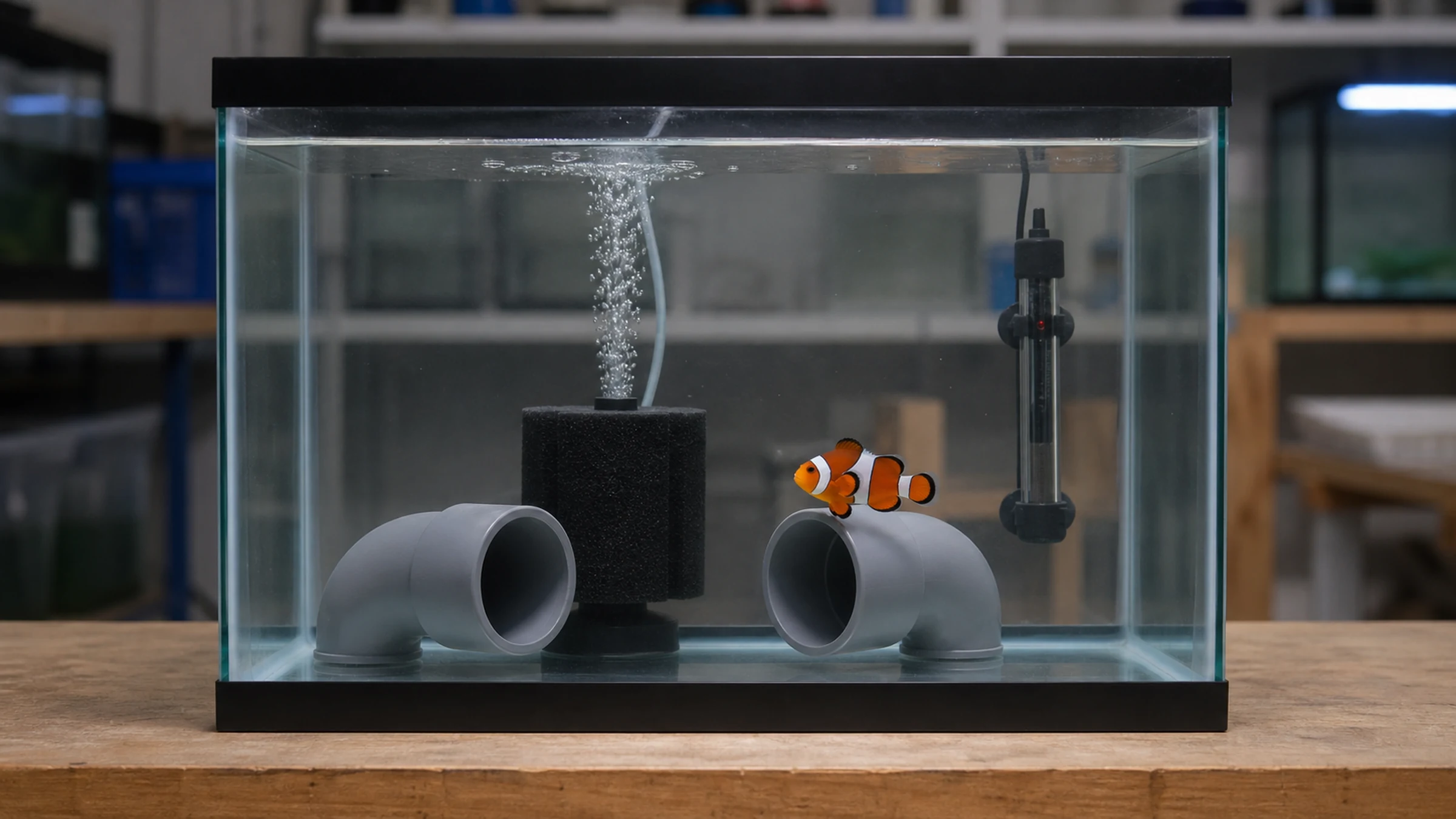
How to quarantine new saltwater fish against marine ich, velvet, and brooklynella: the QT tank, treatments, timelines, and the buy-clean shortcut.
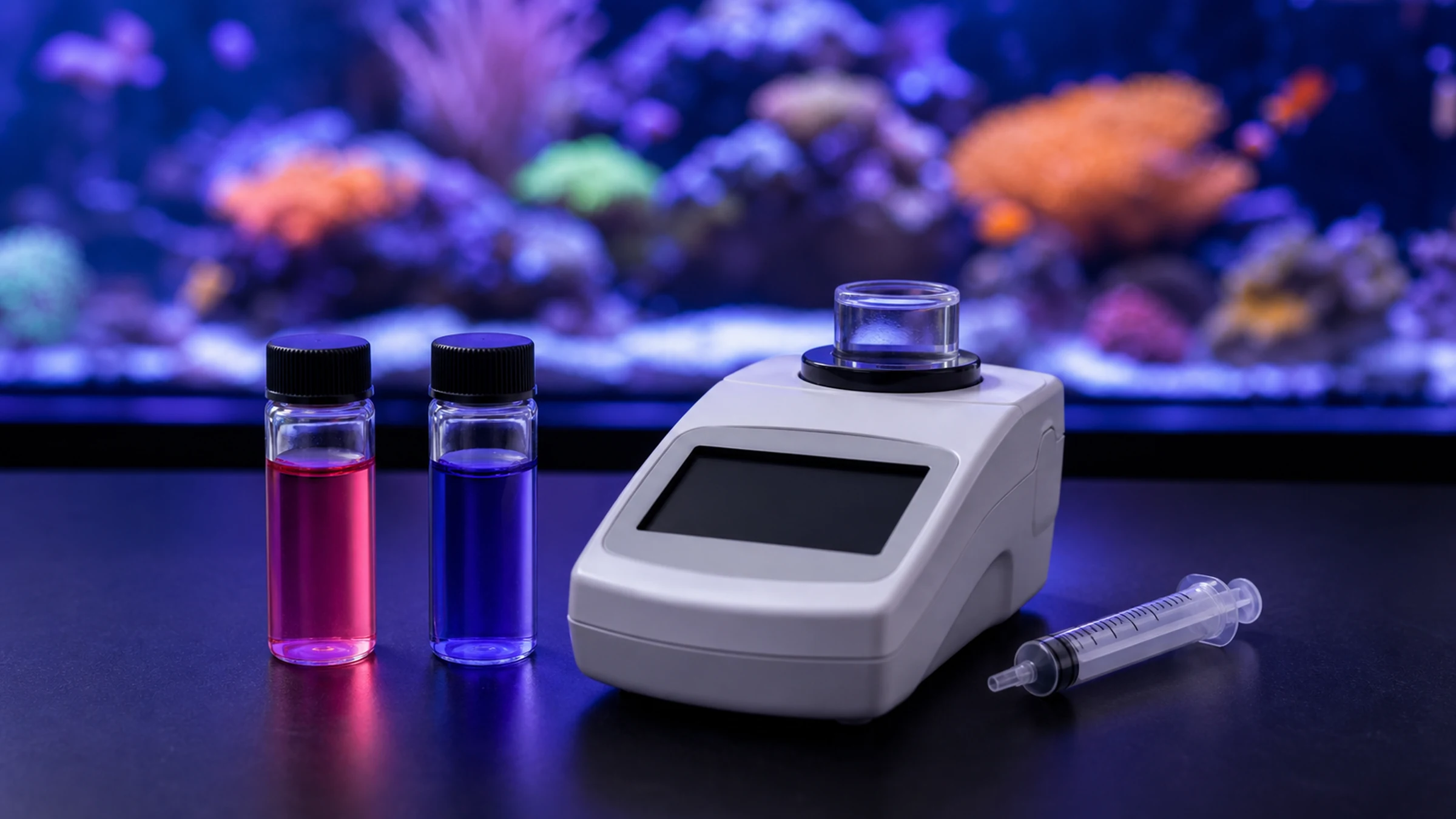
What every reef parameter means and where to keep it: salinity, temperature, pH, alkalinity, calcium, magnesium, nitrate, and phosphate.

Choose compatible fish: school sizes, swimming zones, aggression, temperature and hardness matching, and honest bioload math for a peaceful community.
Keeping Blue Ring Octopus?
AquaLens identifies your fish and plants from a photo, tracks water chemistry, and flags health issues early — free on iOS and Android.