Butterfly Peacock Bass Care Guide
Cichla ocellaris · Freshwater Fish
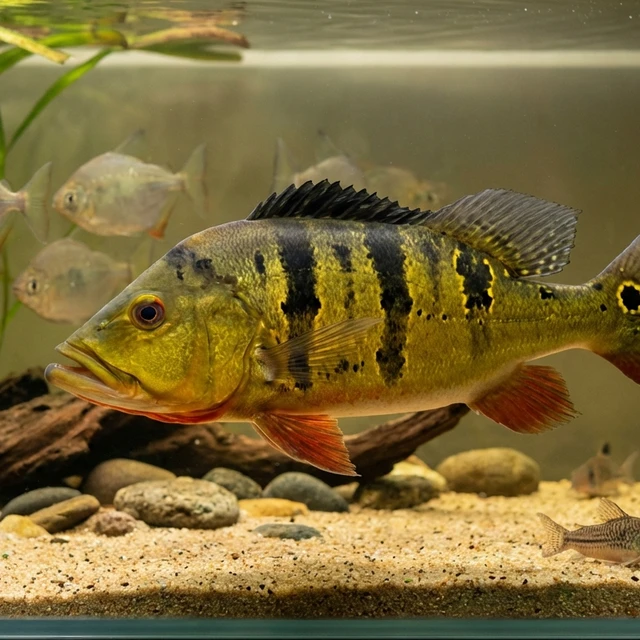
What Butterfly Peacock Bass look like
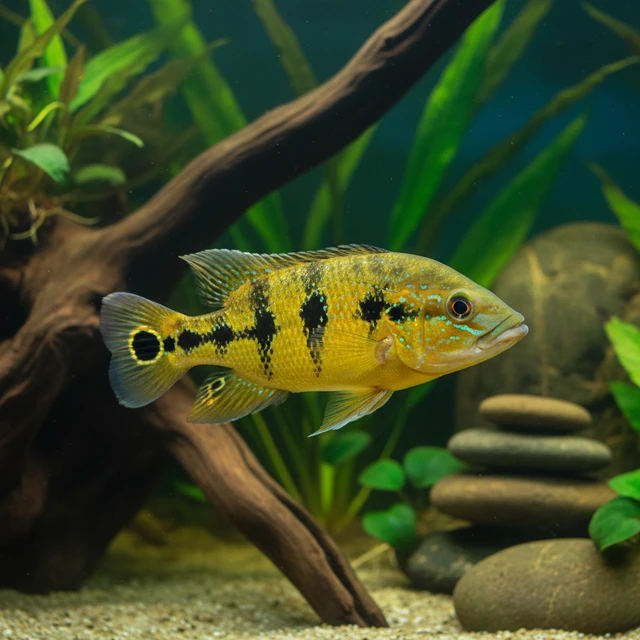
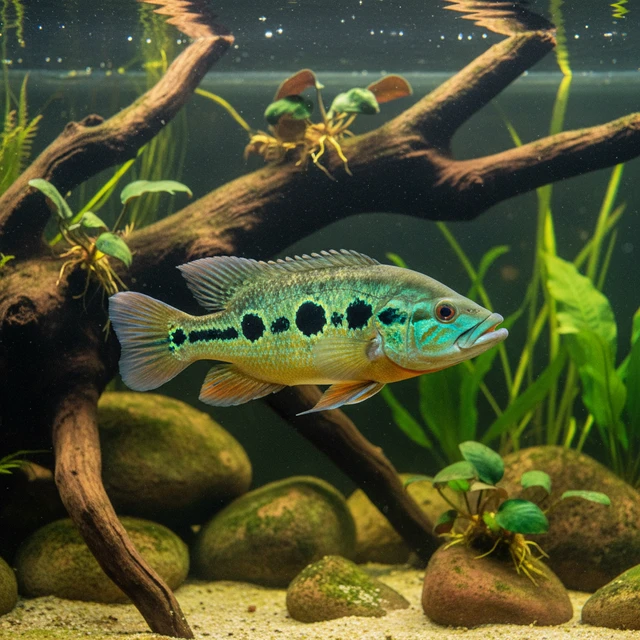
Cichla ocellaris, commonly known as the Butterfly Peacock Bass, exhibits a robust, elongated body that can reach a maximum adult size of 18-24 inches. The body is characterized by a striking golden-green coloration adorned with three prominent dark vertical bars, which serve as a form of camouflage in its natural habitat. A distinctive feature of this species is the large black eyespot (ocellus) located on the caudal peduncle, encircled by a golden ring, which plays a role in predator evasion and mating displays. The mouth is notably large and predatory, equipped with sharp, conical teeth adapted for capturing prey. During breeding, the body coloration intensifies, enhancing the visual appeal of the fish. Additionally, the species possesses a well-developed lateral line system, aiding in the detection of vibrations in the water, and features a pronounced dorsal fin that extends along the back, contributing to its hydrodynamic efficiency.
Behavior & temperament
Cichla ocellaris is primarily a solitary predator, although it may exhibit social behaviors during breeding periods. This species is predominantly pelagic, often found in the mid to upper water column, where it actively hunts for prey. The Butterfly Peacock Bass is known for its aggressive temperament, particularly when defending its territory or during the breeding season. Breeding behavior involves the formation of temporary pairs, where the female lays eggs on a flat surface, and the male guards the nest, showcasing parental care. This species does not exhibit schooling behavior, instead relying on its size and predatory skills to dominate its environment.
Diet & feeding
In the wild, Cichla ocellaris is a carnivorous predator, primarily feeding on smaller fish and invertebrates. In captivity, it requires a diet rich in high-quality protein sources, such as live or frozen fish, shrimp, and specialized carnivore pellets to ensure optimal health and growth.
Behind the name
Cichla (from Greek, meaning 'cichlid'); ocellaris (from Latin, meaning 'with eyespots').
Plan your tank
Check the numbers before you buy: tank volume, a stocking plan, cycle progress, water changes, and your ongoing care routine.
Keep reading
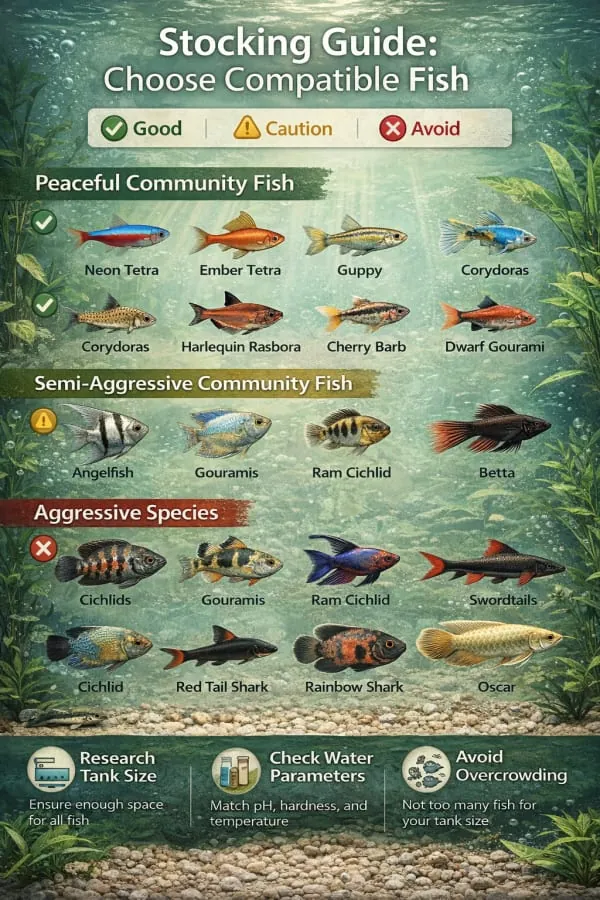
Choose compatible fish: school sizes, swimming zones, aggression, temperature and hardness matching, and honest bioload math for a peaceful community.
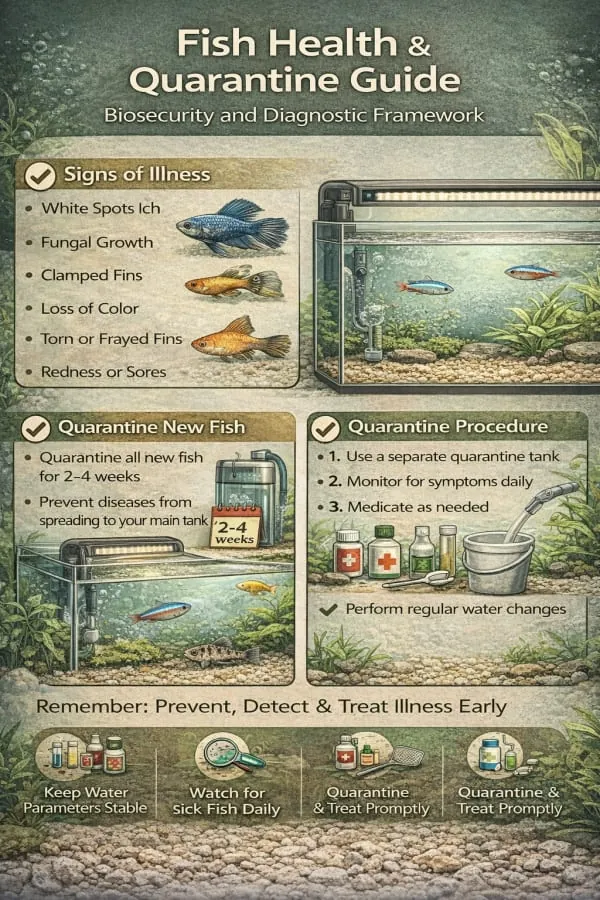
Quarantine new fish, spot the early warning signs, and treat disease without wrecking your tank. A practical freshwater fish health guide.
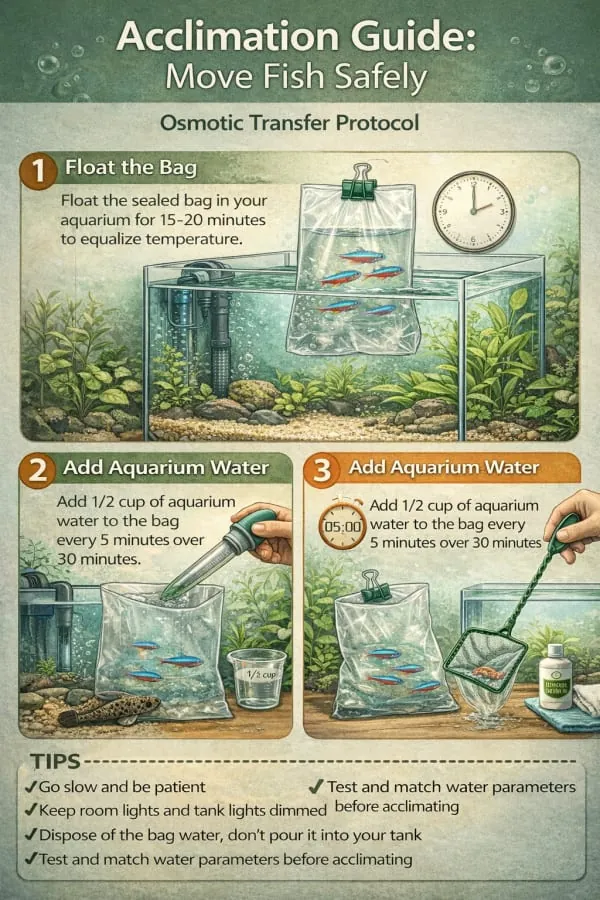
Acclimate new fish, shrimp, and coral safely: temperature floating, drip acclimation, plop-and-drop for shipped livestock, and the first 24 hours.
Keeping Butterfly Peacock Bass?
AquaLens identifies your fish and plants from a photo, tracks water chemistry, and flags health issues early — free on iOS and Android.