Orinoco Peacock Bass Care Guide
Cichla orinocensis · Freshwater Fish
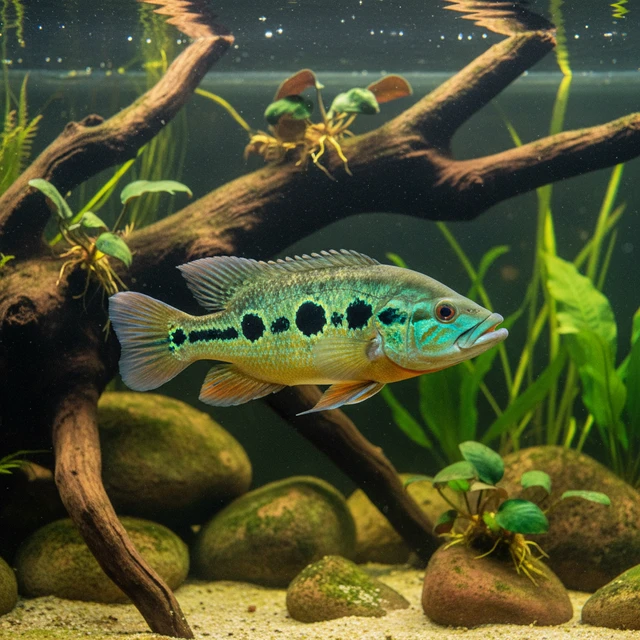
What Orinoco Peacock Bass look like
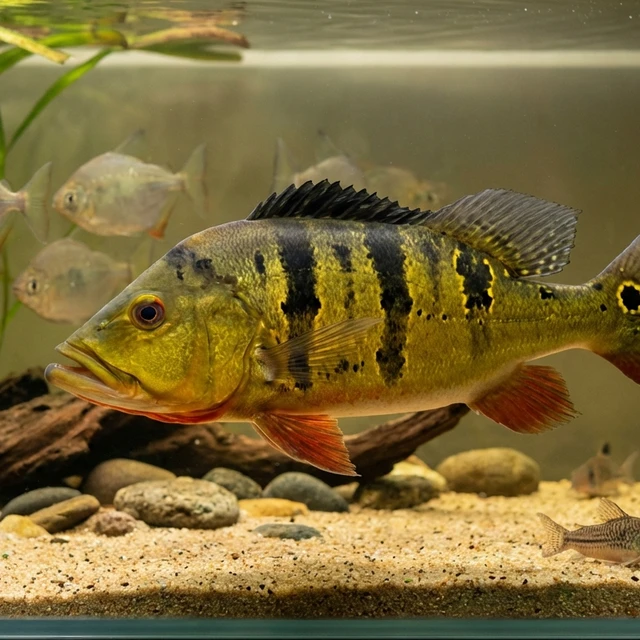
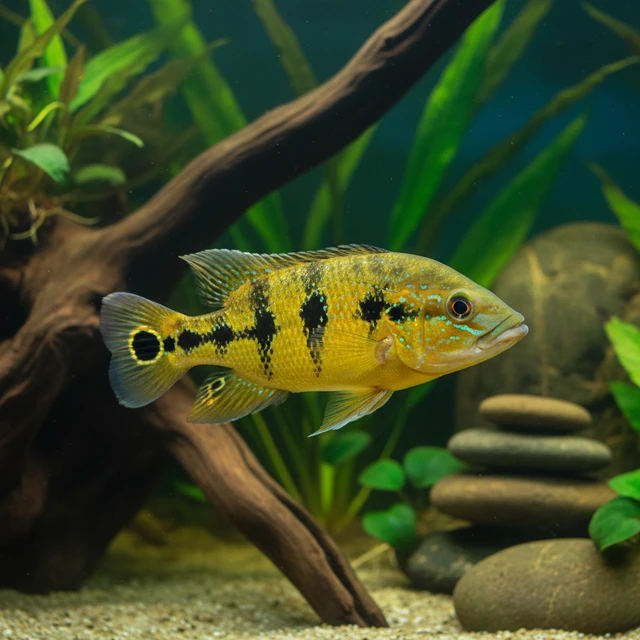
Cichla orinocensis, commonly known as the Orinoco Peacock Bass, exhibits a robust and laterally compressed body, reaching a maximum adult size of 12 to 18 inches (30 to 45 cm). The coloration is predominantly golden-green, adorned with three distinct dark spots along each flank, which serve as a form of disruptive coloration, aiding in ambush predation. A notable feature is the large caudal eyespot, which may confuse potential predators or prey. The species displays sexual dimorphism, with males typically exhibiting more vibrant coloration and larger dorsal and anal fins compared to females. Defensive adaptations include a powerful predatory mouth equipped with conical teeth, allowing for efficient capture of prey. The presence of a well-defined lateral line enhances its ability to detect vibrations in the water, crucial for a predator in its natural habitat.
Behavior & temperament
The Orinoco Peacock Bass is primarily a solitary and territorial species, though it may exhibit social behaviors during breeding periods. It predominantly occupies the pelagic zone of rivers and floodplains in the Orinoco basin, where it can be found near submerged structures and vegetation. Breeding behavior involves the construction of nests in sandy substrates, where the female scatters eggs, which the male subsequently guards. This species is known for its aggressive temperament, particularly when defending its territory or during the breeding season, making it a formidable predator in its environment.
Diet & feeding
In the wild, the Orinoco Peacock Bass is a carnivorous predator, primarily feeding on smaller fish and invertebrates. In captivity, it requires a diet rich in high-quality protein sources, such as live or frozen fish, shrimp, and specialized carnivore pellets to maintain optimal health.
Behind the name
Cichla (from Greek, meaning 'fish'); orinocensis (from Latin, referring to the Orinoco River region).
Plan your tank
Check the numbers before you buy: tank volume, a stocking plan, cycle progress, water changes, and your ongoing care routine.
Keep reading

Choose compatible fish: school sizes, swimming zones, aggression, temperature and hardness matching, and honest bioload math for a peaceful community.
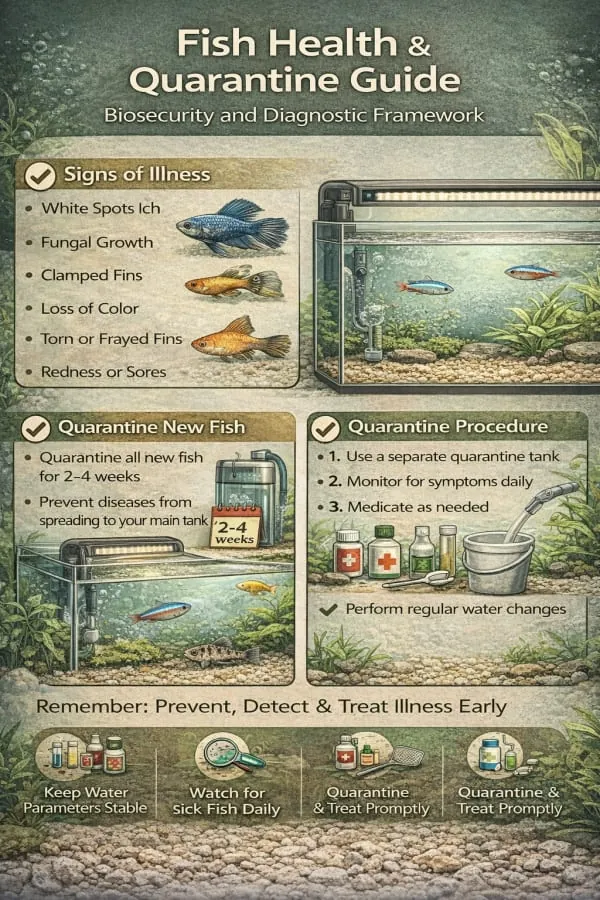
Quarantine new fish, spot the early warning signs, and treat disease without wrecking your tank. A practical freshwater fish health guide.
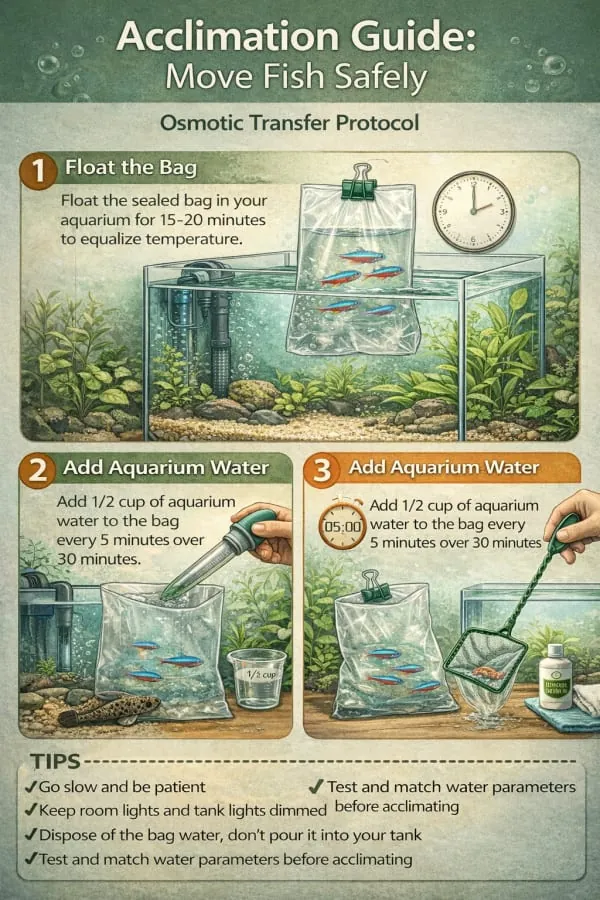
Acclimate new fish, shrimp, and coral safely: temperature floating, drip acclimation, plop-and-drop for shipped livestock, and the first 24 hours.
Keeping Orinoco Peacock Bass?
AquaLens identifies your fish and plants from a photo, tracks water chemistry, and flags health issues early — free on iOS and Android.