Badis Care Guide
Badis badis · Freshwater Fish
What Badis look like
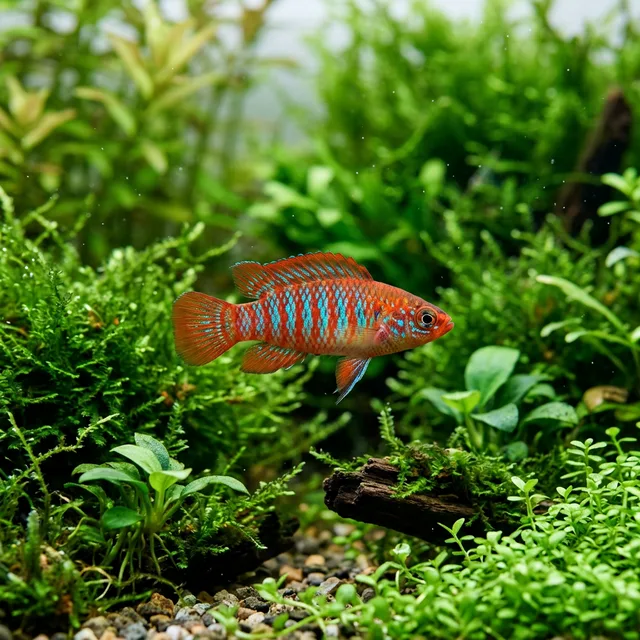
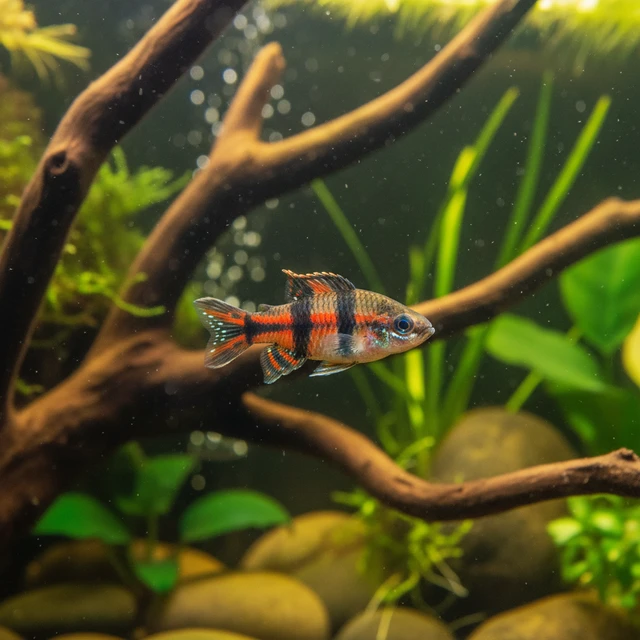
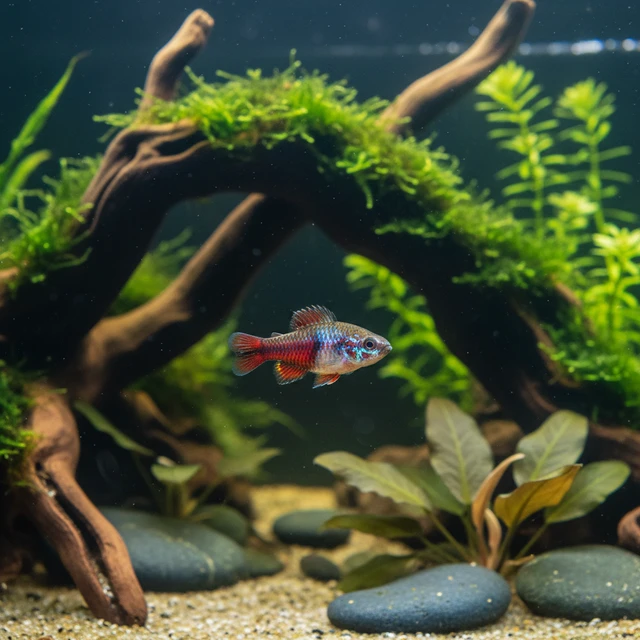
Badis badis, commonly known as the Badis, exhibits a small, cichlid-like body that is laterally compressed, reaching a maximum adult size of approximately 5 to 15 cm. This species is characterized by its striking coloration, which can fluctuate rapidly, showcasing deep sapphire blue to purple hues with prominent barring along the flanks. The dorsal fin is elongated and continuous, while the anal fin is rounded, contributing to its graceful swimming style. Notably, Badis badis possesses a well-defined lateral line that aids in sensory perception, and its dentition is adapted for a carnivorous diet, featuring small, sharp teeth. Sexual dimorphism is evident, with males typically displaying more vibrant colors and larger fins compared to the more subdued hues of females. As a defensive adaptation, Badis can change its coloration to blend into its surroundings, providing camouflage from potential predators.
Behavior & temperament
Badis badis is primarily a solitary and territorial fish, often found dwelling in the lower strata of freshwater habitats, making it a benthic dweller. It exhibits a peaceful temperament but can display aggression during breeding periods or when defending its territory. The breeding behavior of Badis involves egg scattering, where females lay eggs in hidden locations among aquatic vegetation, and males guard the territory around the spawning site. This species is not an obligate schooler, but it may tolerate the presence of conspecifics if ample space is provided. Its behavior is characterized by a degree of shyness, often retreating to cover when threatened, and it displays a curious nature when acclimated to its environment.
Diet & feeding
In the wild, Badis badis is a carnivore, primarily feeding on small invertebrates and zooplankton. In captivity, it requires a diet rich in protein, including high-quality flakes, frozen or live foods such as brine shrimp and daphnia to thrive.
Behind the name
The genus name 'Badis' is derived from the local vernacular, while the species name 'badis' is a direct reference to the fish's native habitat in India, where it is commonly found.
Plan your tank
Check the numbers before you buy: tank volume, a stocking plan, cycle progress, water changes, and your ongoing care routine.
Keep reading

Choose compatible fish: school sizes, swimming zones, aggression, temperature and hardness matching, and honest bioload math for a peaceful community.
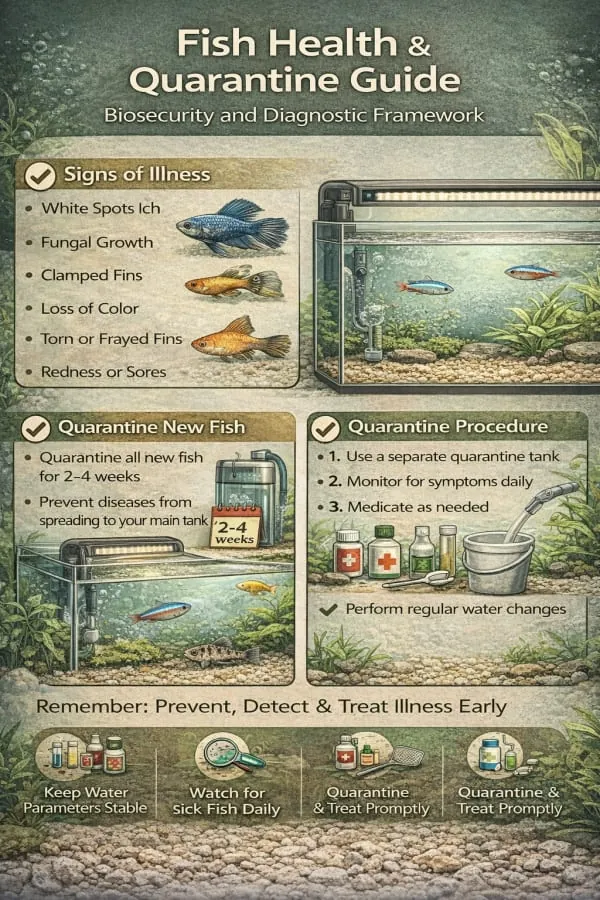
Quarantine new fish, spot the early warning signs, and treat disease without wrecking your tank. A practical freshwater fish health guide.

Acclimate new fish, shrimp, and coral safely: temperature floating, drip acclimation, plop-and-drop for shipped livestock, and the first 24 hours.
Keeping Badis?
AquaLens identifies your fish and plants from a photo, tracks water chemistry, and flags health issues early — free on iOS and Android.