Checkerboard Cichlid Care Guide
Dicrossus filamentosus · Freshwater Fish
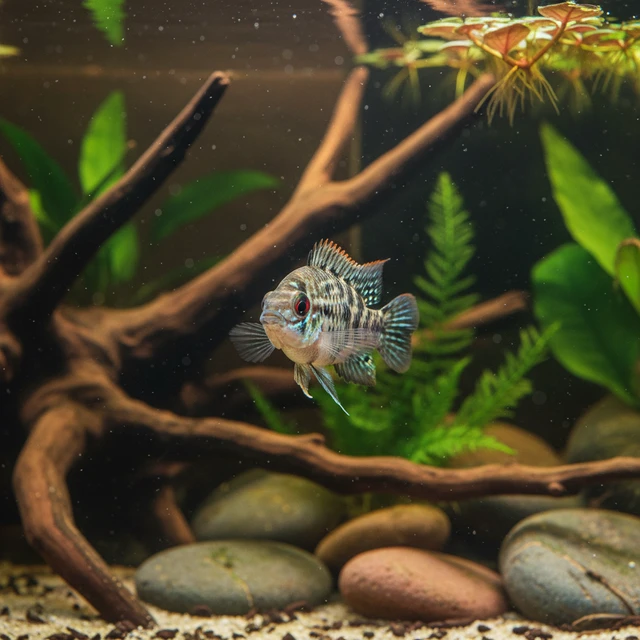
What Checkerboard Cichlid look like
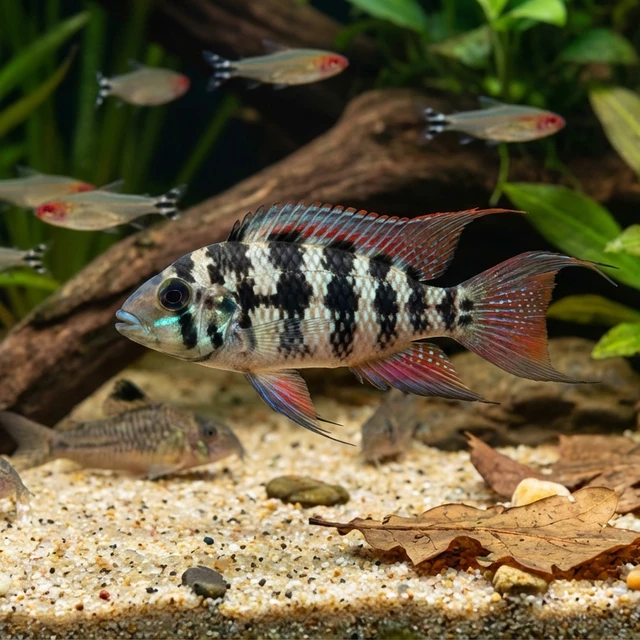
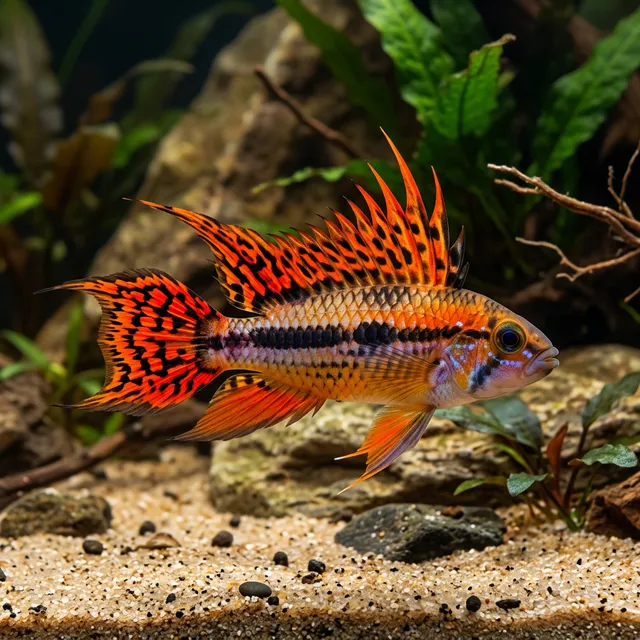
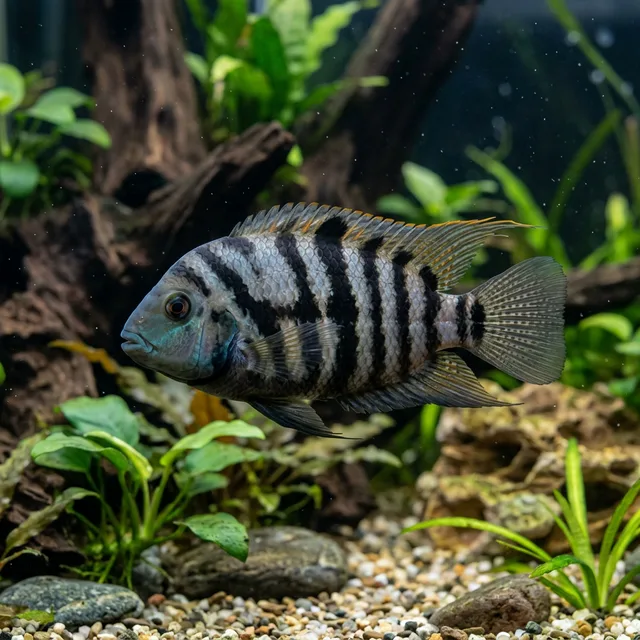
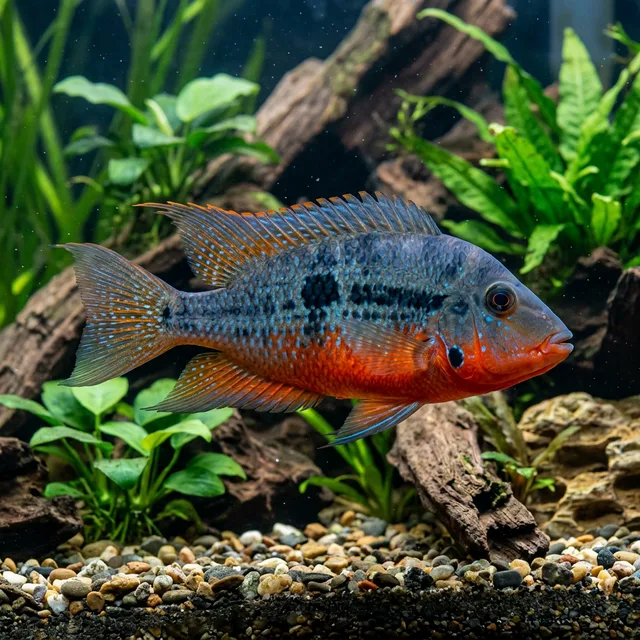
The Checkerboard Cichlid (Dicrossus filamentosus) exhibits a highly elongated and slender body shape, characteristic of its dwarf cichlid status, with a maximum adult size reaching approximately 5 inches (12.7 cm). This species is noted for its striking and intricate checkerboard pattern, featuring sharply defined black squares that are meticulously arranged along the lateral lines, providing excellent camouflage among the leaf litter of its natural habitat. The dorsal and anal fins are exquisitely long and filamentous, culminating in a deeply sweeping lyretail that is distinctly separated at both the top and bottom, enhancing its aesthetic appeal. Sexual dimorphism is subtle, with males typically exhibiting more vibrant coloration and slightly larger fins compared to females. Defensive adaptations include a tendency to hide among dense vegetation and substrate, utilizing their slender morphology to navigate tight spaces, which helps evade predators.
Behavior & temperament
The Checkerboard Cichlid is primarily a benthic dweller, often found in the lower strata of the water column, where it exhibits a semi-social behavior. While not strictly an obligate schooler, it does prefer to inhabit small groups, displaying a loose social hierarchy where dominant individuals may assert themselves during breeding. Breeding behavior is characterized by egg scattering, with females laying eggs in concealed areas among leaf litter or substrate. The species is generally peaceful but can exhibit territorial aggression, particularly during spawning periods, making it essential to provide ample space and hiding spots in a community tank.
Diet & feeding
In the wild, the Checkerboard Cichlid is a carnivore, primarily feeding on small invertebrates and zooplankton. In captivity, it requires a diet rich in high-quality protein sources, such as live or frozen foods like brine shrimp, bloodworms, and finely chopped meaty foods to thrive.
Behind the name
Dicrossus (two cross); filamentosus (thread-like or filamentous, referring to the elongated fins).
Plan your tank
Check the numbers before you buy: tank volume, a stocking plan, cycle progress, water changes, and your ongoing care routine.
Keep reading
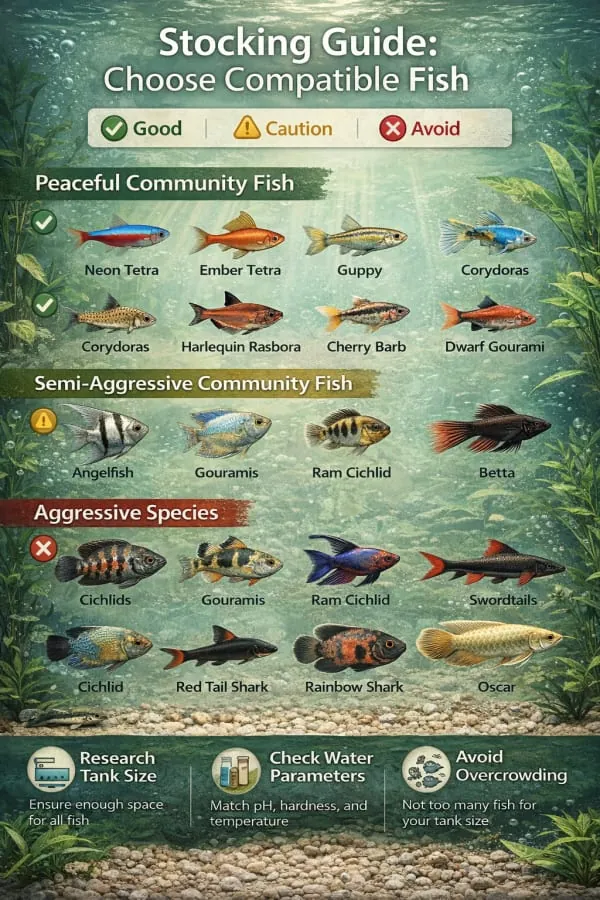
Choose compatible fish: school sizes, swimming zones, aggression, temperature and hardness matching, and honest bioload math for a peaceful community.
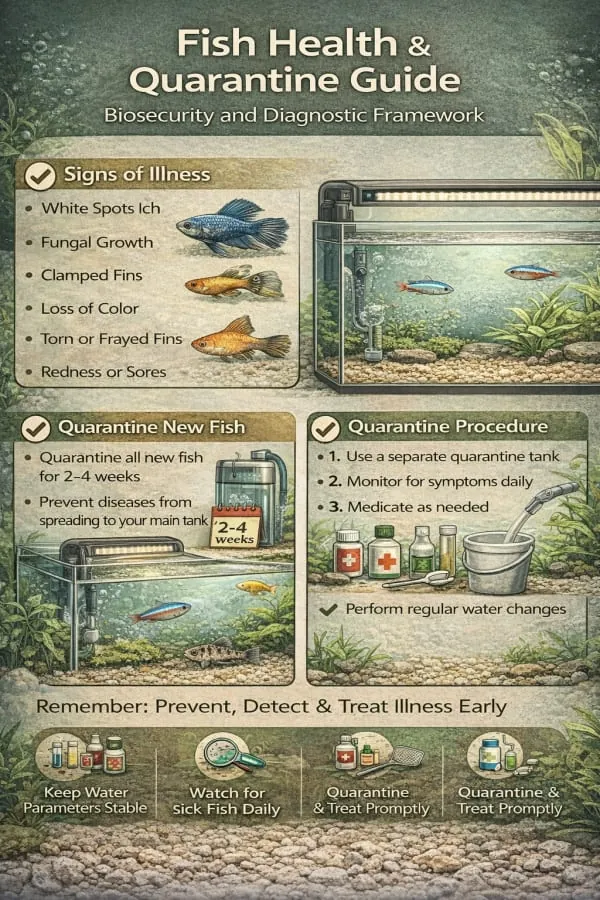
Quarantine new fish, spot the early warning signs, and treat disease without wrecking your tank. A practical freshwater fish health guide.
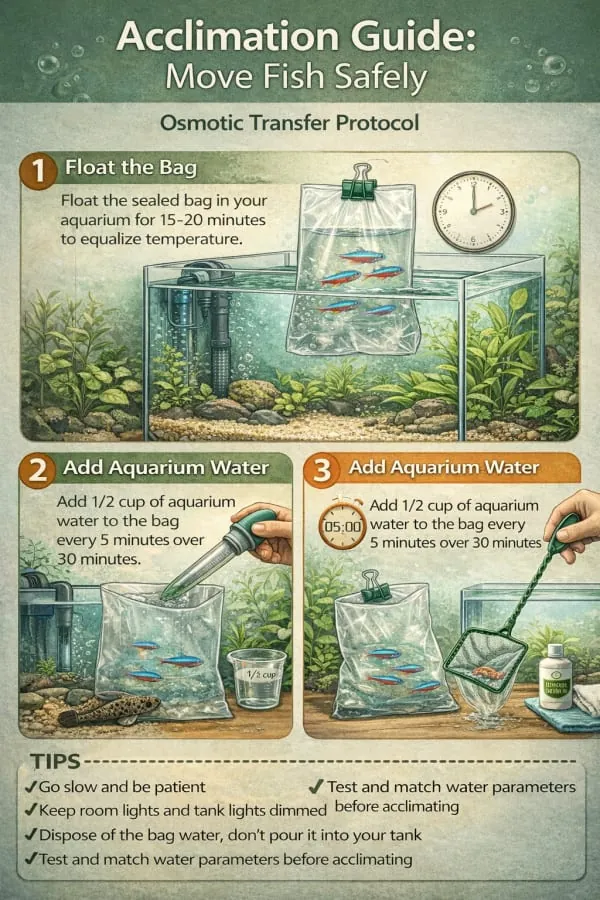
Acclimate new fish, shrimp, and coral safely: temperature floating, drip acclimation, plop-and-drop for shipped livestock, and the first 24 hours.
Keeping Checkerboard Cichlid?
AquaLens identifies your fish and plants from a photo, tracks water chemistry, and flags health issues early — free on iOS and Android.