Convict Cichlid Care Guide
Amatitlania nigrofasciata · Freshwater Fish
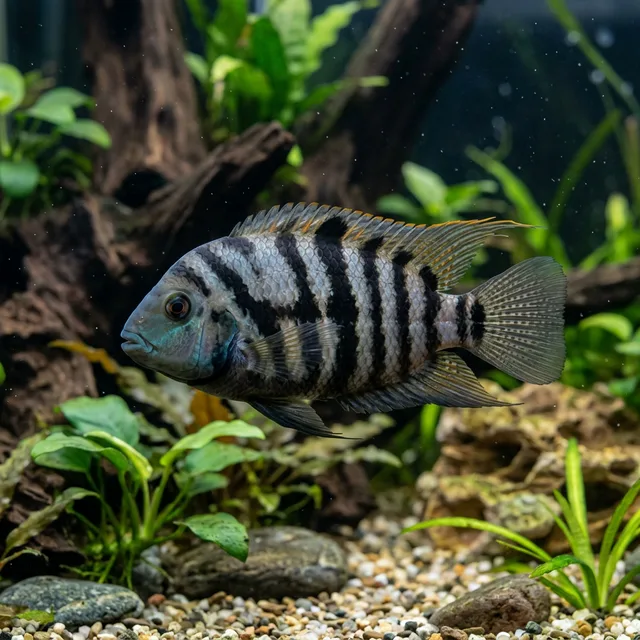
What Convict Cichlid look like
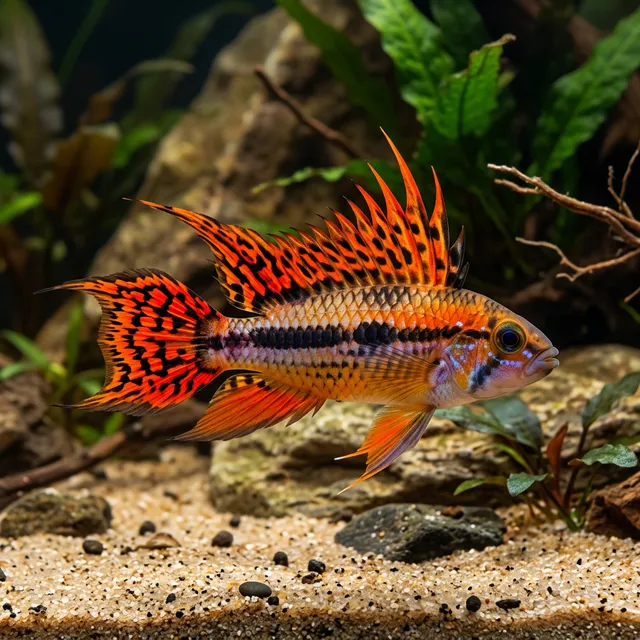
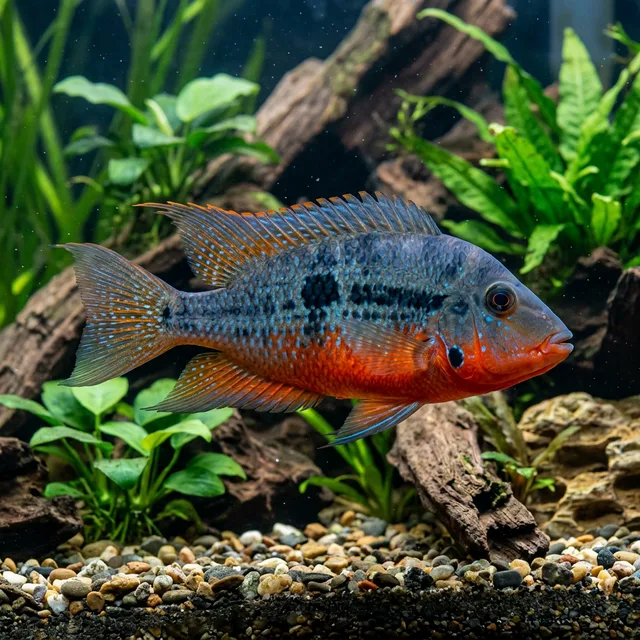
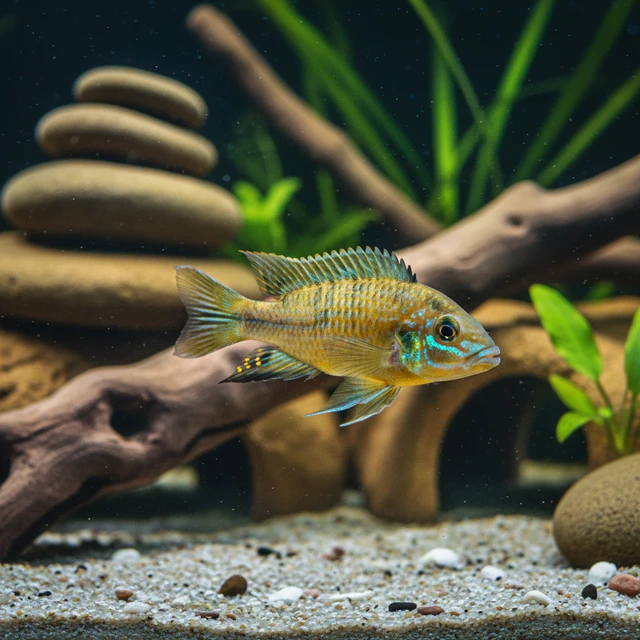
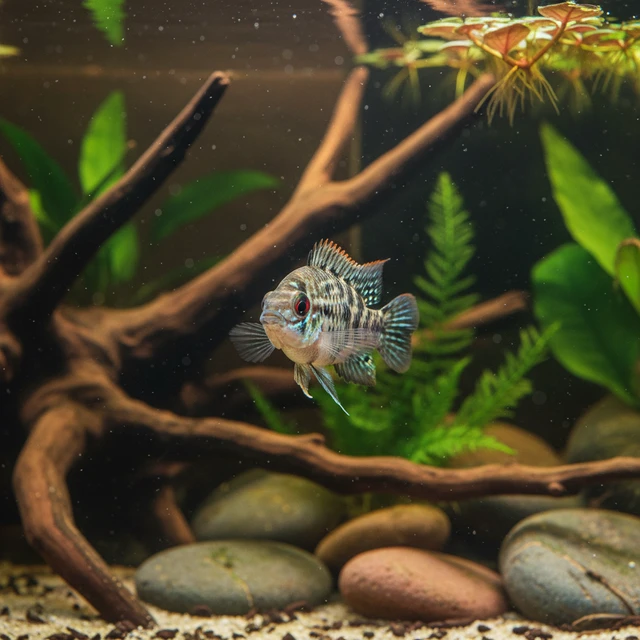
The Convict Cichlid (Amatitlania nigrofasciata) exhibits a laterally compressed, fusiform body shape, reaching a maximum adult size of approximately 5 to 6 inches (12 to 15 cm). This species is characterized by its striking coloration, featuring a base color that ranges from light gray to white, adorned with bold, vertical black stripes that resemble the markings of a convict, hence its common name. Sexual dimorphism is evident, with males typically displaying more vibrant coloration and larger dorsal and anal fins compared to females. The species possesses a well-developed lateral line system, which aids in detecting movement and vibrations in the water. Defensive adaptations include a robust body and the ability to exhibit aggressive territorial behavior, particularly during breeding. Unique morphological features include a pronounced nuchal hump in mature males and a small, rounded adipose fin located between the dorsal fin and the caudal fin.
Behavior & temperament
Convict Cichlids are known for their semi-aggressive behavior and territorial nature, often establishing dominance hierarchies within their social structure. They are not obligate schoolers and can be found either solitary or in small groups, particularly during breeding periods. In the wild, they typically inhabit the benthic zone of freshwater environments, such as rivers and lakes, where they can be found near rocky substrates. Breeding behavior involves forming monogamous pairs, with females laying eggs on flat surfaces, which the male then fertilizes. The species exhibits parental care, with both parents guarding the eggs and fry. Their temperament can vary, with individuals displaying varying levels of aggression, especially when defending their territory or offspring.
Diet & feeding
In their natural habitat, Convict Cichlids are omnivorous, feeding on a varied diet that includes small invertebrates, plant matter, and detritus. In captivity, they thrive on a balanced diet that includes high-quality pellets, frozen or live foods such as brine shrimp and bloodworms, as well as vegetable matter to ensure proper nutrition.
Behind the name
The genus name Amatitlania is derived from the Amatitlán Lake in Guatemala, while the species name nigrofasciata translates to 'black-striped' from Latin, referring to the species' distinctive coloration.
Plan your tank
Check the numbers before you buy: tank volume, a stocking plan, cycle progress, water changes, and your ongoing care routine.
Keep reading

Choose compatible fish: school sizes, swimming zones, aggression, temperature and hardness matching, and honest bioload math for a peaceful community.

Quarantine new fish, spot the early warning signs, and treat disease without wrecking your tank. A practical freshwater fish health guide.

Acclimate new fish, shrimp, and coral safely: temperature floating, drip acclimation, plop-and-drop for shipped livestock, and the first 24 hours.
Keeping Convict Cichlid?
AquaLens identifies your fish and plants from a photo, tracks water chemistry, and flags health issues early — free on iOS and Android.