Apistogramma cacatuoides Care Guide
Apistogramma cacatuoides · Freshwater Fish
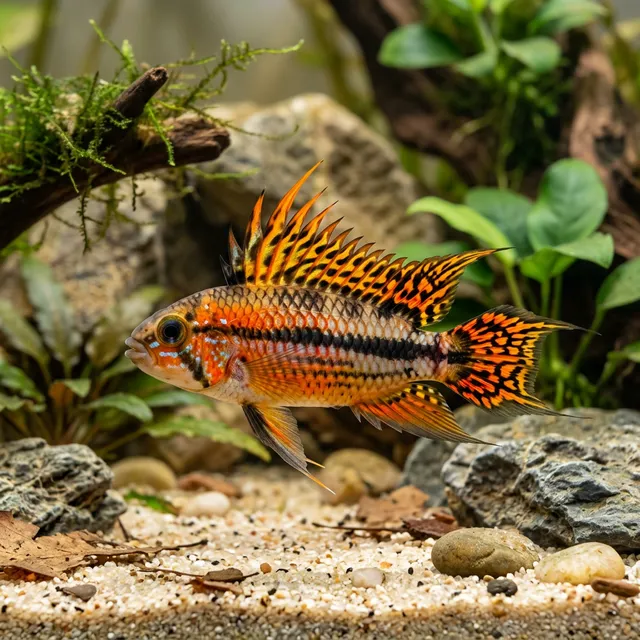
What Apistogramma cacatuoides look like
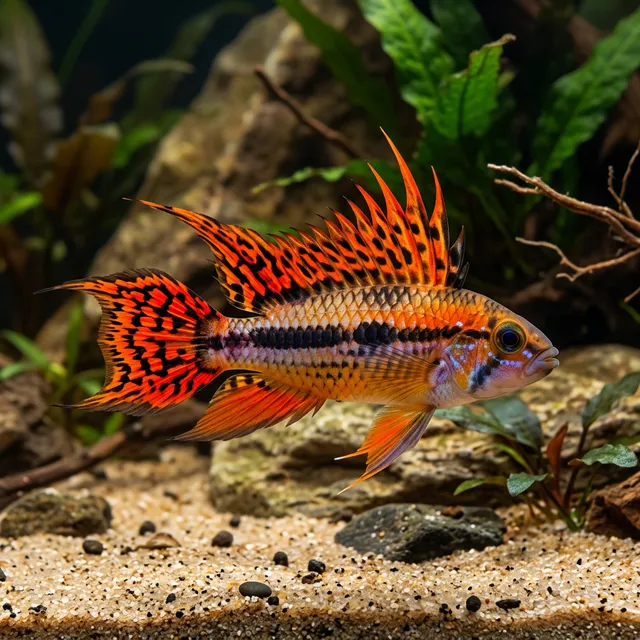
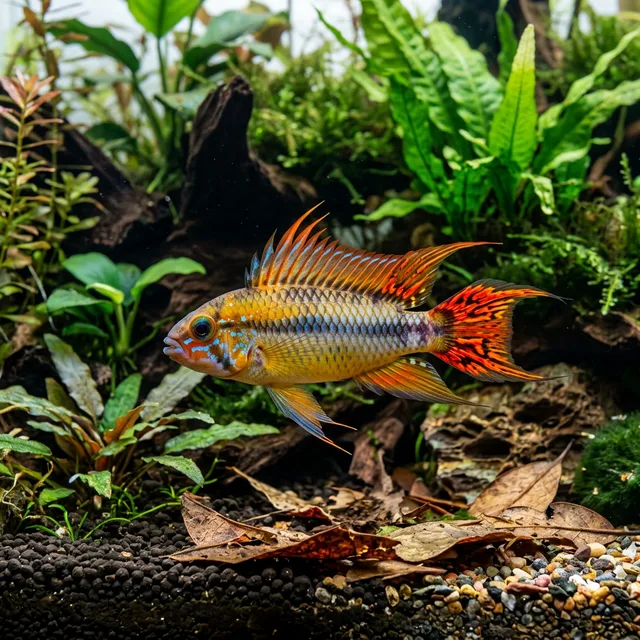
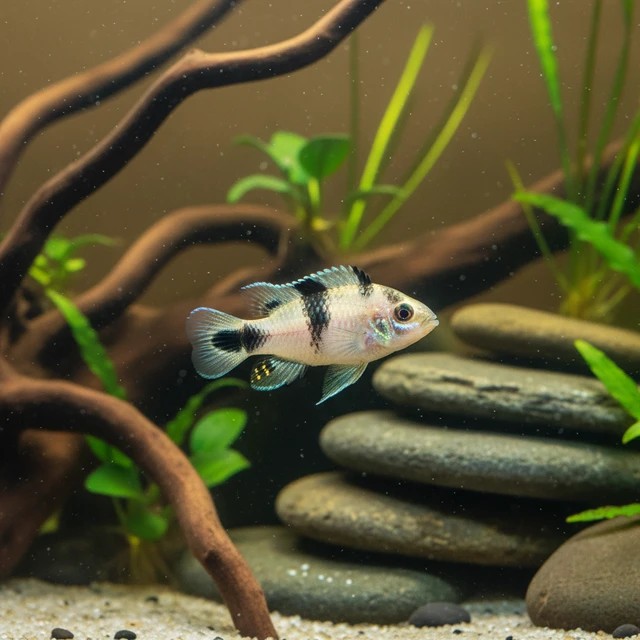
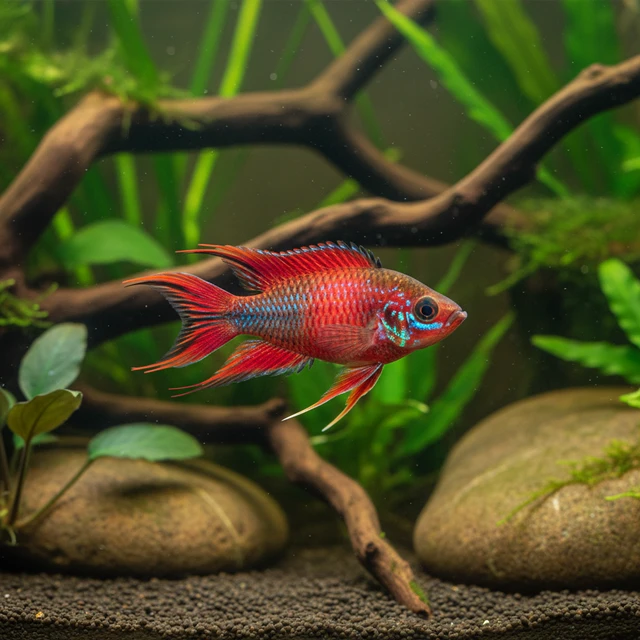
Apistogramma cacatuoides, commonly known as the cockatoo cichlid, exhibits a distinctive morphology characterized by its small, laterally compressed body, reaching a maximum adult size of approximately 3.5 inches (8.9 cm). Males are notably more flamboyant than females, displaying elongated, jagged dorsal fins reminiscent of a cockatoo's crest, adorned with vibrant orange and black checkered patterns. Sexual dimorphism is pronounced, with males showcasing larger fins and more vivid coloration, while females are generally smaller and more subdued in hue. The species possesses a well-defined lateral line, which aids in sensory perception, and its dentition is adapted for a carnivorous diet, featuring small, conical teeth suitable for capturing prey. Defensive adaptations include a cryptic coloration that allows it to blend into its natural habitat of densely vegetated waters, as well as the ability to retreat into crevices and among plant roots when threatened.
Behavior & temperament
In terms of ethology, Apistogramma cacatuoides is primarily a benthic species, often found dwelling near the substrate among leaf litter and aquatic vegetation. They exhibit a social hierarchy, with males establishing territories during breeding seasons and displaying aggressive behaviors to defend their domain, particularly against other males. This species is not an obligate schooler but may form loose aggregations, especially in the presence of females. Breeding behavior is characterized by mouthbrooding, where females incubate the eggs in their mouths until they are ready to be released as free-swimming fry. The temperament of this species can range from moderately aggressive to territorial, particularly during breeding, necessitating careful tankmate selection in captivity.
Diet & feeding
In the wild, Apistogramma cacatuoides is a carnivore, primarily feeding on small invertebrates and zooplankton. In captivity, they require a diet rich in protein, including high-quality pellets, frozen or live foods such as brine shrimp and daphnia, to ensure optimal health and coloration.
Behind the name
The genus name Apistogramma is derived from the Greek words 'apistos' (untrustworthy) and 'gramma' (letter or line), likely referring to the species' elusive nature. The species name cacatuoides is derived from 'cacatua' (cockatoo), alluding to the striking resemblance of the male's dorsal fin to the crest of a cockatoo.
Plan your tank
Check the numbers before you buy: tank volume, a stocking plan, cycle progress, water changes, and your ongoing care routine.
Keep reading

Choose compatible fish: school sizes, swimming zones, aggression, temperature and hardness matching, and honest bioload math for a peaceful community.
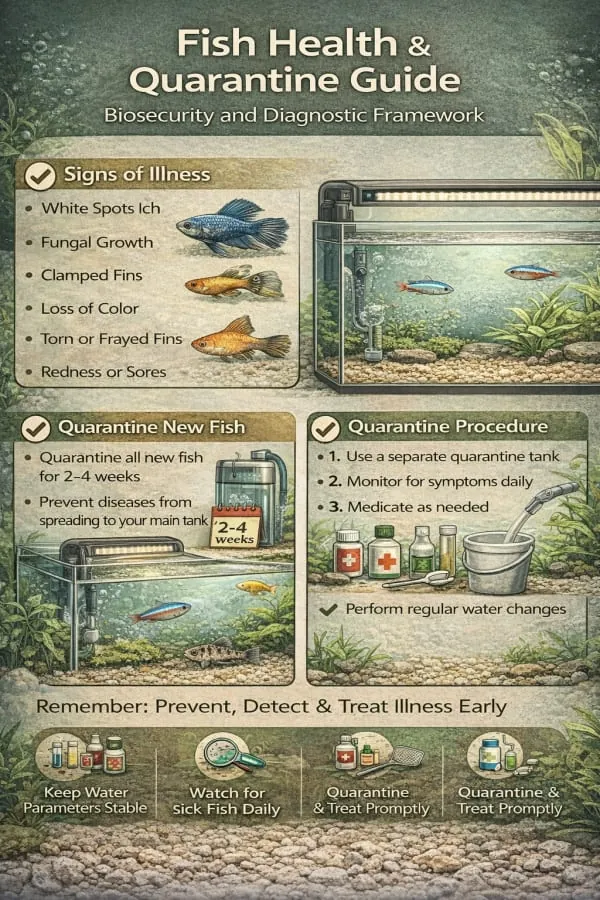
Quarantine new fish, spot the early warning signs, and treat disease without wrecking your tank. A practical freshwater fish health guide.
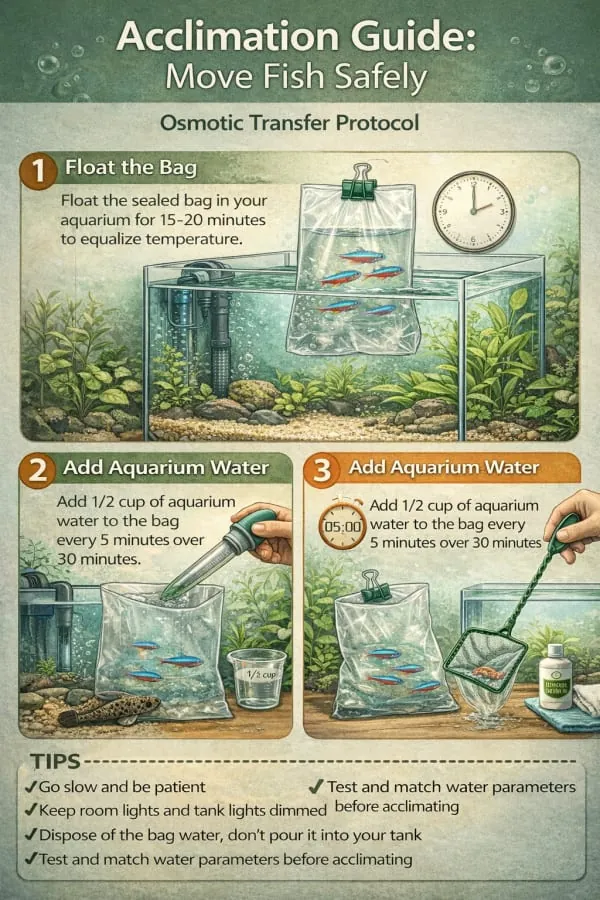
Acclimate new fish, shrimp, and coral safely: temperature floating, drip acclimation, plop-and-drop for shipped livestock, and the first 24 hours.
Keeping Apistogramma cacatuoides?
AquaLens identifies your fish and plants from a photo, tracks water chemistry, and flags health issues early — free on iOS and Android.