Colombian Ram (Microgeophagus) Care Guide
Mikrogeophagus ramirezi (Gold) · Freshwater Fish
.Real.webp)
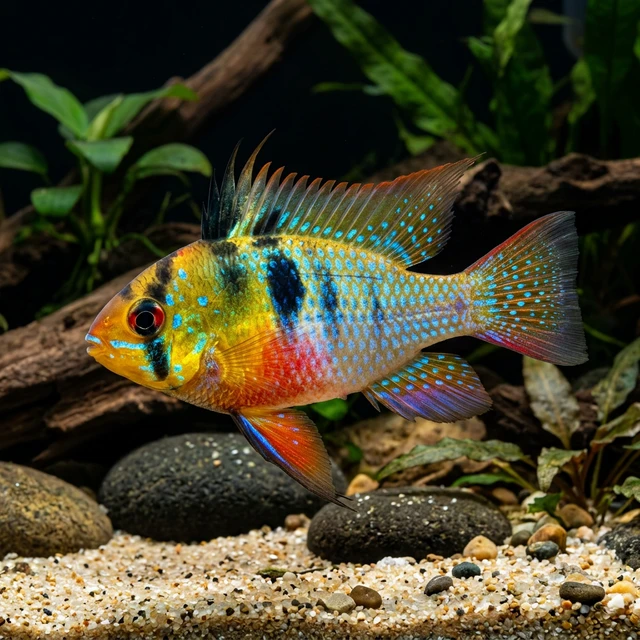
What Colombian Ram (Microgeophagus) look like
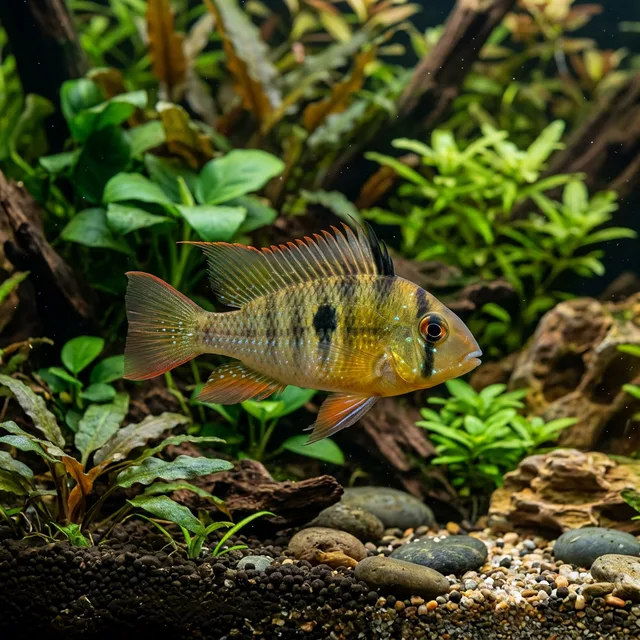
The Colombian Ram, or Mikrogeophagus ramirezi (Gold), is a diminutive cichlid characterized by its striking golden yellow base coloration, which is devoid of the black spots typically seen in its standard counterpart, the German Blue Ram. This species exhibits a maximum adult size of approximately 1-2 inches (2.5-5 cm), making it a true dwarf cichlid. Sexual dimorphism is evident, with males displaying more pronounced and elongated dorsal and anal fins, adorned with vibrant red, orange, and yellow hues, while females tend to have shorter, rounder fins. The body is laterally compressed and fusiform, allowing for agile movement within its aquatic environment. Notably, the Colombian Ram possesses a prominent lateral line system, which aids in detecting water movements, and its dentition is adapted for an omnivorous diet, featuring small, conical teeth suitable for grazing on soft plant matter and small invertebrates. Defensive adaptations include a tendency to retreat into dense vegetation when threatened, utilizing its coloration for camouflage.
Behavior & temperament
In terms of behavior, the Colombian Ram is generally a peaceful and social species, often found in small groups or pairs, although it can exhibit territoriality during breeding periods. It primarily occupies the lower to middle strata of the water column, preferring densely planted areas that provide cover and breeding sites. The breeding behavior is characterized by egg scattering, with females laying eggs on flat surfaces, which are then guarded by both parents until hatching. The Colombian Ram is known for its relatively calm temperament, though it may display aggression towards conspecifics or other species that encroach upon its territory, particularly during the breeding season.
Diet & feeding
In the wild, the Colombian Ram is an omnivore, feeding on a varied diet that includes small invertebrates, detritus, and soft plant matter. In captivity, it thrives on high-quality flake foods, frozen or live foods such as brine shrimp and daphnia, and should also be provided with blanched vegetables to ensure a balanced diet.
Behind the name
Mikrogeophagus (small earth); ramirezi (named in honor of the ichthyologist, Dr. Manuel Ramírez).
Plan your tank
Check the numbers before you buy: tank volume, a stocking plan, cycle progress, water changes, and your ongoing care routine.
Keep reading
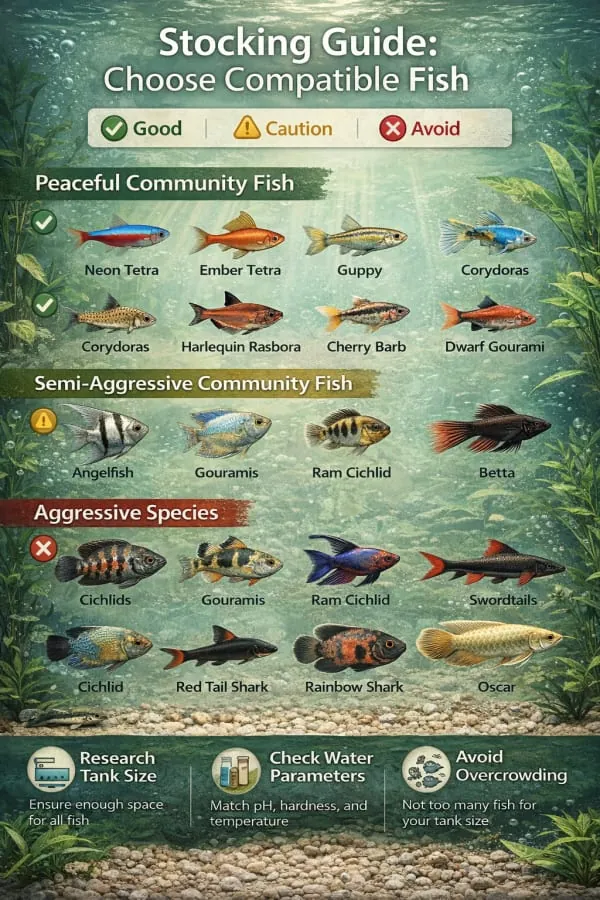
Choose compatible fish: school sizes, swimming zones, aggression, temperature and hardness matching, and honest bioload math for a peaceful community.
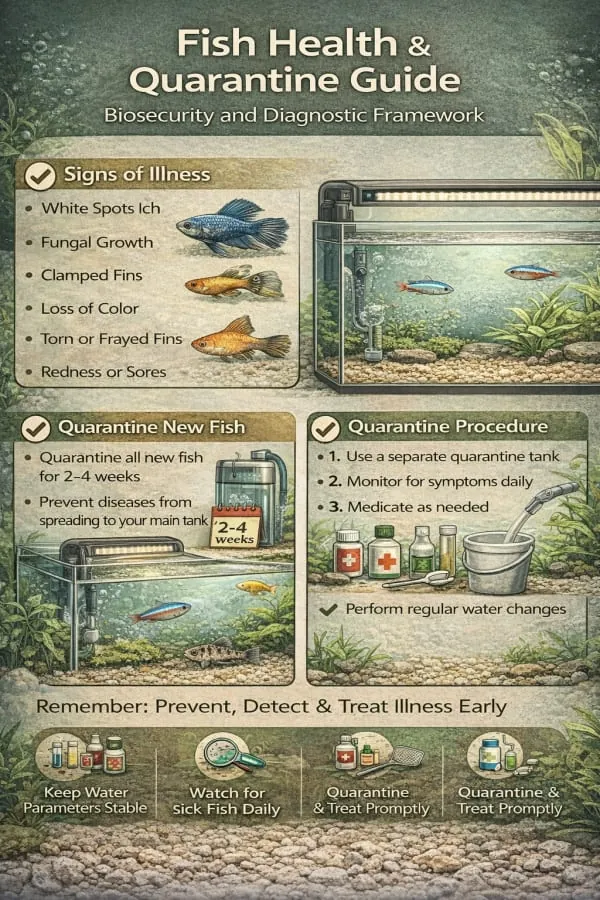
Quarantine new fish, spot the early warning signs, and treat disease without wrecking your tank. A practical freshwater fish health guide.
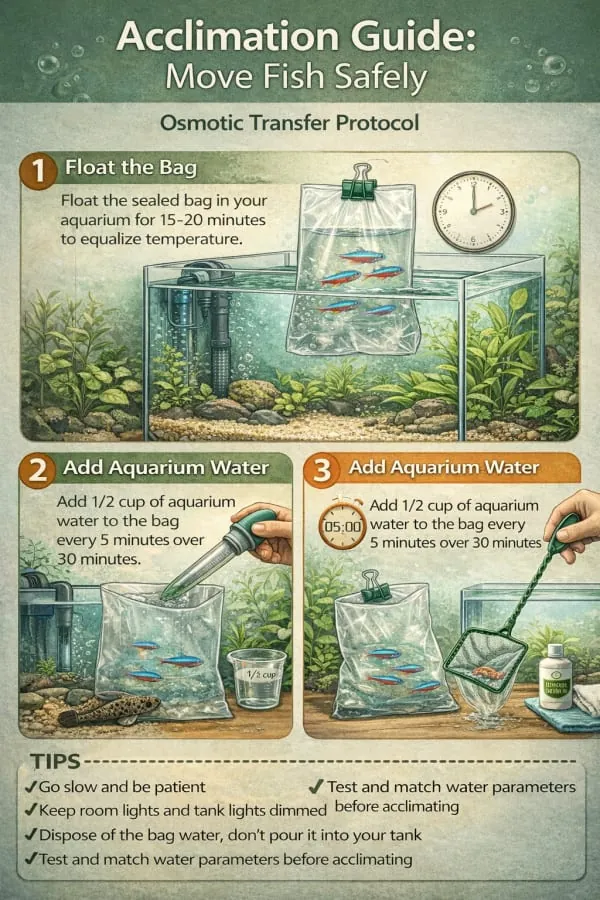
Acclimate new fish, shrimp, and coral safely: temperature floating, drip acclimation, plop-and-drop for shipped livestock, and the first 24 hours.
Keeping Colombian Ram (Microgeophagus)?
AquaLens identifies your fish and plants from a photo, tracks water chemistry, and flags health issues early — free on iOS and Android.