Condylactis Anemone Care Guide
Condylactis gigantea · Saltwater Anemone
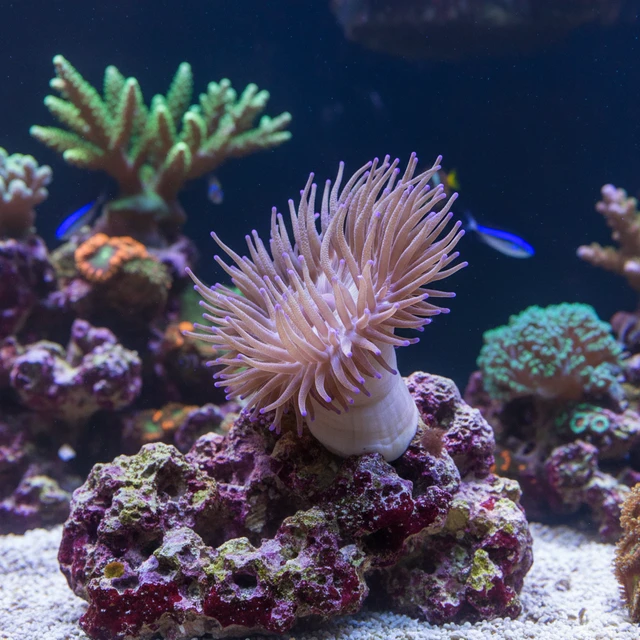
What Condylactis Anemone look like
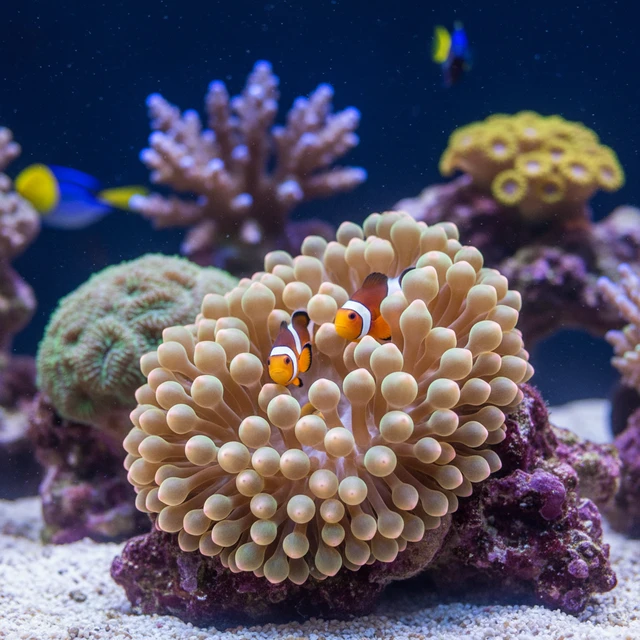
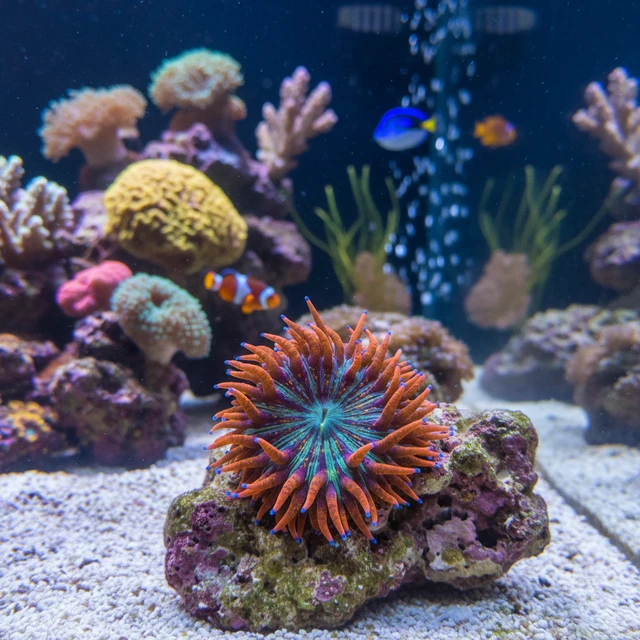
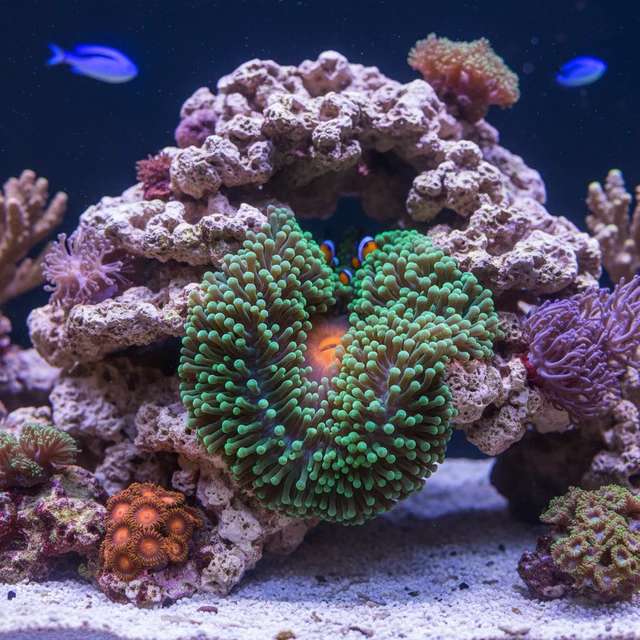
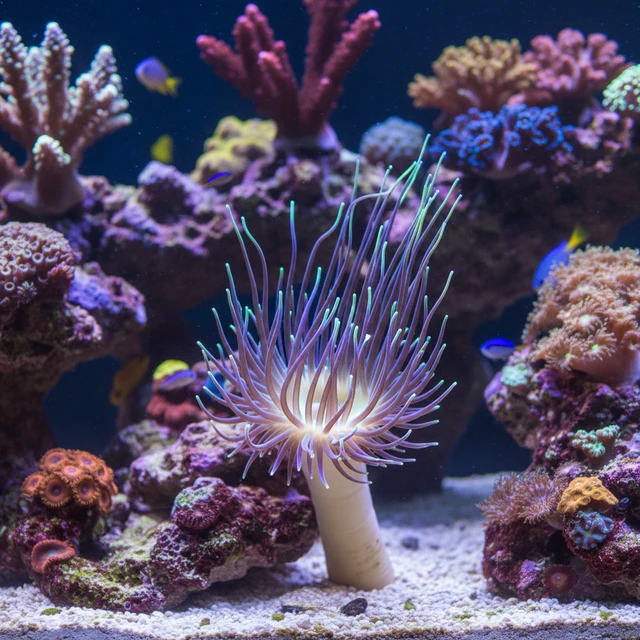
Condylactis gigantea, commonly known as the Condylactis Anemone, exhibits a robust and cylindrical body structure, typically reaching a maximum adult size of 12 inches (30 cm) in diameter. The anemone's column is smooth and can vary in color from bright green to various shades of brown and purple, often displaying a mottled appearance. Its tentacles, which can number in the hundreds, are long, slender, and highly flexible, adorned with specialized stinging cells called nematocysts that serve both for defense and capturing prey. The tentacles are arranged in a spiral pattern around the oral disc, which is prominent and features a central mouth. There is no significant sexual dimorphism in this species, but individuals may exhibit variations in coloration and size based on environmental factors. The anemone's ability to retract its tentacles and column into a smaller profile serves as a defensive adaptation against predators.
Behavior & temperament
Condylactis gigantea is primarily a solitary organism, although it can occasionally be found in small groups. It exhibits a sedentary lifestyle, anchoring itself to substrates such as rocks or coral rubble. The anemone extends its tentacles to capture zooplankton and small fish, exhibiting a rapid response to stimuli when prey is detected. Breeding behavior is characterized by asexual reproduction through budding, as well as sexual reproduction during spawning events, which typically occur during specific lunar phases. The anemone is known for its aggressive feeding behavior, utilizing its nematocysts to immobilize prey, and can exhibit territorial aggression towards other anemones or competing invertebrates.
Diet & feeding
Condylactis gigantea is primarily carnivorous, feeding on small fish, zooplankton, and other marine invertebrates. In captivity, it requires a diet of meaty foods such as shrimp, fish, and specialized anemone food to thrive.
Behind the name
The scientific name 'Condylactis' is derived from the Greek words 'kondylos' meaning 'knuckle' and 'aktis' meaning 'ray' or 'ray-like structure', referring to the anemone's tentacle structure.
Plan your tank
Check the numbers before you buy: tank volume, salinity, salt mix, water changes, and your ongoing care routine. Keeping reef? Start from the Saltwater & Reef hub.
Keep reading
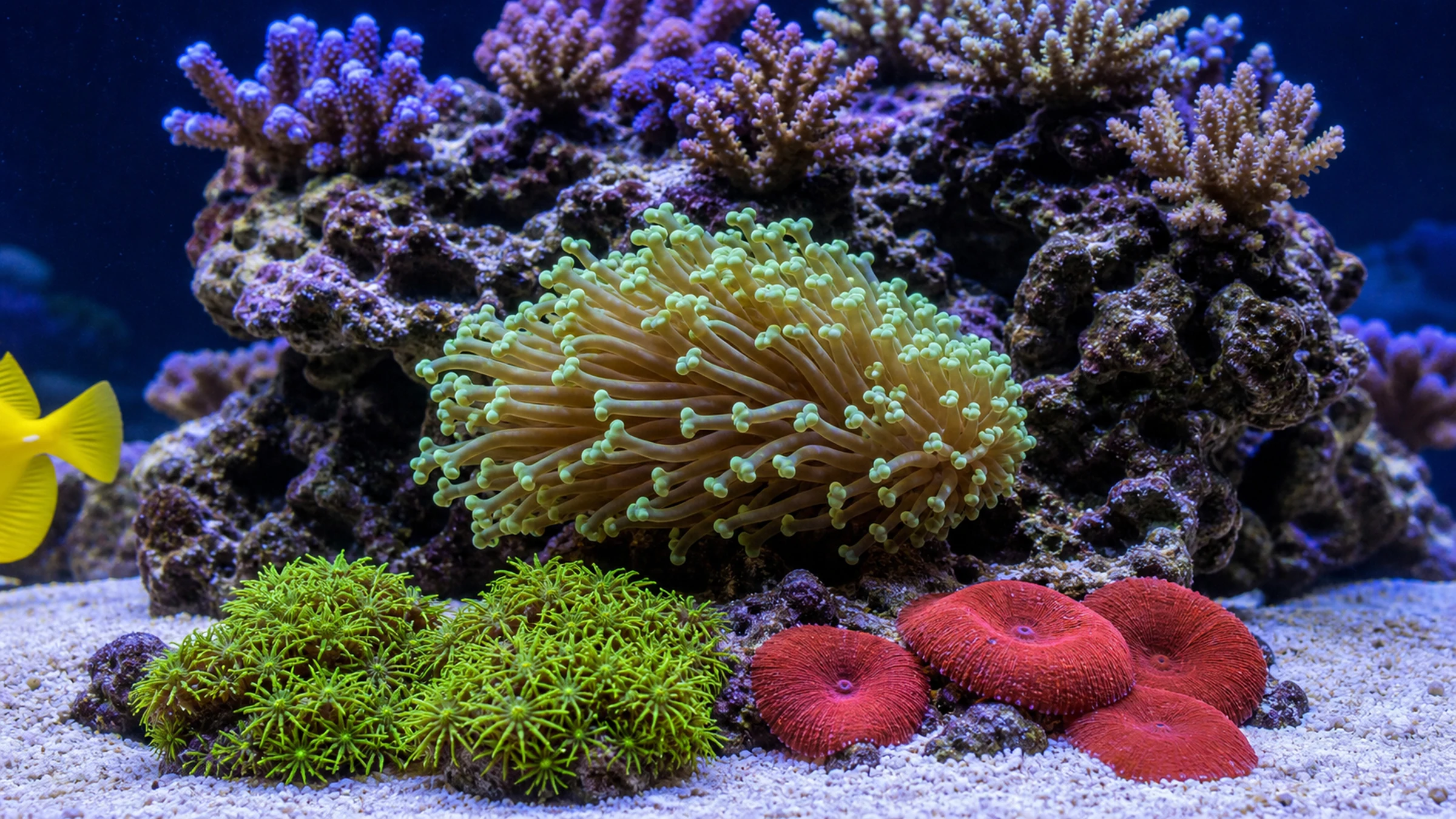
How to place corals by light and flow, PAR targets for softies, LPS, and SPS, dipping new corals for pests, and acclimating them without bleaching.
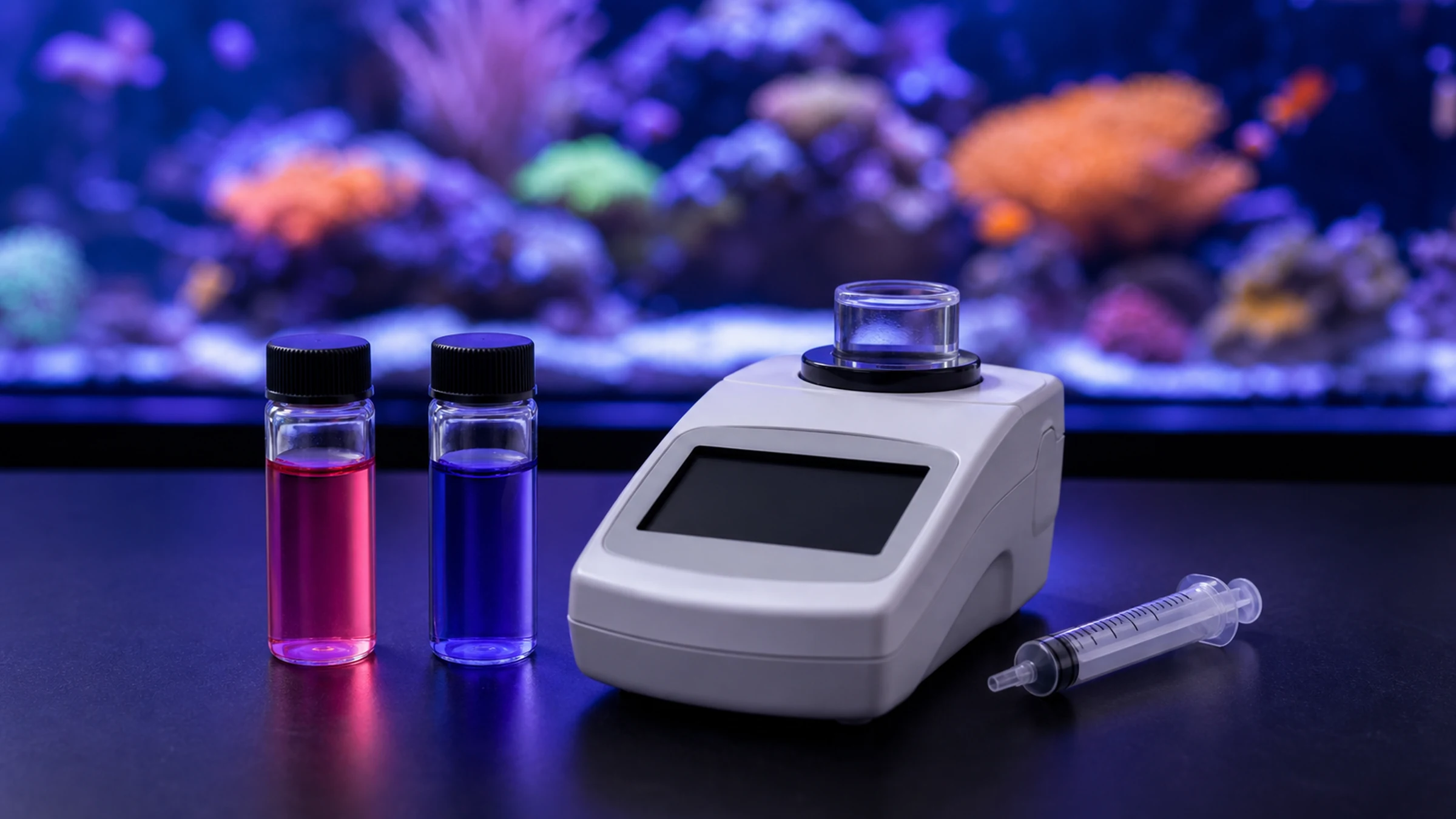
What every reef parameter means and where to keep it: salinity, temperature, pH, alkalinity, calcium, magnesium, nitrate, and phosphate.

Acclimate new fish, shrimp, and coral safely: temperature floating, drip acclimation, plop-and-drop for shipped livestock, and the first 24 hours.
Keeping Condylactis Anemone?
AquaLens identifies your fish and plants from a photo, tracks water chemistry, and flags health issues early — free on iOS and Android.