Rock Flower Anemone Care Guide
Phymanthus crucifer · Saltwater Anemone
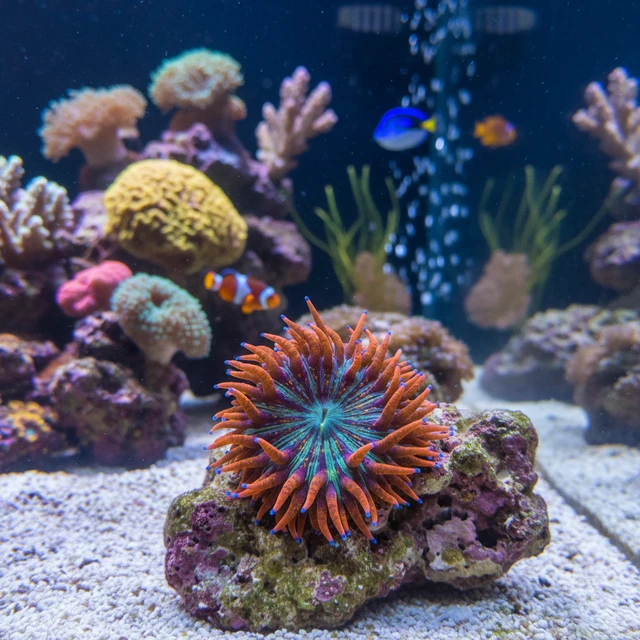
What Rock Flower Anemone look like
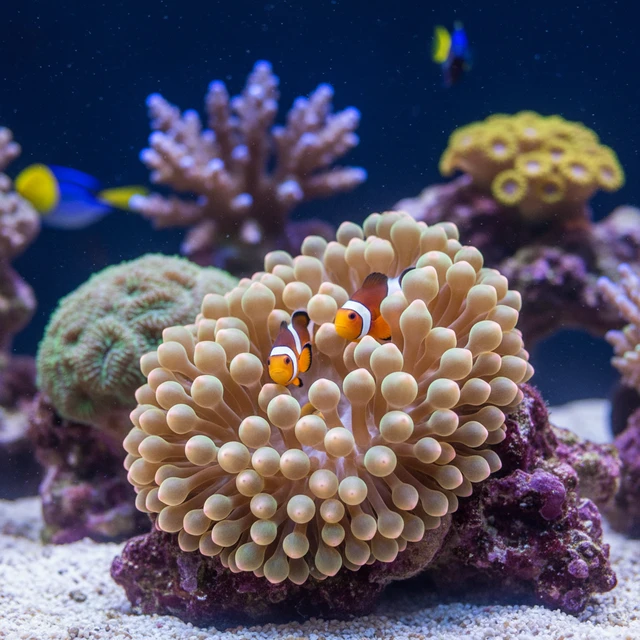
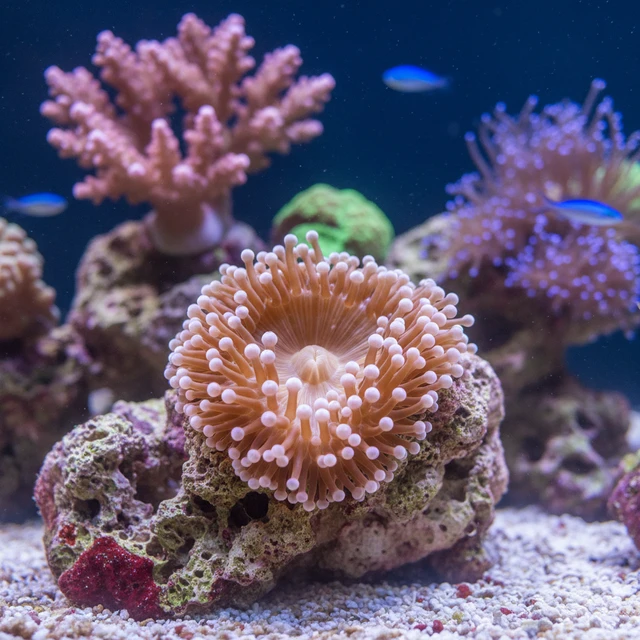
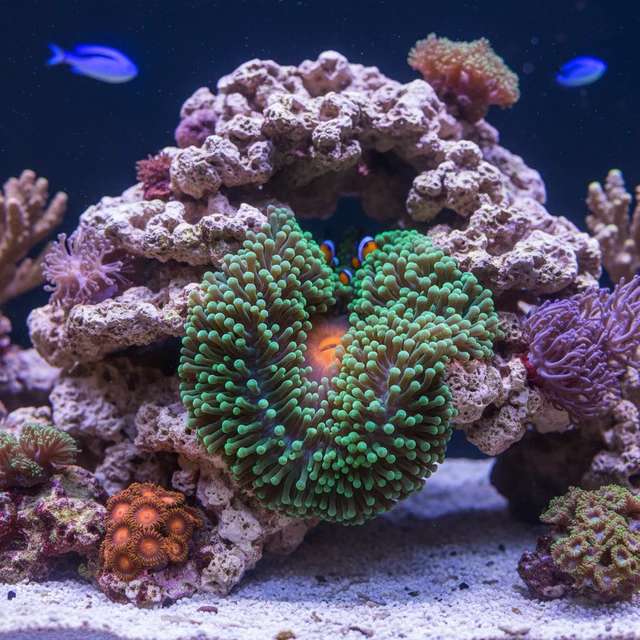
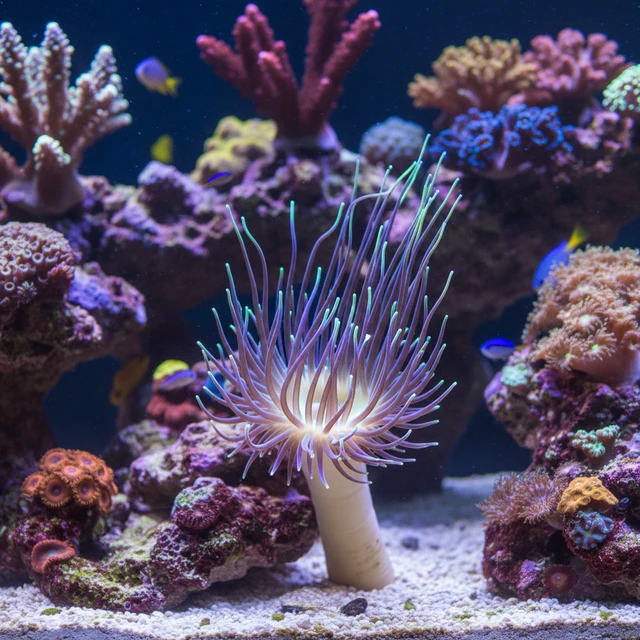
Phymanthus crucifer, commonly known as the Rock Flower Anemone, exhibits a distinctive morphology characterized by its vibrant coloration, which can range from deep reds and greens to yellows and blues. This species typically reaches a maximum diameter of 10 cm (4 inches) when fully expanded. The anemone features a cylindrical column that is often adorned with a series of prominent, fleshy tentacles that can extend significantly during feeding or in response to environmental stimuli. These tentacles are equipped with specialized nematocysts, providing both a means of prey capture and a defensive mechanism against potential predators. The base of the anemone is adhesive, allowing it to securely attach to substrates such as rocks or coral rubble, while its oral disc is often slightly elevated, showcasing the tentacles in a radiating pattern. Notably, the Rock Flower Anemone lacks a pronounced pedal disc, which is typical of many other anemone species, contributing to its unique appearance.
Behavior & temperament
The Rock Flower Anemone is primarily a solitary organism, though it can occasionally be found in small clusters. It exhibits a sedentary lifestyle, remaining anchored to its substrate while extending its tentacles to capture passing prey, primarily small fish and zooplankton. The anemone's feeding behavior is opportunistic, utilizing its stinging tentacles to immobilize prey before bringing it to its mouth. In terms of symbiotic relationships, it can host various species of clownfish, which provide protection and food scraps in exchange for shelter. The anemone demonstrates a low to moderate level of aggression, primarily defending its territory from other anemones and potential threats, but it generally coexists peacefully with other reef inhabitants.
Diet & feeding
The Rock Flower Anemone is a carnivorous predator, primarily feeding on small fish, zooplankton, and other marine invertebrates in the wild. In captivity, it requires a diet of meaty foods such as shrimp, fish, and high-quality frozen or live foods to thrive.
Behind the name
The scientific name 'Phymanthus' is derived from the Greek words 'phyma,' meaning 'to grow,' and 'anthos,' meaning 'flower,' referring to the anemone's flower-like appearance. The species name 'crucifer' comes from the Latin 'crucifer,' meaning 'cross-bearing,' likely referencing the cross-like pattern of its tentacles.
Plan your tank
Check the numbers before you buy: tank volume, salinity, salt mix, water changes, and your ongoing care routine. Keeping reef? Start from the Saltwater & Reef hub.
Keep reading
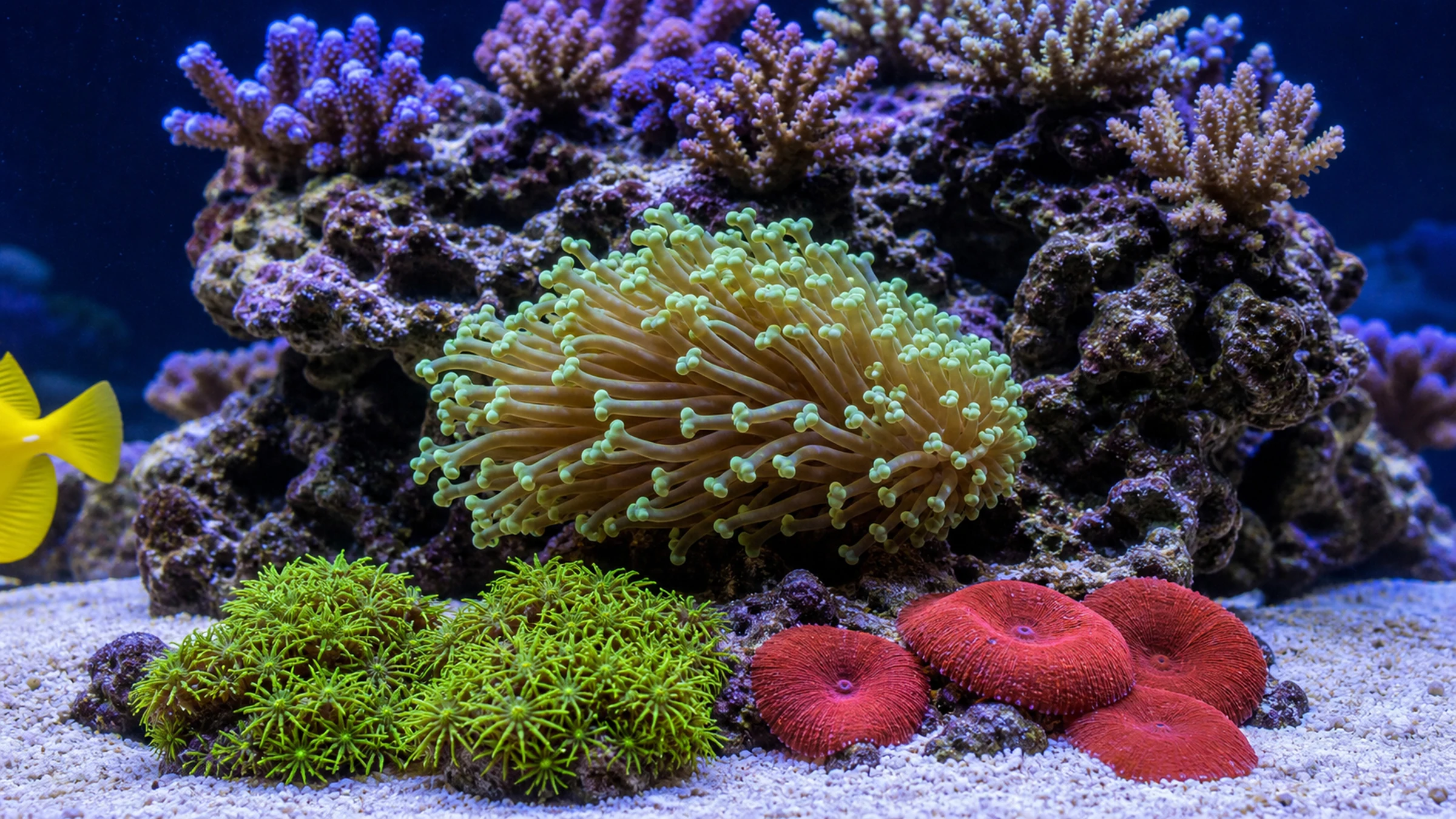
How to place corals by light and flow, PAR targets for softies, LPS, and SPS, dipping new corals for pests, and acclimating them without bleaching.

What every reef parameter means and where to keep it: salinity, temperature, pH, alkalinity, calcium, magnesium, nitrate, and phosphate.
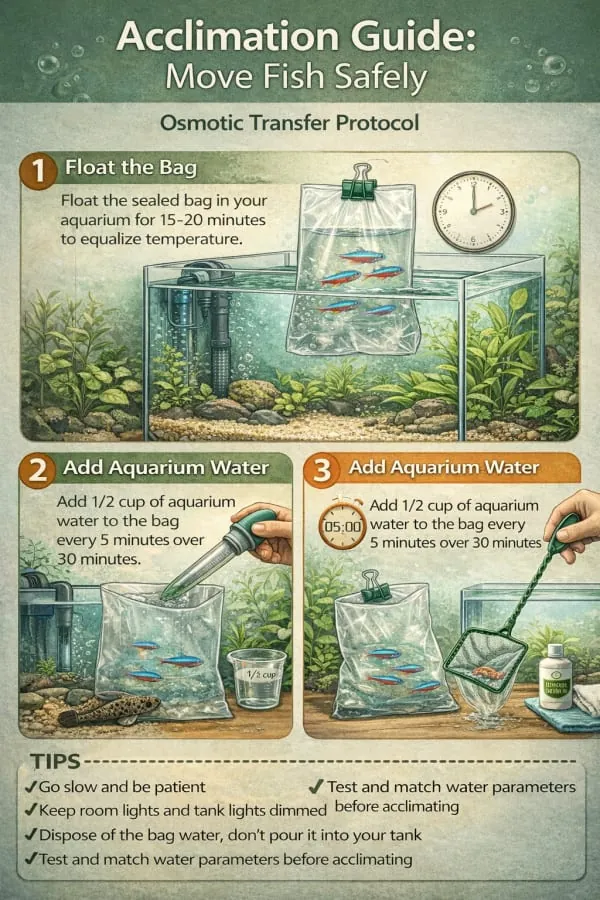
Acclimate new fish, shrimp, and coral safely: temperature floating, drip acclimation, plop-and-drop for shipped livestock, and the first 24 hours.
Keeping Rock Flower Anemone?
AquaLens identifies your fish and plants from a photo, tracks water chemistry, and flags health issues early — free on iOS and Android.