Congo Ctenopoma Care Guide
Ctenopoma congicum · Freshwater Fish
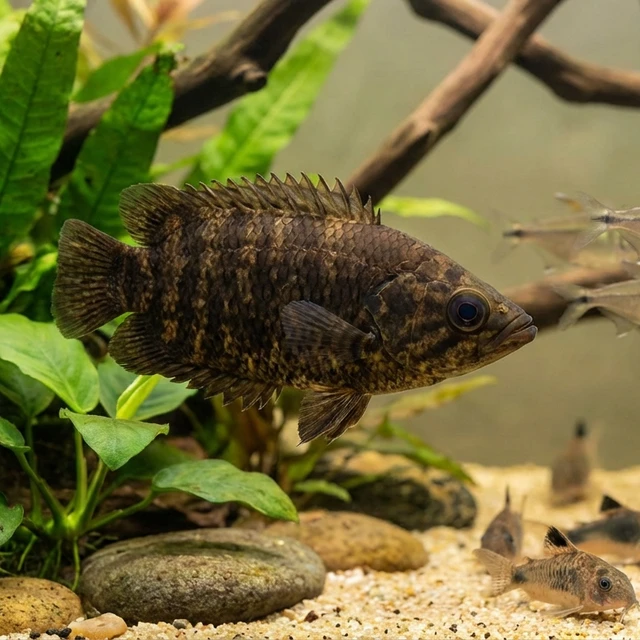
What Congo Ctenopoma look like
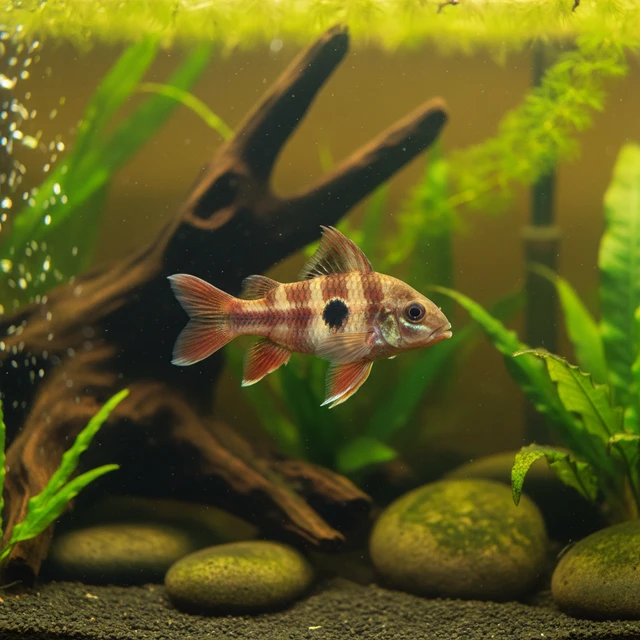
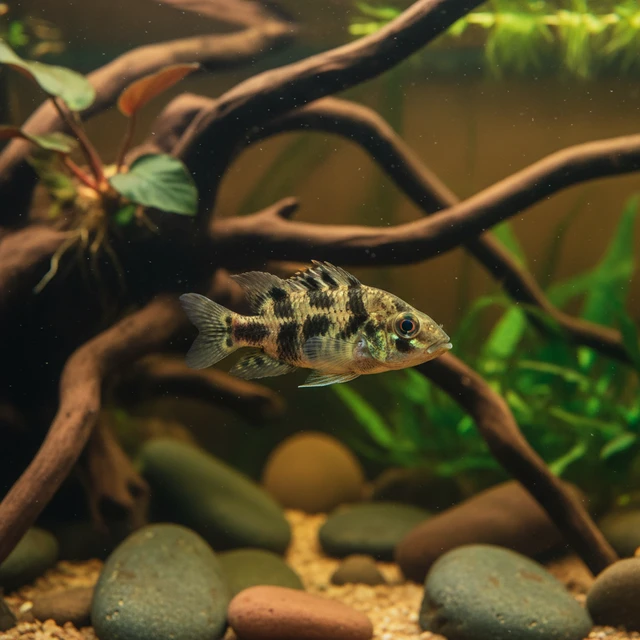
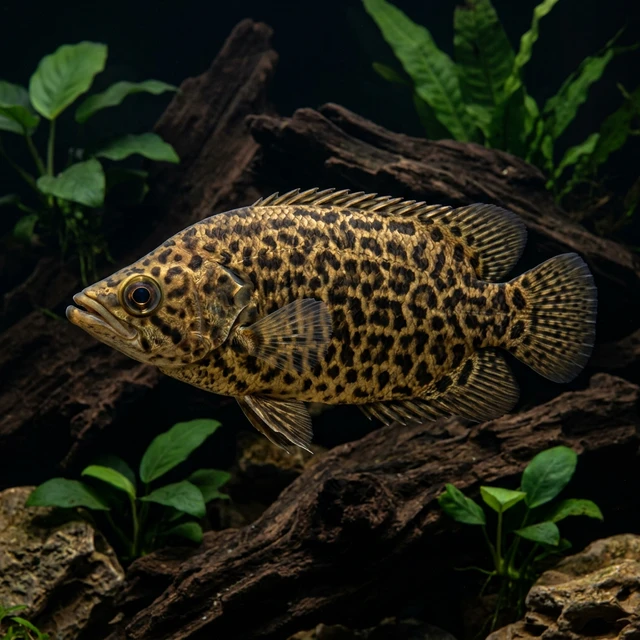
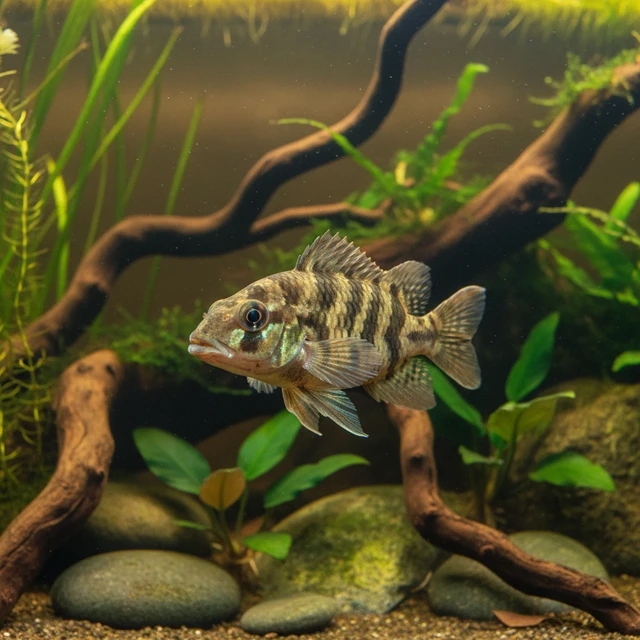
Ctenopoma congicum, commonly known as the Congo Ctenopoma, exhibits a fusiform body shape that is deep and oval, typically reaching a maximum adult size of 3-4 inches (7.5-10 cm). The coloration is predominantly olive-brown, adorned with subtle vertical barring that provides effective camouflage within its natural habitat of slow-moving streams. This species possesses a unique adaptation allowing it to breathe atmospheric air via a modified swim bladder, which is crucial for survival in oxygen-poor waters. The Congo Ctenopoma features a well-developed lateral line system, aiding in the detection of vibrations in the water, while its dentition is adapted for a carnivorous diet, consisting of small invertebrates and fish. The fins are relatively short and rounded, with an adipose fin present, enhancing its maneuverability in dense aquatic vegetation. Sexual dimorphism is subtle, with females being slightly fuller-bodied during breeding periods, although external differences are not pronounced.
Behavior & temperament
Ctenopoma congicum is primarily a solitary and ambush predator, exhibiting a shy temperament that leads it to prefer hiding among dense vegetation and submerged structures. It occupies the benthic region of the water column, where it utilizes its cryptic coloration to blend into its surroundings while waiting for prey. Breeding behavior involves egg scattering, where females lay eggs among plant matter, providing some protection for the developing fry. The Congo Ctenopoma is not aggressive towards conspecifics but may display territorial behavior during breeding seasons. Its overall demeanor is cautious, often retreating to cover at the slightest disturbance.
Diet & feeding
In the wild, the Congo Ctenopoma primarily feeds on small invertebrates and fish, making it a carnivorous species. In captivity, it requires a diet rich in high-quality frozen or live foods such as brine shrimp, bloodworms, and small pellets designed for carnivorous fish.
Behind the name
Ctenopoma (comb fin); congicum (of the Congo).
Plan your tank
Check the numbers before you buy: tank volume, a stocking plan, cycle progress, water changes, and your ongoing care routine.
Keep reading

Choose compatible fish: school sizes, swimming zones, aggression, temperature and hardness matching, and honest bioload math for a peaceful community.
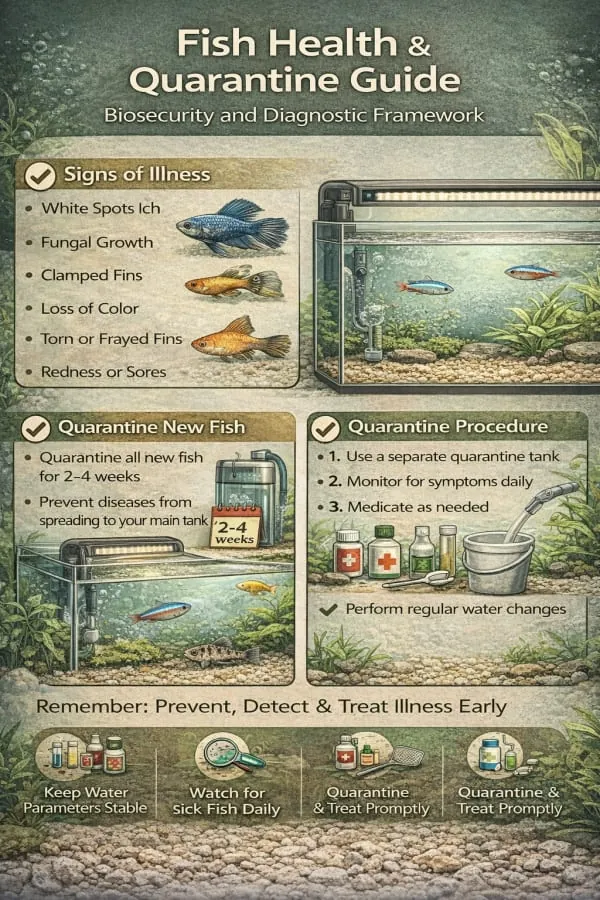
Quarantine new fish, spot the early warning signs, and treat disease without wrecking your tank. A practical freshwater fish health guide.
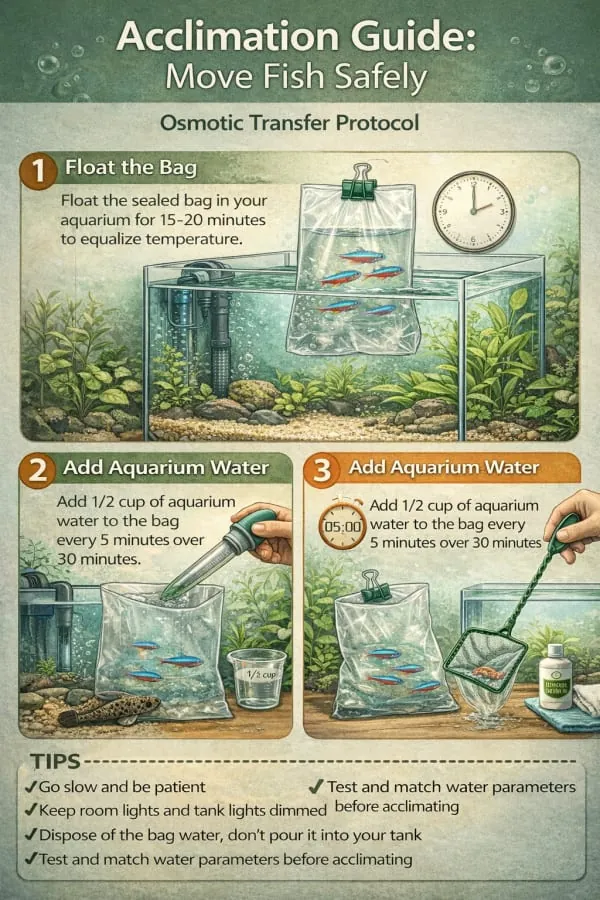
Acclimate new fish, shrimp, and coral safely: temperature floating, drip acclimation, plop-and-drop for shipped livestock, and the first 24 hours.
Keeping Congo Ctenopoma?
AquaLens identifies your fish and plants from a photo, tracks water chemistry, and flags health issues early — free on iOS and Android.