Tailspot Ctenopoma Care Guide
Ctenopoma kingsleyae · Freshwater Fish
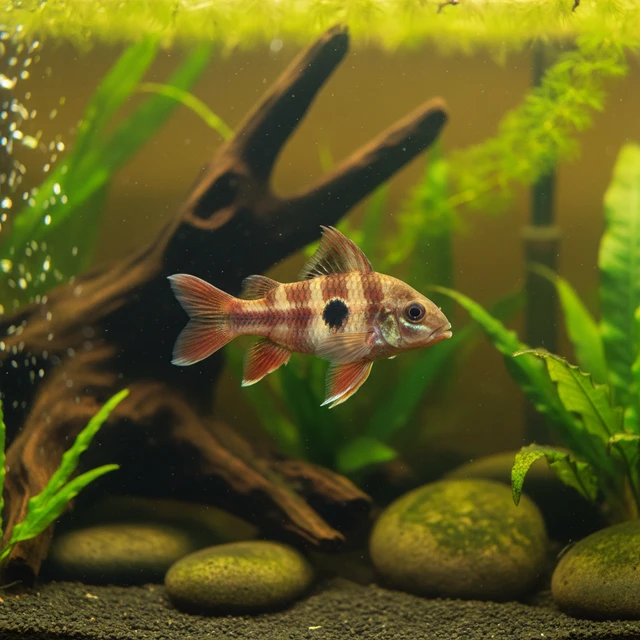
What Tailspot Ctenopoma look like
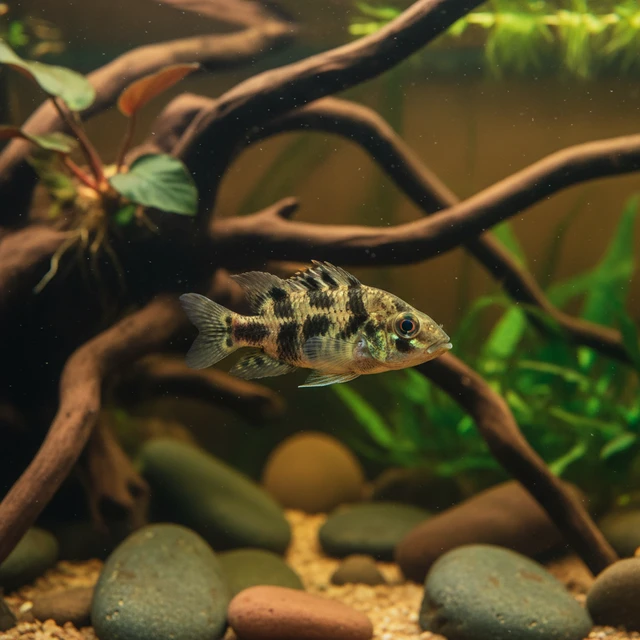
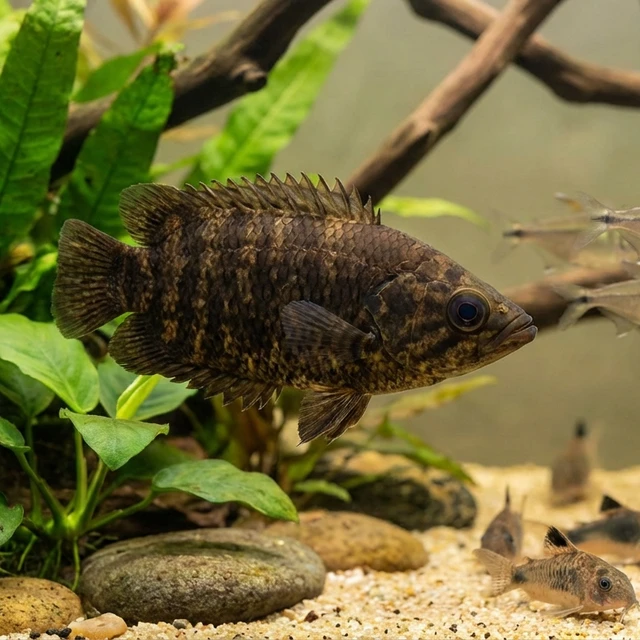
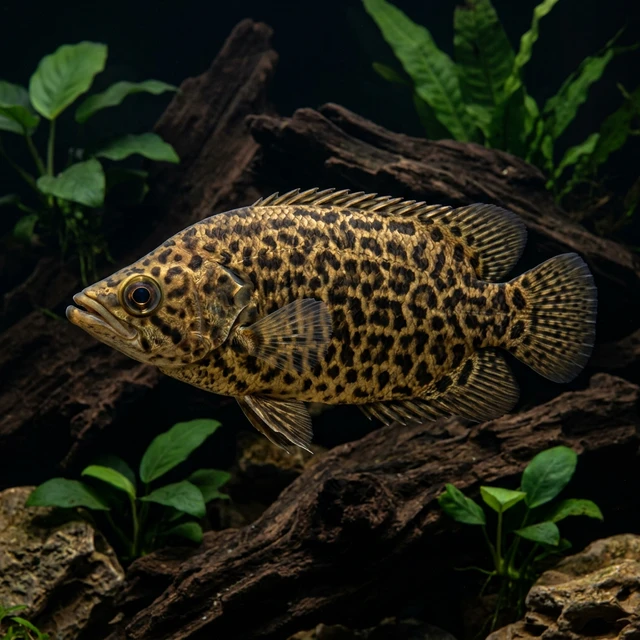
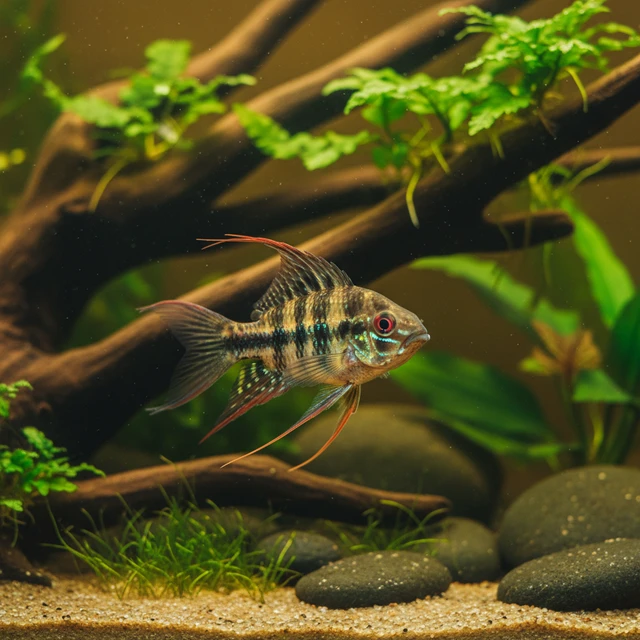
Ctenopoma kingsleyae, commonly known as the Tailspot Ctenopoma, exhibits a robust, laterally compressed body that can reach a maximum adult size of approximately 5-6 inches (12-15 cm). The species displays sexual dimorphism, with males typically being more vibrantly colored and possessing slightly larger dorsal fins than females. A distinctive feature of this species is the prominent dark ocellus located at the base of the caudal fin, which serves as a defensive adaptation to confuse predators. The overall coloration is an olive-gray with subtle mottling, enhancing its camouflage within its natural habitat. The body shape is deep and oval, complemented by a well-developed dorsal fin that extends along much of the back, and an adipose fin that is characteristic of the Anabantidae family. The dentition is adapted for a carnivorous diet, featuring small, sharp teeth suitable for grasping and holding prey.
Behavior & temperament
The Tailspot Ctenopoma is primarily a solitary and territorial species, often found dwelling in the benthic zone of slow-moving waters and swamps in West Africa. It exhibits a semi-aggressive temperament, particularly during breeding seasons when males may display territorial behaviors. Breeding occurs through egg scattering, where females lay adhesive eggs on submerged vegetation. This species is known for its ability to breathe atmospheric air, allowing it to thrive in oxygen-poor environments. Although not an obligate schooler, it can be observed in loose aggregations during non-breeding periods, particularly in environments rich in cover.
Diet & feeding
In the wild, the Tailspot Ctenopoma is a carnivore, primarily feeding on small invertebrates and crustaceans. In captivity, it requires a diet rich in high-quality protein sources such as live or frozen foods, including bloodworms, brine shrimp, and other meaty offerings to maintain optimal health.
Behind the name
Ctenopoma (comb fin); kingsleyae (named in honor of the naturalist Kingsley).
Plan your tank
Check the numbers before you buy: tank volume, a stocking plan, cycle progress, water changes, and your ongoing care routine.
Keep reading

Choose compatible fish: school sizes, swimming zones, aggression, temperature and hardness matching, and honest bioload math for a peaceful community.
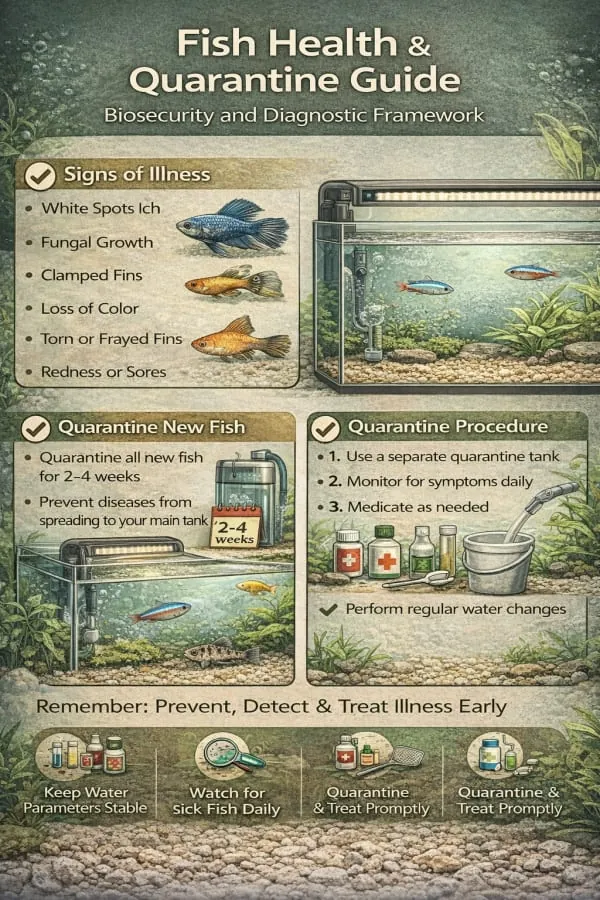
Quarantine new fish, spot the early warning signs, and treat disease without wrecking your tank. A practical freshwater fish health guide.

Acclimate new fish, shrimp, and coral safely: temperature floating, drip acclimation, plop-and-drop for shipped livestock, and the first 24 hours.
Keeping Tailspot Ctenopoma?
AquaLens identifies your fish and plants from a photo, tracks water chemistry, and flags health issues early — free on iOS and Android.