Ornate Ctenopoma Care Guide
Microctenopoma ansorgii · Freshwater Fish
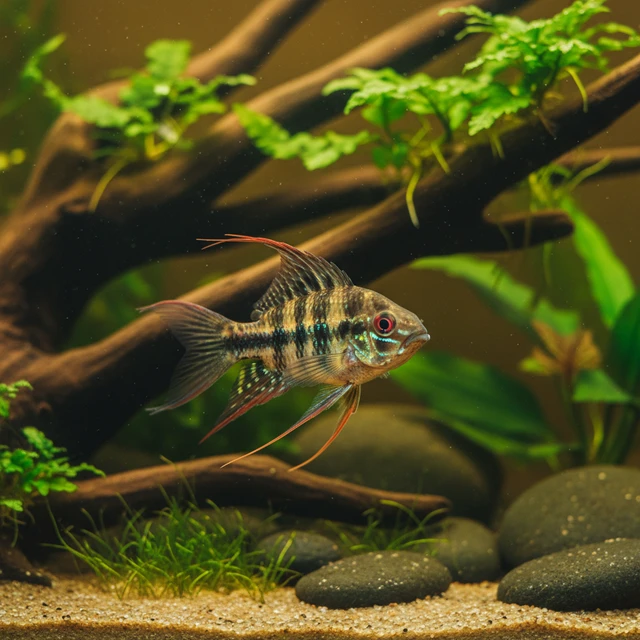
What Ornate Ctenopoma look like
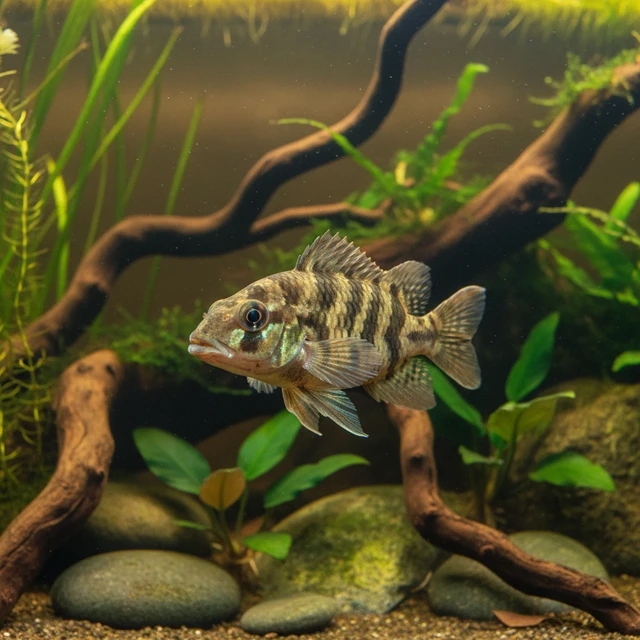
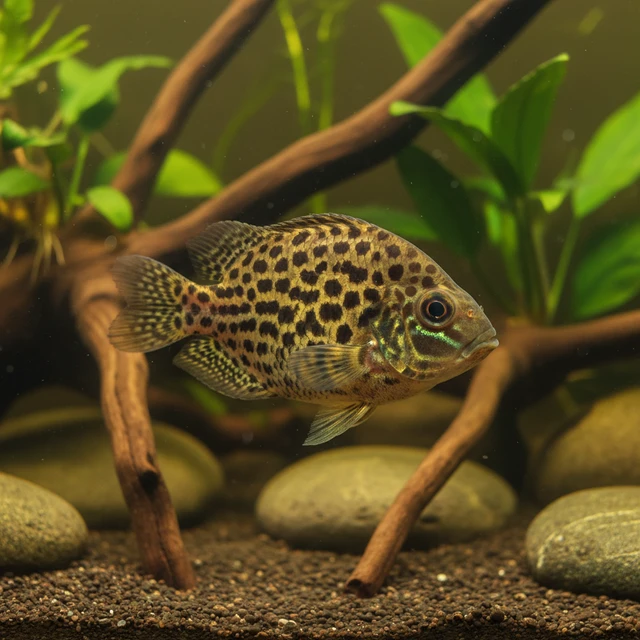
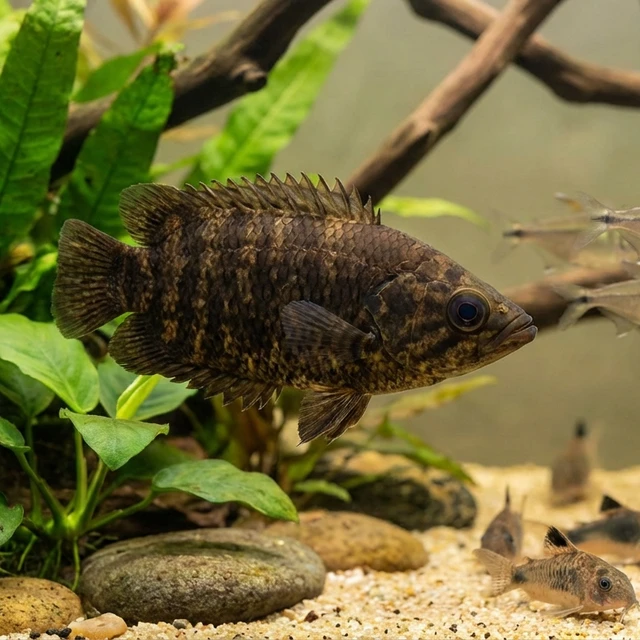
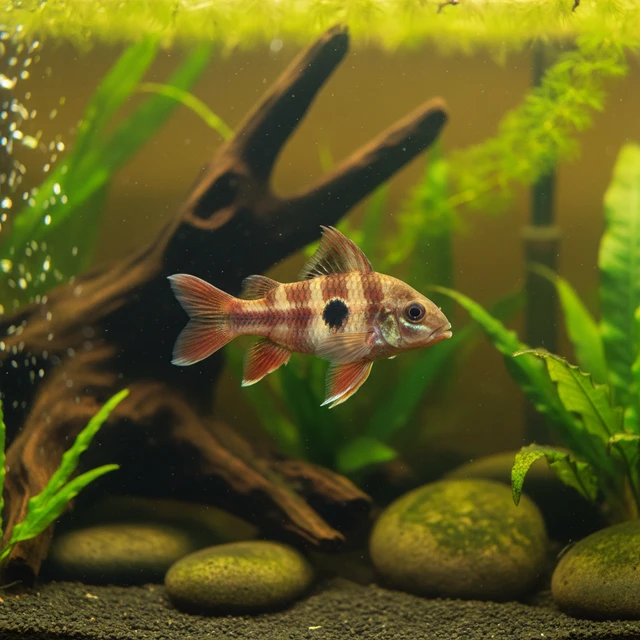
The Ornate Ctenopoma (Microctenopoma ansorgii) exhibits a laterally compressed, fusiform body shape, typically reaching a maximum adult size of approximately 2-3 inches (5-7.5 cm). This species displays pronounced sexual dimorphism, with males showcasing vibrant iridescent blue-green and dark bars, complemented by striking red and blue hues in their fins, whereas females are generally less colorful. Notable morphological features include a well-developed lateral line system, which aids in sensory perception, and a small, rounded head with a terminal mouth adapted for carnivorous feeding. The presence of an adipose fin and a unique arrangement of soft dorsal and anal fins contribute to its agile swimming capabilities. Additionally, the Ornate Ctenopoma possesses the ability to breathe atmospheric air, a trait that enhances its survival in low-oxygen environments.
Behavior & temperament
The Ornate Ctenopoma is primarily a solitary species, often found dwelling in the lower strata of the water column, specifically in benthic zones among dense aquatic vegetation in its native West African habitats. It exhibits a relatively peaceful temperament but can display territorial behavior, particularly during breeding. Breeding occurs through egg scattering, where females release eggs among plants, and males may exhibit courtship displays to attract mates. This species is not an obligate schooler, preferring to establish its own territory rather than forming large groups, and it tends to be more active during twilight hours.
Diet & feeding
In the wild, the Ornate Ctenopoma is a carnivore, primarily feeding on small invertebrates and zooplankton. In captivity, it requires a diet rich in high-quality protein sources, such as live or frozen foods including brine shrimp, daphnia, and bloodworms to maintain optimal health.
Behind the name
Microctenopoma (small comb; poma, lid or cover) ansorgii (named in honor of the explorer and collector, William John Ansorge).
Plan your tank
Check the numbers before you buy: tank volume, a stocking plan, cycle progress, water changes, and your ongoing care routine.
Keep reading
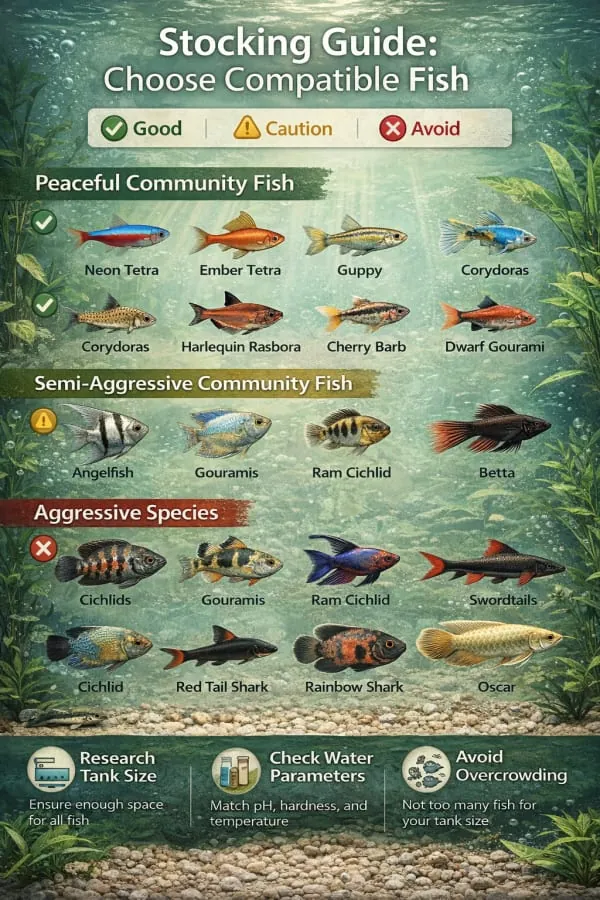
Choose compatible fish: school sizes, swimming zones, aggression, temperature and hardness matching, and honest bioload math for a peaceful community.
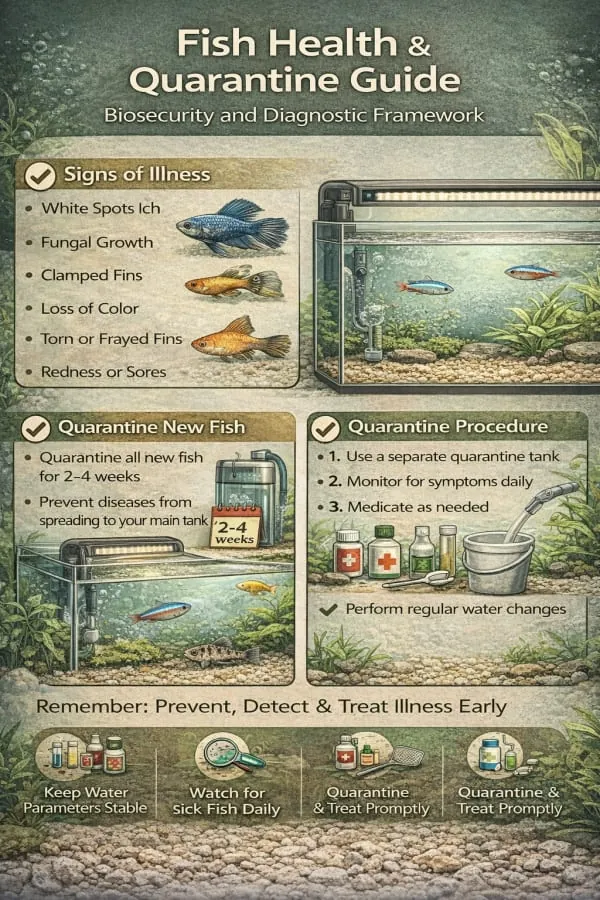
Quarantine new fish, spot the early warning signs, and treat disease without wrecking your tank. A practical freshwater fish health guide.
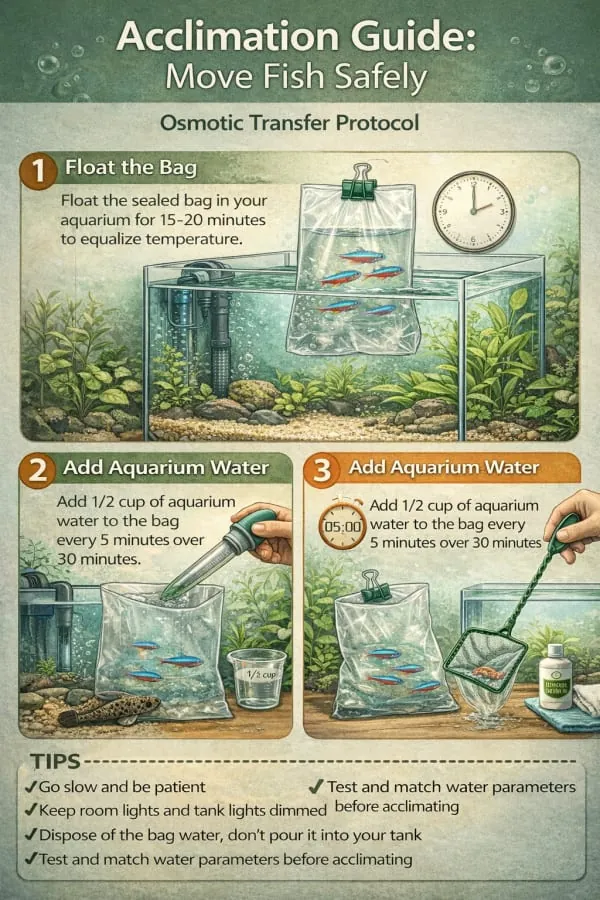
Acclimate new fish, shrimp, and coral safely: temperature floating, drip acclimation, plop-and-drop for shipped livestock, and the first 24 hours.
Keeping Ornate Ctenopoma?
AquaLens identifies your fish and plants from a photo, tracks water chemistry, and flags health issues early — free on iOS and Android.