Crocea Clam Care Guide
Tridacna crocea · Saltwater Clam
What Crocea Clam look like
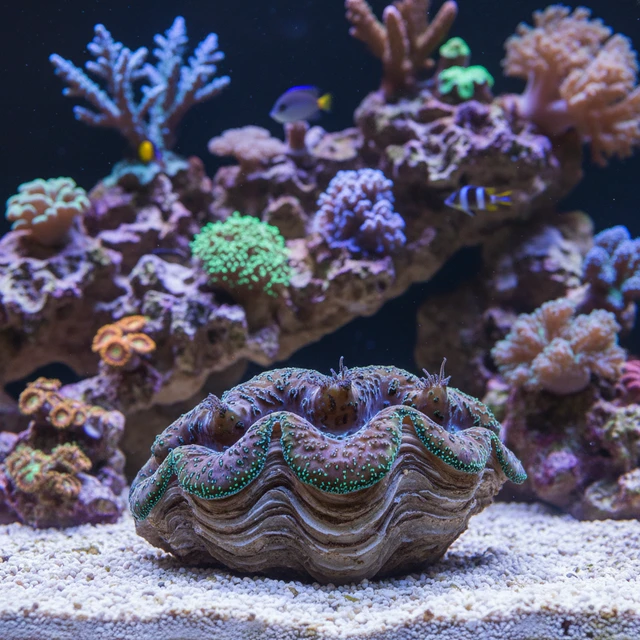
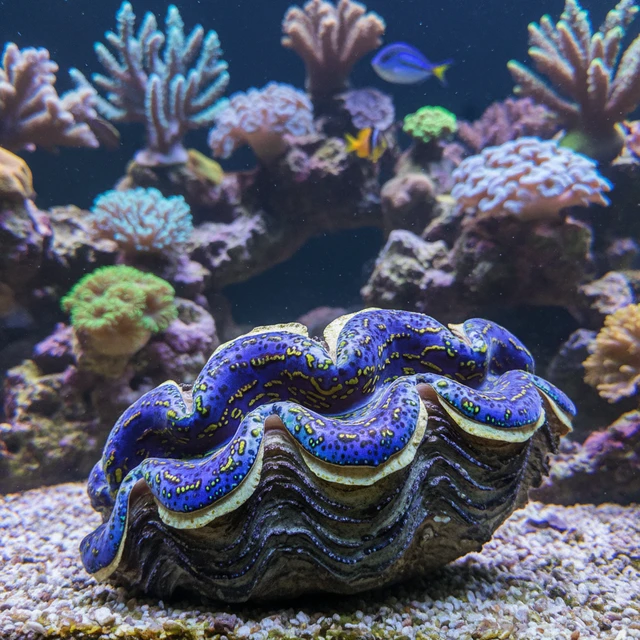
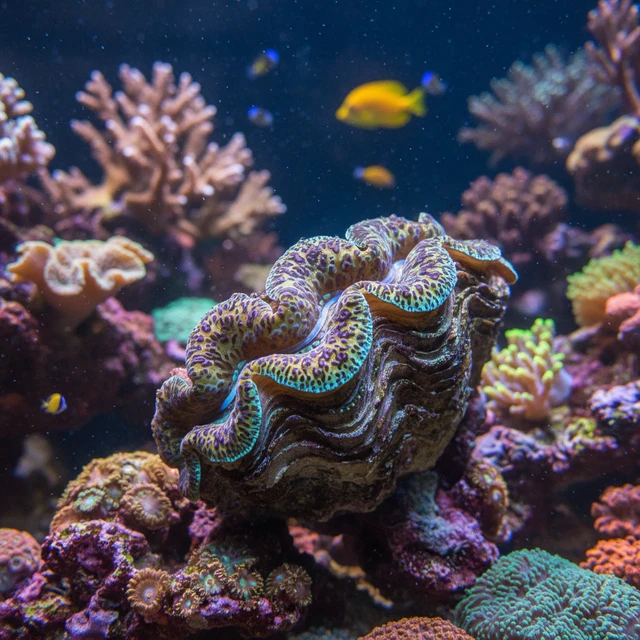
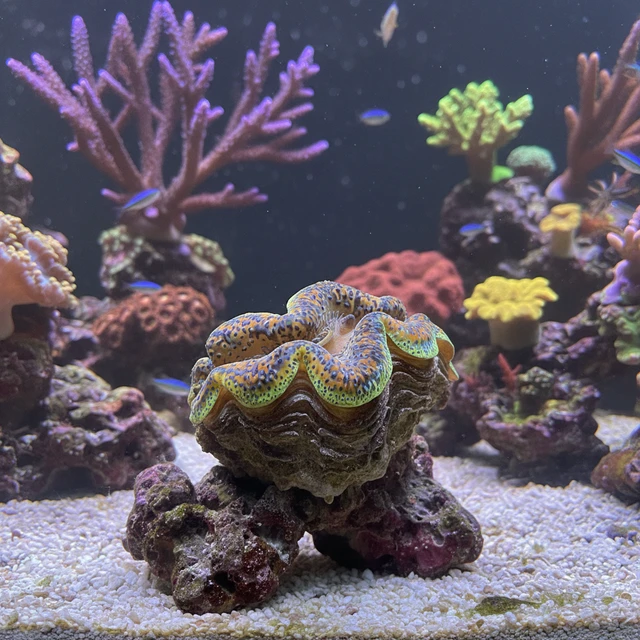
Tridacna crocea, commonly known as the Crocea Clam, exhibits a distinctive morphology characterized by its elongated, oval shell which can reach a maximum adult size of approximately 8-12 inches (20-30 cm) in length. The shell features a series of prominent, radiating ridges and a vibrant coloration that ranges from yellow to blue, often with intricate patterns that enhance its aesthetic appeal. The shell is composed of aragonite and is adorned with a smooth inner surface that provides a stark contrast to the rough exterior. Sexual dimorphism is minimal, as both sexes exhibit similar shell morphology; however, reproductive organs can be differentiated during spawning events. Defensive adaptations include the ability to tightly close its shell to protect against predation and environmental stressors. Unique morphological features include the presence of siphons that facilitate water intake and expulsion, allowing for efficient filter feeding and gas exchange.
Behavior & temperament
The Crocea Clam is primarily a sessile organism, exhibiting a behavior of burrowing into the substrate of coral reefs, which provides it with stability and protection. It forms symbiotic relationships with zooxanthellae, photosynthetic algae that reside within its tissues, allowing it to derive energy from sunlight. This symbiosis also influences its feeding behavior, as it filters plankton and organic particles from the water column while utilizing the byproducts of the zooxanthellae for additional nutrition. The clam exhibits minimal movement, primarily extending its siphons to feed and respire, and it can retract them quickly in response to disturbances. While generally peaceful, the Crocea Clam can exhibit stress responses when exposed to poor water quality or aggressive tank mates.
Diet & feeding
The Crocea Clam is an obligate filter feeder, primarily consuming phytoplankton and organic detritus from the water column. In captivity, it requires a diet rich in microalgae and particulate food to thrive, often supplemented with phytoplankton and other fine foods.
Behind the name
The scientific name Tridacna crocea derives from the Latin 'tridacna', meaning 'three teeth', referring to the characteristic structure of the shell, and 'crocea', which translates to 'saffron-colored', indicative of its vibrant coloration.
Plan your tank
Check the numbers before you buy: tank volume, salinity, salt mix, water changes, and your ongoing care routine. Keeping reef? Start from the Saltwater & Reef hub.
Keep reading
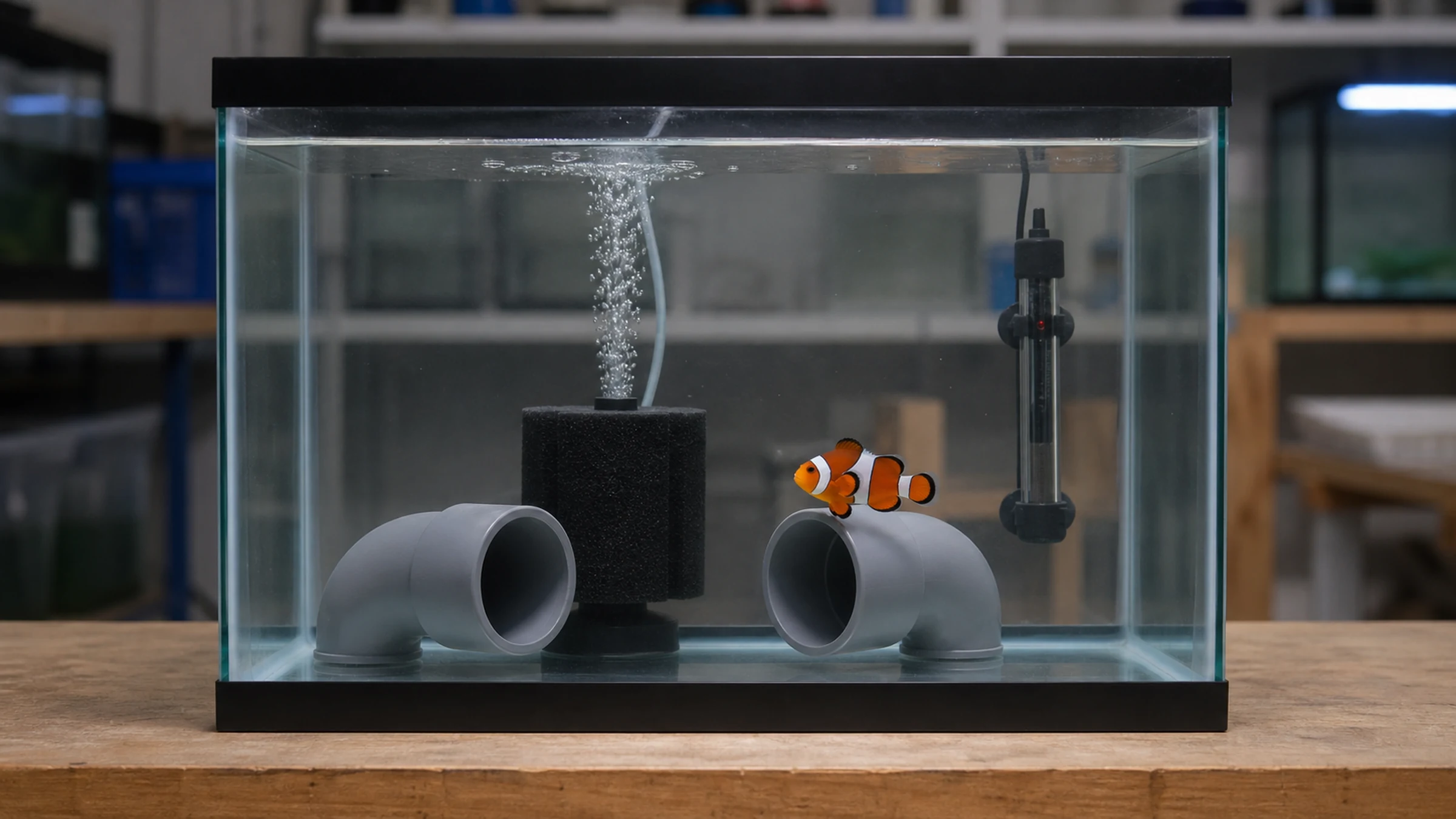
How to quarantine new saltwater fish against marine ich, velvet, and brooklynella: the QT tank, treatments, timelines, and the buy-clean shortcut.

What every reef parameter means and where to keep it: salinity, temperature, pH, alkalinity, calcium, magnesium, nitrate, and phosphate.

Choose compatible fish: school sizes, swimming zones, aggression, temperature and hardness matching, and honest bioload math for a peaceful community.
Keeping Crocea Clam?
AquaLens identifies your fish and plants from a photo, tracks water chemistry, and flags health issues early — free on iOS and Android.