Derasa Clam Care Guide
Tridacna derasa · Saltwater Clam
What Derasa Clam look like
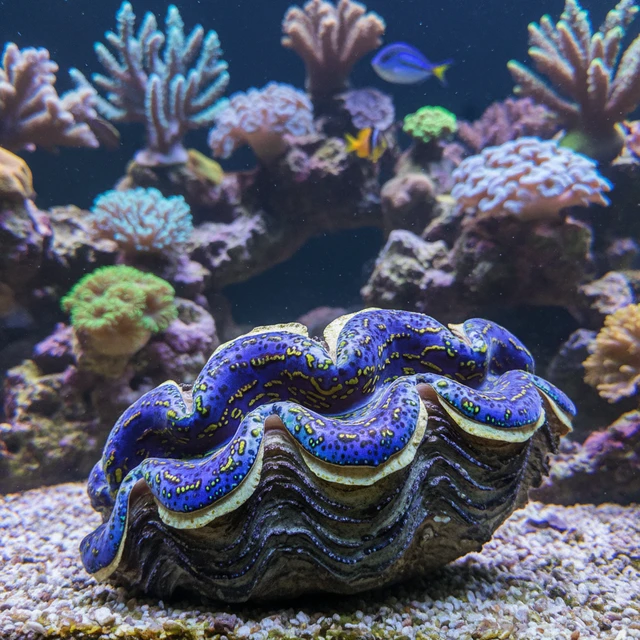
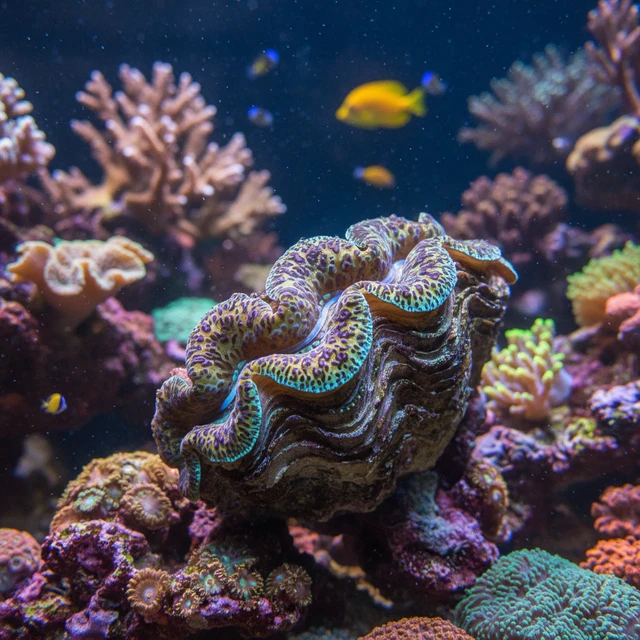
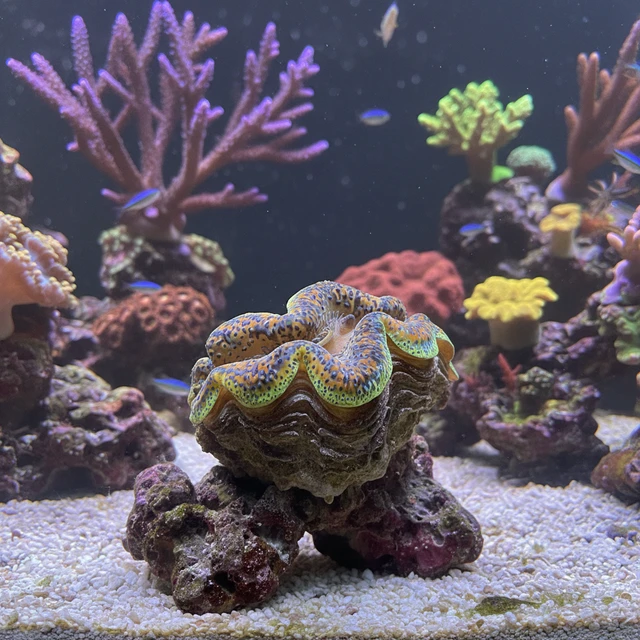
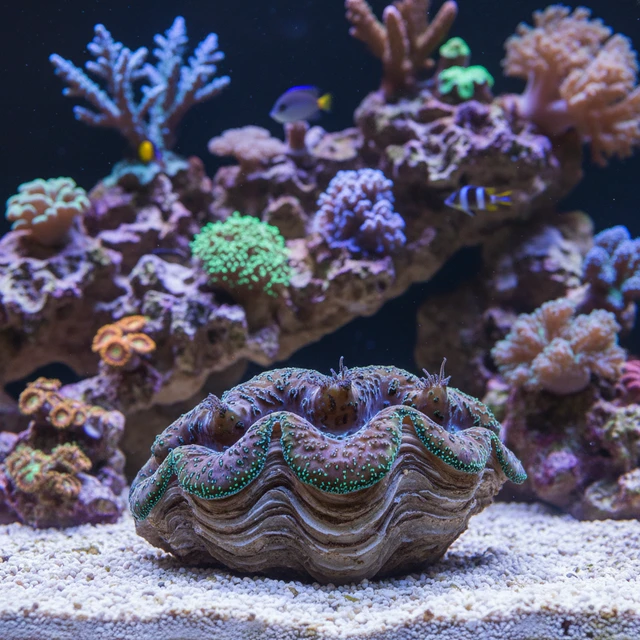
Tridacna derasa, commonly known as the Derasa Clam, exhibits a robust and elongated shell that can reach a maximum adult size of approximately 12 inches (30 cm) in length. The shell is characterized by its smooth, glossy surface and a distinctive coloration that ranges from deep blue to green, often with striking patterns of yellow or orange. The shell's structure is composed of two valves that are asymmetrical, with the left valve being more convex and the right valve flatter. Sexual dimorphism is not pronounced in this species; however, individuals may exhibit slight variations in coloration and size. Defensive adaptations include the ability to close its shell tightly to protect against predation, and the presence of a thick, calcified shell that deters many potential threats. Unique morphological features include the presence of numerous small, radiating ridges on the shell surface, which enhance its structural integrity and may aid in camouflage among the reef substrate.
Behavior & temperament
The Derasa Clam is primarily a sessile organism, anchoring itself to the substrate of coral reefs. It exhibits a symbiotic relationship with zooxanthellae, photosynthetic algae that reside within its tissues, allowing it to derive energy from sunlight. This clam extends its mantle tissue, which is richly pigmented, to maximize light absorption for photosynthesis. While generally peaceful, it may exhibit slight retraction of its mantle in response to disturbances or threats. The clam does not display aggressive behaviors and is often found in sandy or rubble substrates, where it can blend seamlessly into its environment. Its feeding behavior primarily involves filter feeding, as it siphons water through its gills to capture plankton and organic particles.
Diet & feeding
Tridacna derasa is primarily a filter feeder, consuming phytoplankton and organic detritus from the water column. In captivity, it requires a diet supplemented with phytoplankton and other fine particulate foods to thrive.
Behind the name
The genus name 'Tridacna' is derived from the Greek words 'tri' meaning three and 'daknein' meaning to bite, referring to the three cardinal teeth found in the shell. The species name 'derasa' is of Arabic origin, meaning 'to spread out' or 'to extend', likely referencing the clam's broad and flattened shell.
Plan your tank
Check the numbers before you buy: tank volume, salinity, salt mix, water changes, and your ongoing care routine. Keeping reef? Start from the Saltwater & Reef hub.
Keep reading
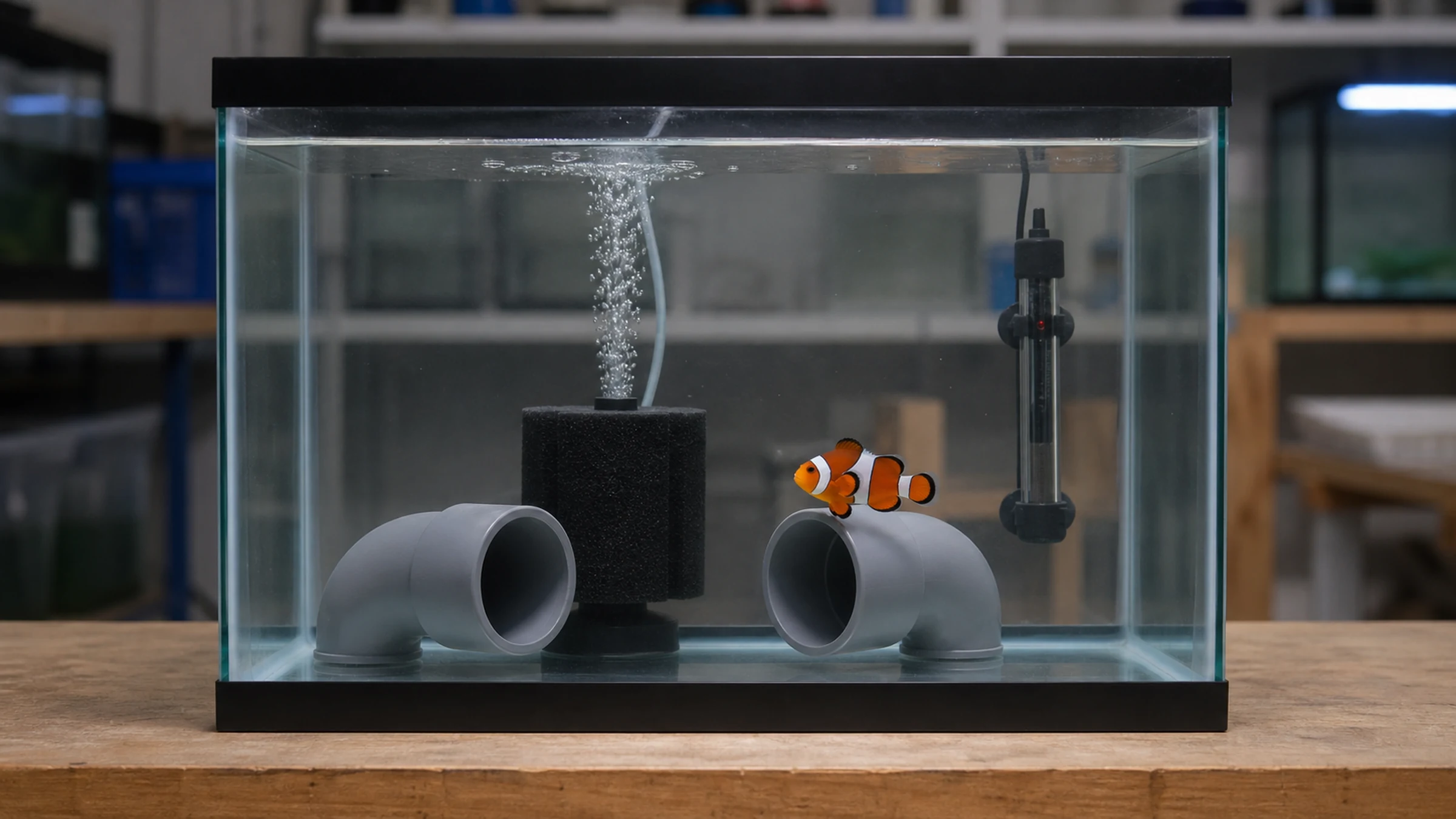
How to quarantine new saltwater fish against marine ich, velvet, and brooklynella: the QT tank, treatments, timelines, and the buy-clean shortcut.

What every reef parameter means and where to keep it: salinity, temperature, pH, alkalinity, calcium, magnesium, nitrate, and phosphate.

Choose compatible fish: school sizes, swimming zones, aggression, temperature and hardness matching, and honest bioload math for a peaceful community.
Keeping Derasa Clam?
AquaLens identifies your fish and plants from a photo, tracks water chemistry, and flags health issues early — free on iOS and Android.