Squamosa Clam Care Guide
Tridacna squamosa · Saltwater Clam
What Squamosa Clam look like
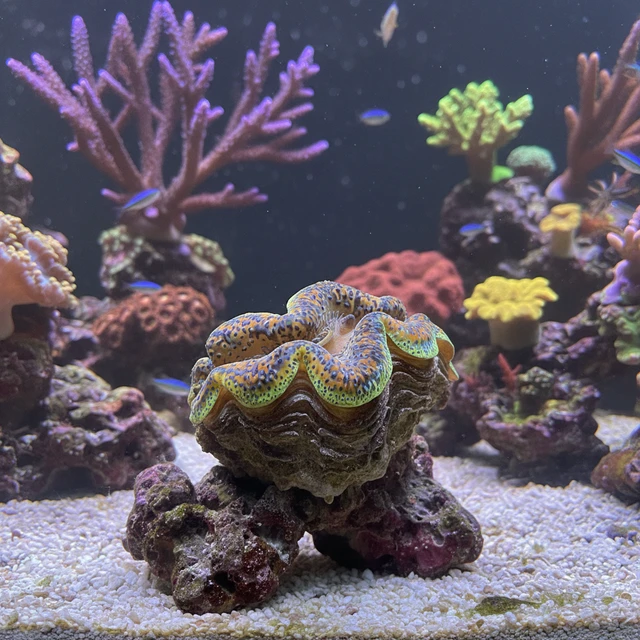
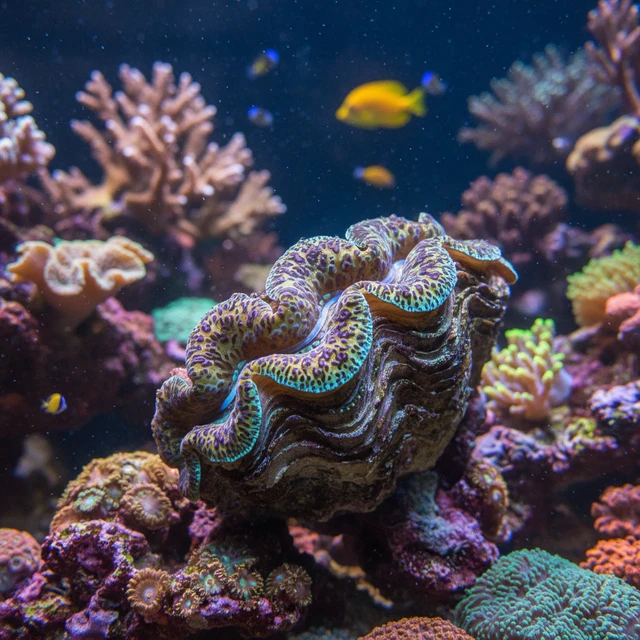
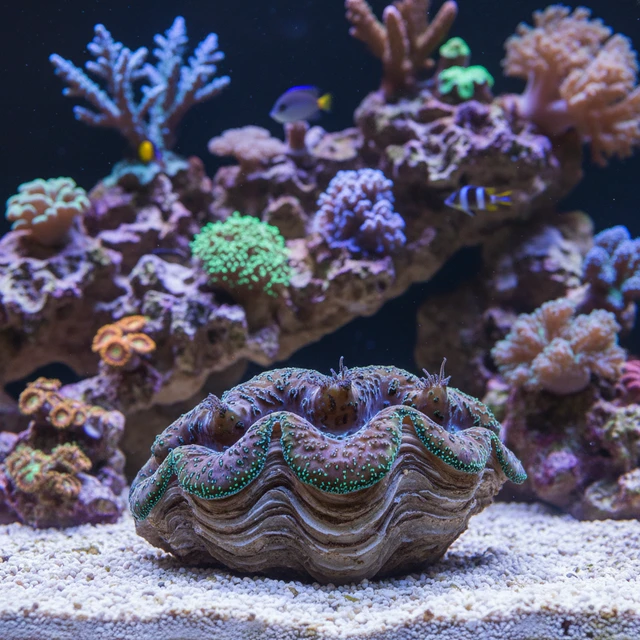
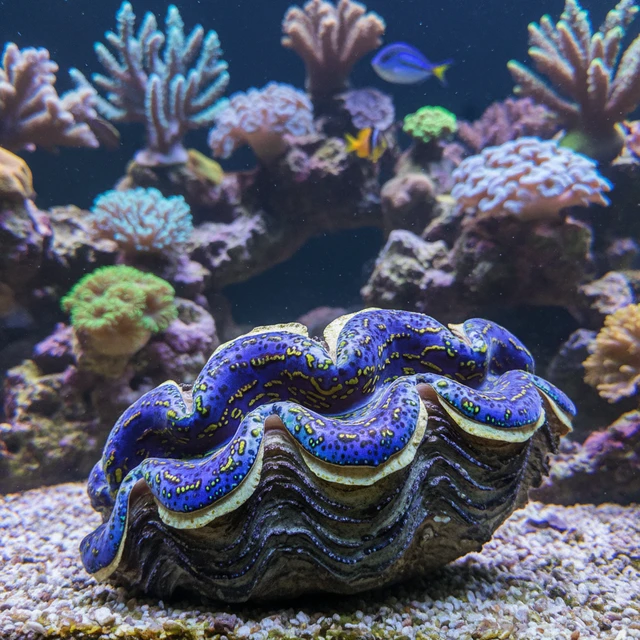
Tridacna squamosa, commonly known as the Squamosa Clam, exhibits a robust, asymmetrical shell that can reach a maximum adult size of approximately 12 inches (30 cm) in length. The shell is characterized by its thick, scaly exterior with prominent, raised ridges that provide a distinctive texture and appearance. The coloration varies widely, ranging from shades of blue, green, and brown to vibrant patterns that can include yellows and purples, which serve as camouflage against the reef substrate. Sexual dimorphism is not pronounced in this species; however, individuals may exhibit slight variations in shell shape and coloration. Defensive adaptations include the ability to close tightly to protect the soft body from predators, and the presence of symbiotic zooxanthellae within its tissues allows for photosynthetic energy acquisition, contributing to its overall health and growth. The siphons are elongated and can extend significantly, facilitating feeding and respiration.
Behavior & temperament
Squamosa Clams are generally sessile and exhibit minimal movement, primarily relying on their siphons for feeding and respiration. They are filter feeders, drawing in water to extract phytoplankton and organic particles. The clams possess a symbiotic relationship with zooxanthellae, which reside within their tissues and provide additional nutrients through photosynthesis. While they do not exhibit aggressive behavior, they can react defensively to disturbances by closing their shells. The clams extend their siphons to feed and can retract them rapidly if threatened, showcasing a level of responsiveness to their environment.
Diet & feeding
Tridacna squamosa is primarily a filter feeder, consuming phytoplankton and organic detritus from the water column. In captivity, they require a diet rich in phytoplankton and may benefit from supplemental feeding with finely crushed marine foods.
Behind the name
The scientific name 'Tridacna' is derived from the Greek words 'tri' meaning three and 'daknein' meaning to bite, referring to the three cardinal teeth found in the shell. The species name 'squamosa' comes from the Latin 'squamosus', meaning scaly, which describes the shell's textured surface.
Plan your tank
Check the numbers before you buy: tank volume, salinity, salt mix, water changes, and your ongoing care routine. Keeping reef? Start from the Saltwater & Reef hub.
Keep reading
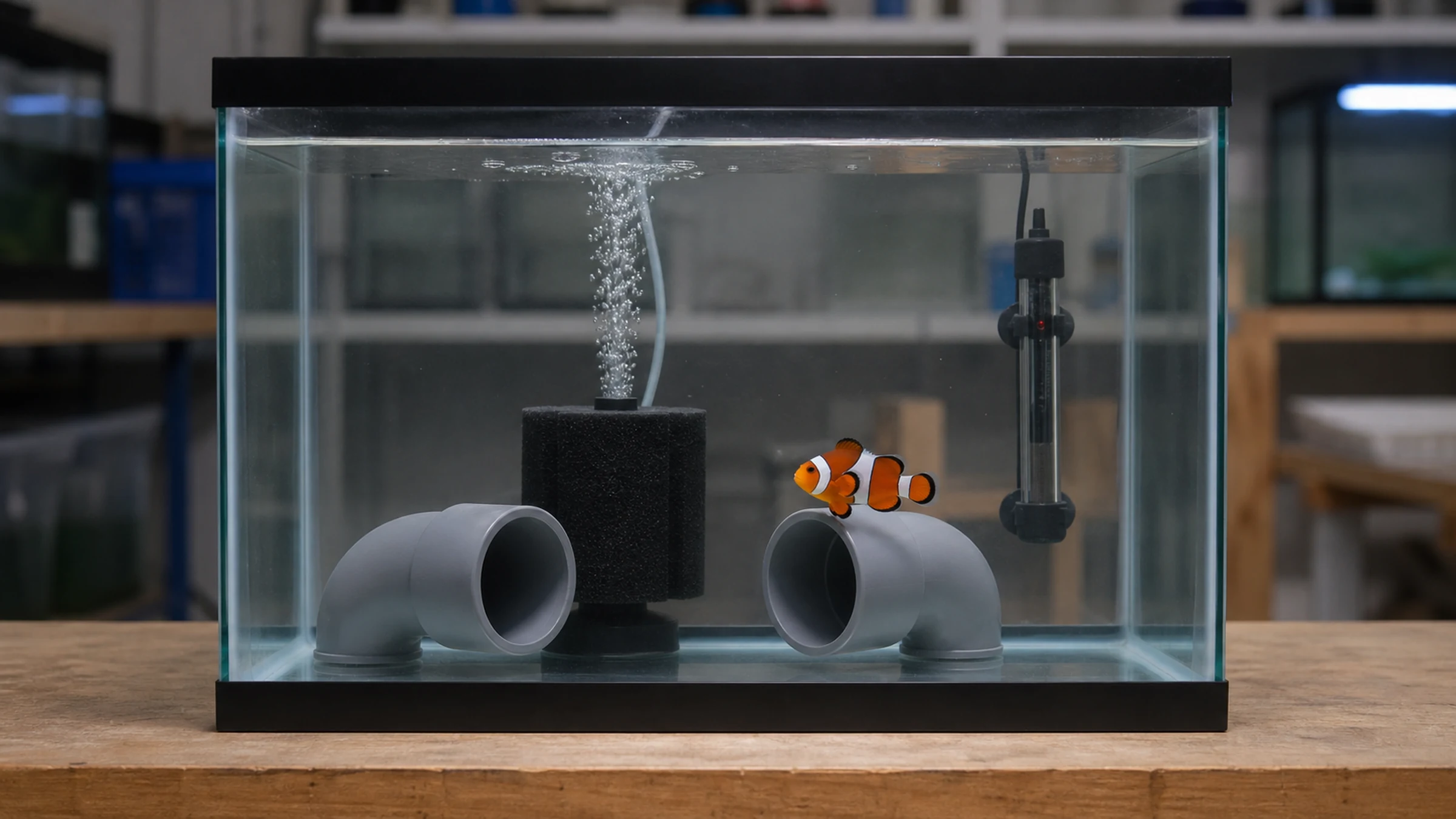
How to quarantine new saltwater fish against marine ich, velvet, and brooklynella: the QT tank, treatments, timelines, and the buy-clean shortcut.

What every reef parameter means and where to keep it: salinity, temperature, pH, alkalinity, calcium, magnesium, nitrate, and phosphate.

Choose compatible fish: school sizes, swimming zones, aggression, temperature and hardness matching, and honest bioload math for a peaceful community.
Keeping Squamosa Clam?
AquaLens identifies your fish and plants from a photo, tracks water chemistry, and flags health issues early — free on iOS and Android.