Cryptocoryne Balansae Care Guide
Cryptocoryne balansae · Freshwater Plant
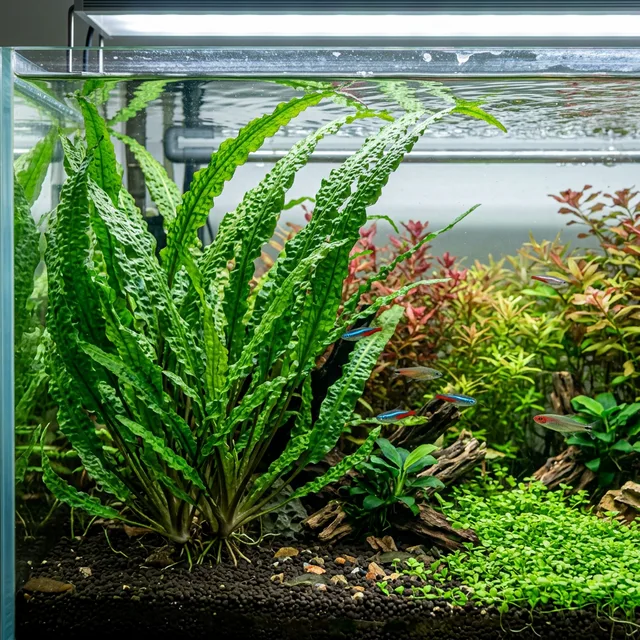
What Cryptocoryne Balansae look like
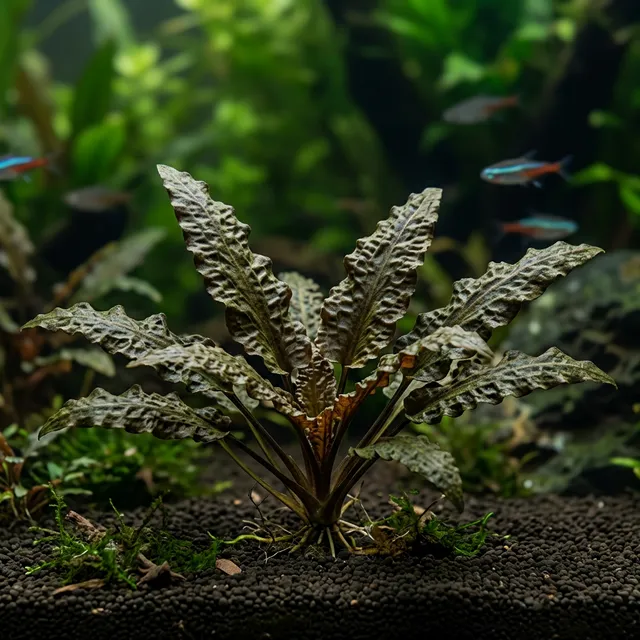
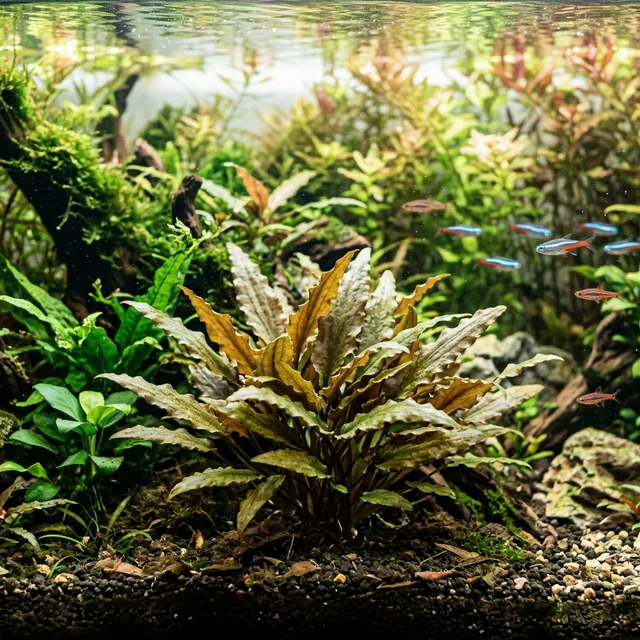
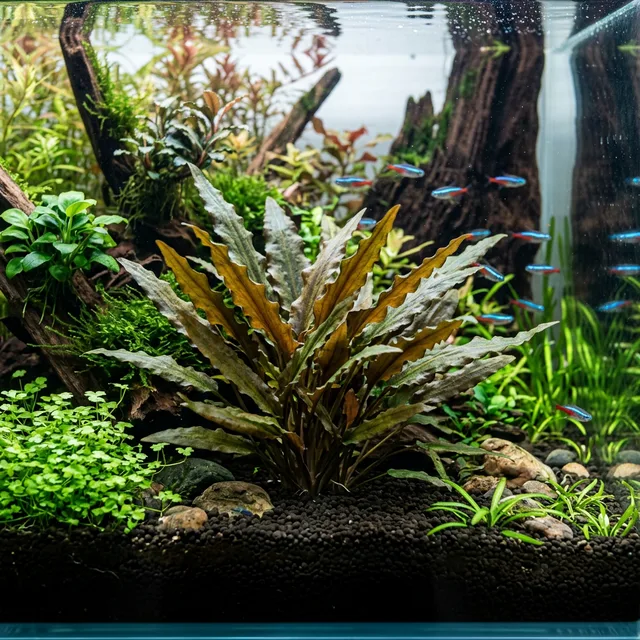
Cryptocoryne balansae is characterized by its strikingly long, narrow, strap-like leaves that can attain lengths of up to 20 inches, with a typical maximum size ranging from 12 to 20 inches. The leaves exhibit a heavily textured surface, presenting a distinctive crinkled, bullated, or hammered pattern that contributes to its aesthetic appeal. The coloration varies from bright to dark green, enhancing its visual presence in aquatic environments. The leaves emerge from a basal rosette, displaying an undulating and wavy margin that adds to their dynamic movement in water currents. The roots are robust and white, providing stability as they anchor into the substrate, while the overall growth habit is erect and graceful, making it a prominent feature in planted aquaria. This species does not exhibit sexual dimorphism, and its defensive adaptations include the ability to thrive in varying water conditions, although it is primarily a rooted aquatic plant.
Behavior & temperament
In its natural habitat, Cryptocoryne balansae typically dwells in the benthic zone of slow-moving waters, often found in shaded areas with ample leaf litter and organic debris. It is not an obligate schooler and does not exhibit a social hierarchy, as it is primarily a solitary plant species. The plant engages in asexual reproduction through rhizome propagation, allowing it to spread and form dense colonies over time. Its temperament is passive, as it does not exhibit aggressive behaviors; instead, it relies on its structural adaptations to thrive in its environment.
Diet & feeding
As a photosynthetic aquatic plant, Cryptocoryne balansae primarily derives its nutrients through the process of photosynthesis, utilizing light to convert carbon dioxide and water into energy. In captivity, it requires a nutrient-rich substrate and may benefit from the addition of liquid fertilizers to support optimal growth.
Behind the name
Cryptocoryne (hidden horn); balansae (named after the botanist who first described it).
Plan your tank
Check the numbers before you buy: tank volume, a stocking plan, cycle progress, water changes, and your ongoing care routine.
Keep reading
Diagnose aquarium plant deficiencies by leaf age and symptom: yellowing, pinholes, twisting, and stunting. Read the pattern, then fix it safely.

PAR-first planted tank lighting: choose intensity by what you grow, set photoperiod and spectrum, kill shadows, and hold algae back without overspending.

Aquarium CO₂ injection made safe: how carbon, light, and nutrients balance, which system to buy, and how to dial it in without gassing your fish.
Keeping Cryptocoryne Balansae?
AquaLens identifies your fish and plants from a photo, tracks water chemistry, and flags health issues early — free on iOS and Android.