Elkhorn Coral Care Guide
Acropora palmata · Saltwater SPS Coral
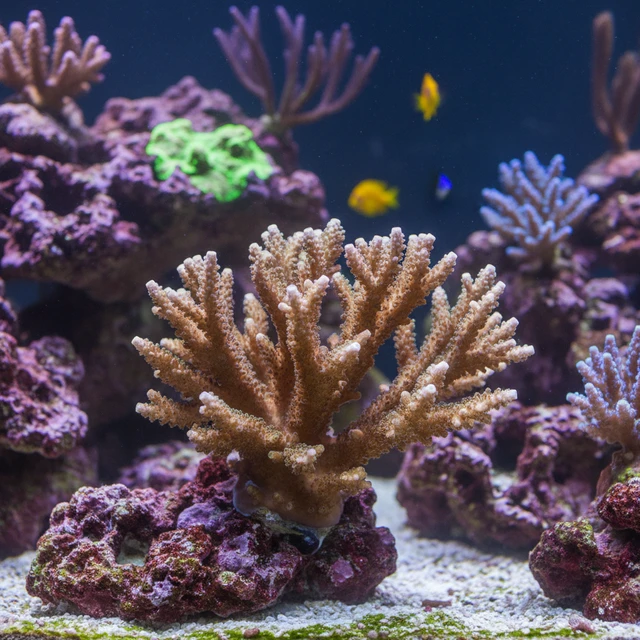
What Elkhorn Coral look like
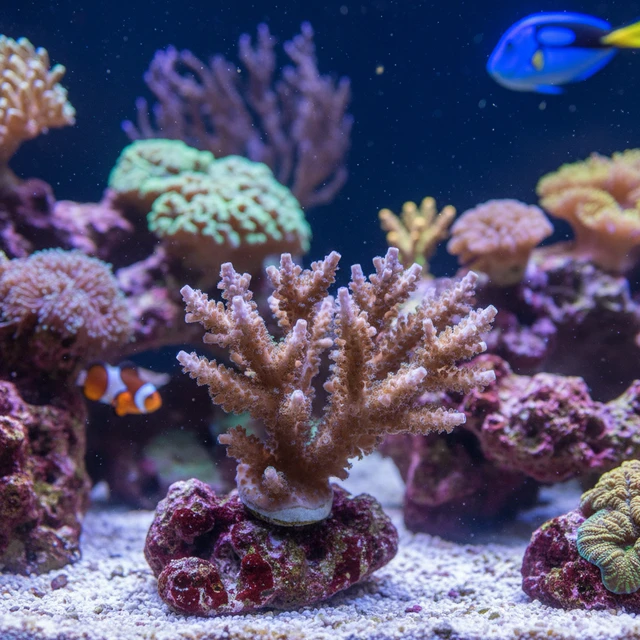
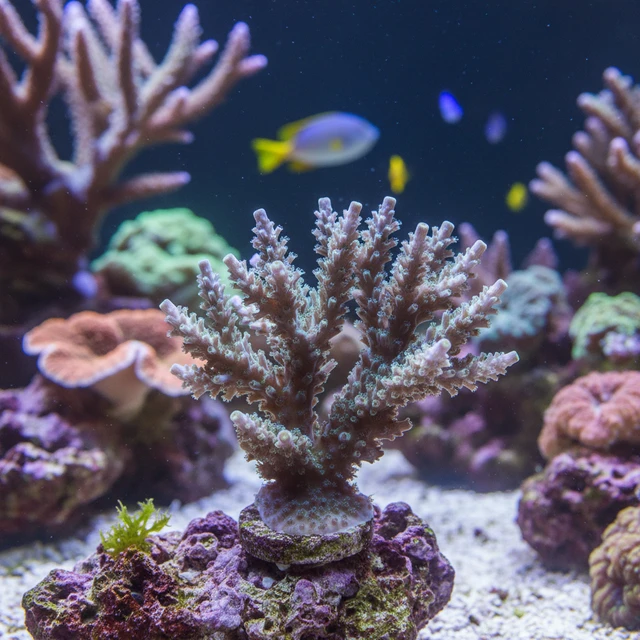
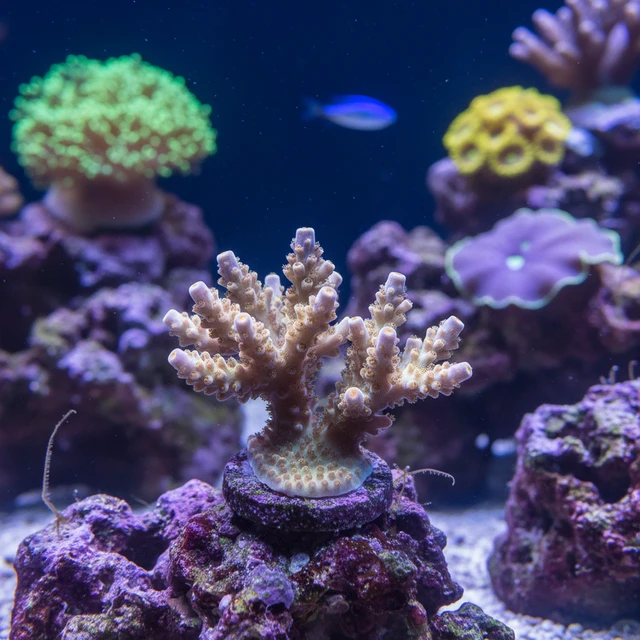
Acropora palmata, commonly known as Elkhorn Coral, exhibits a robust, branching morphology characterized by thick, flattened branches that can reach a maximum adult size of approximately 3 meters in diameter. The branches are typically arranged in a distinctive, antler-like structure, which provides a high surface area for photosynthesis and enhances its competitive advantage in reef environments. Sexual dimorphism is not pronounced in this species; however, the coloration can vary significantly, ranging from light brown to yellowish hues, often with a contrasting white or cream-colored tip. Defensive adaptations include a dense calcareous skeleton that provides structural integrity and resilience against physical disturbances, as well as the presence of nematocysts in its polyps, which can deliver a mild sting to deter herbivores. Unique morphological features include the presence of corallites that house the polyps, which extend during the night for feeding, and the characteristic growth patterns that resemble the antlers of a deer, hence the common name.
Behavior & temperament
Elkhorn Coral is primarily a sessile organism that exhibits a symbiotic relationship with zooxanthellae, allowing it to utilize sunlight for energy through photosynthesis. It engages in a form of passive feeding by extending its polyps at night to capture plankton and other organic particles from the water column. This species is known for its rapid growth rates compared to other corals, which allows it to dominate in shallow reef environments. While it does not exhibit aggressive territorial behaviors like some other coral species, it can engage in competition for space and light with neighboring corals through overgrowth and shading. Its stinging potential is relatively mild, primarily serving as a defense mechanism against competing organisms rather than as a predatory adaptation.
Diet & feeding
Elkhorn Coral is primarily a photosynthetic coral, relying on its symbiotic zooxanthellae for energy, but it also captures plankton and organic matter from the water column. In captivity, it requires a nutrient-rich environment with adequate light and may benefit from supplemental feeding with planktonic foods or coral-specific supplements.
Behind the name
The scientific name 'Acropora' derives from the Greek words 'akron' meaning 'top' or 'summit' and 'pora' meaning 'porous', referring to the structure of the coral. The species name 'palmata' comes from the Latin word 'palma', meaning 'palm tree', alluding to the shape of the coral's branches.
Plan your tank
Check the numbers before you buy: tank volume, salinity, salt mix, water changes, and your ongoing care routine. Keeping reef? Start from the Saltwater & Reef hub.
Keep reading
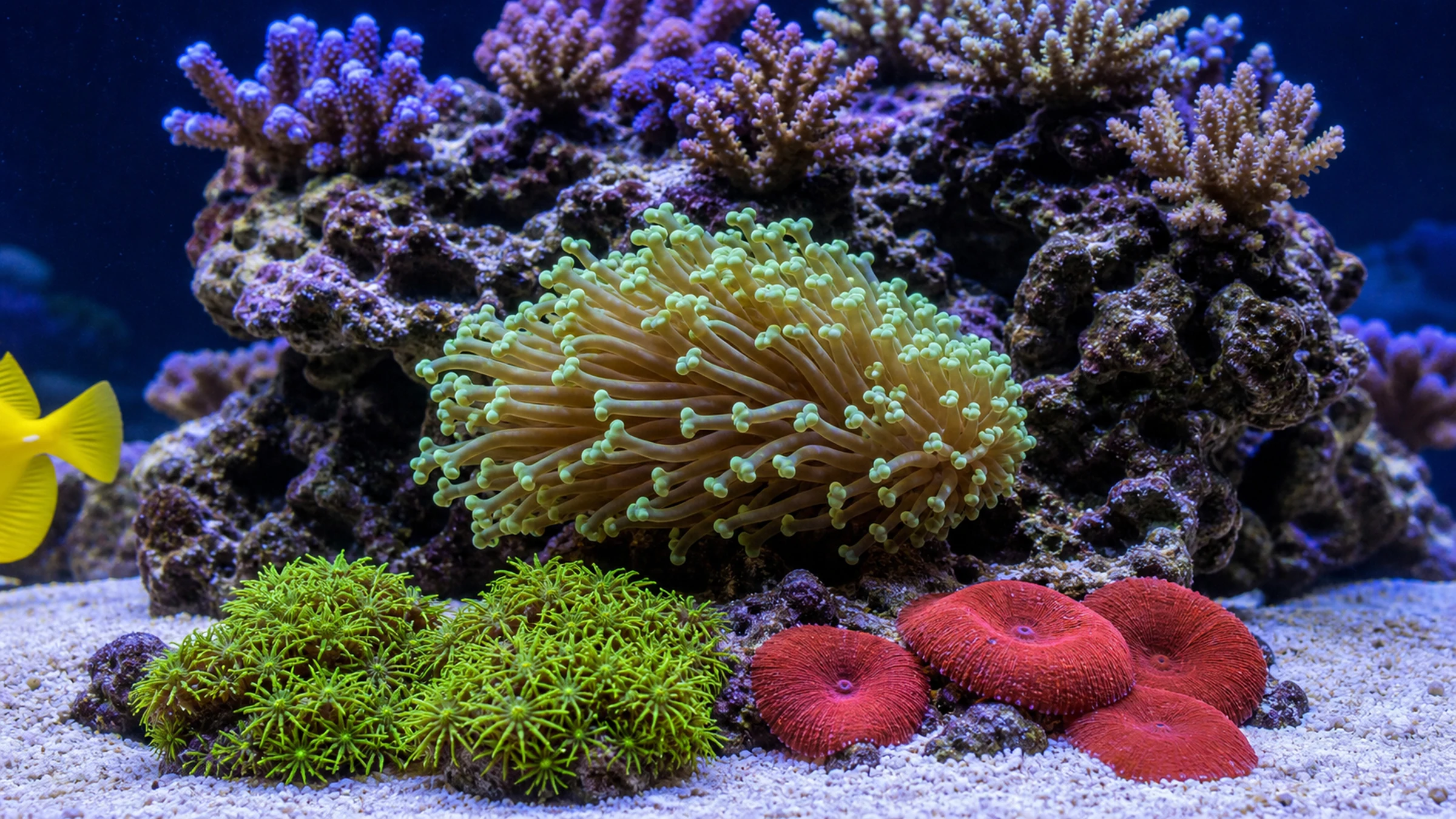
How to place corals by light and flow, PAR targets for softies, LPS, and SPS, dipping new corals for pests, and acclimating them without bleaching.

What every reef parameter means and where to keep it: salinity, temperature, pH, alkalinity, calcium, magnesium, nitrate, and phosphate.

Acclimate new fish, shrimp, and coral safely: temperature floating, drip acclimation, plop-and-drop for shipped livestock, and the first 24 hours.
Keeping Elkhorn Coral?
AquaLens identifies your fish and plants from a photo, tracks water chemistry, and flags health issues early — free on iOS and Android.